TR
TR EN
EN

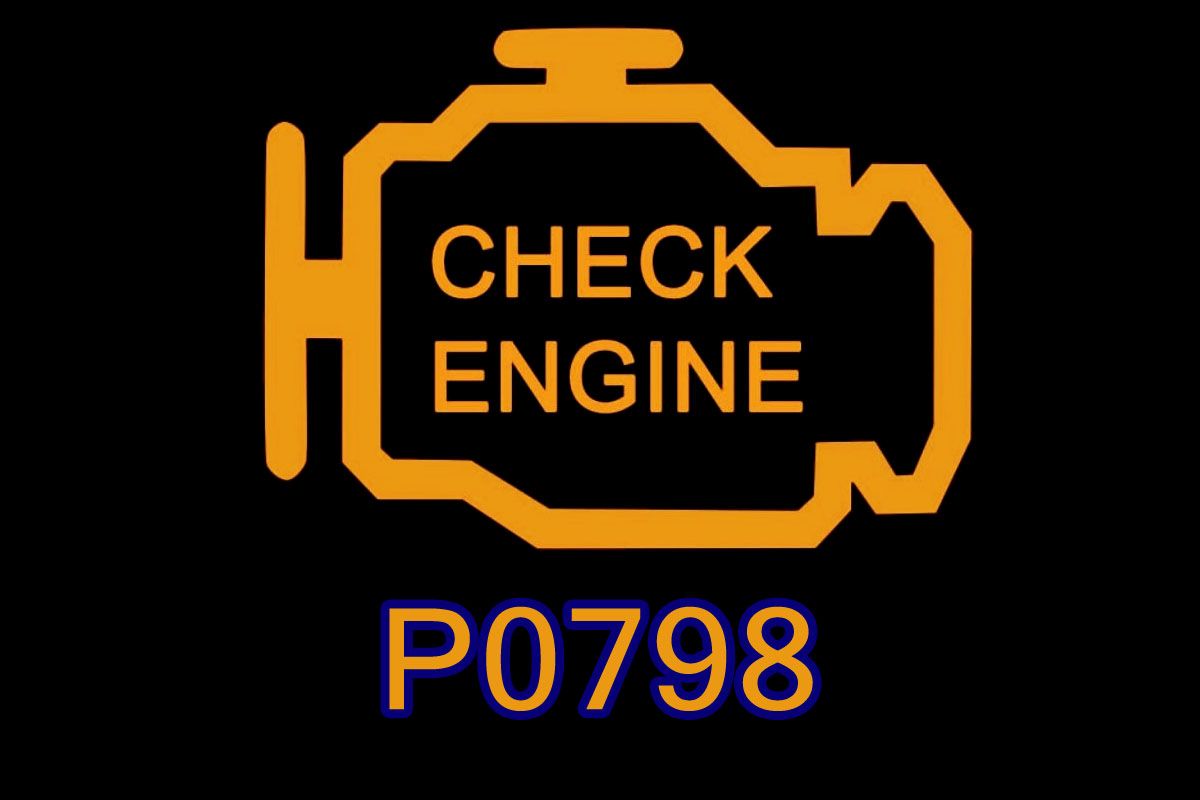
P0798 Pressure Control Solenoid "C" Electrical
The P0798 trouble code is an OBD-II diagnostic trouble code related to the Pressure Control Solenoid "C" electrical circuit.
P0798 – Pressure Control Solenoid "C" Electrical
This code means that the transmission control module (TCM) or powertrain control module (PCM) has detected an electrical problem in the circuit controlling Pressure Control Solenoid "C".
The solenoid is responsible for regulating hydraulic pressure inside the automatic transmission. The TCM uses this pressure to control clutch and band engagement, gear changes, shift quality, and overall transmission operation.
P0798 is primarily an electrical circuit code. It does not automatically mean that the transmission has suffered internal mechanical damage.
What Does P0798 Mean?
An automatic transmission uses hydraulic pressure to operate its internal clutches and other components.
The TCM controls this pressure electronically through pressure-control solenoids.
The basic operation is:
TCM → Electrical command → Pressure Control Solenoid "C" → Hydraulic pressure → Transmission clutch/gear operation
When the TCM detects an abnormal electrical condition in the circuit for Solenoid "C", it can store:
P0798 – Pressure Control Solenoid "C" Electrical
The exact function of Solenoid "C" varies between manufacturers and transmission models. It should not be assumed that "C" always controls the same clutch or gear in every vehicle.
What Is a Pressure Control Solenoid?
A pressure control solenoid is an electronically controlled valve used to regulate transmission hydraulic pressure.
The transmission control module can vary the solenoid's operation to control pressure according to:
-
Engine torque
-
Vehicle speed
-
Gear position
-
Transmission temperature
-
Throttle position
-
Input speed
-
Output speed
-
Driving conditions
Correct pressure is essential.
Too little pressure can cause clutch slipping, while excessive or poorly controlled pressure can cause harsh engagement and hard shifts.
What Does "Electrical" Mean in P0798?
The word "Electrical" indicates that the TCM has detected an electrical problem with the Solenoid "C" circuit.
Possible electrical faults include:
-
Open circuit
-
Short circuit
-
Incorrect voltage
-
Excessive resistance
-
Solenoid coil failure
-
Poor connector connection
-
Damaged wiring
-
Corroded terminals
-
TCM driver circuit problem
This is different from codes that specifically indicate range/performance, low signal, high signal, or intermittent operation.
Symptoms of P0798
P0798 can produce different symptoms depending on the transmission.
Possible symptoms include:
-
Check Engine Light
-
Transmission warning light
-
Harsh shifting
-
Delayed shifting
-
Gear slipping
-
Flare during shifts
-
Transmission stuck in one gear
-
Incorrect shift timing
-
Poor acceleration
-
Reduced fuel economy
-
Transmission limp mode
-
Difficulty engaging certain gears
-
Delayed Drive or Reverse engagement
-
Increased transmission temperature
In some cases, the vehicle may continue to drive almost normally at first.
Common Causes of P0798
Faulty Pressure Control Solenoid "C"
The solenoid may have an internally damaged coil or valve.
Open solenoid circuit
A broken wire can prevent the solenoid from receiving the required electrical signal.
Short circuit
The control circuit may be shorted to ground or battery voltage.
Damaged transmission wiring
The wiring harness inside or outside the transmission may be damaged.
Corroded connector
Transmission connectors are exposed to heat, vibration, oil and moisture.
Loose terminal
A terminal that does not make reliable contact can create an electrical fault.
Transmission fluid contamination
Contaminated fluid can cause solenoid valves to stick or operate incorrectly.
Incorrect transmission fluid
Using the wrong fluid can affect hydraulic and solenoid operation.
Low transmission fluid
Low fluid can create hydraulic problems that may appear alongside electrical faults.
Faulty valve body
A valve-body problem can interfere with the operation of the pressure-control system.
Poor electrical ground
A weak ground can affect the operation of the solenoid and TCM.
Low battery voltage
Low system voltage can interfere with transmission solenoid control.
Faulty TCM
The transmission control module may have a damaged internal driver circuit.
Is P0798 Serious?
Yes, P0798 should be taken seriously.
Although the code identifies an electrical problem, the pressure-control solenoid directly affects transmission hydraulic operation.
If the solenoid is not controlled correctly, the transmission may develop:
-
Clutch slip
-
Harsh shifts
-
Delayed engagement
-
Incorrect line pressure
-
Excessive heat
Continued driving with a severe pressure-control problem can potentially lead to additional transmission damage.
Can You Drive With P0798?
If the vehicle still shifts normally, it may be possible to drive it a short distance for diagnosis.
However, extended driving is not recommended if you notice:
-
Severe slipping
-
Hard shifting
-
Transmission overheating
-
Loss of drive
-
Transmission stuck in a gear
-
Severe delay when selecting Drive or Reverse
If the transmission is slipping, continuing to drive can generate excessive heat and accelerate clutch wear.
P0798 vs. P0796
These codes concern the same general solenoid but identify different types of faults.
P0796 – Pressure Control Solenoid "C" Performance or Stuck Off
Indicates a range/performance problem or a condition where the solenoid may not be operating as expected.
P0798 – Pressure Control Solenoid "C" Electrical
Specifically identifies an electrical problem in the Solenoid "C" circuit.
Therefore, P0798 should lead the diagnosis toward:
Wiring → Connector → Solenoid → Power → Control signal → TCM
P0798 vs. P0797
P0797 – Pressure Control Solenoid "C" Stuck On
The control system believes the solenoid is stuck in an activated condition.
P0798 – Pressure Control Solenoid "C" Electrical
The control system has detected an electrical circuit problem.
These are not interchangeable diagnoses.
P0798 vs. P0799
P0799 – Pressure Control Solenoid "C" Intermittent
The electrical or operational problem occurs intermittently.
P0798 – Pressure Control Solenoid "C" Electrical
The system has detected an electrical fault without necessarily classifying it as intermittent.
Where Is Pressure Control Solenoid "C"?
The location varies by transmission.
It may be located:
-
Inside the transmission
-
Inside the valve body
-
Inside the transmission control valve assembly
-
Inside a mechatronic unit
On some transmissions, multiple pressure-control solenoids are integrated into a valve-body or mechatronic assembly.
Therefore, the exact location should be determined from the vehicle's transmission service information.
How to Diagnose P0798
Because P0798 specifically identifies an electrical fault, diagnosis should begin with the electrical circuit before assuming a hydraulic or mechanical transmission failure.
1. Scan all transmission-related modules
Use a professional diagnostic scanner capable of accessing the TCM.
Record all codes before clearing them.
Look for additional codes involving:
-
Other solenoids
-
Transmission pressure
-
Input/output speed sensors
-
Transmission temperature
-
Gear ratio
-
TCM communication
-
System voltage
Additional codes can significantly change the diagnosis.
2. Check freeze-frame data
Record:
-
Engine RPM
-
Vehicle speed
-
Selected gear
-
Transmission temperature
-
Throttle position
-
Line pressure if available
-
Battery voltage
This can help determine when the electrical fault occurred.
3. Inspect the transmission connector
Check for:
-
Corrosion
-
Bent pins
-
Loose terminals
-
Water intrusion
-
Oil contamination
-
Damaged seals
A poor connection can produce an electrical solenoid code.
4. Inspect the transmission wiring
Look for:
-
Broken wires
-
Chafing
-
Melted insulation
-
Pinched wiring
-
Corrosion
-
Previous repairs
Pay particular attention to areas exposed to heat and vibration.
5. Check transmission power and grounds
Verify:
-
Battery voltage
-
TCM power
-
TCM ground
-
Transmission harness power supply
Low voltage can create misleading solenoid faults.
6. Identify the exact Solenoid "C" circuit
Use the manufacturer's wiring diagram.
Determine:
-
Solenoid power supply
-
Control wire
-
Ground/control strategy
-
TCM connector pin
-
Solenoid connector pin
Different transmissions use different circuit designs.
7. Measure solenoid resistance
Disconnect the appropriate connector and measure the resistance of Pressure Control Solenoid "C".
Compare the result with the manufacturer's specification.
An open circuit or a resistance value outside specification can indicate a faulty solenoid.
Do not use a generic resistance value because specifications differ significantly between transmissions.
8. Check for an open circuit
Test the wiring between the TCM and solenoid.
Look for excessive resistance or a complete loss of continuity.
9. Check for shorts
Test for:
-
Short to ground
-
Short to battery voltage
-
Short to another solenoid circuit
10. Check the control signal
Using the appropriate test equipment, verify that the TCM is producing the expected control signal.
The exact signal may be a switched voltage or a pulse-width-modulated command, depending on the system.
11. Perform an actuator test
If supported by the diagnostic scanner, command Pressure Control Solenoid "C".
Observe whether the solenoid responds as expected.
12. Inspect the valve body
If the electrical circuit and solenoid test correctly, inspect the valve body.
Look for:
-
Sticking valves
-
Contamination
-
Wear
-
Blocked passages
13. Check transmission fluid
Inspect the fluid for:
-
Correct level
-
Correct specification
-
Excessive discoloration
-
Burnt smell
-
Metal particles
-
Contamination
Transmission-fluid inspection should follow the manufacturer's procedure because some transmissions require specific temperature and checking methods.
14. Check hydraulic pressure
If necessary, perform a hydraulic-pressure test.
Compare actual pressure with manufacturer specifications.
This can help distinguish an electrical solenoid problem from a hydraulic or mechanical problem.
15. Check TCM operation
If the solenoid, wiring, connectors, power supply and hydraulic system are functioning correctly, investigate the TCM.
A damaged TCM driver can prevent correct solenoid operation.
Can a Bad Pressure Control Solenoid Cause P0798?
Yes.
A failed solenoid coil can create:
-
Open circuit
-
Short circuit
-
Incorrect resistance
A mechanically stuck solenoid can also produce related transmission symptoms.
Can Wiring Cause P0798?
Yes.
Wiring faults are among the first things that should be checked.
A broken, corroded or shorted wire can prevent the TCM from controlling the solenoid correctly.
Can a Bad Connector Cause P0798?
Yes.
A loose or corroded connector can interrupt the solenoid circuit.
This is especially important because transmission connectors operate in a harsh environment.
Can Low Transmission Fluid Cause P0798?
Low fluid can cause transmission-pressure and shifting problems, but it does not by itself explain an electrical circuit fault.
If P0798 is present, the electrical circuit should still be tested.
However, low fluid can create additional transmission problems that may occur at the same time.
Can Dirty Transmission Fluid Cause P0798?
Dirty or contaminated fluid can cause solenoid and valve-body problems.
However, because P0798 specifically identifies an electrical fault, the solenoid circuit should be checked before blaming the fluid.
Can P0798 Cause Transmission Slipping?
Yes.
If Pressure Control Solenoid "C" controls hydraulic pressure associated with a clutch or shift circuit, incorrect pressure can result in clutch slip.
The exact effect depends on the transmission design.
Can P0798 Cause Harsh Shifting?
Yes.
Incorrect pressure control can cause:
-
Hard shifts
-
Delayed shifts
-
Shift shock
-
Gear engagement problems
Can P0798 Cause Limp Mode?
Yes.
The TCM may place the transmission into a protective mode if it cannot reliably control the pressure-control solenoid.
The transmission may then remain in a limited number of gears.
Can P0798 Damage the Transmission?
Potentially, if the vehicle continues to operate with severe pressure-control problems.
Incorrect hydraulic pressure can cause excessive clutch slip and heat.
Therefore, a vehicle showing serious transmission symptoms should not be driven unnecessarily.
Can P0798 Be Caused by the TCM?
Yes, but this is less common than a wiring or solenoid problem.
A TCM may have a failed output driver that cannot correctly control Solenoid "C".
Before replacing the TCM, verify:
Power → Ground → Wiring → Connector → Solenoid → Control signal → Hydraulic operation
Common Diagnostic Mistakes With P0798
Replacing the transmission immediately
P0798 is an electrical code and does not automatically indicate internal transmission failure.
Replacing the solenoid without testing the wiring
A broken wire can create the same code.
Ignoring the transmission connector
Corrosion or loose terminals can interrupt the circuit.
Using a generic resistance specification
Solenoid resistance varies between transmissions.
Ignoring system voltage
Low battery or charging voltage can cause electronic transmission problems.
Changing transmission fluid without electrical testing
Fluid maintenance may be necessary, but it does not repair an electrical circuit fault.
Replacing the TCM too quickly
The complete circuit should be tested before condemning the control module.
What Is the Correct Repair for P0798?
The repair depends on the confirmed cause.
Possible repairs include:
-
Replacing Pressure Control Solenoid "C"
-
Repairing an open circuit
-
Repairing a short circuit
-
Repairing damaged wiring
-
Repairing connector terminals
-
Cleaning corrosion
-
Repairing water intrusion
-
Restoring proper power supply
-
Repairing the ground circuit
-
Repairing the valve body
-
Cleaning contaminated hydraulic passages
-
Correcting transmission-fluid level
-
Using the correct transmission fluid
-
Repairing or replacing a mechatronic assembly
-
Updating TCM software
-
Reprogramming the TCM
-
Replacing the TCM when confirmed defective
How to Test the Vehicle After Repair
After completing the repair, verify:
-
Solenoid "C" resistance is within specification
-
Wiring has correct continuity
-
No short circuits remain
-
Connector terminals are secure
-
Solenoid responds to commands
-
TCM control signal is correct
-
Transmission fluid level is correct
-
Hydraulic pressure is within specification
-
Gear changes are smooth
-
No slipping occurs
-
Transmission does not enter limp mode
-
P0798 does not return
A complete road test should be performed after the repair.
Frequently Asked Questions About P0798
What does P0798 mean?
P0798 means the transmission control system has detected an electrical problem with Pressure Control Solenoid "C".
Does P0798 mean the transmission is bad?
No. The problem may be caused by the solenoid, wiring, connector, power supply or TCM.
Can a bad solenoid cause P0798?
Yes.
Can wiring cause P0798?
Yes. Open circuits, shorts, corrosion and excessive resistance can cause the code.
Can P0798 cause harsh shifting?
Yes. Incorrect pressure control can affect shift quality.
Can P0798 cause transmission slipping?
Yes. Incorrect hydraulic pressure can result in clutch slip.
Can P0798 cause limp mode?
Yes, depending on the transmission and the severity of the fault.
Can I drive with P0798?
If the transmission operates normally, a short drive for diagnosis may be possible. If there is slipping, severe shifting or loss of drive, continued driving should be avoided.
Does P0798 require transmission replacement?
No. The electrical circuit and solenoid should be tested before considering major transmission repairs.
Final Thoughts on P0798
P0798 – Pressure Control Solenoid "C" Electrical indicates an electrical problem involving the circuit that controls one of the transmission's pressure-control solenoids.
The most important diagnostic path is:
Solenoid "C" → Connector → Wiring → Power supply → Control signal → TCM → Hydraulic system
Because the code specifically identifies an electrical fault, the first priority should be testing the solenoid circuit rather than immediately rebuilding or replacing the transmission.
A faulty solenoid, broken wire, corroded connector or poor electrical connection can all produce P0798.
However, if the electrical circuit tests correctly, the diagnosis should continue into the valve body, hydraulic system and TCM.
Most importantly, P0798 does not automatically mean that the transmission needs to be replaced. A systematic electrical diagnosis can often identify a much simpler problem before expensive mechanical repairs are considered.