TR
TR EN
EN

What Is a Throttle Position Sensor (TPS)? What Are the Symptoms of TPS Failure?
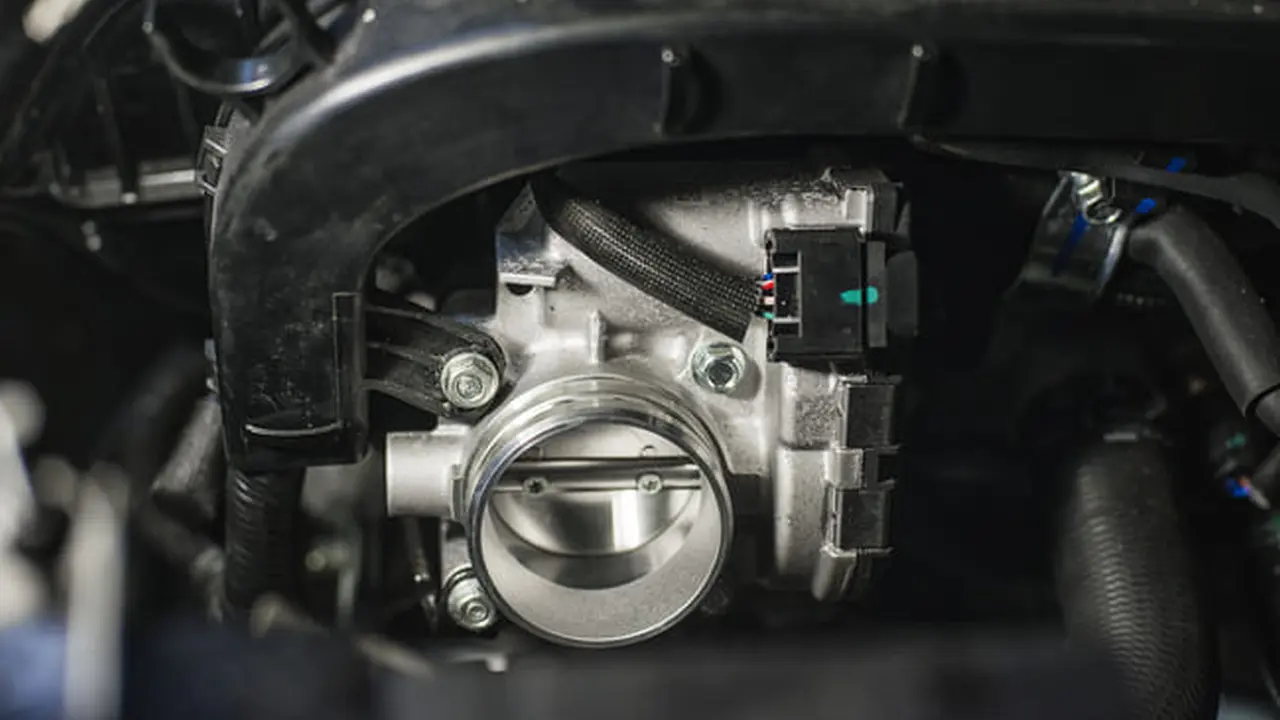
The Throttle Position Sensor (TPS) is an important sensor in a modern vehicle's engine management system. Its primary job is to provide information about the position of the throttle valve to the Engine Control Unit (ECU).
The throttle controls how much air enters the engine. The ECU needs to know how far the throttle is open so that it can properly calculate engine load and adjust fuel injection, ignition timing, idle control, transmission behavior, and other functions.
When the TPS operates correctly, the ECU receives a reliable signal that changes smoothly as the throttle position changes.
When the sensor, its wiring, connector, power supply, or the throttle body itself develops a problem, the ECU may receive an incorrect or unstable throttle-position signal.
This can cause symptoms such as:
-
Poor acceleration
-
Hesitation
-
Unstable idle
-
Engine stalling
-
Increased fuel consumption
-
Poor throttle response
-
Transmission shifting problems
-
Reduced engine power
-
Check Engine Light
-
Limp-home mode
-
Difficulty maintaining a stable engine speed
However, these symptoms do not automatically mean that the TPS itself has failed. Modern electronic throttle systems contain several related components, and a fault in another part of the system can produce very similar symptoms.
What Does the Throttle Position Sensor Do?
The TPS tells the ECU how much the throttle is open.
For example, the throttle may be:
-
Fully closed
-
Slightly open
-
Partially open
-
Mostly open
-
Fully open
The ECU uses this information together with data from other sensors to determine what the engine is being asked to do.
The TPS signal can influence:
-
Fuel injection
-
Ignition timing
-
Engine load calculations
-
Idle control
-
Acceleration enrichment
-
Deceleration fuel control
-
Automatic transmission shift strategy
-
Torque management
-
Cruise control operation
-
Electronic throttle control
The exact functions depend on the vehicle and engine management system.
How Does a TPS Work?
Traditional throttle position sensors commonly use a potentiometer.
A potentiometer contains a resistive track and a moving contact connected mechanically to the throttle shaft.
As the throttle opens and closes, the contact moves along the resistive track.
This changes the output voltage sent to the ECU.
The ECU monitors this voltage and interprets it as throttle position.
A typical sensor circuit may include:
-
A reference voltage
-
A ground connection
-
A signal wire
In many systems, the reference voltage is approximately 5 volts, although the exact design varies by manufacturer.
The signal voltage changes according to throttle position.
The important characteristic is that the signal should change smoothly and predictably as the throttle moves.
What Is a Dual TPS?
Modern vehicles often use more than one throttle-position signal.
Electronic throttle bodies commonly contain two throttle position sensors, sometimes called TPS1 and TPS2.
These sensors provide redundant information to the ECU.
The two signals are designed to have a specific relationship with each other.
The ECU constantly compares them.
If the signals disagree beyond the permitted range, the ECU can recognize a potential fault.
This is an important safety feature because the throttle controls engine power.
A problem in one sensor should not be allowed to go unnoticed.
TPS in an Electronic Throttle Body
Older vehicles often used a mechanical throttle cable.
When the driver pressed the accelerator pedal, the cable physically opened the throttle valve.
Modern vehicles increasingly use electronic throttle control, often called drive-by-wire.
In this system, there is no conventional mechanical cable connecting the accelerator pedal directly to the throttle plate.
Instead, the accelerator pedal has its own position sensors.
The ECU receives the accelerator-pedal signal and commands an electric motor inside the throttle body.
The throttle position sensors then report the actual throttle-valve position back to the ECU.
The system can therefore be summarized as:
Accelerator pedal → Accelerator pedal sensors → ECU → Throttle motor → Throttle valve → TPS feedback → ECU
This distinction is important because a vehicle with electronic throttle control can have a throttle-related problem even when the TPS itself is functioning correctly.
TPS vs. Accelerator Pedal Position Sensor
The TPS and accelerator pedal position sensor are not the same component.
The Throttle Position Sensor monitors the position of the throttle valve.
The Accelerator Pedal Position Sensor (APP) monitors the position of the accelerator pedal.
In a drive-by-wire vehicle, the driver presses the pedal, the APP sensors report the driver's request to the ECU, and the ECU determines how much the electronic throttle should open.
The TPS then confirms the actual position of the throttle.
Therefore, if the accelerator pedal signal is correct but the throttle does not move as commanded, the problem may be in the throttle body or its control system.
If the throttle moves correctly but the feedback signal is incorrect, the TPS circuit may be the problem.
What Are the Symptoms of a Bad TPS?
A faulty TPS can produce a wide variety of symptoms.
The most common include:
-
Poor throttle response
-
Hesitation during acceleration
-
Engine stalling
-
Rough or unstable idle
-
Surging
-
Reduced engine power
-
Difficulty accelerating
-
Increased fuel consumption
-
Transmission shift problems
-
Cruise control problems
-
Check Engine Light
-
Limp mode
-
Intermittent engine performance
The exact symptoms depend on how the sensor fails.
A sensor with a completely dead signal can behave differently from a sensor that produces an intermittent or noisy signal.
Poor Throttle Response
One of the most common TPS-related symptoms is poor throttle response.
The driver may press the accelerator and experience a delay before the engine responds.
The response may also feel inconsistent.
For example, the vehicle may accelerate normally with a small amount of throttle but hesitate when the pedal is pressed further.
If the ECU does not receive a reliable throttle-position signal, it may not be able to respond correctly to changes in driver demand.
Hesitation During Acceleration
A failing TPS can cause hesitation when accelerating.
This may be particularly noticeable when the throttle moves through a specific position.
A worn potentiometer can develop a damaged or contaminated section on its resistive track.
When the sensor reaches that position, the output signal may become unstable or momentarily drop out.
The ECU may interpret this as an implausible throttle movement.
The result can be hesitation, jerking, or temporary loss of power.
Unstable Idle
The TPS can also affect idle behavior.
The ECU needs to know whether the throttle is closed or nearly closed during idle.
If the sensor incorrectly reports that the throttle is slightly open, or if the signal fluctuates, the ECU may have difficulty maintaining stable engine operation.
The driver may notice:
-
Fluctuating RPM
-
Rough idle
-
High idle speed
-
Low idle speed
-
Engine shaking
-
Occasional stalling
However, idle problems have many other possible causes, including vacuum leaks, dirty throttle bodies, idle control problems, ignition faults and fuel-system issues.
Engine Stalling
A severely faulty TPS can contribute to engine stalling.
If the ECU suddenly receives an implausible throttle signal, it may alter fuel delivery, ignition timing or throttle control.
This can cause the engine to lose stable operation.
Stalling may occur:
-
When releasing the accelerator
-
During deceleration
-
When coming to a stop
-
During sudden acceleration
-
When shifting between gears
-
When the throttle passes through a particular position
The operating conditions can provide important clues during diagnosis.
Increased Fuel Consumption
A faulty throttle-position signal can affect engine load calculations and fuel-control strategies.
If the ECU receives incorrect information about throttle opening, it may not control fueling as efficiently as it should.
This can contribute to increased fuel consumption.
However, poor fuel economy should not automatically be attributed to the TPS.
Other possible causes include:
-
Faulty oxygen sensor
-
MAF sensor problems
-
MAP sensor problems
-
Injector problems
-
Incorrect fuel pressure
-
Thermostat problems
-
Engine misfires
-
Tire pressure
-
Driving conditions
A diagnostic test is necessary to identify the actual cause.
Reduced Engine Power
A TPS fault can trigger a protective strategy.
Modern vehicles continuously monitor throttle-related signals because the throttle is directly associated with engine torque.
If the ECU detects an unsafe or implausible throttle position, it may limit engine power.
The driver may then see messages such as:
-
Reduced Engine Power
-
Electronic Throttle Control Fault
-
Check Engine
-
Engine Management Fault
The vehicle may enter limp mode.
In this situation, the engine may still run but respond poorly to accelerator input.
Check Engine Light
A TPS-related electrical or performance problem can trigger the Check Engine Light.
The ECU may detect conditions such as:
-
Signal voltage too high
-
Signal voltage too low
-
Signal intermittent
-
Throttle position disagreement
-
Throttle position not matching the commanded position
-
TPS correlation problems
The exact diagnostic trouble code depends on the vehicle manufacturer and throttle-control system.
Common OBD-II codes can include throttle-position and throttle-actuator-related codes, but the exact code should always be interpreted according to the vehicle's specific diagnostic strategy.
Transmission Shifting Problems
This symptom is often overlooked.
Automatic transmissions use information about engine load and driver demand when determining shift timing and pressure control.
Throttle position is one of the inputs that can influence this strategy.
If the ECU receives an incorrect throttle-position signal, the transmission may receive incorrect engine-load information.
Possible symptoms include:
-
Harsh shifting
-
Delayed shifting
-
Early shifting
-
Late shifting
-
Unusual downshifts
-
Gear hunting
-
Torque-converter behavior changes
This does not mean that the transmission itself is necessarily defective.
A throttle-position problem can sometimes create symptoms that appear to originate from the transmission.
Cruise Control Problems
Cruise control can also be affected by throttle-related faults.
The cruise control system needs accurate information about throttle position and engine operating conditions.
If the ECU detects an unreliable throttle signal, it may disable cruise control as a safety measure.
In some vehicles, cruise control may stop functioning even though the vehicle drives normally under manual accelerator input.
This can be a useful diagnostic clue, although it is not proof of a TPS failure.
Can a TPS Fail Intermittently?
Yes.
An intermittent TPS problem can be particularly difficult to diagnose.
The sensor may work normally most of the time but produce an incorrect signal at a particular throttle position.
A potentiometer-type sensor can develop wear in a specific section of its internal resistive track.
The signal may then become noisy, jump suddenly, or briefly drop out.
The driver may experience an occasional hesitation without any obvious mechanical problem.
A scan tool capable of displaying live throttle-position data can be very useful in this situation.
Can a Dirty Throttle Body Cause TPS Symptoms?
Yes, but the distinction is important.
The TPS measures throttle position; it does not measure whether the throttle body is dirty.
However, heavy carbon deposits around the throttle plate can interfere with throttle movement and affect the relationship between commanded and actual throttle position.
A dirty throttle body can therefore create symptoms that resemble a TPS problem.
Possible symptoms include:
-
Rough idle
-
Poor throttle response
-
Stalling
-
Hesitation
-
Incorrect idle behavior
Cleaning the throttle body may solve the problem in some cases.
However, electronic throttle bodies should be cleaned according to the manufacturer's procedure because aggressive or incorrect handling can damage the throttle mechanism or create calibration problems.
Can Wiring Problems Cause TPS Faults?
Absolutely.
The sensor itself may be perfectly healthy while its electrical circuit is defective.
Potential problems include:
-
Broken signal wire
-
Poor ground
-
Corroded connector
-
Loose terminal
-
Damaged insulation
-
Short circuit
-
Open circuit
-
Poor reference-voltage supply
A wiring fault can produce exactly the same symptoms as a failed sensor.
This is why replacing the TPS immediately after seeing a throttle-related trouble code is not always the correct repair.
How Is a TPS Diagnosed?
A proper diagnosis normally starts with the diagnostic trouble codes and live data.
A technician may inspect the throttle body and wiring before performing electrical measurements.
Important checks can include:
-
Reference voltage
-
Sensor ground
-
Signal voltage
-
Signal stability
-
TPS1 and TPS2 correlation
-
Commanded throttle position
-
Actual throttle position
-
Accelerator pedal position
-
Throttle actuator operation
The throttle signal should generally change smoothly as the throttle moves.
Sudden jumps, dropouts, unrealistic readings or disagreement between redundant sensors can indicate a problem.
Testing a TPS With a Multimeter
A multimeter can sometimes be used to test a traditional TPS.
The technician checks the reference voltage, ground and signal circuit.
The throttle is then moved slowly through its operating range while the signal is monitored.
A healthy potentiometer-type TPS should normally produce a smooth change in voltage.
If the signal suddenly drops, jumps or becomes intermittent at a particular position, the sensor may be worn or damaged.
However, the exact expected voltage range varies between vehicles.
For this reason, testing should be performed according to the manufacturer's wiring diagram and specifications.
Blindly applying a generic voltage value can lead to an incorrect diagnosis.
Testing an Electronic Throttle Body
Electronic throttle bodies require a different approach.
The throttle plate is controlled by an electric motor, and the ECU continuously monitors its position.
A diagnostic scanner can often display:
-
Accelerator pedal position
-
Commanded throttle angle
-
Actual throttle angle
-
TPS sensor values
-
Throttle motor status
-
Fault codes
The technician can compare commanded and actual values.
If the ECU commands the throttle to open but the actual position does not follow correctly, the problem may involve the motor, mechanical mechanism, wiring, power supply, or position sensors.
Does a TPS Need Calibration?
Some vehicles require a throttle or throttle-position relearn procedure after replacing the throttle body or certain related components.
Other systems automatically learn the required values.
The procedure can vary considerably between manufacturers.
Depending on the vehicle, relearning may involve:
-
A scan-tool procedure
-
Ignition cycling
-
Specific accelerator-pedal sequences
-
Engine operating procedures
-
Automatic ECU adaptation
Therefore, the correct manufacturer's procedure should be followed.
A new throttle body or TPS can sometimes operate incorrectly if the required relearn procedure has not been completed.
Can You Drive With a Bad TPS?
It depends on the severity of the fault.
A mild intermittent problem may allow the vehicle to continue operating temporarily, but it can cause unpredictable throttle response.
A severe fault can cause:
-
Loss of power
-
Stalling
-
Limp mode
-
Poor acceleration
-
Unpredictable engine response
Because throttle control is directly related to vehicle acceleration, a serious TPS or electronic throttle fault should not be ignored.
If the vehicle enters limp mode or develops unpredictable accelerator response, it is safer to have the vehicle inspected rather than continuing to drive normally.
Is Replacing the TPS Always Necessary?
No.
Before replacing the sensor, the technician should determine whether the problem is actually caused by the TPS.
The fault could instead be:
-
Throttle-body contamination
-
Damaged wiring
-
Connector corrosion
-
Poor electrical ground
-
Incorrect reference voltage
-
Accelerator pedal sensor problem
-
Throttle motor problem
-
ECU issue
-
Mechanical throttle restriction
On some modern vehicles, the TPS is integrated into the throttle body.
In such designs, the manufacturer may not provide the sensor as a separate service part.
This means the complete throttle body may need to be replaced if the internal position sensor has failed.
What Happens If the TPS Signal Is Too High or Too Low?
A TPS signal that is outside the expected range can cause the ECU to recognize an electrical fault.
A signal that is too low may indicate:
-
Signal wire shorted to ground
-
Faulty sensor
-
Poor reference supply
-
Wiring problem
-
Incorrect sensor position
A signal that is too high may indicate:
-
Signal wire shorted to voltage
-
Faulty sensor
-
Wiring fault
-
Incorrect sensor operation
The actual diagnosis depends on the vehicle's circuit design.
A diagnostic code describing high or low input should therefore be treated as a clue rather than a direct instruction to replace the sensor.
Can a Bad TPS Cause a High Idle?
It can contribute to abnormal idle behavior, but it is not the only possible cause.
If the ECU receives incorrect information about throttle position, it may interpret the throttle as being more open than it really is.
However, a high idle can also result from:
-
Vacuum leaks
-
Intake leaks
-
Dirty throttle body
-
Idle-control problems
-
PCV problems
-
EGR problems
-
Coolant temperature sensor problems
-
Throttle actuator faults
The entire air-management system should therefore be checked.
Can a Bad TPS Cause Misfires?
A TPS problem can indirectly contribute to poor combustion under certain conditions, but it is not normally the first component to suspect when an engine misfires.
A misfire is more commonly associated with problems involving:
-
Spark plugs
-
Ignition coils
-
Fuel injectors
-
Fuel pressure
-
Air leaks
-
Compression
-
Valve timing
If a TPS fault and misfire occur together, both problems should be diagnosed independently rather than assuming one automatically caused the other.
How Long Does a Throttle Position Sensor Last?
There is no universal replacement interval for a TPS.
A good-quality sensor can operate for many years and a very high number of throttle cycles.
Its lifespan depends on:
-
Sensor design
-
Vehicle usage
-
Heat exposure
-
Vibration
-
Electrical conditions
-
Throttle-body contamination
-
Manufacturing quality
A potentiometer-type TPS can gradually wear over time because of repeated mechanical movement.
Electronic throttle bodies may use non-contact sensing technology, which can reduce mechanical wear, although electronic and mechanical failures can still occur.
Final Thoughts
The Throttle Position Sensor (TPS) is a critical part of the engine management and electronic throttle-control system.
Its primary function is to tell the ECU the actual position of the throttle valve.
A healthy TPS should provide a stable and predictable signal as the throttle opens and closes.
When the sensor or its circuit develops a problem, the vehicle may experience poor throttle response, hesitation, unstable idle, stalling, reduced power, increased fuel consumption, transmission shifting problems, cruise control deactivation, Check Engine Light and limp mode.
However, these symptoms do not prove that the TPS itself is defective.
The throttle body, accelerator pedal sensors, wiring, connectors, reference-voltage supply, throttle motor and ECU can all produce similar symptoms.
For this reason, proper diagnosis should involve checking diagnostic trouble codes, examining live data, inspecting the wiring and comparing commanded and actual throttle position.
On vehicles with electronic throttle control, the relationship between the accelerator pedal, ECU, throttle motor and dual throttle-position sensors is particularly important.
In short, a TPS problem should be treated as a throttle-control system diagnosis, not simply as a sensor replacement job. Correctly identifying the source of the problem can prevent unnecessary parts replacement and ensure that the vehicle's throttle system operates safely and reliably.