TR
TR EN
EN

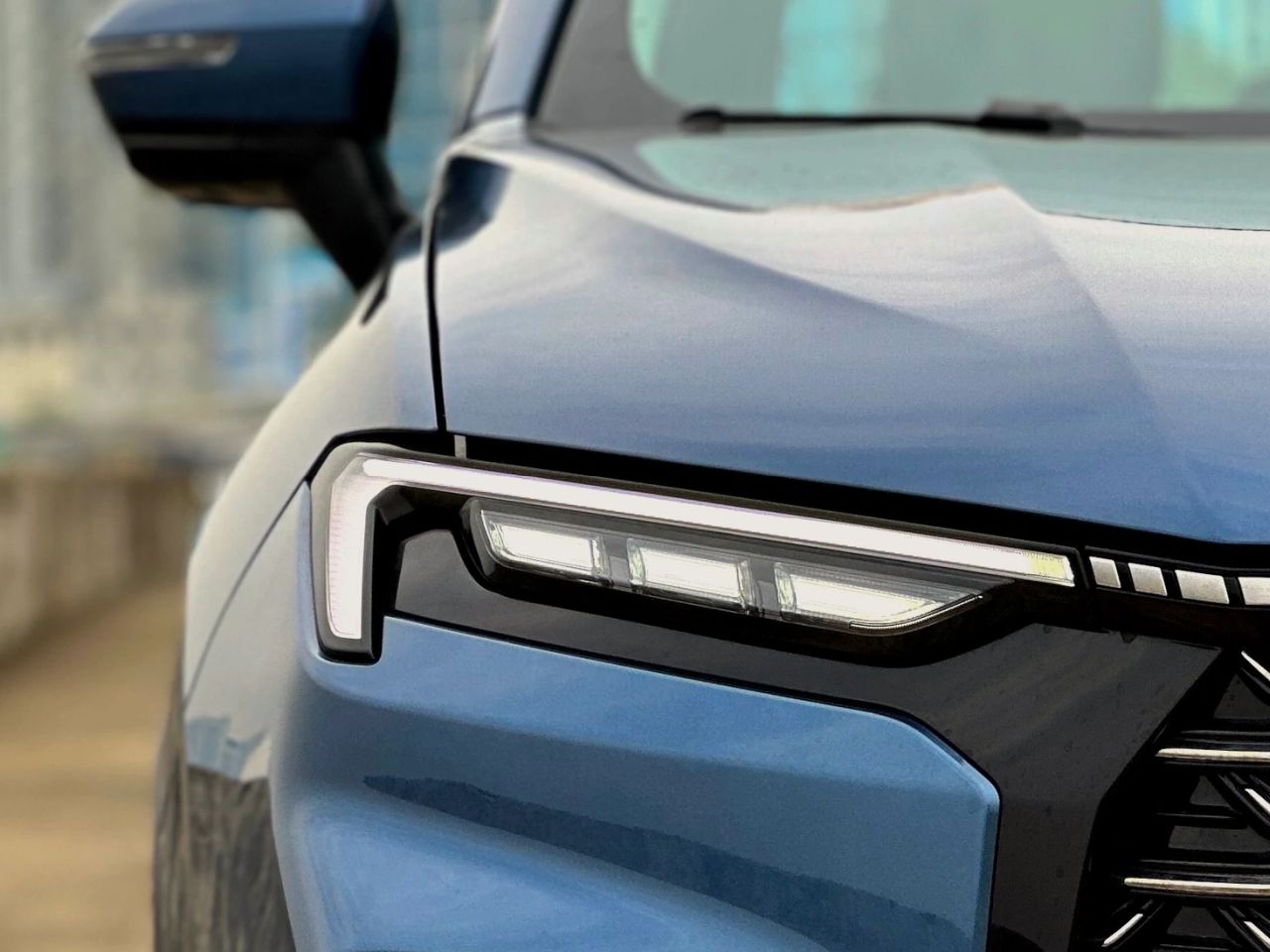
What Are Daytime Running Lights (DRL)? What Are the Causes of DRL Failure?
Daytime Running Lights, commonly abbreviated as DRL, are lighting systems designed to make a vehicle more visible to other road users during daylight hours.
Unlike low-beam headlights, DRLs are primarily intended for vehicle visibility rather than illuminating the road. They help approaching drivers, pedestrians, cyclists, and other road users recognize the presence and position of the vehicle.
DRLs are now standard equipment on many modern vehicles. Depending on the vehicle, they may use LED technology, halogen bulbs, or an integrated lighting module controlled electronically by the vehicle's body control system.
Although a daytime running light may appear to be a simple lamp, its operation can involve the lighting switch, body control module, fuses, wiring, connectors, LED drivers, sensors, and vehicle software.
How Do Daytime Running Lights Work?
The basic purpose of a DRL is simple: when the vehicle is running and certain conditions are met, the daytime running lights automatically illuminate.
The exact operating logic varies between manufacturers.
A typical system may consider:
-
Engine running status
-
Ignition status
-
Vehicle speed
-
Parking brake status
-
Gear position
-
Ambient light level
-
Headlight switch position
-
Low-beam headlight status
-
Vehicle configuration
-
Body control module commands
In some vehicles, the DRLs illuminate as soon as the engine starts. In others, they activate only after the vehicle begins moving.
Modern vehicles frequently control DRLs electronically rather than using a simple independent switch.
What Is the Purpose of Daytime Running Lights?
The primary purpose of DRLs is to increase daytime conspicuity.
A vehicle can be difficult to notice during certain daylight conditions, especially against bright backgrounds, trees, buildings, or changing weather.
DRLs provide a recognizable light source that helps other road users identify the vehicle.
They are particularly useful in situations such as:
-
Bright daylight
-
Overcast weather
-
Driving through shaded areas
-
Approaching intersections
-
Driving on roads surrounded by trees
-
Changing light conditions
-
Certain tunnels or transitional areas
DRLs should not be confused with headlights. Their primary job is to make the vehicle easier to see.
What Is the Difference Between DRL and Low-Beam Headlights?
The two systems perform different functions.
Daytime Running Lights
DRLs are designed mainly to make the vehicle visible to others during the day. They generally produce a relatively focused light output and do not replace headlights when road illumination is required.
Low-beam headlights
Low beams are designed both to illuminate the road ahead and to make the vehicle visible to other road users.
Therefore, DRLs should not be treated as a substitute for low beams at night.
This distinction becomes particularly important because some vehicles automatically switch between DRLs and headlights depending on ambient lighting conditions.
What Are the Main Types of Daytime Running Lights?
DRLs can be designed in several different ways.
LED daytime running lights
LEDs are extremely common in modern vehicles because they provide high efficiency, long service life, compact dimensions, and design flexibility.
Many LED DRLs are integrated into the headlight or front lighting assembly.
Halogen DRLs
Older vehicles may use conventional halogen bulbs for daytime running lights.
These systems are generally simpler and may use a replaceable bulb.
Integrated LED light strips
Some vehicles use long LED strips incorporated into the headlight design. These may function as DRLs as well as part of the vehicle's position or parking lighting system, depending on the vehicle.
Reduced-intensity high-beam systems
Some vehicles use the high-beam bulb or another existing lighting circuit at reduced intensity to perform the daytime running light function.
The exact configuration depends on the manufacturer.
What Are the Symptoms of Daytime Running Light Failure?
A DRL failure does not always mean that the light completely stops working.
Common symptoms include:
-
One DRL does not illuminate
-
Both DRLs do not illuminate
-
DRLs work intermittently
-
DRL flickers
-
DRL is noticeably dimmer than the other side
-
DRL changes color
-
DRL turns off while driving
-
DRL warning appears on the dashboard
-
Lighting malfunction warning appears
-
DRL works when cold but fails when hot
-
LED strip works partially
-
DRL does not switch on automatically
-
DRL remains illuminated when it should turn off
These symptoms can help determine whether the problem is related to the light source, wiring, power supply, or electronic control system.
One Daytime Running Light Is Not Working
When only one DRL is defective, the problem is usually localized to that side.
Possible causes include:
-
Failed LED module
-
Burned-out bulb
-
Damaged connector
-
Corroded terminals
-
Broken wire
-
Poor ground
-
Water entering the lamp
-
Faulty LED driver
-
Internal circuit-board failure
-
Physical damage to the lamp
If the vehicle uses a replaceable bulb, checking the bulb is an obvious first step.
However, many modern LED DRLs do not have a conventional replaceable bulb. In such cases, replacing a bulb will not solve the problem.
Both Daytime Running Lights Are Not Working
If both DRLs stop working simultaneously, a common electrical or control problem is more likely.
Possible causes include:
-
Blown fuse
-
Faulty relay, if equipped
-
Lighting control problem
-
Body control module fault
-
Configuration issue
-
Wiring problem
-
Low vehicle voltage
-
Headlight switch problem
-
Conditions preventing DRL activation
If both sides stopped working at approximately the same time, it is usually better to investigate the common power or control circuit before replacing individual lamps.
Why Does One DRL Work and the Other Does Not?
This is one of the most common DRL complaints.
If one side works normally while the other does not, possible causes include:
Failed LED or bulb
The light source itself may have reached the end of its service life.
Poor connector connection
A loose connector can interrupt the electrical supply.
Corrosion
Water and road contamination can corrode terminals.
Broken wiring
A damaged wire can interrupt power or ground.
Internal lamp failure
Integrated LED assemblies can develop internal circuit or driver failures.
Poor ground
A defective ground can cause dimming, flickering, or complete failure.
The diagnosis should focus on the affected side first.
Why Does the DRL Flicker?
Flickering usually indicates an unstable electrical or electronic condition.
Possible causes include:
-
Loose connector
-
Corroded terminal
-
Damaged wiring
-
Poor ground
-
Failing LED driver
-
Voltage instability
-
Internal LED circuit failure
-
Control module problem
If the DRL flickers when the connector or wiring harness is moved, the electrical connection should be inspected carefully.
If it flickers only after the vehicle becomes hot, an electronic component or LED driver that becomes unstable with temperature may be responsible.
Why Is One DRL Dimmer Than the Other?
A significant brightness difference between the two sides is not normal.
Possible causes include:
-
Aging LED
-
Partially failed LED array
-
Poor electrical connection
-
Voltage drop
-
Poor ground
-
Corroded connector
-
Faulty LED driver
-
Damaged lens
-
Internal lamp contamination
A voltage and circuit test can help determine whether the lamp is receiving the correct electrical supply.
Why Does the DRL Change Color?
LED DRLs can sometimes develop a noticeable color difference as they age or as individual LEDs begin to fail.
For example, one side may appear:
-
Whiter
-
Bluish
-
Yellowish
-
Dimmer
-
More uneven
A different bulb or replacement lamp can also produce a color mismatch.
If an integrated LED assembly changes color, the problem may be internal and the complete module or lamp may need to be replaced.
Why Does the DRL Work Sometimes and Stop Sometimes?
Intermittent operation is often caused by an electrical connection or electronic component that changes behavior because of vibration, temperature, or moisture.
Common causes include:
-
Loose connector
-
Corroded terminals
-
Broken wire
-
Poor ground
-
Water intrusion
-
Failing LED driver
-
Thermal protection
-
Internal circuit-board fault
-
Control module issue
Intermittent faults are often best diagnosed while the problem is actually occurring.
Why Does the DRL Stop Working When the Headlights Turn On?
This can be completely normal.
Many vehicles are designed so that DRLs operate under specific daytime conditions and change state when the normal headlights or parking lights are activated.
Depending on the vehicle, the DRLs may:
-
Turn off completely
-
Become dimmer
-
Change from DRL mode to position-light mode
-
Switch to another lighting function
Therefore, a DRL that turns off when the low beams are switched on is not automatically defective.
The vehicle's factory lighting strategy should be checked before diagnosing this behavior as a fault.
Can a Blown Fuse Cause DRL Failure?
Yes.
The DRL circuit may have its own fuse or share protection with another lighting circuit.
A blown fuse can interrupt power to the DRL system.
Possible reasons for a blown fuse include:
-
Short circuit
-
Damaged wiring
-
Water intrusion
-
Failed lamp assembly
-
Faulty LED driver
-
Incorrect bulb
-
Electrical installation problems
The fuse should always be replaced with the specified rating.
Installing a higher-rated fuse can allow excessive current to flow and potentially damage the wiring or electrical components.
DRL Fuse Keeps Blowing
A fuse that repeatedly blows should never be treated as a normal bulb problem.
There is likely an underlying electrical fault.
Potential causes include:
-
Shorted wire
-
Damaged connector
-
Water inside the lamp
-
Internal lamp failure
-
Faulty LED driver
-
Incorrect aftermarket lighting
-
Wiring installed incorrectly
The circuit should be tested to identify the source of excessive current before another fuse is installed.
Can a Bad Battery Cause DRL Problems?
Yes, particularly on modern vehicles.
A weak battery or charging system can cause unusual behavior in electronically controlled lighting systems.
Possible symptoms may include:
-
DRLs not activating
-
Lighting warnings
-
Flickering
-
Multiple electrical warnings
-
Intermittent operation
-
Control module communication errors
However, a low battery voltage should not automatically be blamed for a DRL problem.
The battery and charging system should be tested if other electrical systems are also behaving abnormally.
Can the Alternator Cause DRL Problems?
Yes.
The alternator is responsible for maintaining the vehicle's electrical supply while the engine is running.
If charging voltage is unstable or outside the expected range, electronically controlled lighting can behave abnormally.
Possible signs of a charging problem include:
-
DRL flickering
-
Headlight brightness changing
-
Battery warning light
-
Multiple electrical warnings
-
Difficulty starting
-
Other electronic systems malfunctioning
If the DRL problem occurs together with several unrelated electrical problems, the charging system should be investigated.
Can a Bad Ground Cause DRL Failure?
Absolutely.
A lighting circuit needs both a proper power supply and a reliable return path.
A poor ground connection can cause:
-
Dim DRL
-
Flickering
-
Intermittent operation
-
Complete failure
-
Voltage drop
-
Unusual electrical behavior
Ground points should be checked for corrosion, looseness, damaged wiring, and poor contact.
Can Water Damage a Daytime Running Light?
Yes.
DRLs are located at the front of the vehicle and can be exposed to rain, car washing, road spray, mud, and moisture.
A properly sealed lamp should resist normal exposure, but damaged housings or seals can allow water to enter.
Water can damage:
-
LED circuits
-
Connectors
-
Terminals
-
LED drivers
-
Circuit boards
-
Reflectors
-
Internal contacts
If water repeatedly appears inside the lamp, simply drying the lamp is not a complete repair. The source of the water entry must also be identified.
What Causes Condensation Inside a DRL?
Light condensation can sometimes occur because of temperature differences and the ventilation characteristics of a lamp assembly.
However, persistent heavy condensation or visible water droplets may indicate a sealing or ventilation problem.
Possible causes include:
-
Cracked lens
-
Damaged housing
-
Failed seal
-
Incorrectly installed component
-
Damaged ventilation path
Long-term moisture exposure can eventually lead to electrical failure.
Can a Faulty DRL Cause a Dashboard Warning?
Yes.
Modern vehicles can monitor lighting circuits electronically.
The vehicle may detect:
-
Open circuit
-
Short circuit
-
Abnormal current
-
LED failure
-
Communication failure
-
Control module malfunction
Depending on the vehicle, a warning such as a lighting malfunction message may appear on the instrument cluster.
Some systems can also store a diagnostic trouble code in the body control or lighting module.
Can an OBD Scanner Detect a DRL Problem?
A basic OBD-II scanner may not be able to diagnose a DRL fault.
Standard OBD-II primarily focuses on emissions-related systems. DRL faults are often handled by other vehicle modules.
A manufacturer-capable diagnostic scanner may communicate with:
-
Body Control Module
-
Lighting Control Module
-
Central Electronics Module
-
Headlight Control Module
-
Gateway Module
The available diagnostic functions vary between vehicle manufacturers.
A proper diagnostic scan can sometimes reveal whether the control module is detecting an open circuit, short circuit, LED failure, or communication problem.
How Are Daytime Running Light Problems Diagnosed?
A systematic approach is much more effective than replacing parts randomly.
Start by determining whether:
-
One DRL has failed
-
Both DRLs have failed
-
The problem is intermittent
-
The light is dim
-
The light flickers
-
A warning message is present
Then inspect the relevant components.
Check the lamp
Look for physical damage, moisture, cracked housing, and abnormal LED operation.
Check the fuse
If the vehicle uses a dedicated DRL fuse, inspect it.
Check the connector
Look for corrosion, loose terminals, damaged locking mechanisms, and water contamination.
Check the wiring
Inspect the harness for cuts, crushing, stretching, and previous repairs.
Check power and ground
A multimeter can help determine whether the lamp is receiving the expected electrical supply and whether the ground circuit is intact.
Scan the vehicle
If the lighting system is electronically controlled, scan the relevant body or lighting modules for stored faults and check live data where available.
Can a DRL Bulb Be Replaced?
That depends on the design.
Older systems may use replaceable bulbs.
Many modern vehicles use integrated LED assemblies where the LEDs are permanently incorporated into the lamp.
In these systems, the repair may involve:
-
LED module replacement
-
LED driver replacement
-
Circuit-board repair
-
Complete lamp assembly replacement
The correct solution depends on the manufacturer's design.
Can LED DRLs Be Repaired?
Sometimes.
An LED DRL may fail because of the LED itself, an electronic driver, wiring, connector, or internal circuit board.
Some specialist repair facilities can repair electronic lighting assemblies.
However, repairability depends on the lamp's construction, availability of replacement components, sealing requirements, and manufacturer design.
A repaired lamp must also remain properly sealed against moisture.
Why Does a New DRL Not Work After Replacement?
If a replacement lamp does not work, several possibilities should be considered.
The replacement component may be:
-
Incorrect specification
-
Incompatible with the vehicle
-
Defective
-
Improperly installed
-
Not configured correctly
There may also be an unrelated wiring, fuse, ground, or control-module problem.
Some electronically controlled lighting systems may require coding, configuration, or initialization after component replacement.
Can Aftermarket LED DRLs Cause Problems?
Yes.
Poor-quality aftermarket DRLs can create electrical and optical problems.
Potential issues include:
-
Incorrect current consumption
-
Warning messages
-
Flickering
-
Poor heat management
-
Incorrect beam or light distribution
-
Wiring overload
-
Water leakage
-
CAN bus compatibility problems
-
Premature LED failure
An aftermarket lighting modification should be electrically compatible with the vehicle and comply with applicable lighting regulations.
Why Does the DRL Turn Off While Driving?
If the DRL suddenly switches off while driving, the cause can range from an electrical connection problem to a control-module decision.
Possible causes include:
-
Loose connector
-
Broken wire
-
Overheating LED driver
-
Voltage problem
-
Internal lamp failure
-
Control module fault
-
Communication problem
-
Software or configuration issue
If the light returns after the vehicle is switched off and restarted, an intermittent electronic fault becomes more likely.
Why Does the DRL Not Turn On Automatically?
Possible causes include:
-
Faulty light sensor
-
Incorrect lighting switch position
-
Body control module problem
-
Configuration issue
-
Low voltage
-
Faulty wiring
-
Software problem
-
Conditions that intentionally disable DRLs
Some vehicles use an ambient light sensor or other logic to determine which lighting mode should be active.
Therefore, understanding the vehicle's normal DRL operating strategy is important before diagnosing a fault.
Does the Parking Brake Affect DRL Operation?
On some vehicles, yes.
Certain manufacturers configure DRLs to behave differently depending on whether the vehicle is stationary or moving, and the parking brake may be one of the conditions used by the control system.
Therefore, a DRL that does not illuminate while the vehicle is stationary may not necessarily be defective.
The exact behavior depends on the vehicle.
What Is the Difference Between DRL Failure and Headlight Failure?
A DRL failure does not necessarily mean that the headlight itself is defective.
Modern headlight assemblies can contain several independent functions, such as:
-
DRL
-
Position light
-
Low beam
-
High beam
-
Turn signal
-
Cornering light
-
Adaptive lighting
One function can fail while the others continue to work normally.
This is especially common with complex LED headlight assemblies.
Is It Safe to Drive With a Failed DRL?
A failed DRL should be repaired, but the immediate safety implications depend on the lighting conditions and the vehicle's other functioning lights.
The main purpose of DRLs is daytime visibility rather than road illumination.
If the failure occurs at night, the more important concern is whether the vehicle's required headlights, position lights, and other lighting systems are functioning correctly.
Local laws and vehicle inspection requirements should also be considered because lighting requirements vary between countries.
How Can DRL Failures Be Prevented?
Some failures cannot be prevented because LEDs and electronic components eventually age. However, several practices can reduce the risk of problems.
Avoid:
-
Installing incompatible bulbs
-
Using oversized fuses
-
Poor-quality wiring modifications
-
Ignoring water inside the lamp
-
High-pressure washing directly at damaged seals
-
Unapproved lighting modifications
It is also useful to inspect the front lighting assemblies after accidents or bumper repairs.
A small connector or wiring problem can become a much more expensive lamp failure if moisture and corrosion are allowed to continue.
Common Mistakes When Diagnosing DRL Problems
One of the biggest mistakes is assuming that every DRL failure is a bulb problem.
Other common mistakes include:
Replacing the lamp without testing the power supply
If the circuit has no power, a new lamp will not solve the problem.
Installing a higher-rated fuse
This can create a dangerous overload condition.
Ignoring the ground circuit
A poor ground can produce symptoms that look like a defective lamp.
Ignoring moisture
Water can damage modern LED electronics.
Using an unsuitable aftermarket LED
Physical compatibility does not guarantee electrical or optical compatibility.
Replacing an expensive headlight assembly without diagnosis
A connector, wire, fuse, or control problem can sometimes be repaired for a fraction of the cost of a complete headlight assembly.
Final Thoughts
Daytime Running Lights are an important part of modern vehicle safety because they improve the vehicle's visibility to other road users during daylight.
Although the basic concept is simple, modern DRL systems can be surprisingly sophisticated. A single lighting assembly may contain LEDs, drivers, electronic circuits, connectors, control modules, and communication systems.
The most common DRL problems include complete failure, intermittent operation, flickering, dim lighting, color changes, moisture, blown fuses, wiring problems, poor grounds, and electronic control faults.
When diagnosing a DRL problem, it is important to determine whether the fault affects one side or both. From there, the bulb or LED assembly, fuse, power supply, ground, wiring, connectors, control module, and diagnostic codes can be checked systematically.
Most importantly, do not assume that a failed DRL automatically requires an expensive headlight replacement. In many cases, the actual cause may be a relatively simple electrical or connection problem.