TR
TR EN
EN

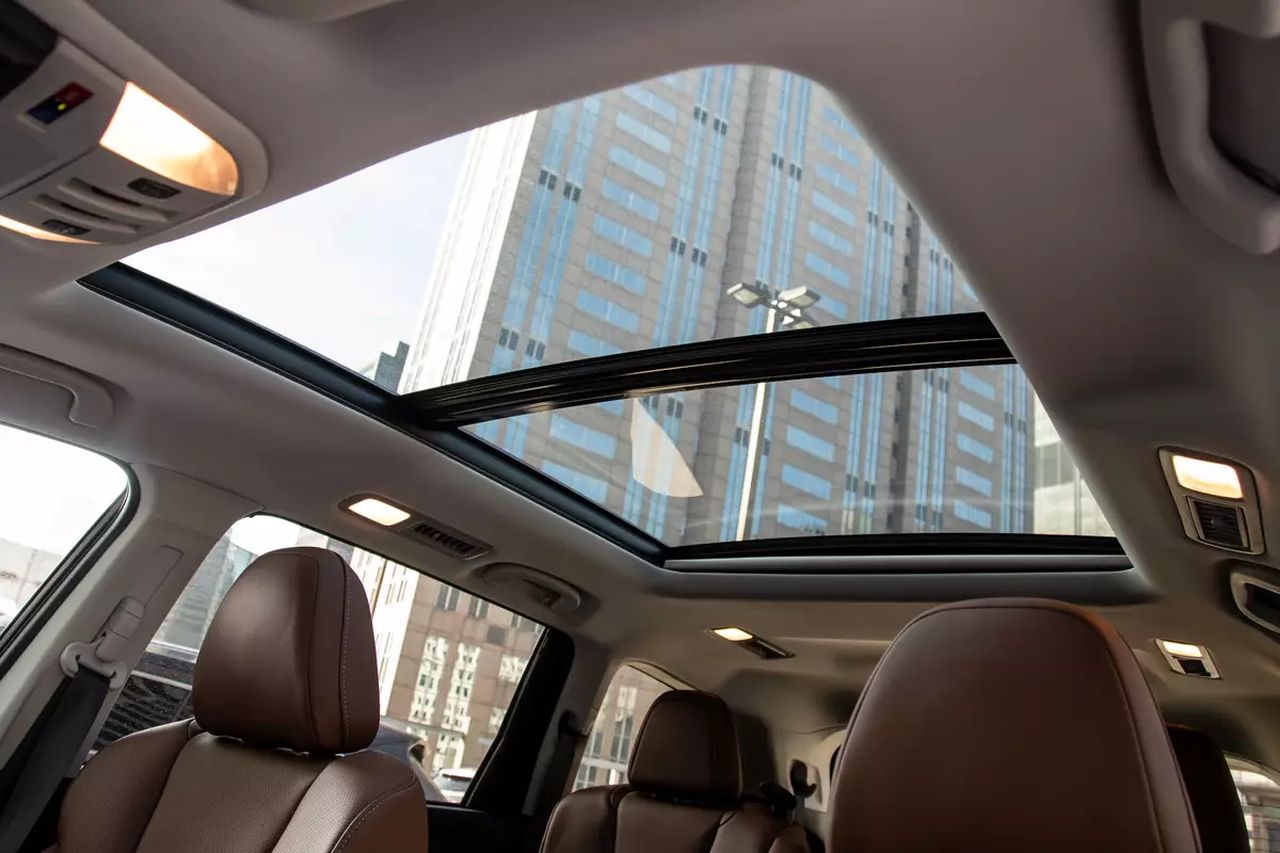
What Is a Sunroof? What Are the Common Sunroof Problems?
A sunroof is a movable or fixed glass panel installed in the roof of a vehicle. Depending on its design, it can tilt upward, slide backward, or open partially or completely to allow fresh air and natural light into the passenger compartment.
Sunroofs are available in many different forms. Some vehicles have a simple manually operated glass panel, while modern cars may use an electrically powered system with motors, cables, guide rails, control modules, anti-pinch protection, position sensors, and automatic closing functions.
Although a sunroof is generally a reliable system, mechanical wear, electrical faults, blocked drainage channels, damaged seals, water intrusion, and incorrect adjustment can eventually cause problems.
What Is the Purpose of a Sunroof?
A sunroof provides several functions beyond simply opening the roof.
It can:
-
Allow fresh air into the cabin
-
Increase natural light
-
Improve ventilation
-
Reduce the need to open side windows
-
Provide a more open feeling inside the vehicle
-
Improve cabin comfort in suitable weather conditions
Some sunroofs are designed mainly for ventilation, while others provide a large opening that allows significant airflow.
What Is the Difference Between a Sunroof and a Moonroof?
The terms sunroof and moonroof are often used interchangeably, but there is a traditional distinction.
A conventional sunroof may be made from metal or glass and can open to expose part of the roof.
A moonroof generally refers to a transparent glass roof panel that allows light into the cabin even when the panel is closed.
In modern automotive terminology, however, manufacturers and drivers frequently use the two terms differently.
What Types of Sunroofs Are Available?
Sunroofs come in several designs.
Pop-up sunroof
A simple panel tilts upward from the rear or front edge. It is mechanically simpler than a fully sliding sunroof.
Sliding sunroof
The glass panel moves backward to create an opening.
Tilt-and-slide sunroof
The panel can both tilt upward and slide backward.
Panoramic sunroof
A panoramic roof uses a much larger glass area and may extend over a significant portion of the vehicle roof.
Panoramic roof with multiple panels
Some vehicles use two or more glass panels, with one section capable of opening.
Electrically operated sunroof
Modern vehicles commonly use an electric motor controlled by a switch or electronic module.
The larger and more complex the system, the more components there are that can potentially develop faults.
How Does an Electric Sunroof Work?
An electric sunroof generally operates through a motor connected to a mechanical drive mechanism.
Depending on the design, the system may include:
-
Electric motor
-
Drive gears
-
Cables
-
Guide rails
-
Sliding mechanisms
-
Glass panel
-
Switch
-
Position sensors
-
Anti-pinch system
-
Control module
-
Drain channels
-
Seals and weatherstripping
When the driver presses the sunroof switch, the control system activates the motor.
The motor rotates the drive mechanism, which moves the glass along its guides.
Some systems use a separate control module, while others integrate sunroof control into a body electronics module.
What Are the Most Common Sunroof Problems?
Sunroof problems can be mechanical, electrical, or related to water management.
Common symptoms include:
-
Sunroof does not open
-
Sunroof does not close
-
Sunroof opens but will not close completely
-
Sunroof moves slowly
-
Sunroof stops halfway
-
Sunroof makes clicking or grinding noises
-
Sunroof gets stuck
-
Sunroof becomes misaligned
-
Sunroof leaks water
-
Wind noise develops around the glass
-
Sunroof rattles while driving
-
One side moves higher than the other
-
Anti-pinch protection activates unnecessarily
-
Sunroof reverses while closing
-
Sunroof loses its automatic function
-
Sunroof switch does not respond
-
Sunroof works intermittently
The exact symptom often provides an important clue about the underlying problem.
Sunroof Does Not Open
If the sunroof does not respond when the switch is pressed, the problem may be electrical or mechanical.
Possible causes include:
-
Blown fuse
-
Faulty sunroof switch
-
Failed electric motor
-
Low battery voltage
-
Wiring problem
-
Faulty control module
-
Seized mechanism
-
Damaged guide rails
-
Mechanical obstruction
-
Lost initialization or calibration
If there is no motor sound at all, the electrical supply and control system should be checked before assuming the mechanical mechanism is damaged.
Sunroof Does Not Close
A sunroof that opens but refuses to close can have several causes.
Possible causes include:
-
Obstruction in the guide rails
-
Anti-pinch activation
-
Motor problem
-
Damaged cable
-
Mechanical binding
-
Switch problem
-
Position sensor problem
-
Low voltage
-
Lost calibration
-
Control module fault
If the sunroof begins closing and then immediately reverses, the anti-pinch system deserves particular attention.
Sunroof Opens but Stops Halfway
A sunroof that starts moving normally and then stops can indicate mechanical resistance or a problem with the motor or position monitoring system.
Possible causes include:
-
Dirty guide rails
-
Lack of appropriate lubrication
-
Damaged sliding components
-
Bent guide mechanism
-
Worn drive cable
-
Motor overheating
-
Position sensor problem
-
Obstruction
-
Control module intervention
Repeatedly forcing the switch may make a mechanical problem worse.
Sunroof Moves Slowly
A slow-moving sunroof is often an early warning sign.
Possible causes include:
-
Dirty rails
-
Incorrect or insufficient lubrication
-
Mechanical friction
-
Worn gears
-
Weak motor
-
Damaged cables
-
Low electrical voltage
-
Excessive resistance from the glass mechanism
If the sunroof has gradually become slower over time, mechanical resistance is often worth investigating.
Sunroof Makes a Clicking Noise
A clicking sound can indicate a mechanical problem.
Possible causes include:
-
Worn gears
-
Damaged drive mechanism
-
Cable damage
-
Guide rail problems
-
Loose mounting components
-
Foreign objects in the mechanism
If the clicking occurs only while the sunroof is moving, the motor and drive mechanism should be inspected.
Continuing to operate a mechanism that is skipping teeth can eventually result in more serious damage.
Sunroof Makes a Grinding Noise
Grinding is generally not considered normal.
It can be caused by:
-
Dry or contaminated guide rails
-
Damaged gears
-
Worn cables
-
Broken plastic components
-
Misalignment
-
Foreign material
-
Motor or gearbox damage
A grinding noise should be investigated rather than ignored.
Sunroof Rattles While Driving
A rattling sunroof can be caused by several different issues.
Possible causes include:
-
Loose glass mounting
-
Worn guide components
-
Loose trim
-
Damaged seals
-
Panoramic roof frame movement
-
Loose sunshade components
-
Worn mechanical parts
A rattle that occurs only on rough roads can provide a useful clue because vibration is exposing mechanical play in the system.
One Side of the Sunroof Is Higher Than the Other
An uneven glass panel can indicate a mechanical alignment problem.
Possible causes include:
-
Misaligned guide rails
-
Damaged mounting points
-
Uneven adjustment
-
Cable synchronization problem
-
Bent components
-
Previous repair
-
Accident or roof damage
The glass should not simply be forced into position because incorrect adjustment can increase stress on the mechanism and seals.
Sunroof Leaks Water
Water leakage is one of the most common and frustrating sunroof problems.
However, a leaking sunroof does not necessarily mean that the glass seal has failed.
Most modern sunroofs are designed with drainage channels. Small amounts of water can enter the area around the glass and are then directed through drain tubes and discharged outside the vehicle.
Therefore, a clogged drain can cause a leak even when the glass seal itself is perfectly intact.
What Causes Sunroof Water Leaks?
Common causes include:
-
Blocked drain tubes
-
Dirt accumulation
-
Leaves and debris
-
Damaged drain hoses
-
Disconnected drain tubes
-
Damaged seals
-
Cracked sunroof frame
-
Incorrect glass adjustment
-
Damaged weatherstripping
-
Body seal problems
Water can enter through the roof area and travel along the headliner before appearing somewhere that is not directly below the sunroof.
This can make leak diagnosis surprisingly difficult.
What Are Sunroof Drain Channels?
Sunroof drain channels are designed to collect water around the glass panel and direct it away from the vehicle interior.
A typical system may have drainage points near the corners of the sunroof frame.
Drain tubes then carry water through the vehicle's body and release it underneath the vehicle.
The exact design varies between vehicles.
What Happens When Sunroof Drains Become Blocked?
A blocked drain prevents water from leaving the sunroof frame properly.
Water can then accumulate around the drainage tray and eventually overflow into the vehicle.
Possible symptoms include:
-
Wet headliner
-
Water around the A-pillars
-
Wet floor carpet
-
Damp interior trim
-
Water near the overhead console
-
Musty smell
-
Fogging windows
-
Electrical problems
A blocked drain should be addressed before repeated water exposure causes interior or electrical damage.
Can Compressed Air Be Used to Clean Sunroof Drains?
Care is necessary.
Using excessive compressed-air pressure can potentially disconnect a drain hose from its fitting.
If the hose becomes disconnected inside the roof pillar, water may be redirected into the vehicle instead of outside.
A safer approach is generally to inspect the drain opening and use an appropriate flexible cleaning method recommended for the vehicle.
Do not force rigid wires deep into the drain tube because they can damage or puncture the hose.
Why Does Water Appear Around the A-Pillar?
Water from a sunroof drainage system can sometimes travel through the roof structure or pillar.
A blocked or disconnected front drain can result in water appearing around:
-
A-pillar trim
-
Headliner
-
Dashboard edge
-
Door area
-
Front floor
This is why simply drying the visible water does not solve the problem.
The drainage path itself must be checked.
Can a Sunroof Seal Cause Water Leaks?
Yes, but the seal is not always the first suspect.
The weather seal around the glass can become:
-
Hardened
-
Cracked
-
Deformed
-
Dirty
-
Damaged
However, many sunroof designs intentionally allow some water to pass into the drainage system rather than relying on the glass seal to block every drop.
Therefore, a leaking sunroof should be diagnosed as a complete water-management system.
Sunroof Wind Noise
A sudden increase in wind noise can indicate a change in the sealing or alignment of the glass.
Possible causes include:
-
Incorrect glass height
-
Damaged weatherstrip
-
Loose trim
-
Misaligned panel
-
Worn seal
-
Roof damage
-
Panoramic roof mechanism movement
If the wind noise appeared immediately after sunroof repair, glass alignment should be checked.
Sunroof Switch Failure
The sunroof switch is responsible for sending opening and closing commands.
A faulty switch may cause:
-
No response
-
Intermittent operation
-
Only one direction working
-
Incorrect operation
-
Delayed response
Before replacing the switch, the power supply and control circuit should be checked.
Sunroof Motor Failure
The electric motor is one of the key components of a powered sunroof.
A failed motor may produce:
-
No movement
-
Clicking
-
Humming without movement
-
Slow operation
-
Intermittent operation
-
Motor overheating
A motor should not automatically be replaced just because the sunroof does not move.
A seized mechanism can overload a perfectly functional motor and produce similar symptoms.
Sunroof Motor Overheating
Sunroof motors can become hot if they are forced to work against excessive mechanical resistance.
Possible causes include:
-
Dirty rails
-
Mechanical binding
-
Misalignment
-
Damaged cables
-
Obstruction
-
Incorrect adjustment
If the motor repeatedly overheats, continued operation can eventually damage the motor itself.
What Is the Sunroof Anti-Pinch System?
Modern sunroofs may include an anti-pinch function.
This system is designed to detect excessive resistance while the roof is closing.
If the system detects an abnormal increase in resistance, it may stop the closing movement and reverse the glass.
This feature is designed to reduce the risk of trapping an object or a person's body part.
Why Does the Sunroof Close and Then Reopen?
If the sunroof starts closing and then reverses, the anti-pinch system may be detecting excessive resistance.
Possible causes include:
-
Dirty guide rails
-
Mechanical friction
-
Obstruction
-
Incorrect glass alignment
-
Weak motor
-
Damaged mechanism
-
Lost calibration
-
Faulty position sensing
It is important not to disable or bypass the anti-pinch system.
Sunroof Calibration and Initialization
Some electrically operated sunroofs require initialization after:
-
Battery replacement
-
Battery disconnection
-
Motor replacement
-
Sunroof repair
-
Control module replacement
-
Loss of position information
During initialization, the system learns the correct open, closed, and tilt positions.
If the sunroof has lost its learned positions, it may:
-
Stop unexpectedly
-
Reverse while closing
-
Lose one-touch operation
-
Fail to close correctly
-
Behave differently after battery disconnection
The correct initialization procedure varies by vehicle.
Can Disconnecting the Battery Cause Sunroof Problems?
Yes.
On some vehicles, disconnecting the battery can erase or reset learned positions.
This does not necessarily mean that the sunroof has a mechanical failure.
If the sunroof worked correctly before the battery was disconnected and behaves differently afterward, initialization may be required.
The exact procedure should follow the vehicle manufacturer's instructions.
Sunroof Problems After a Battery Replacement
After replacing a battery, a sunroof may lose its automatic open/close function or anti-pinch calibration.
Depending on the vehicle, the system may require a reset or relearn procedure.
Other body systems may also require initialization after battery power is interrupted.
Can a Sunroof Problem Be Caused by a Low Battery?
Yes.
An electric sunroof motor requires sufficient voltage to operate correctly.
Low system voltage can cause:
-
Slow movement
-
Intermittent operation
-
Motor stopping
-
Anti-pinch activation
-
Loss of initialization
-
Control module errors
If several electrical systems are experiencing problems at the same time, the battery and charging system should be checked.
Sunroof Problems After a Car Accident
A roof or body impact can affect sunroof operation even if the glass itself appears undamaged.
Possible damage includes:
-
Bent frame
-
Misaligned rails
-
Damaged mounting points
-
Broken glass
-
Distorted roof panel
-
Damaged drain channels
-
Seal deformation
-
Motor mechanism misalignment
A sunroof that develops problems immediately after an accident should be inspected for structural and alignment damage.
Panoramic Sunroof Problems
Panoramic roofs can have more complex failure modes because they often contain larger glass panels, multiple seals, motorized mechanisms, sunshades, and additional drainage paths.
Common panoramic roof problems include:
-
Water leaks
-
Cracking noises
-
Glass alignment problems
-
Sunshade failure
-
Motor problems
-
Broken guide components
-
Wind noise
-
Rattling
-
Drain blockage
Because of the size and weight of panoramic glass panels, repairs should be performed carefully.
Panoramic Sunroof Sunshade Does Not Work
Some panoramic roofs have a separate electrically operated sunshade.
The sunshade can have its own:
-
Motor
-
Drive mechanism
-
Guide rails
-
Switch command
-
Control circuit
Therefore, a sunshade failure does not necessarily mean that the glass roof itself has failed.
A jammed shade can also place additional load on its motor and drive mechanism.
Can a Sunroof Drain Cause Electrical Problems?
Yes.
Water from a blocked or disconnected drain can reach electrical components.
Depending on the vehicle design, water may affect:
-
Overhead controls
-
Interior lighting
-
Wiring connectors
-
Body control modules
-
Airbag-related wiring
-
Sensors
-
Interior electronics
This is one reason why a sunroof leak should not be ignored.
Can a Sunroof Leak Cause a Bad Smell?
Yes.
Persistent moisture inside the vehicle can lead to damp carpeting, insulation, and interior materials.
Over time, this can produce a musty smell.
If the vehicle develops a persistent damp odor together with a wet headliner or carpet, the sunroof drainage system should be one of the areas considered during diagnosis.
How Is a Sunroof Problem Diagnosed?
Diagnosis should begin with the symptom rather than replacing expensive parts.
First determine whether the problem is:
-
Electrical
-
Mechanical
-
Related to water drainage
-
Related to calibration
-
Related to the glass or seal
Then inspect the appropriate areas.
For a non-working sunroof:
Check the fuse, switch, wiring, power supply, motor, and control module.
For a slow or noisy sunroof:
Inspect the guide rails, mechanism, lubrication, cables, and motor.
For a leaking sunroof:
Inspect the drainage channels, drain tubes, seals, glass alignment, and roof frame.
For a sunroof that reverses while closing:
Check for obstruction, mechanical resistance, alignment, anti-pinch operation, and calibration.
Can an OBD Scanner Detect Sunroof Problems?
Sometimes.
A basic OBD-II scanner may not communicate with the sunroof system.
However, advanced diagnostic equipment can often access body electronics and other vehicle modules.
Depending on the manufacturer, faults may be stored in:
-
Body Control Module
-
Roof Control Module
-
Comfort Module
-
Central Electronics Module
-
Sunroof Control Module
A diagnostic scan can be particularly useful when the problem is related to sensors, calibration, communication, or electronic control.
Can a Sunroof Be Repaired?
In many cases, yes.
The repair depends on the failed component.
Possible repairs include:
-
Cleaning drainage channels
-
Reconnecting drain hoses
-
Replacing seals
-
Repairing wiring
-
Replacing switches
-
Replacing motors
-
Repairing guide mechanisms
-
Replacing cables
-
Adjusting glass alignment
-
Reinitializing the system
-
Replacing damaged glass
However, extensive panoramic roof damage can be considerably more expensive than a conventional sunroof repair.
Should Sunroof Rails Be Lubricated?
Appropriate lubrication can be useful, but the correct lubricant is important.
Not every grease is suitable for sunroof guide rails.
An unsuitable lubricant can:
-
Attract dirt
-
Damage seals
-
Contaminate drainage channels
-
Increase friction
-
Interfere with the mechanism
The lubricant specified by the vehicle manufacturer or sunroof system supplier should be used.
Over-lubrication can also be counterproductive.
How Can Sunroof Problems Be Prevented?
Regular inspection can help prevent many problems.
Useful practices include:
-
Keep the sunroof area clean
-
Remove leaves and debris
-
Inspect drainage openings
-
Keep the glass and seals clean
-
Listen for new noises
-
Do not force a stuck roof
-
Use the correct lubricant where specified
-
Check for water leaks after heavy rain
-
Inspect the system after roof or body repairs
-
Avoid operating the sunroof when frozen shut
-
Follow the manufacturer's maintenance recommendations
Do not use excessive force if the glass is frozen to the seals.
Trying to open a frozen sunroof can damage the motor, cables, seals, or glass mechanism.
Can You Drive With a Broken Sunroof?
It depends on the type of failure.
If the sunroof is securely closed and there is no structural damage, driving may be possible in some situations.
However, a sunroof that cannot close properly creates a risk of:
-
Water entering the cabin
-
Wind noise
-
Glass movement
-
Further mechanical damage
-
Interior electrical damage
If the glass is cracked, loose, or structurally damaged, the vehicle should be inspected before continued driving.
Final Thoughts
A sunroof combines several different systems into one convenient feature. Behind a simple opening glass panel can be an electric motor, drive mechanism, cables, guide rails, seals, drainage channels, sensors, anti-pinch protection, and electronic control.
The most common sunroof problems include failure to open or close, slow operation, clicking or grinding noises, rattling, uneven movement, water leaks, blocked drains, wind noise, switch failure, motor failure, and calibration problems.
One important point is that a leaking sunroof does not automatically mean that the glass seal needs to be replaced. Blocked or disconnected drainage channels are also common causes of water entering the cabin.
Likewise, a sunroof that refuses to close may not have a failed motor. Mechanical resistance, an obstruction, incorrect alignment, or a lost anti-pinch calibration can produce similar symptoms.
The best approach is therefore to diagnose the actual cause before replacing expensive components. Regular cleaning, correct lubrication, keeping drainage channels clear, and avoiding forced operation can significantly reduce the risk of major sunroof problems.