TR
TR EN
EN

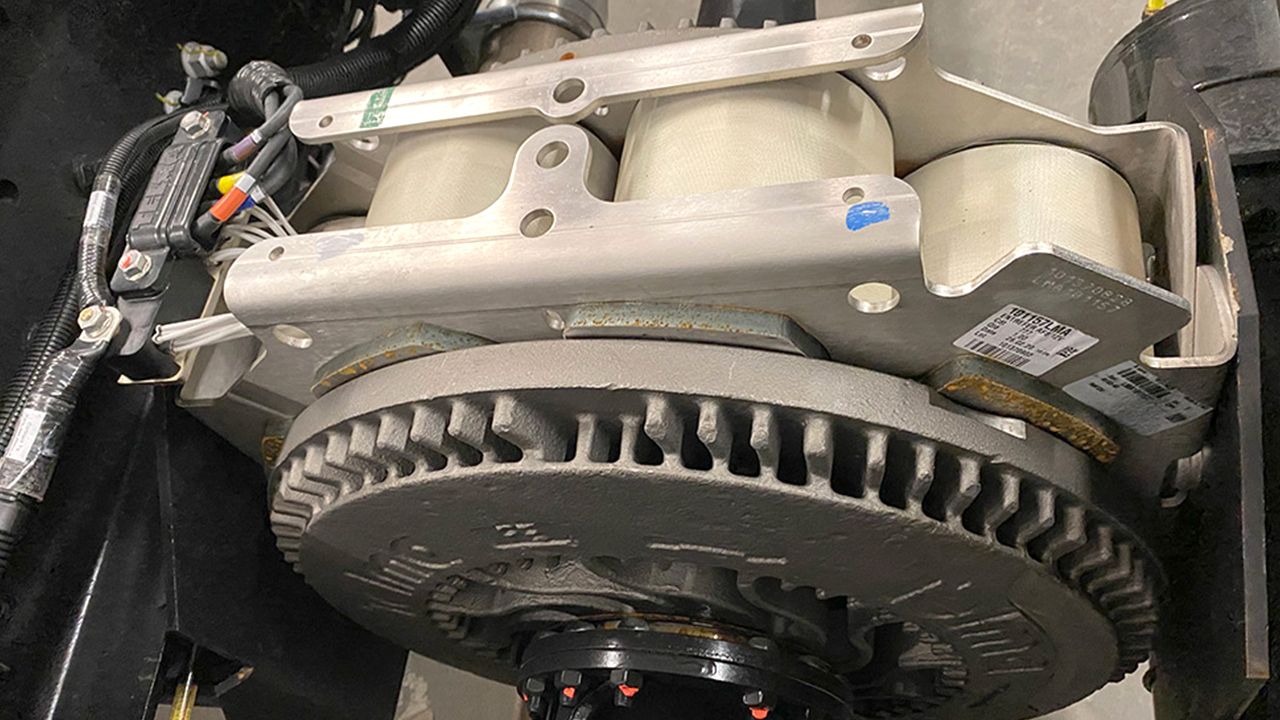
What Is a Retarder? How Does a Retarder Work? What Are the Symptoms of Retarder Failure?
A retarder is an auxiliary braking system designed primarily for heavy commercial vehicles such as trucks, buses, coaches, and long-haul vehicles.
Its main purpose is to slow the vehicle without relying entirely on the conventional service brakes.
This is particularly important when a heavy vehicle is traveling downhill for a long distance.
If the driver continuously uses the service brakes to control speed on a steep descent, the brake components can become extremely hot. Excessive heat can reduce braking performance and, in severe cases, cause brake fade.
A retarder helps prevent this by providing additional braking force through the drivetrain.
The system can slow the vehicle while reducing the workload placed on the conventional wheel brakes.
A retarder is therefore not normally a replacement for the service brake. It is an additional braking system that works alongside the vehicle's primary brakes.
Why Do Heavy Vehicles Need a Retarder?
A fully loaded truck or bus can weigh many times more than a passenger car.
When such a vehicle travels downhill, gravity continuously increases its speed.
The driver must therefore dissipate a considerable amount of kinetic and potential energy to maintain a safe speed.
Using the service brakes continuously would convert this energy into heat at the brake discs or drums.
A retarder provides another way to dissipate energy.
Depending on the type of retarder, the drivetrain's rotational energy is converted into heat through hydraulic resistance or electromagnetic forces.
This reduces the amount of braking work performed by the wheel brakes.
How Does a Retarder Work?
The exact operating principle depends on the type of retarder.
The two major technologies are:
-
Hydrodynamic retarder
-
Electromagnetic retarder
A hydrodynamic retarder uses fluid resistance.
An electromagnetic retarder uses electromagnetic forces.
Both systems create resistance against drivetrain rotation.
The basic concept can be expressed as:
Vehicle movement → Drivetrain rotation → Retarder resistance → Vehicle deceleration
The retarder does not normally stop the vehicle completely. Its primary function is controlled deceleration and speed maintenance, especially during prolonged braking conditions.
What Is a Hydrodynamic Retarder?
A hydrodynamic retarder uses a specially designed rotor and stator arrangement inside a housing filled with hydraulic fluid.
The rotor is connected to the drivetrain.
When the retarder is activated, fluid is introduced into the working chamber.
The rotating rotor accelerates the fluid, while the stationary stator redirects the fluid flow.
This interaction creates resistance against the rotor.
The resulting resistance produces braking torque that is transmitted through the drivetrain to the vehicle.
The energy generated by this process is converted mainly into heat.
How Does a Hydrodynamic Retarder Generate Braking Force?
The key principle is fluid resistance.
When the rotor spins through the fluid, it transfers energy to the fluid.
The stator interferes with the fluid's motion and increases the resistance against the rotating rotor.
The greater the resistance, the greater the braking torque produced by the retarder.
Braking force can be influenced by factors such as:
-
Retarder activation level
-
Drivetrain speed
-
Fluid quantity
-
Fluid temperature
-
Vehicle speed
-
Retarder design
At higher drivetrain speeds, a hydrodynamic retarder can produce substantial braking torque.
What Is an Electromagnetic Retarder?
An electromagnetic retarder creates braking torque using electromagnetic forces rather than hydraulic fluid resistance.
It generally consists of rotating and stationary components that create a magnetic field when the system is activated.
As the rotating component moves through the magnetic field, electrical currents are induced in conductive components.
These currents generate opposing electromagnetic forces.
The resulting resistance slows the rotating drivetrain.
The process is commonly associated with eddy-current braking.
How Does an Electromagnetic Retarder Generate Heat?
Although an electromagnetic retarder does not depend on hydraulic fluid to create the braking force, energy still has to go somewhere.
The vehicle's kinetic energy is converted into heat within the retarder components.
The heat must then be dissipated through the retarder and vehicle cooling system.
For this reason, temperature management is important even with electromagnetic designs.
Where Is a Retarder Installed?
The location depends on the vehicle and retarder design.
A retarder can be integrated into or mounted near components such as:
-
Transmission
-
Propeller shaft
-
Driveline
-
Differential
-
Gearbox output
Transmission-integrated retarders are particularly common in heavy commercial vehicles.
The exact arrangement depends on the manufacturer and drivetrain architecture.
What Is the Difference Between a Retarder and an Engine Brake?
A retarder and an engine brake are both auxiliary braking systems, but they work differently.
A retarder creates resistance within the drivetrain itself.
An engine brake uses the engine to absorb energy and create braking torque.
Depending on the engine design, engine braking may involve controlling fuel injection, exhaust flow, valve operation, or compression.
A retarder can therefore provide braking independently of the engine's combustion process.
Many heavy vehicles can use both systems together.
What Is the Difference Between a Retarder and a Service Brake?
The service brake is the vehicle's primary braking system.
It normally uses friction between brake pads and discs or brake shoes and drums to slow and stop the vehicle.
A retarder is an auxiliary system.
The service brakes are required for situations where the vehicle needs strong braking or must come to a complete stop.
The retarder is particularly useful for controlling speed over long periods.
A good way to understand the difference is:
Service brakes: Designed to slow and stop the vehicle.
Retarder: Designed primarily to reduce speed and control vehicle speed while reducing service-brake usage.
Does a Retarder Stop the Vehicle?
A retarder is generally not intended to bring a heavy vehicle to a complete stop.
Its braking torque decreases as drivetrain speed falls.
At very low speeds, a retarder becomes much less effective.
The service brakes therefore remain essential for final stopping.
The retarder should be considered a supplementary braking system rather than a replacement for the main brakes.
What Are the Advantages of a Retarder?
Retarders provide several important advantages for heavy vehicles.
They can:
-
Reduce service brake wear
-
Reduce brake temperature
-
Reduce brake fade risk
-
Improve downhill speed control
-
Increase brake component life
-
Improve driver control
-
Reduce maintenance requirements
-
Provide smooth auxiliary braking
-
Improve safety during long descents
For vehicles that regularly operate in mountainous areas, a retarder can be particularly valuable.
What Are the Symptoms of Retarder Failure?
A failing retarder can produce different symptoms depending on the type of system and the specific fault.
Common signs include:
-
Weak or missing retarder braking
-
Retarder does not activate
-
Retarder works intermittently
-
Retarder braking is weaker than normal
-
Retarder remains partially active
-
Unexpected braking resistance
-
Retarder warning light
-
Transmission or retarder fault code
-
Excessive retarder temperature
-
Hydraulic fluid leakage
-
Incorrect retarder fluid level
-
Abnormal noise
-
Electrical faults
-
Overheating
-
Reduced downhill speed control
A retarder problem should not be ignored, particularly when the vehicle regularly operates at high weight or on steep roads.
Retarder Has Little or No Braking Effect
One of the clearest symptoms is reduced braking performance.
The driver activates the retarder but receives little or no noticeable deceleration.
Possible causes include:
-
Low hydraulic fluid level
-
Hydraulic pressure problem
-
Solenoid valve fault
-
Control valve problem
-
Electrical failure
-
Speed sensor fault
-
Internal mechanical damage
-
Retarder control-system problem
-
Excessive component wear
The cause depends heavily on the retarder design.
Retarder Does Not Activate
If the retarder does not operate at all, the problem may be electrical or mechanical.
Possible causes include:
-
Faulty activation switch
-
Damaged steering-column or dashboard control
-
Wiring problem
-
Blown fuse
-
Faulty relay
-
Control module problem
-
Speed sensor failure
-
Transmission communication problem
-
Solenoid problem
-
Internal retarder fault
Modern heavy vehicles often integrate the retarder into the transmission and electronic control architecture.
A diagnostic scan can therefore be important.
Retarder Works Intermittently
An intermittent retarder fault can be particularly difficult to diagnose.
The system may work normally when cold but fail after prolonged operation.
Possible causes include:
-
Excessive temperature
-
Electrical connection problem
-
Faulty sensor
-
Solenoid malfunction
-
Low fluid level
-
Internal hydraulic problem
-
Control module fault
Monitoring the system while the problem is occurring can provide important diagnostic information.
Retarder Braking Is Weaker Than Before
A gradual reduction in braking performance may indicate deterioration rather than a sudden electrical failure.
On a hydrodynamic retarder, possible causes include:
-
Incorrect fluid level
-
Fluid degradation
-
Hydraulic pressure loss
-
Internal leakage
-
Control valve problems
-
Wear within the retarder
On an electromagnetic retarder, possible causes can include:
-
Electrical supply problems
-
Coil problems
-
Control-system faults
-
Excessive temperature
-
Sensor or communication faults
Retarder Remains Active
A retarder that does not fully release can create unusual drivetrain resistance.
The vehicle may feel as though it is being held back even when the driver has released the retarder control.
Possible causes include:
-
Stuck control valve
-
Solenoid malfunction
-
Electrical command problem
-
Faulty switch
-
Control module issue
-
Hydraulic pressure not releasing correctly
This condition should be investigated quickly because continuous retarder operation can create excessive heat.
Retarder Overheating
Overheating is an important warning sign.
In a hydrodynamic system, the retarder converts mechanical energy into heat through fluid resistance.
That heat must be transferred away through the cooling system.
Possible causes of excessive temperature include:
-
Prolonged high retarder load
-
Insufficient cooling
-
Low coolant flow
-
Restricted heat exchanger
-
Incorrect fluid level
-
Internal hydraulic problem
-
Retarder remaining partially engaged
An electromagnetic retarder also produces heat and can overheat if used beyond its intended operating conditions.
Hydraulic Fluid Leakage
Hydrodynamic retarders depend on hydraulic fluid.
A leak can reduce the amount of fluid available for proper operation.
Leaks may occur around:
-
Seals
-
Gaskets
-
Hydraulic connections
-
Housing joints
-
Pipes
-
Cooling circuit connections
Fluid leakage should be repaired before continued operation causes further damage.
Low Retarder Fluid Level
If the retarder has a dedicated fluid circuit or specified oil level, the correct level is important.
Insufficient fluid can affect pressure generation, cooling, lubrication, and braking performance depending on the system design.
However, the correct fluid and inspection procedure vary considerably between retarder designs.
The manufacturer's specification should always be followed.
Wrong or Contaminated Fluid
Using an incorrect fluid can cause serious problems.
A hydrodynamic retarder may depend on specific fluid characteristics for:
-
Viscosity
-
Heat transfer
-
Lubrication
-
Seal compatibility
-
Hydraulic performance
Contaminated fluid can also affect valves and internal components.
The fluid specification should therefore never be guessed.
Retarder Makes an Abnormal Noise
A retarder normally operates with relatively controlled mechanical and hydraulic sounds.
A sudden increase in noise may indicate a problem.
Possible causes include:
-
Bearing wear
-
Gear damage
-
Internal mechanical damage
-
Cavitation
-
Low fluid level
-
Damaged rotating components
A grinding or metallic noise should receive particular attention.
What Causes Retarder Failure?
Retarder failures can be caused by several different factors.
Common causes include:
-
Lack of maintenance
-
Incorrect fluid
-
Low fluid level
-
Fluid contamination
-
Excessive temperature
-
Cooling-system problems
-
Electrical faults
-
Sensor failure
-
Solenoid failure
-
Wiring problems
-
Control module faults
-
Mechanical wear
-
Seal failure
-
Internal component damage
The retarder itself is not always the source of the problem.
The transmission, cooling system, electrical system, or vehicle control network can also affect retarder operation.
Can a Retarder Failure Damage the Transmission?
A retarder is closely integrated with the drivetrain on many vehicles.
A serious mechanical problem can therefore have consequences beyond the retarder itself.
For example, abnormal bearing loads, lubrication problems, excessive heat, or damaged rotating components may affect nearby drivetrain components.
However, a retarder warning or loss of retarder function does not automatically mean that the transmission is damaged.
Proper diagnosis is required.
Can a Retarder Cause Transmission Overheating?
It can contribute to thermal load because retarding converts vehicle energy into heat.
In a hydrodynamic system, the retarder may transfer significant heat into its fluid and cooling circuit.
If the cooling system cannot dissipate the heat effectively, temperatures can rise.
This is why many heavy vehicles have dedicated or integrated heat exchangers and sophisticated temperature monitoring.
How Is a Retarder Diagnosed?
Diagnosis should begin with the vehicle's diagnostic system.
Modern heavy vehicles can monitor the retarder through the transmission or vehicle control network.
A technician may check:
-
Diagnostic trouble codes
-
Retarder activation commands
-
Vehicle speed
-
Transmission speed
-
Retarder temperature
-
Hydraulic pressure
-
Fluid level
-
Solenoid operation
-
Electrical voltage
-
Wiring continuity
-
Cooling-system operation
The exact diagnostic procedure depends on the vehicle manufacturer and retarder type.
Why Are Diagnostic Trouble Codes Important?
Modern retarders are electronically controlled or monitored in many commercial vehicles.
A fault may therefore generate a specific diagnostic code.
The code can help identify whether the problem is related to:
-
Electrical circuits
-
Sensors
-
Solenoids
-
Communication
-
Hydraulic pressure
-
Temperature
-
Control modules
However, replacing a component solely because a fault code points toward it is not always appropriate.
The code identifies a monitored abnormal condition, not necessarily the failed physical component.
Can a Retarder Be Repaired?
Yes, depending on the type and severity of the failure.
Possible repairs include:
-
Replacing seals
-
Repairing hydraulic connections
-
Replacing solenoids
-
Repairing wiring
-
Replacing sensors
-
Correcting fluid level
-
Flushing contaminated fluid where permitted
-
Repairing cooling-system faults
-
Rebuilding internal components
Major internal failures may require specialist rebuilding or replacement of the complete retarder assembly.
How Can Retarder Problems Be Prevented?
Proper maintenance is essential.
Important practices include:
-
Use the correct specified fluid
-
Maintain the correct fluid level
-
Inspect for leaks
-
Monitor operating temperature
-
Keep the cooling system in good condition
-
Follow the manufacturer's service intervals
-
Check electrical connections
-
Diagnose warning lights promptly
-
Avoid ignoring unusual noises
-
Avoid excessive continuous retarder use beyond the vehicle's operating recommendations
Correct use is particularly important during long downhill journeys.
How Should a Retarder Be Used on a Long Downhill?
The retarder should be used to help control vehicle speed before the vehicle becomes too fast.
A driver should not wait until excessive speed has already developed and then expect the retarder alone to recover the situation.
The appropriate gear and retarder setting should be selected according to the road, vehicle load, gradient, and manufacturer's recommendations.
The service brakes remain available when stronger braking is required.
The exact operating strategy varies by vehicle and transmission.
Does a Retarder Reduce Brake Wear?
Yes.
One of the primary advantages of a retarder is reducing the amount of work performed by the friction brakes.
Less service-brake usage generally means:
-
Lower brake pad or lining wear
-
Lower brake disc or drum wear
-
Lower brake temperatures
-
Reduced brake fade risk
-
Longer service intervals in suitable operating conditions
This can be particularly valuable for vehicles that regularly carry heavy loads.
Is a Retarder the Same as a Jake Brake?
No.
A Jake Brake is a specific type of engine compression-release brake technology.
A retarder is a separate auxiliary braking system that creates resistance in the drivetrain.
Both are used to slow heavy vehicles, but they operate through different mechanisms.
Some vehicles can use an engine brake and a retarder together.
Does Every Truck Have a Retarder?
No.
Not every truck or bus is equipped with a retarder.
Some vehicles rely on other auxiliary braking technologies, such as:
-
Exhaust brakes
-
Engine brakes
-
Compression-release brakes
-
Transmission retarders
-
Electromagnetic retarders
The choice depends on the vehicle, engine, transmission, intended application, weight, and manufacturer.
Can You Drive With a Faulty Retarder?
A vehicle may remain operational if the retarder fails, because the conventional service brake system is still responsible for normal stopping.
However, this does not mean that the vehicle should continue operating normally without addressing the problem.
A failed retarder can be particularly important for vehicles operating:
-
In mountainous areas
-
With heavy loads
-
On long descents
-
In high-temperature conditions
-
On routes requiring frequent speed control
The driver should follow the vehicle manufacturer's fault instructions and have the system inspected as soon as practical.
Final Thoughts
A retarder is an auxiliary braking system designed to help heavy vehicles control their speed while reducing reliance on the conventional service brakes.
It is especially useful for trucks, buses, coaches, and other heavy vehicles that regularly travel on long downhill sections.
Hydrodynamic retarders use fluid resistance to create braking torque, while electromagnetic retarders use electromagnetic forces. Both systems convert the vehicle's kinetic energy into heat and therefore require appropriate thermal management.
Common retarder failure symptoms include weak braking, complete loss of retarder operation, intermittent operation, excessive temperature, abnormal noises, hydraulic leakage, warning lights, and diagnostic trouble codes.
However, a retarder problem does not always mean that the retarder itself has failed. Sensors, wiring, solenoids, transmission controls, hydraulic circuits, cooling systems, and communication networks can all affect its operation.
Because a retarder is an important auxiliary braking system on heavy vehicles, any significant loss of braking assistance or abnormal temperature should be investigated promptly.
When correctly maintained and used, a retarder can greatly reduce service-brake workload, improve downhill speed control, reduce brake wear, and provide an important additional layer of braking performance for heavy commercial vehicles.