TR
TR EN
EN

What Is an Anti-Lag System (ALS)? How Does It Work?
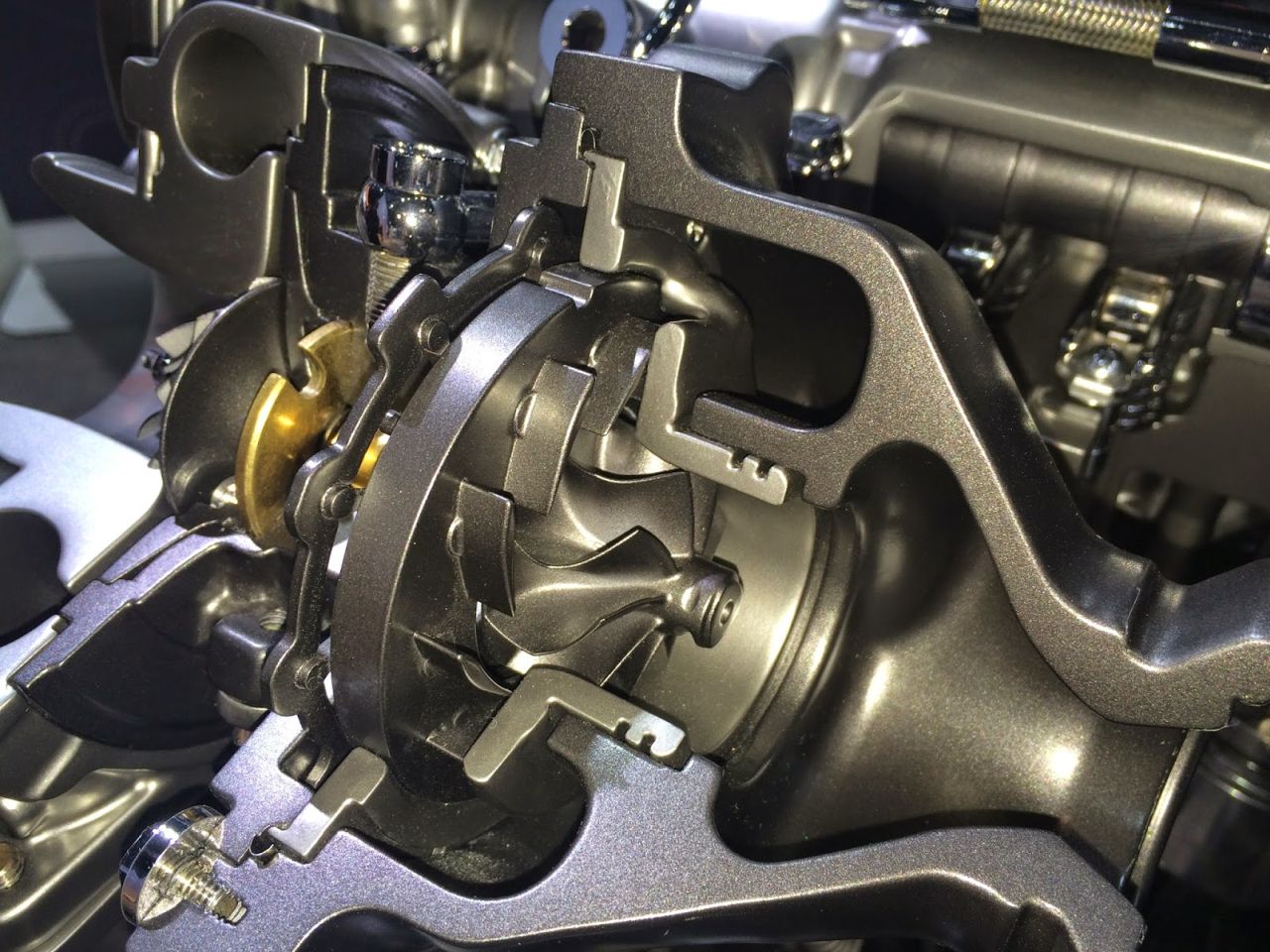
An Anti-Lag System, commonly abbreviated as ALS, is a technology used primarily on turbocharged engines to reduce turbo lag and keep the turbocharger spinning when the driver is not applying full throttle.
An Anti-Lag System, commonly abbreviated as ALS, is a technology used primarily on turbocharged engines to reduce turbo lag and keep the turbocharger spinning when the driver is not applying full throttle.
The basic problem is simple.
A turbocharger uses exhaust gas energy to spin its turbine. When the driver lifts off the accelerator or closes the throttle, exhaust gas flow decreases. As a result, the turbocharger can slow down.
When the driver presses the accelerator again, the engine must produce enough exhaust energy to accelerate the turbocharger back to the required speed.
The delay between pressing the accelerator and obtaining significant turbocharger boost is commonly known as turbo lag.
An anti-lag system attempts to reduce this delay by maintaining turbocharger speed or generating exhaust energy even when the engine is not producing normal full-load exhaust flow.
This can make throttle response much faster.
Why Was Anti-Lag Developed?
Anti-lag technology became particularly well known through motorsport.
Rally cars and other competition vehicles frequently need to alternate between braking, lifting off the throttle, and accelerating again.
A conventional turbocharged engine can lose turbo speed during these transitions.
When the driver gets back on the throttle, the turbocharger needs time to recover its speed.
In competition, even a short delay can affect acceleration out of a corner.
ALS was therefore developed to keep the turbocharger closer to its operating speed during periods when the throttle is reduced.
What Is Turbo Lag?
Turbo lag is the delay between a change in throttle demand and the turbocharger producing the desired increase in boost pressure.
It is influenced by many factors, including:
-
Turbocharger size
-
Turbocharger inertia
-
Engine displacement
-
Exhaust flow
-
Exhaust manifold design
-
Wastegate operation
-
Throttle strategy
-
Engine speed
-
Gear selection
-
Engine calibration
A larger turbocharger can produce high airflow and power at high engine speeds, but its greater rotating inertia can make response more difficult.
An anti-lag system is one method of addressing this response problem.
How Does an Anti-Lag System Work?
There is no single ALS design.
Different systems use different methods to maintain turbocharger speed.
The general concept is to create or maintain energy on the turbine side of the turbocharger while the driver is reducing engine torque.
Depending on the system, this can involve:
-
Retarding ignition timing
-
Supplying additional fuel
-
Allowing additional air into the engine
-
Bypassing or controlling the throttle
-
Managing exhaust flow
-
Controlling the wastegate
-
Using secondary air
-
Using electronically controlled valves
The exact strategy depends on the engine and the ALS calibration.
What Happens Inside the Engine During Anti-Lag Operation?
In a conventional gasoline engine, combustion is normally timed so that the expanding gases efficiently push the piston downward.
An anti-lag strategy can deliberately alter combustion timing.
For example, ignition may be significantly retarded.
This means combustion continues later in the expansion process and can increase exhaust-gas temperature and energy.
The resulting exhaust energy can help keep the turbocharger rotating.
Some systems also introduce additional air or fuel to create combustion in the exhaust system.
This can generate extremely high exhaust temperatures.
Why Does Retarding Ignition Help the Turbocharger?
Ignition timing determines when the air-fuel mixture is ignited.
Under normal conditions, the ignition event is optimized to produce useful cylinder pressure at the appropriate point in the combustion cycle.
During an anti-lag event, ignition can be intentionally delayed.
The combustion process then occurs later, allowing more energy to reach the exhaust side.
This can increase turbine energy even when the engine is producing relatively little useful crankshaft torque.
The technique is effective, but it comes with significant thermal and mechanical consequences.
Does Anti-Lag Inject Fuel When the Throttle Is Closed?
Some anti-lag systems can use additional fuel, but the exact strategy varies.
A traditional motorsport ALS may use fuel and highly retarded ignition timing to generate energy in the exhaust system.
Modern electronically controlled systems can use much more sophisticated strategies.
It is important to understand that not every anti-lag system works by simply dumping fuel into the exhaust.
Some systems use additional air, throttle control, ignition timing, valve timing, or combinations of these methods.
What Is Exhaust Anti-Lag?
Exhaust-based anti-lag is one of the most aggressive approaches.
The objective is to maintain energy at the turbine even when the throttle is reduced.
This can involve combustion continuing very late in the engine cycle or combustion occurring within the exhaust system.
The resulting high-energy exhaust flow can keep the turbocharger spinning.
This is the type of anti-lag commonly associated with the loud bangs, pops, and flames seen in motorsport.
However, those dramatic effects are not the fundamental purpose of ALS.
The real objective is faster turbocharger response.
Why Does Anti-Lag Make Popping and Bangs?
The characteristic popping and banging sounds are caused by combustion events and pressure changes in the exhaust system.
When ignition is heavily retarded and fuel remains available, some combustion can occur later than normal.
Depending on the system, combustion may continue into the exhaust manifold or exhaust system.
This produces rapid pressure and temperature changes.
The resulting sounds can be extremely loud.
In some motorsport applications, visible flames can also appear at the exhaust outlet.
The sound and flames are therefore side effects of the anti-lag strategy rather than the primary purpose of the system.
Why Does Anti-Lag Produce Flames From the Exhaust?
Flames can occur when combustible material reaches the hot exhaust system and ignites.
An ALS strategy can increase the likelihood of this happening by allowing fuel and oxygen to remain available during highly retarded combustion conditions.
The exhaust manifold, turbine housing, and exhaust components can become extremely hot.
If combustion continues in the exhaust system, visible flames may exit the tailpipe.
However, a properly engineered anti-lag system does not need to produce dramatic flames to be effective.
Does Anti-Lag Keep the Turbocharger at Maximum RPM?
Not necessarily.
The goal is to keep the turbocharger sufficiently energized to provide fast response when full throttle is requested.
The exact turbocharger speed depends on:
-
ALS strategy
-
Engine speed
-
Throttle position
-
Gear
-
Target boost
-
Wastegate position
-
Turbocharger design
-
Exhaust flow
Some systems may maintain a very high turbocharger speed, while others use a less aggressive strategy to reduce thermal stress.
What Is Rally-Style Anti-Lag?
Rally-style anti-lag is one of the best-known forms of ALS.
In traditional rally applications, the system was designed to maintain turbocharger speed while the driver was braking or lifting off the accelerator.
The driver could therefore enter a corner, reduce engine torque, and still have the turbocharger ready for rapid acceleration when the throttle was reapplied.
This was particularly valuable when using large turbochargers.
What Is Modern Anti-Lag?
Modern engine management systems can control anti-lag much more precisely.
An electronic engine control unit can coordinate:
-
Throttle position
-
Fuel injection
-
Ignition timing
-
Valve timing
-
Wastegate position
-
Bypass valves
-
Air injection
-
Engine speed
-
Turbocharger pressure
This allows the system to activate ALS only under specific conditions.
Modern systems may also use less aggressive strategies than traditional motorsport anti-lag.
What Is a Spool Valve?
A spool valve is a device that can help manage airflow and pressure in a turbocharged engine.
Depending on the design, a dedicated valve can provide an alternative airflow path that helps maintain compressor or turbine operating conditions.
The exact terminology and function vary between systems.
Some modern turbocharged engines use electrically controlled valves and sophisticated airflow management rather than traditional mechanical anti-lag arrangements.
What Is the Difference Between Anti-Lag and Launch Control?
Anti-lag and launch control are not the same thing.
Launch control is designed to help the vehicle achieve an effective launch from a stationary position.
It typically manages engine speed, torque, boost, clutch engagement, and wheel slip during takeoff.
Anti-lag is primarily designed to improve turbocharger response during changes in throttle demand.
The two systems can sometimes work together, but their objectives are different.
What Is the Difference Between Anti-Lag and Two-Step Rev Limiter?
A two-step rev limiter controls engine speed using a secondary RPM limit under specific conditions.
It is often used during launching.
A two-step system can create exhaust pops under certain calibrations, but that does not automatically make it an anti-lag system.
Anti-lag is specifically intended to maintain turbocharger energy and reduce turbo response delay.
Does Anti-Lag Increase Engine Power?
Anti-lag primarily improves response rather than directly increasing maximum engine power.
Its main benefit is reducing the time required for the turbocharger to produce boost.
However, maintaining turbo speed can allow the engine to reach its desired boost level sooner.
This can make the vehicle feel significantly more responsive.
The actual peak power of the engine still depends on the turbocharger, airflow, fuel system, engine hardware, boost pressure, and calibration.
Does Anti-Lag Increase Boost Pressure?
It can help maintain or build boost pressure during conditions where boost would otherwise fall.
The exact behavior depends on the ALS strategy.
Some systems are designed to maintain a relatively high boost level during throttle lift, while others target a lower pressure to balance response and component protection.
Anti-lag should therefore not be understood simply as a system that continuously increases boost.
What Are the Advantages of Anti-Lag?
A properly engineered ALS can provide several performance benefits.
These include:
-
Reduced turbo lag
-
Faster throttle response
-
Faster boost recovery
-
Improved acceleration after cornering
-
Better response during gear changes
-
Improved drivability in competition
-
Better utilization of larger turbochargers
The biggest advantage is the reduction of the delay between throttle application and turbocharger response.
What Are the Disadvantages of Anti-Lag?
Anti-lag can place considerable stress on the engine and turbocharger.
Potential disadvantages include:
-
Very high exhaust temperatures
-
Increased turbocharger thermal stress
-
Exhaust manifold stress
-
Turbocharger wear
-
Increased fuel consumption
-
Increased exhaust-system temperatures
-
Potential catalytic converter damage
-
Increased engine stress
-
Increased noise
-
More demanding engine calibration
For these reasons, aggressive motorsport-style ALS is not generally appropriate for ordinary road vehicles.
Can Anti-Lag Damage a Turbocharger?
Yes.
This is one of the most important considerations.
An anti-lag system can expose the turbocharger to extremely high exhaust temperatures and rapid thermal changes.
The turbine wheel, turbine housing, bearings, seals, and other components may experience additional stress.
Repeated aggressive anti-lag operation can therefore reduce turbocharger service life.
The severity depends on the turbocharger design, ALS strategy, operating duration, exhaust temperature, lubrication, and calibration.
Can Anti-Lag Damage the Engine?
It can increase engine stress.
Aggressive ALS operation may produce unusual combustion and exhaust conditions.
Potentially affected components include:
-
Exhaust valves
-
Valve seats
-
Pistons
-
Exhaust manifold
-
Turbocharger
-
Head gasket
-
Exhaust system
-
Catalytic converter
-
Oxygen sensors
The risk depends heavily on the system design and how aggressively it is calibrated.
A professionally engineered system with appropriate hardware is very different from an improvised aftermarket tune.
Can Anti-Lag Damage the Catalytic Converter?
Yes.
A catalytic converter is designed to operate within a controlled exhaust temperature range.
Excessive unburned fuel and extremely high exhaust temperatures can damage the catalyst.
Aggressive anti-lag strategies can therefore shorten catalytic-converter life or cause severe damage.
This is one reason why motorsport ALS systems and road-car emissions systems may have very different operating strategies.
Does Anti-Lag Increase Fuel Consumption?
It can.
Depending on the ALS strategy, additional fuel may be injected or combustion may be intentionally made less efficient to generate exhaust energy.
That energy is useful for turbocharger response, but it does not come for free.
Fuel consumption can therefore increase significantly during frequent or aggressive anti-lag operation.
Is Anti-Lag Legal on Road Cars?
The answer depends on the country, vehicle, emissions certification, noise regulations, and exact system.
Motorsport-style anti-lag can produce excessive exhaust noise, emissions, and thermal stress.
A modification that changes the engine's emissions or exhaust behavior may also affect the vehicle's legal road status.
Therefore, an ALS calibration developed for a race car should not automatically be assumed to be legal for public-road use.
Can Anti-Lag Be Installed on Any Turbocharged Car?
Technically, many turbocharged engines can be modified to use some form of turbo-response strategy.
However, that does not mean every engine or turbocharger is suitable for aggressive ALS.
Important considerations include:
-
Engine hardware
-
Turbocharger design
-
Exhaust manifold
-
Fuel system
-
Engine control unit
-
Exhaust system
-
Cooling system
-
Engine management strategy
-
Emissions equipment
The vehicle must be properly engineered and calibrated for the intended application.
Is Anti-Lag the Same as Launch Control?
No.
The two systems can be confused because both may produce loud exhaust sounds and high engine speeds.
Launch control focuses on controlling the vehicle during takeoff.
Anti-lag focuses on maintaining turbocharger response.
A vehicle may have launch control without anti-lag, anti-lag without launch control, or both.
Is Anti-Lag the Same as a Blow-Off Valve?
No.
A blow-off valve, also called a diverter or bypass valve depending on the application, manages compressor-side pressure when the throttle changes.
Its purpose is primarily to prevent undesirable compressor surge and manage intake pressure.
An anti-lag system operates mainly by managing engine and exhaust energy to keep the turbocharger responsive.
The two technologies can work together but serve different purposes.
What Is Compressor Surge and How Is It Related to Anti-Lag?
Compressor surge occurs when the compressor cannot operate within a stable airflow region.
It can create pressure oscillations and characteristic fluttering or chattering sounds.
A properly designed turbo system uses appropriate control strategies to avoid damaging surge conditions.
Anti-lag must also be calibrated carefully because changes in throttle position, boost, and airflow can influence compressor operating conditions.
How Is Anti-Lag Controlled by the ECU?
The engine control unit can coordinate multiple systems to implement ALS.
Depending on the vehicle, the ECU may monitor:
-
Accelerator position
-
Throttle position
-
Engine speed
-
Boost pressure
-
Intake air temperature
-
Exhaust gas temperature
-
Gear position
-
Vehicle speed
-
Lambda or air-fuel ratio
-
Turbocharger pressure
It can then modify ignition timing, fuel injection, throttle position, wastegate control, and other parameters.
This allows the anti-lag strategy to operate within predefined limits.
What Is a Soft Anti-Lag System?
Not all anti-lag strategies are aggressive.
A softer system may attempt to reduce turbo lag using less extreme ignition timing, throttle management, boost control, or other techniques.
The objective is to improve response while limiting exhaust temperature and component stress.
This approach is more suitable for some road-oriented performance applications than traditional rally-style ALS.
What Is Anti-Lag Without Fuel Dumping?
Some modern strategies attempt to maintain turbocharger response without relying heavily on additional fuel combustion in the exhaust.
Engine manufacturers can use combinations of:
-
Throttle control
-
Variable valve timing
-
Exhaust valve control
-
Wastegate control
-
Turbocharger technology
-
Air management
These approaches can improve response while reducing the extreme thermal conditions associated with traditional ALS.
Do Modern Turbocharged Cars Need Anti-Lag?
Most modern road cars do not need traditional anti-lag.
Manufacturers have developed other methods to reduce turbo lag, including:
-
Smaller or optimized turbochargers
-
Variable geometry turbochargers
-
Twin-scroll turbochargers
-
Electrically assisted turbochargers
-
Variable valve timing
-
Sophisticated boost control
-
Electronic throttle control
-
Advanced transmission strategies
These technologies can provide rapid response without relying on extremely aggressive exhaust combustion.
What Is Electric Turbo Assistance?
Some modern systems use an electric motor to accelerate the turbocharger.
This approach can provide rapid compressor speed without depending entirely on exhaust gas flow.
It can therefore reduce turbo lag while avoiding some of the extreme exhaust temperatures associated with traditional anti-lag strategies.
Electrically assisted turbochargers are becoming increasingly relevant in high-performance and hybridized powertrains.
Why Does Anti-Lag Sound So Aggressive?
The characteristic sound comes from rapid pressure changes and combustion events in the exhaust system.
Depending on the calibration, the system can produce:
-
Popping
-
Crackling
-
Bangs
-
Loud exhaust pulses
-
Occasional flames
The sound level depends on the exhaust design, catalyst, mufflers, fuel strategy, ignition timing, and ALS configuration.
A loud anti-lag system is not necessarily a more effective one.
How Should Anti-Lag Be Calibrated?
Anti-lag calibration requires a detailed understanding of the entire engine system.
Important parameters include:
-
Ignition timing
-
Fuel quantity
-
Throttle position
-
Boost target
-
Wastegate control
-
Engine speed
-
Engine load
-
Intake temperature
-
Exhaust temperature
-
Turbocharger limitations
A calibration that produces impressive sounds but excessive exhaust temperature may significantly shorten component life.
The objective should be controlled turbocharger response, not simply loud exhaust noise.
Final Thoughts
An Anti-Lag System is a technology designed to reduce turbo lag by keeping the turbocharger energized when the driver is not requesting full engine power.
Traditional anti-lag strategies can achieve this by deliberately changing ignition timing and, depending on the system, fuel and airflow conditions. The resulting exhaust energy can keep the turbocharger spinning and ready to produce boost when the throttle is reopened.
The main advantage of ALS is faster throttle response.
However, aggressive anti-lag can create extremely high exhaust temperatures and place additional stress on the turbocharger, exhaust manifold, valves, catalytic converter, and other components.
This is why traditional rally-style anti-lag is much more common in motorsport than in ordinary road cars.
Modern vehicles can achieve similar goals through more sophisticated technologies, including variable turbocharger geometry, twin-scroll turbochargers, advanced wastegate control, variable valve timing, electronic throttle management, and electrically assisted turbochargers.
Anti-lag should therefore be viewed as a specialized performance technology rather than simply a modification that makes a turbocharged engine faster.
When properly engineered and calibrated, ALS can dramatically improve turbocharger response. When implemented without considering engine hardware, exhaust temperatures, emissions equipment, and turbocharger limitations, it can significantly reduce component life and cause expensive mechanical damage.