TR
TR EN
EN

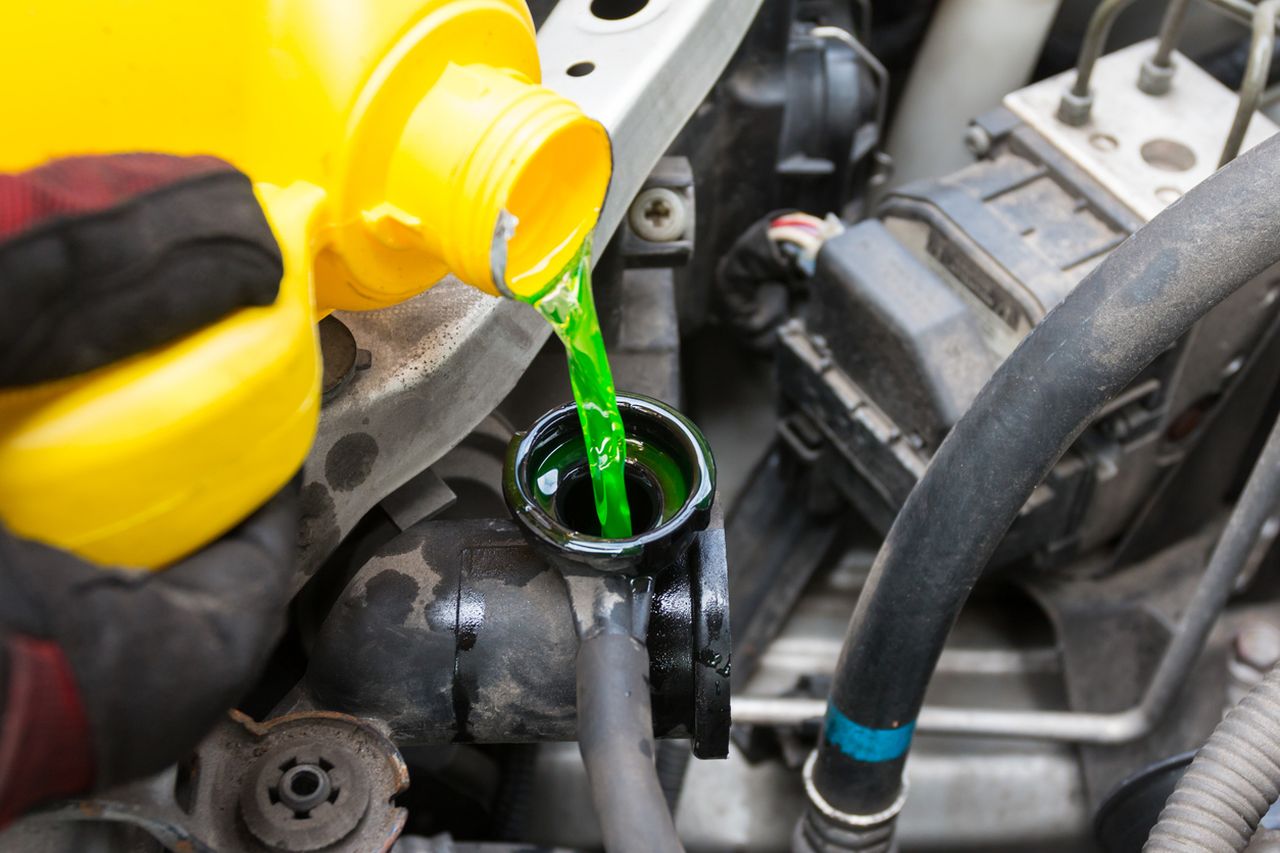
Everything You Need to Know About Antifreeze: Types, Colors, Protection, Mixing, and Replacement
Antifreeze is one of the most important fluids in a vehicle's cooling system, yet it is often misunderstood. Many drivers think antifreeze is simply a liquid that prevents the coolant from freezing in winter. In reality, modern engine coolant performs several important functions. It helps protect the engine against freezing, overheating, corrosion, deposits, and cooling-system component damage.
Antifreeze is also used far beyond passenger cars. Similar coolant technologies are found in trucks, agricultural machinery, industrial equipment, heating systems, power-generation equipment, and many other applications where heat must be transferred while protecting metal components.
Another common source of confusion is antifreeze color. Blue, green, red, orange, pink, yellow, and other colors are found on the market, but color alone does not tell you whether two coolants are compatible.
Choosing the correct coolant therefore requires more than simply matching the color of the fluid already inside the expansion tank.
What Is Antifreeze?
Antifreeze is a concentrated fluid designed to be mixed with water and used as engine coolant.
The main purpose of antifreeze is to modify the freezing and boiling characteristics of the cooling-system fluid while also providing corrosion protection and other chemical properties.
Most modern automotive antifreeze products are based on ethylene glycol or, in some applications, propylene glycol.
The concentrate is normally mixed with water at a specified ratio.
Once mixed, the resulting coolant circulates through the engine, radiator, heater core, water pump, hoses, and other cooling-system components.
The coolant absorbs heat from the engine and transfers it to the radiator, where the heat is released into the surrounding air.
Therefore, antifreeze is only one part of the complete cooling system. The final fluid circulating through the engine is generally a coolant mixture, not pure antifreeze.
What Does Antifreeze Do?
Antifreeze performs several functions simultaneously.
Freeze protection
The most obvious function is preventing the coolant from freezing at low temperatures.
Water expands when it freezes. If water freezes inside an engine block, radiator, or other cooling-system component, the resulting expansion can cause severe damage.
Boiling protection
Antifreeze also helps increase the boiling point of the coolant when correctly mixed and used in a pressurized cooling system.
This provides additional protection when engine temperatures become high.
Corrosion protection
Modern coolant contains additives that protect metals and cooling-system components from corrosion.
Without appropriate corrosion protection, components made from aluminum, iron, steel, copper, brass, and other materials can deteriorate over time.
Deposit control
Coolant formulations are also designed to reduce deposits and maintain clean coolant passages.
Water-pump protection
The coolant formulation can help protect the water pump and its sealing surfaces from corrosion and certain forms of wear.
Cooling-system compatibility
The correct coolant formulation is designed to work with the materials and components used by a particular engine and cooling system.
Antifreeze Is Not Just for Winter
The name "antifreeze" can create the impression that the product is only necessary during cold weather.
That is incorrect.
Antifreeze is used throughout the year because the coolant must provide corrosion protection and appropriate thermal properties even when the outside temperature is high.
Running an engine with plain water may provide adequate heat transfer under some conditions, but it does not provide the complete chemical protection expected from a properly formulated coolant.
For this reason, the cooling system should normally contain the manufacturer's specified coolant mixture throughout the year.
A Brief History of Antifreeze and Coolant
The history of engine coolant is closely connected to the development of the internal combustion engine.
Early cooling systems often relied heavily on water because water is inexpensive and has excellent heat-transfer properties.
However, water has an obvious limitation: it freezes at 0°C under normal atmospheric pressure.
When vehicles began operating in colder climates, freezing coolant became a serious engineering problem.
The development and wider use of glycol-based antifreeze provided a practical solution.
Ethylene glycol became particularly important because it significantly lowers the freezing point of a water mixture and increases its boiling point.
As engine technology developed, another problem became increasingly important: corrosion.
Modern engines contain a mixture of materials, including aluminum alloys, cast iron, steel, copper, plastics, rubber, and other materials.
Simply preventing freezing was no longer sufficient.
Coolant manufacturers therefore developed increasingly sophisticated additive packages to protect the cooling system.
This led to different coolant technologies, including conventional inorganic additive formulations and later organic-acid and hybrid formulations.
Modern coolants are therefore much more than simple water-and-glycol mixtures.
What Are the Main Types of Antifreeze?
There is no single antifreeze formulation that is suitable for every vehicle.
Different coolant technologies use different additive systems.
Some common categories include:
-
IAT – Inorganic Additive Technology
-
OAT – Organic Acid Technology
-
HOAT – Hybrid Organic Acid Technology
-
Si-OAT – Silicate-enhanced Organic Acid Technology
-
P-OAT – Phosphate-enhanced Organic Acid Technology
The exact formulation varies between manufacturers and markets.
IAT coolant
Traditional IAT coolants generally use inorganic inhibitors such as silicates and phosphates to provide corrosion protection.
They have historically been common in older vehicles.
OAT coolant
Organic Acid Technology coolants use organic corrosion inhibitors and generally have longer service lives than many traditional IAT formulations.
They became widely used in many modern vehicles.
HOAT coolant
Hybrid formulations combine organic inhibitors with selected inorganic inhibitors.
Different manufacturers may use different combinations.
This is why simply seeing the word "HOAT" does not necessarily identify one universal coolant formula.
What Does Blue Antifreeze Mean?
Blue antifreeze is commonly associated with certain coolant formulations and manufacturers.
However, blue is not a universal technical classification.
A blue coolant from one manufacturer may have a different chemical formulation from a blue coolant produced by another manufacturer.
Therefore, you should never assume:
"Both coolants are blue, so they must be compatible."
The correct approach is to check the manufacturer's specification and approval requirements.
What Does Green Antifreeze Mean?
Green coolant is historically associated with conventional coolant formulations, particularly older IAT-type products.
However, green coolant can also be found in other formulations depending on the manufacturer.
The color therefore provides only a visual identification.
It does not guarantee a specific additive technology.
What Does Red Antifreeze Mean?
Red coolant is often associated with certain long-life organic-acid or manufacturer-specific coolant formulations.
Japanese and Asian vehicle manufacturers, for example, have used distinctive coolant colors in various applications.
But red does not automatically mean OAT, nor does it automatically mean that the coolant is compatible with another red coolant.
Always follow the required specification rather than relying on color.
What Does Orange Antifreeze Mean?
Orange coolant is commonly associated with certain long-life coolant formulations, particularly products used in some North American vehicles.
However, orange is not a universal chemical standard.
Two orange coolants can still have different additive packages and compatibility requirements.
The same principle applies to pink, yellow, purple, and other coolant colors.
Does Antifreeze Color Really Matter?
Color matters much less than the coolant specification.
Manufacturers add dyes to coolant for identification and leak detection, but there is no universal international color system that guarantees chemical compatibility.
Therefore:
Never choose coolant based only on color.
Instead, check:
-
Vehicle manufacturer
-
Engine type
-
Model year
-
Required coolant specification
-
Manufacturer approval
-
Coolant technology
-
Concentration requirements
This is one of the most important rules when selecting antifreeze.
What Happens If Blue and Green Antifreeze Are Mixed?
Mixing blue and green antifreeze is not automatically safe or unsafe simply because of the colors.
The important question is whether the two products have compatible chemical formulations and manufacturer approvals.
If the formulations are compatible, mixing may be permitted by the coolant manufacturer.
If they are incompatible, mixing can reduce corrosion protection or cause other undesirable chemical interactions.
Possible consequences of using incompatible coolants include:
-
Reduced corrosion protection
-
Additive imbalance
-
Deposits
-
Sludge formation
-
Cooling-system contamination
-
Reduced component protection
-
Potential restriction of coolant passages in severe cases
Therefore, blue plus green does not have a universal answer.
The coolant specification is what matters.
Can Different Types of Antifreeze Be Mixed?
They should not be mixed simply because they appear similar.
Mixing different technologies can change the additive balance of the final coolant.
This can potentially reduce the protection originally intended by the manufacturer.
If you do not know what coolant is already in the system, the safest approach is generally to determine the existing formulation or perform an appropriate coolant drain and refill procedure rather than adding an unknown product.
What Happens If the Wrong Antifreeze Is Used?
Using the wrong coolant does not necessarily cause immediate engine failure.
In some cases, the vehicle may continue operating normally for a considerable period.
The problem can develop gradually as the coolant's corrosion protection becomes inadequate or incompatible additives interact.
Possible long-term consequences include:
-
Corrosion
-
Deposits
-
Water-pump problems
-
Radiator deterioration
-
Heater-core restriction
-
Cooling-system contamination
-
Seal and gasket problems in certain circumstances
-
Reduced cooling-system reliability
The consequences depend on the specific coolant chemistry and the vehicle.
When Should Antifreeze Be Changed?
There is no single replacement interval for every vehicle.
The correct interval depends on:
-
Coolant formulation
-
Vehicle manufacturer
-
Engine design
-
Coolant specification
-
Operating conditions
-
Previous maintenance
-
Coolant condition
Some modern long-life coolants can remain in service for several years and many tens of thousands of kilometers.
Older coolant technologies may require more frequent replacement.
The vehicle manufacturer's service schedule should therefore be the primary reference.
How Can You Tell If Antifreeze Needs to Be Changed?
Visual inspection can provide clues, but it cannot determine coolant condition perfectly.
Warning signs can include:
-
Rust-colored coolant
-
Muddy or cloudy appearance
-
Floating particles
-
Oil contamination
-
Excessive discoloration
-
Sludge
-
Unusual deposits
-
Repeated coolant contamination
However, coolant can sometimes look clean while its corrosion-inhibitor package has deteriorated.
Professional coolant testing can provide more useful information.
Depending on the system, technicians may evaluate:
-
Freeze protection
-
Coolant concentration
-
pH
-
Condition of inhibitors
-
Contamination
-
Electrical conductivity
What Is the Correct Antifreeze-to-Water Ratio?
A common coolant mixture is approximately 50% antifreeze and 50% water, although the exact recommended ratio depends on the product and vehicle.
Some systems may specify a different concentration.
Using too little antifreeze reduces freeze and corrosion protection.
Using too much antifreeze can also be undesirable because concentrated glycol does not transfer heat as efficiently as a properly balanced water-glycol mixture.
Therefore, "more antifreeze is always better" is incorrect.
The manufacturer's recommended concentration should be followed.
Antifreeze Freezing and Temperature Protection Range
One of the main reasons coolant concentration matters is its freezing-point protection.
A properly selected water-glycol mixture can provide substantial protection against freezing while also raising the boiling point.
The exact protection depends on:
-
Glycol type
-
Concentration
-
Water quality
-
System pressure
-
Coolant formulation
-
Temperature measurement method
A typical 50/50 ethylene-glycol and water mixture provides strong freeze protection and is widely used in automotive applications.
Increasing the concentration does not indefinitely improve protection.
At very high glycol concentrations, both heat-transfer performance and freeze protection can become less favorable.
Therefore, the ideal mixture is not simply the one containing the highest possible percentage of antifreeze.
Can You Use Pure Antifreeze?
In most automotive applications, using concentrated antifreeze without the required amount of water is not recommended.
Pure glycol does not provide the same heat-transfer characteristics as a properly formulated coolant mixture.
It can also have a higher viscosity and may not provide the optimum thermal performance expected by the cooling-system design.
Always follow the product manufacturer's mixing instructions.
Can You Use Tap Water With Antifreeze?
This depends on the quality of the local water and the manufacturer's requirements.
Tap water can contain minerals and salts that may contribute to deposits or corrosion over time.
For coolant mixing, distilled or deionized water is often preferred when the coolant is supplied as a concentrate and the vehicle manufacturer permits or recommends it.
Some coolants are sold premixed and should not be diluted.
Always check the label before adding water.
Is It Safe to Replace Antifreeze With Water?
Water can cool an engine effectively under certain conditions, and many older cooling systems historically operated with water.
However, using plain water as a permanent replacement for coolant is generally not recommended for a modern vehicle.
Water does not provide the same freeze protection and corrosion protection as the correct coolant.
In freezing weather, water can freeze inside the cooling system.
In addition, prolonged use of untreated water can contribute to corrosion and deposits.
Water may be useful as a temporary emergency measure in some situations, but the correct coolant mixture should be restored as soon as possible.
What Happens If You Drive With Only Water?
The immediate result may not be obvious.
The engine can continue operating because water transfers heat effectively.
However, several risks increase.
In cold weather, the water can freeze and expand.
In hot conditions, the boiling characteristics of the system are different from those of the specified coolant mixture.
Most importantly, plain water lacks the complete corrosion-inhibitor package provided by the correct coolant.
Long-term operation with untreated water can therefore reduce cooling-system durability.
Can Antifreeze Prevent Engine Overheating?
Antifreeze contributes to temperature control, but it does not guarantee that an engine will never overheat.
Overheating can result from:
-
Low coolant level
-
Water-pump failure
-
Thermostat failure
-
Radiator blockage
-
Cooling-fan failure
-
Head-gasket problems
-
Coolant leaks
-
Air trapped in the cooling system
-
Incorrect coolant mixture
-
Blocked coolant passages
The correct antifreeze mixture helps the system operate within its intended thermal range, but it cannot compensate for a mechanical cooling-system failure.
Why Does Coolant Become Brown?
Brown coolant can indicate contamination, corrosion, degraded additives, or mixing of incompatible products.
In some cases, rust can enter the coolant.
In other situations, different coolant formulations may have been mixed.
If the coolant has become brown, muddy, or heavily contaminated, simply adding fresh coolant is not necessarily the correct solution.
The cooling system should be inspected to determine the cause.
Why Does Coolant Become Oily?
An oily film in the coolant can be a serious warning sign.
Possible causes include:
-
Engine oil entering the cooling system
-
Automatic transmission fluid contamination in systems using a coolant-integrated transmission cooler
-
Oil cooler failure
-
Head-gasket failure
-
Internal engine damage
This situation should be investigated promptly.
Adding more antifreeze without identifying the source of the contamination does not solve the underlying problem.
Can Antifreeze Leak?
Yes.
Coolant can leak from many locations.
Common leak points include:
-
Radiator
-
Radiator hoses
-
Expansion tank
-
Water pump
-
Thermostat housing
-
Heater hoses
-
Heater core
-
Head gasket
-
Coolant pipes
-
Seals
-
Drain plug
-
Radiator cap or pressure cap
A coolant leak can cause the level to fall below the required amount.
Low coolant can then lead to overheating.
Why Does the Coolant Level Keep Falling?
A coolant level that repeatedly decreases should not be considered normal.
Possible causes include:
-
External leakage
-
Internal coolant consumption
-
Water-pump leakage
-
Hose failure
-
Radiator leakage
-
Expansion-tank leakage
-
Heater-core leakage
-
Head-gasket problems
Small leaks can sometimes evaporate before leaving a large visible puddle.
A professional pressure test can help locate difficult leaks.
Can Antifreeze Expire?
Coolant does not necessarily have a simple expiration date in the same way as some consumer products, but its condition can deteriorate over time.
A sealed, unused product stored under appropriate conditions can remain usable for a long period, subject to the manufacturer's storage recommendations.
Once coolant is inside a vehicle, however, its additive package gradually becomes depleted.
Heat cycles, contamination, corrosion products, and chemical aging can all affect coolant condition.
How Should the Correct Antifreeze Be Selected?
The safest way to choose antifreeze is to start with the vehicle manufacturer's specification.
Do not start with color.
Check:
Vehicle manufacturer specification
The owner's manual or official service documentation should identify the required coolant standard or specification.
Engine type
Different engines may use different coolant requirements.
Coolant technology
Determine whether the system requires an IAT, OAT, HOAT, or manufacturer-specific formulation.
Manufacturer approvals
A coolant that explicitly meets the required manufacturer specification is preferable to one selected only because its label says "universal."
Premixed or concentrate
Check whether the product is ready to use or must be diluted.
Water quality
If concentrate is used, follow the manufacturer's instructions regarding water quality.
What Does "Universal Antifreeze" Mean?
"Universal" does not necessarily mean that a coolant is compatible with every vehicle and every coolant already installed in the system.
It generally means the product is formulated for a broad range of applications according to the manufacturer's claims.
Even universal coolant should be checked against the vehicle's required specification.
A product that is advertised as universal should not automatically override the manufacturer's coolant requirement.
Can Antifreeze Be Used in Diesel Engines?
Yes.
Diesel engines use coolant just like gasoline engines, but some heavy-duty diesel applications have specific coolant requirements.
Certain diesel engines are particularly sensitive to coolant chemistry because of the materials, operating temperatures, and combustion characteristics involved.
Heavy-duty cooling systems may also require specific additive technologies.
Therefore, diesel coolant selection should follow the engine manufacturer's specification.
Antifreeze in LPG and Other Alternative-Fuel Vehicles
Vehicles equipped with LPG systems still depend on the engine cooling system.
In many vapor-phase LPG systems, engine coolant circulates through the LPG regulator to provide the heat required to vaporize LPG.
This means cooling-system condition can also affect LPG operation.
Insufficient coolant circulation may cause:
-
Poor LPG vaporization
-
Regulator icing
-
Difficult switching to LPG
-
Stalling after switching
-
Unstable LPG pressure
Therefore, coolant maintenance can be important not only for engine temperature control but also for LPG system performance.
Antifreeze Use in Other Industrial Applications
Antifreeze technology is not limited to automobiles.
Water-glycol mixtures and specialized heat-transfer fluids are used in many industries.
Examples include:
-
Industrial cooling systems
-
Heating systems
-
HVAC equipment
-
Power-generation systems
-
Agricultural machinery
-
Construction equipment
-
Marine engines
-
Data-center cooling systems
-
Manufacturing equipment
-
Solar thermal systems
-
Heat pumps
-
Process cooling systems
The exact fluid used depends on the application.
Automotive antifreeze should not automatically be substituted for an industrial heat-transfer fluid.
Industrial systems may require specialized formulations designed for particular temperatures, pressures, materials, pumps, seals, and operating conditions.
Is Antifreeze Toxic?
Many conventional automotive antifreeze products contain ethylene glycol, which is toxic if swallowed.
It can also be dangerous to animals because its sweet taste can attract pets.
Antifreeze should therefore be stored securely and spills should be cleaned up properly.
Some products use propylene glycol, which has a different toxicity profile, but this does not mean that coolant should be treated as harmless.
Always follow the manufacturer's safety instructions and local disposal regulations.
Can Antifreeze Be Recycled?
Used coolant should not simply be poured onto the ground, into drains, or into waterways.
Used coolant can contain:
-
Glycol
-
Corrosion products
-
Metals
-
Additive residues
-
Contaminants
Many regions have recycling or hazardous-fluid collection programs.
Proper disposal protects the environment and reduces the risk of accidental exposure.
Important Safety Rules When Working With Antifreeze
Never open a hot cooling system.
A hot engine cooling system can be under significant pressure.
Opening the radiator cap or expansion-tank cap while the engine is hot can release scalding coolant and steam.
Before checking or servicing coolant:
-
Allow the engine to cool
-
Use appropriate protective equipment
-
Follow the vehicle manufacturer's procedure
-
Keep coolant away from children and animals
-
Clean spills immediately
-
Dispose of used coolant properly
Also remember that coolant leaks can cause burns if they occur while the engine is hot.
Final Thoughts
Antifreeze is much more than a fluid designed to prevent freezing.
A properly selected coolant helps protect the engine against freezing and excessive temperatures while also controlling corrosion, deposits, and cooling-system deterioration.
The most important lesson is that antifreeze color should not be used as the primary method of selecting coolant.
Blue, green, red, orange, pink, yellow, and other colors can be used by different manufacturers for different formulations. Therefore, two coolants with the same color may not necessarily be compatible, while two different-colored products may sometimes have compatible formulations.
The correct coolant should always be selected according to the vehicle manufacturer's specification.
The same principle applies when mixing coolants. Blue and green antifreeze should not be mixed simply because someone assumes their colors are compatible. The actual coolant chemistry and manufacturer specifications are what matter.
Plain water may be useful as a temporary emergency solution in some circumstances, but it should not replace the correct coolant permanently. A properly formulated coolant mixture provides freeze protection, thermal protection, and corrosion protection that untreated water cannot provide.
Finally, coolant is a critical part of the entire thermal-management system. A healthy engine needs not only the correct coolant but also a functioning radiator, thermostat, water pump, cooling fan, hoses, pressure cap, and properly sealed cooling system.
Regular inspection and replacement according to the manufacturer's specifications can prevent many expensive cooling-system problems before they become serious.