TR
TR EN
EN

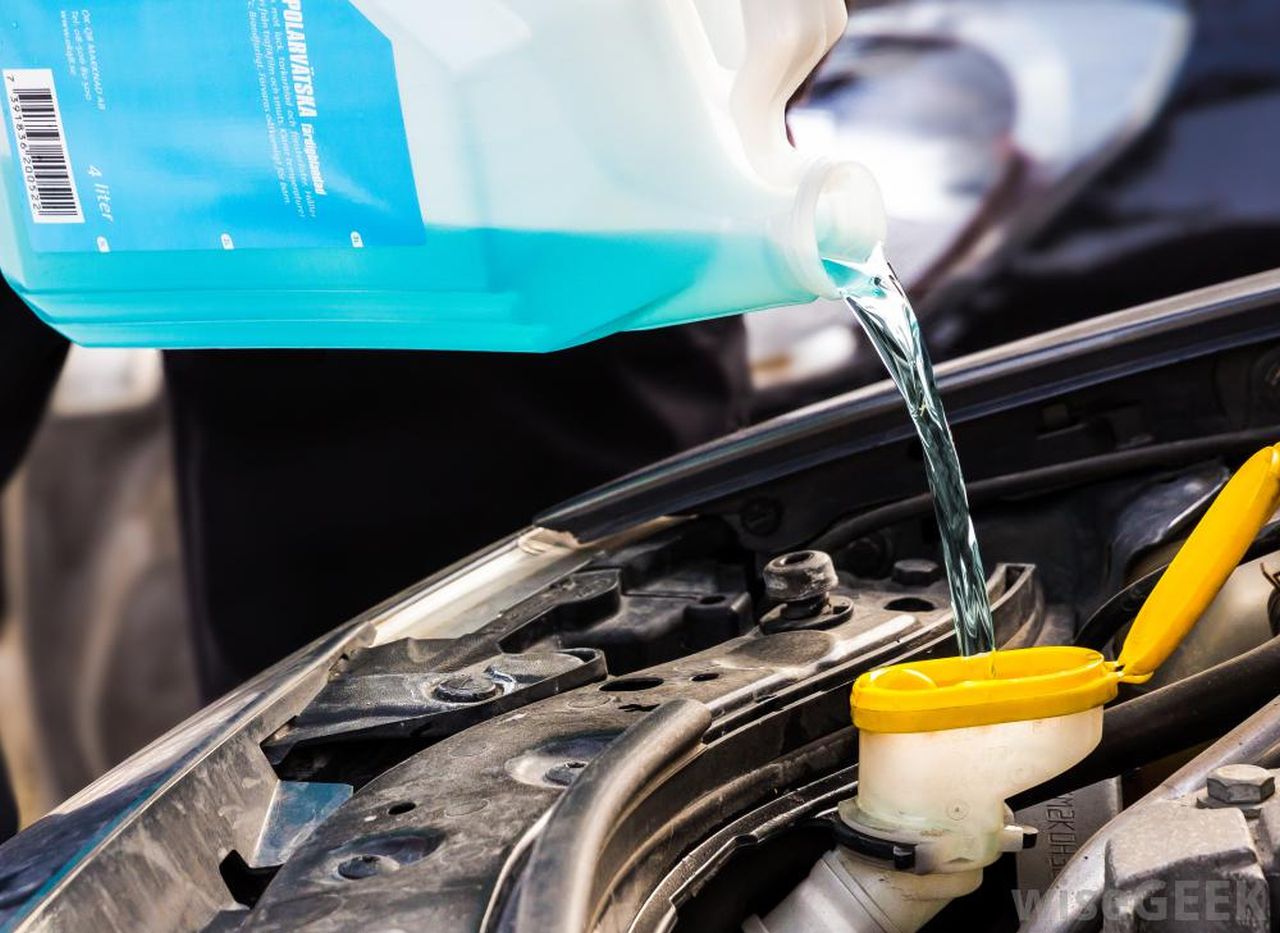
What Is Antifreeze Windshield Washer Fluid?
Antifreeze windshield washer fluid is a specially formulated liquid used in a vehicle's windshield washer system to clean the windshield while providing protection against freezing temperatures.
Unlike ordinary water, winter-grade windshield washer fluid contains ingredients that lower its freezing point. This allows the washer system to continue functioning when temperatures fall below 0°C.
It is particularly important in regions where winter temperatures can become low enough to freeze ordinary water.
The fluid is stored in the windshield washer reservoir and is pumped through small hoses to the washer nozzles. When the driver activates the windshield washer system, the fluid is sprayed onto the windshield and then removed by the wiper blades.
What Does Antifreeze Windshield Washer Fluid Do?
The primary purpose of antifreeze windshield washer fluid is to keep the windshield clean without freezing inside the washer system.
It performs several functions at the same time.
Windshield cleaning
The fluid helps remove:
-
Road dirt
-
Dust
-
Mud
-
Insects
-
Oil and oily road film
-
Salt residue
-
Traffic grime
-
Windshield deposits
Freeze protection
Its most important difference from plain water is its lower freezing point.
The correct formulation can remain liquid at temperatures where water would freeze.
Protection of the washer system
When the appropriate fluid is used, it helps prevent freezing inside:
-
Washer reservoir
-
Washer pump
-
Washer hoses
-
Washer nozzles
This is especially important because even a small amount of frozen fluid can prevent the washer system from working.
Why Should You Not Use Plain Water in Winter?
Water freezes at approximately 0°C under normal atmospheric conditions.
If plain water is used in the washer system and the temperature drops below freezing, the water can turn into ice.
This can cause several problems.
The washer nozzles may become blocked.
The hoses may freeze.
The washer pump may be unable to move the frozen fluid.
The reservoir can become filled with ice.
In severe conditions, expansion during freezing can place stress on components of the washer system.
Therefore, using plain water throughout winter is not recommended in climates where freezing temperatures are expected.
Is Antifreeze Windshield Washer Fluid the Same as Engine Antifreeze?
No.
This is an important distinction.
Engine coolant antifreeze is designed for the engine cooling system. It contains specific corrosion inhibitors and additives designed to protect the engine, radiator, water pump, cooling passages, and other components.
Windshield washer fluid is designed to clean glass and operate through a washer pump and spray nozzles.
These two fluids have completely different purposes and formulations.
Engine antifreeze should never be poured into the windshield washer reservoir.
Likewise, windshield washer fluid is not a substitute for engine coolant.
What Is Inside Antifreeze Windshield Washer Fluid?
The exact formulation varies between manufacturers and products.
Winter windshield washer fluids commonly contain:
-
Water
-
Alcohol-based freeze protection components
-
Cleaning agents
-
Surfactants
-
Dyes
-
Fragrance in some products
-
Other formulation-specific additives
Alcohol is commonly used because it lowers the freezing point of the mixture.
Different products may use different alcohols or combinations depending on the intended temperature rating and regional regulations.
What Does the Temperature Rating Mean?
Winter windshield washer fluid is usually labeled with a temperature rating.
You may see products advertised for temperatures such as:
-
-10°C
-
-20°C
-
-30°C
-
-40°C
The rating indicates the approximate temperature range for which the product is formulated to remain usable.
However, the exact performance depends on the product and the conditions.
A fluid rated for -20°C should not automatically be assumed to provide reliable protection at -30°C.
Choosing a fluid with an appropriate temperature rating for your local climate is therefore important.
Can Summer and Winter Washer Fluids Be Different?
Yes.
Summer windshield washer fluids are generally formulated primarily for cleaning performance under warmer conditions.
They may contain cleaning agents designed to remove insects, dust, and road grime but may not provide sufficient freeze protection.
Winter washer fluids contain additional freeze-protection properties.
For this reason, a product suitable for summer should not automatically be used during freezing weather.
Can Antifreeze Windshield Washer Fluid Freeze?
Yes, if the temperature becomes lower than the fluid's specified protection range.
No windshield washer fluid should be considered completely immune to freezing at every temperature.
For example, a product formulated for moderate winter conditions may freeze or become too viscous during extreme cold.
This is why the temperature rating should be checked before purchase.
What Happens If Windshield Washer Fluid Freezes?
A frozen washer system may stop working completely.
The fluid may freeze inside the reservoir, hoses, pump, or nozzles.
The driver may activate the washer switch and hear the pump operating, but no fluid may reach the windshield.
Alternatively, the pump may be unable to operate normally because the fluid around it has frozen.
Trying repeatedly to operate a washer system that is frozen can put unnecessary strain on the pump.
If the system is frozen, allowing it to thaw naturally in a warmer environment is preferable to forcing it to operate.
Can Frozen Washer Fluid Damage the Pump?
It can potentially cause problems.
The washer pump is designed to move liquid, not solid ice.
If the fluid around the pump has frozen, the pump may be unable to circulate it.
Repeatedly activating the pump under these conditions can place additional load on the electric motor.
The extent of potential damage depends on the design and circumstances.
The best approach is to prevent freezing by using the correct winter washer fluid in the first place.
Why Are Windshield Washer Nozzles Frozen?
Frozen washer nozzles are common during very cold weather.
Several situations can contribute to this problem:
-
Plain water in the system
-
Summer washer fluid used during winter
-
Washer fluid diluted excessively with water
-
Incorrect temperature rating
-
Residual water inside the nozzle
-
Extremely low ambient temperature
-
Snow or ice physically covering the nozzle
If the reservoir contains a winter-rated fluid but the nozzles still freeze, the nozzle area itself may simply be exposed to conditions colder than the product's intended operating range.
Can You Mix Antifreeze Washer Fluid With Water?
Some concentrated washer-fluid products are specifically designed to be diluted with water.
Other products are sold ready to use and should not be diluted.
Therefore, the product instructions should always be followed.
If a winter washer fluid is already correctly mixed and ready to use, adding a large amount of water can reduce its freeze protection.
For example, a mixture designed to remain liquid at a low temperature can become much less resistant to freezing if it is heavily diluted.
What Happens If You Add Too Much Water?
Adding too much water can significantly reduce the fluid's freeze protection.
The washer system may work normally at moderate temperatures, but the diluted mixture can freeze when the temperature falls.
This can be particularly dangerous when driving in winter because the windshield may become covered with road salt, mud, and spray from other vehicles.
If the washer fluid cannot be sprayed, visibility can deteriorate rapidly.
Can You Use Concentrated Washer Fluid Without Diluting It?
Only if the product manufacturer specifically permits it.
Some concentrates are designed to be diluted to a specific ratio.
Using the concentrate at full strength may not provide the intended cleaning or freezing characteristics and can unnecessarily increase the concentration of certain ingredients.
Always check whether the bottle contains:
-
Ready-to-use fluid
-
Concentrate
-
A product requiring dilution
Is Antifreeze Windshield Washer Fluid Safe for the Windshield?
A properly formulated automotive windshield washer fluid is designed specifically for use on automotive glass.
It should clean the windshield without causing the type of surface damage associated with unsuitable household chemicals.
However, products should always be used according to the manufacturer's instructions.
Some unsuitable liquids can leave residues, damage certain surfaces, or interfere with visibility.
Can It Damage Wiper Blades?
The correct washer fluid is generally designed to be compatible with automotive wiper systems.
However, poor-quality or inappropriate chemicals may contribute to deterioration of rubber components over time.
If the wiper blades become:
-
Cracked
-
Hardened
-
Streaky
-
Noisy
-
Uneven
the problem may be related to blade age, contamination, mechanical wear, or windshield condition rather than washer fluid alone.
Does Antifreeze Washer Fluid Improve Visibility?
Yes, indirectly.
The fluid itself does not make the windshield optically clearer than a properly functioning cleaning system would under all conditions, but it helps maintain visibility by removing contamination.
This becomes particularly important during winter.
Road spray can contain:
-
Salt
-
Dirt
-
Oil
-
Mud
-
Fine particles
These substances can quickly create a film on the windshield.
A functioning washer system allows the driver to clean the windshield without stopping the vehicle.
Why Is Winter Washer Fluid Important for Driving Safety?
Visibility is one of the most important aspects of safe driving.
During winter, the windshield can become contaminated very quickly.
If the washer system is frozen, the driver may be unable to remove the contamination.
This can become especially dangerous when:
-
Driving behind trucks
-
Driving on salted roads
-
Driving during snowfall
-
Driving in slush
-
Driving on wet roads
-
Driving at night
A windshield that appears acceptable at the beginning of a journey can become significantly dirtier after only a few kilometers.
Can You Add Windshield Washer Fluid to a Hot Engine?
The windshield washer reservoir is separate from the engine cooling system.
Nevertheless, normal precautions should be followed when working under the hood.
Avoid spilling fluid onto hot engine components.
If the reservoir is difficult to access because of hot components, allow the area to cool before servicing it.
More importantly, never confuse the washer-fluid reservoir with the coolant expansion tank.
How Do You Identify the Windshield Washer Reservoir?
The washer-fluid reservoir is usually identified by a cap marked with a windshield and water-spray symbol.
The cap is often located in the engine compartment.
The exact location differs between vehicles.
Before adding any fluid, verify the reservoir symbol and owner's manual if necessary.
Do not rely solely on the color of the reservoir cap because manufacturers use different designs.
What Color Is Antifreeze Windshield Washer Fluid?
There is no universal color requirement.
Windshield washer fluid can be:
-
Blue
-
Green
-
Pink
-
Yellow
-
Orange
-
Purple
-
Clear
Color is mainly used for product identification and does not reliably indicate the freezing temperature or chemical composition.
Therefore, choosing washer fluid based only on its color is not recommended.
Does Antifreeze Washer Fluid Have an Expiration Date?
A properly sealed product can generally be stored for a considerable period when kept according to the manufacturer's storage instructions.
However, storage conditions matter.
Extreme temperatures, contamination, and prolonged exposure to unsuitable conditions can affect product quality.
Once the product has been opened, keeping the container properly sealed helps prevent contamination and evaporation of volatile components.
Can You Use Antifreeze Windshield Washer Fluid All Year?
Yes.
A winter-rated washer fluid can generally be used during warmer seasons as long as it is appropriate for the vehicle and product instructions.
However, some summer-specific washer fluids may offer specialized cleaning characteristics for insects and other warm-weather contamination.
Some drivers therefore switch between seasonal products.
The important point is that the fluid must provide adequate freeze protection whenever freezing temperatures are expected.
What Should You Consider When Choosing Windshield Washer Fluid?
Do not choose the product based only on price or color.
Consider:
Minimum operating temperature
Select a product appropriate for the coldest temperatures expected in your region.
Ready-to-use or concentrate
Make sure you know whether dilution is required.
Cleaning performance
The fluid should effectively remove road grime, salt, insects, and oily contamination.
Vehicle compatibility
Use products intended for automotive windshield washer systems.
Manufacturer instructions
Follow the recommended dilution and usage instructions.
Can Homemade Windshield Washer Fluid Be Used?
Homemade mixtures are sometimes suggested online, but they can create several problems.
An incorrect mixture may:
-
Freeze
-
Leave residue
-
Reduce cleaning performance
-
Damage rubber components
-
Produce excessive foam
-
Affect the washer pump
-
Create an unpleasant or unsafe vapor
The freezing point of a homemade mixture may also be difficult to determine accurately.
A commercially formulated automotive washer fluid provides a more predictable combination of cleaning and freeze protection.
Can Household Glass Cleaner Be Used?
Household glass cleaner is not automatically suitable for a vehicle's washer system.
Some household products contain ingredients that are not intended to pass through a small automotive washer pump and nozzle system.
They may also leave residues or create excessive foam.
Windshield washer fluid is specifically formulated for this application.
Therefore, using a dedicated automotive product is the safer choice.
Is Antifreeze Windshield Washer Fluid Toxic?
Some winter washer fluids contain alcohols and other chemicals that can be harmful if swallowed or improperly handled.
They should be stored away from children and animals.
Never transfer the fluid into food or beverage containers.
Always follow the safety information provided by the manufacturer.
What Should You Do If You Accidentally Put Engine Antifreeze in the Washer Reservoir?
Engine coolant and washer fluid should not be mixed.
If the wrong fluid has been added to the washer reservoir, it is best to remove the contaminated fluid rather than continuing to use the system.
The reservoir and washer lines may need to be flushed with the appropriate washer fluid.
The exact procedure depends on how much coolant was added and the vehicle's washer-system design.
If engine coolant has accidentally been poured into the washer reservoir, avoid spraying it onto the windshield until the system has been properly cleaned.
What Should You Do If Washer Fluid Freezes?
If the washer system is frozen:
-
Do not repeatedly activate the pump
-
Move the vehicle to a warmer location if possible
-
Allow the system to thaw naturally
-
Check the reservoir and nozzles
-
Remove snow and ice from the nozzle area
-
Replace heavily diluted or incorrect fluid
-
Refill with an appropriate winter-rated washer fluid
If the pump still does not work after the system has thawed, the pump, fuse, wiring, or switch may need to be inspected.
Why Is Antifreeze Windshield Washer Fluid Important in Europe?
Winter conditions vary significantly across Europe.
Some regions rarely experience severe freezing temperatures, while northern and mountainous areas can experience prolonged periods of extreme cold.
A washer fluid suitable for one region may not be appropriate for another.
Drivers traveling across borders should therefore consider the expected weather conditions rather than relying on the product they normally use at home.
This is particularly important when driving through mountainous areas or northern regions during winter.
Final Thoughts
Antifreeze windshield washer fluid is a relatively simple product, but it plays an important role in winter driving safety.
Its primary purpose is to clean the windshield while remaining usable at temperatures where ordinary water would freeze.
The most important thing to remember is that windshield washer antifreeze is not the same as engine coolant antifreeze.
They have completely different purposes and should never be treated as interchangeable fluids.
When choosing a winter washer fluid, pay attention to its minimum temperature rating, whether it is ready to use or requires dilution, and whether it is intended for automotive windshield washer systems.
Avoid excessive dilution because adding too much water can significantly reduce freeze protection.
Using plain water during freezing weather can allow the reservoir, hoses, pump, or nozzles to freeze and can leave the driver without an effective way to clean the windshield.
Ultimately, good winter washer fluid is not simply a convenience. It is part of the vehicle's visibility and safety system, especially when roads are wet, dirty, salted, or covered with snow and slush.