TR
TR EN
EN

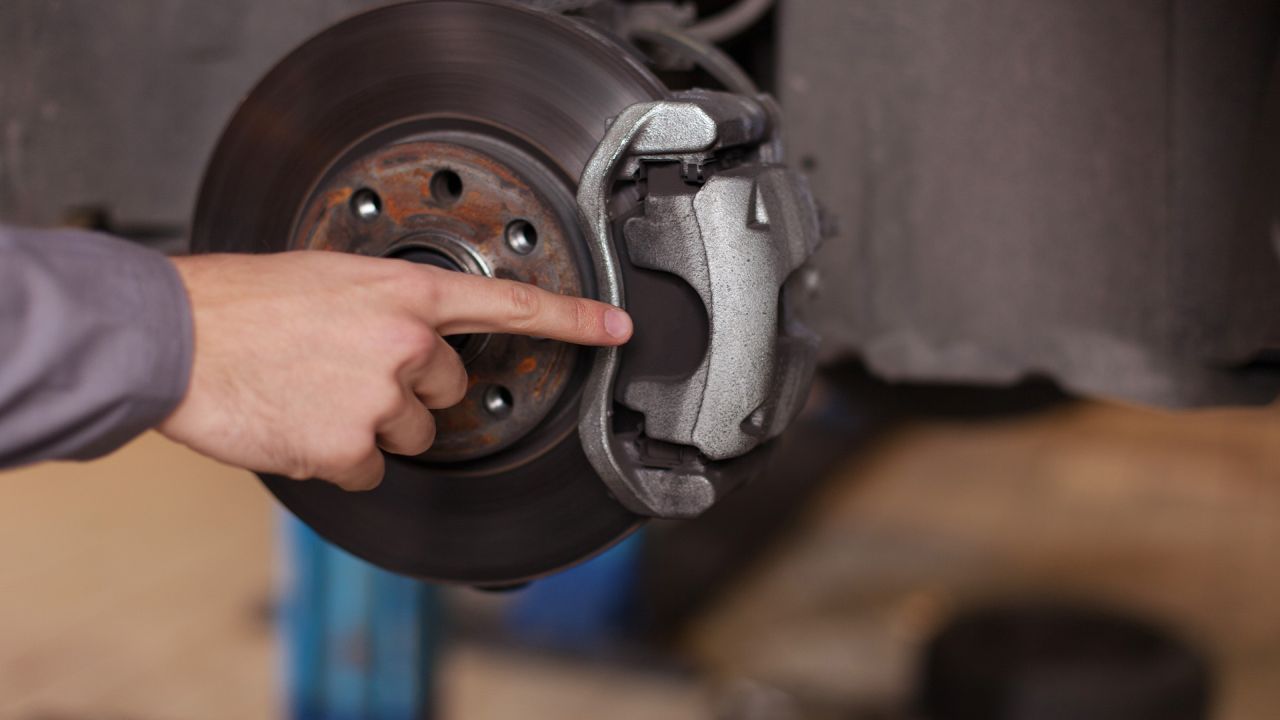
What Are Brake Pads? What Types Are There? When Should They Be Replaced?
Brake pads are one of the most important wear components in a vehicle's braking system. Every time the driver presses the brake pedal, the brake pads work together with the brake discs or rotors to convert the vehicle's kinetic energy into heat and slow the vehicle down.
Although brake pads may appear to be simple components, their material composition, design, operating temperature and friction characteristics can have a major effect on braking performance.
Brake pads gradually wear during normal driving. Eventually, the friction material becomes too thin and the pads need to be replaced.
Knowing what brake pads do, what types are available, how they wear and when they should be replaced is essential for both safety and maintenance.
How Do Brake Pads Work?
Most modern passenger cars use disc brakes on at least the front axle, and many vehicles also use disc brakes at the rear.
When the driver presses the brake pedal, hydraulic pressure is generated in the braking system. This pressure causes the brake caliper piston to move.
The piston pushes the brake pad against the rotating brake disc.
At the same time, the caliper mechanism allows the other pad to press against the opposite side of the disc.
The resulting friction slows the disc and therefore slows the wheel.
The basic process is:
Brake pedal → hydraulic pressure → caliper → brake pads → brake disc → friction → vehicle slows down
During this process, a considerable amount of kinetic energy is converted into heat.
This is why brake pads must be capable of operating reliably at elevated temperatures.
What Is a Brake Pad Made Of?
A brake pad is not simply a piece of metal.
A typical brake pad consists of several important parts.
Friction material
This is the working material that contacts the brake disc. It contains a carefully engineered mixture of fibers, fillers, binders, lubricants and friction modifiers.
Backing plate
The backing plate provides structural support for the friction material and transfers the force from the caliper piston to the pad.
Shim
Some brake pads use a shim attached to the rear of the backing plate. Its purpose can include reducing vibration and brake noise.
Wear indicator
Depending on the design, the pad may have a mechanical wear indicator or an electronic wear sensor.
The exact construction varies between manufacturers and pad types.
Why Are Brake Pads Different From One Another?
Brake pads must work under very different conditions.
A small city car may experience relatively moderate braking temperatures, while a heavy SUV, sports car or commercial vehicle may generate much higher brake temperatures.
The friction material therefore has to be matched to the vehicle and its intended use.
Important characteristics include:
-
Friction coefficient
-
Temperature resistance
-
Wear rate
-
Noise characteristics
-
Dust production
-
Disc compatibility
-
Cold braking performance
-
High-temperature stability
-
Pedal feel
There is no single brake pad material that is ideal for every vehicle and every driving condition.
What Are the Main Types of Brake Pads?
Brake pads are commonly classified according to their friction-material composition.
The main categories include organic, semi-metallic, low-metallic and ceramic brake pads.
Organic Brake Pads
Organic brake pads, often referred to as NAO pads in some markets, use a relatively high proportion of non-metallic materials.
Depending on the formulation, these materials can include fibers, resins and various fillers.
Organic pads are generally known for relatively quiet operation and smooth engagement.
They can be a good choice for normal passenger-car driving.
However, they may not tolerate extremely high temperatures as well as some more performance-oriented formulations.
Potential characteristics include:
-
Quiet operation
-
Smooth braking feel
-
Relatively low noise
-
Generally comfortable everyday performance
-
Potentially higher wear under severe conditions
The exact characteristics depend heavily on the manufacturer's formulation.
Semi-Metallic Brake Pads
Semi-metallic pads contain a significant amount of metallic material.
The metallic content can improve heat transfer and high-temperature durability.
These pads are widely used in many applications because they can provide strong braking performance and good resistance to demanding conditions.
However, they can sometimes produce more brake dust and noise than organic or ceramic formulations.
Typical characteristics include:
-
Strong braking performance
-
Good heat resistance
-
Good durability under demanding use
-
Potentially higher noise
-
Potentially more visible brake dust
They can be particularly suitable for vehicles that experience frequent heavy braking.
Low-Metallic Brake Pads
Low-metallic formulations contain metallic fibers but generally use less metal than traditional semi-metallic pads.
They can provide good heat transfer and braking performance while maintaining characteristics suitable for everyday driving.
Depending on the formulation, they may generate more dust or noise than some ceramic or organic alternatives.
Again, the exact composition differs between manufacturers.
Ceramic Brake Pads
Ceramic brake pads use ceramic-based materials combined with other components designed to achieve the desired friction characteristics.
They are often associated with low noise, relatively low dust production and consistent performance over a broad range of normal operating temperatures.
However, ceramic does not automatically mean "best."
Ceramic pads can be more expensive, and not every ceramic formulation is appropriate for every vehicle.
The brake pad must still be correctly matched to the brake disc, caliper and vehicle.
Are Ceramic Brake Pads Better Than Other Types?
Not necessarily.
The best brake pad is the one that matches the vehicle and its intended use.
For normal commuting, a high-quality OEM-equivalent pad may be more appropriate than an expensive performance pad.
For towing, mountain driving or repeated heavy braking, temperature capability becomes more important.
For a performance-oriented vehicle, the priorities may be different again.
Brake pad selection should therefore consider the complete braking system rather than simply choosing the most expensive material.
What Determines How Long Brake Pads Last?
Brake pad life can vary enormously.
There is no universal replacement mileage that applies to every vehicle.
Several factors influence brake pad wear.
Driving style
Frequent hard braking wears pads much faster than smooth, anticipatory braking.
Traffic conditions
Stop-and-go urban traffic can produce much more brake usage than steady motorway driving.
Vehicle weight
A heavier vehicle has more kinetic energy to dissipate during braking.
Terrain
Mountain roads and long downhill sections can significantly increase brake usage.
Towing and heavy loads
Additional weight increases the energy that the brakes must dissipate.
Brake system design
Different vehicles use different pad sizes, materials, brake-disc dimensions and electronic brake systems.
Pad material
Different formulations have different wear characteristics.
Caliper condition
A sticking caliper can cause one pad to remain in contact with the disc and wear much faster than normal.
Driving environment
Dust, moisture, corrosion and road conditions can also influence brake component life.
When Should Brake Pads Be Replaced?
Brake pads should be replaced when their friction material reaches the manufacturer's specified minimum thickness or when the pads have suffered damage or contamination.
Many workshops use a practical inspection approach based on remaining friction material.
The exact replacement threshold depends on the vehicle and manufacturer.
The important point is that brake pads should not be judged solely by mileage.
A car driven mainly on motorways may have substantial pad material remaining after many kilometres, while a vehicle used in heavy urban traffic may wear its pads much faster.
What Are the Symptoms of Worn Brake Pads?
Brake pad wear can produce several warning signs.
Common symptoms include:
-
Brake warning indicator
-
Reduced braking performance
-
Squealing
-
Grinding
-
Scraping noises
-
Increased pedal travel
-
Vibration during braking
-
Vehicle pulling to one side
-
Uneven pad wear
-
Visible reduction in friction-material thickness
-
Increased braking distance
Not every noise means that the pads are worn, however.
Brake noise can also be caused by pad material, disc condition, contamination, installation problems or caliper issues.
Brake Pad Squealing
A high-pitched squeal is one of the most familiar brake symptoms.
Some brake pads incorporate mechanical wear indicators that deliberately produce a noise when the friction material reaches a specified level.
However, squealing can also occur when the pads are not necessarily worn out.
Possible causes include:
-
Pad material characteristics
-
Brake dust
-
Glazing
-
Disc surface condition
-
Insufficient bedding-in
-
Vibration
-
Damaged or missing shims
-
Caliper hardware problems
-
Environmental conditions
Therefore, replacing the pads solely because they squeal is not always the correct diagnosis.
Grinding Noise From the Brakes
Grinding or harsh metallic scraping is much more serious.
If the friction material has worn away completely, the backing plate can contact the brake disc.
This can damage the disc and significantly reduce braking performance.
A vehicle producing severe grinding noises during braking should be inspected as soon as possible.
Continuing to drive can turn a relatively simple pad replacement into a much more expensive brake repair.
Can Brake Pads Cause Steering Wheel Vibration?
Brake pads themselves are not usually the direct cause of steering-wheel vibration.
When vibration occurs primarily during braking, possible causes include:
-
Disc thickness variation
-
Brake disc runout
-
Uneven disc deposits
-
Caliper problems
-
Suspension play
-
Wheel or tyre issues
Uneven pad contact can contribute to braking irregularities, but the entire brake system should be inspected before blaming the pads alone.
What Is Uneven Brake Pad Wear?
Ideally, the pads on the same axle should wear at a reasonably similar rate.
If one pad is significantly thinner than the other, there may be an underlying problem.
Possible causes include:
-
Sticking caliper piston
-
Seized caliper slide pins
-
Restricted brake hose
-
Incorrect pad installation
-
Damaged brake hardware
-
Caliper mechanical problems
Uneven wear should therefore be treated as a diagnostic clue rather than simply a reason to replace the pads.
Should Brake Pads Be Replaced in Pairs?
Yes, brake pads should normally be replaced on both sides of the same axle.
For example, if the front-left brake pad is worn out, the front-right pad should normally be replaced at the same time.
Installing a new pad on one side while leaving an old pad on the other side can create differences in friction characteristics and braking behavior.
The front and rear axles do not necessarily need to be replaced simultaneously.
Each axle should be assessed according to its own condition.
Should Brake Discs Be Replaced With Brake Pads?
Not automatically.
Brake discs can often remain in service through more than one set of brake pads if they remain within the manufacturer's specifications.
However, the discs should be inspected when the pads are replaced.
Important checks include:
-
Disc thickness
-
Minimum allowable thickness
-
Surface condition
-
Cracks
-
Corrosion
-
Grooves
-
Heat damage
-
Disc runout
-
Thickness variation
If the disc is below its minimum thickness or has suffered significant damage, replacement may be necessary.
What Happens If You Drive With Worn Brake Pads?
Continuing to drive with severely worn pads can cause progressively more serious problems.
Initially, braking performance may remain acceptable, but as the friction material becomes thinner, the thermal characteristics and safety margin change.
If the friction material becomes completely depleted, the backing plate can contact the disc.
This can result in:
-
Severe disc damage
-
Reduced braking performance
-
Increased stopping distance
-
Brake overheating
-
Caliper damage
-
Expensive repairs
-
Potential loss of braking effectiveness
Brake pad wear should therefore be addressed before the material reaches a dangerously low level.
What Is Brake Pad Glazing?
Brake pad glazing occurs when the friction surface becomes excessively smooth or hardened because of heat and operating conditions.
A glazed pad may produce reduced friction, noise or inconsistent braking behavior.
Glazing can develop after repeated heavy braking, incorrect bedding-in or overheating.
Depending on the severity and manufacturer's recommendations, the solution may involve replacing the pads and addressing the cause of overheating rather than simply continuing to use them.
What Is Brake Pad Bedding-In?
New brake pads generally need to establish a proper contact relationship with the brake discs.
This process is commonly called bedding-in.
During bedding-in, controlled braking allows the pad and disc surfaces to develop the appropriate contact and friction characteristics.
The exact procedure varies according to the pad and disc manufacturer.
Aggressive braking immediately after installation should generally be avoided unless the manufacturer's procedure specifically calls for it.
A poor bedding-in process can contribute to noise, uneven deposits or reduced braking consistency.
Can Brake Pads Become Contaminated?
Yes.
Brake pads can become contaminated by substances such as:
-
Engine oil
-
Gear oil
-
Brake fluid
-
Grease
-
Certain chemicals
-
Other lubricants
Friction material is designed to operate dry.
Oil or grease contamination can significantly reduce friction and may make the affected pad unsafe for continued use.
A contaminated pad generally should not simply be cleaned and returned to service without following the manufacturer's repair guidance.
The source of contamination must also be corrected.
Why Do New Brake Pads Sometimes Make Noise?
New pads can occasionally produce noise during the initial period of use.
Possible reasons include:
-
Bedding-in
-
Pad material characteristics
-
Disc surface condition
-
Installation issues
-
Brake hardware problems
-
Caliper movement
-
Environmental conditions
If the noise persists or is accompanied by poor braking, vibration or grinding, the system should be inspected.
A new pad should not be assumed to be defective simply because it makes a noise.
How Can You Make Brake Pads Last Longer?
Brake pad life can often be extended through smoother driving and proper vehicle maintenance.
Useful practices include:
-
Avoid unnecessary hard braking
-
Maintain a safe following distance
-
Anticipate traffic conditions
-
Use engine braking where appropriate
-
Avoid riding the brake pedal
-
Keep the vehicle within its recommended load limits
-
Inspect the braking system regularly
-
Repair sticking calipers promptly
-
Use correctly specified brake pads
-
Follow proper bedding-in procedures after replacement
These practices reduce unnecessary heat and friction.
How Are Brake Pads Inspected?
A proper brake inspection should go beyond looking at the visible edge of the pad.
The technician should check the remaining friction-material thickness and compare wear between the inner and outer pads.
The brake disc should also be examined.
The inspection may include:
-
Pad thickness
-
Inner and outer pad wear
-
Disc thickness
-
Disc surface
-
Caliper condition
-
Slide-pin movement
-
Brake hose condition
-
Pad hardware
-
Wear sensors
-
Brake fluid condition
On some vehicles, the wheel must be removed to obtain an accurate inspection.
Can You Check Brake Pad Thickness Yourself?
In some vehicles, part of the pad can be seen through the wheel.
However, this does not always provide a reliable assessment.
The outer pad may appear healthy while the inner pad is significantly more worn.
For this reason, a proper inspection should evaluate both pads on each side where possible.
If the remaining material is close to the manufacturer's minimum specification, professional inspection is advisable.
How Often Should Brake Pads Be Checked?
Brake pads should be inspected during routine servicing and whenever there are signs of braking problems.
They should also be checked before long trips if their condition is uncertain.
There is no single universal inspection interval because brake wear depends heavily on usage.
A vehicle used for frequent city driving, towing or mountainous driving may require more frequent inspections than a vehicle primarily used for long motorway journeys.
What Is the Difference Between Brake Pads and Brake Shoes?
Brake pads are normally associated with disc brake systems.
Brake shoes are generally used in drum brake systems.
A brake pad presses against a rotating disc.
A brake shoe presses outward against the inside of a rotating drum.
The two systems perform the same basic task—converting kinetic energy into heat—but their mechanical designs are different.
Some vehicles can also use both technologies, such as disc brakes for the service brake and a small drum mechanism integrated into the rear disc for the parking brake.
Are Front Brake Pads Worn Faster Than Rear Pads?
In many vehicles, front brake pads wear faster because the front axle generally handles a larger proportion of braking force during deceleration.
When a vehicle slows down, weight transfers toward the front axle.
However, this is not a universal rule.
Vehicle design, brake-force distribution, regenerative braking, electronic stability systems, driving habits and brake-system configuration can all affect wear.
Hybrid and electric vehicles can have particularly different brake-wear patterns because regenerative braking can reduce the amount of work performed by the friction brakes.
Can Electric and Hybrid Cars Have Brake Pad Wear Problems?
Yes, although their brake usage can be different from conventional vehicles.
Regenerative braking allows the electric motor to recover some kinetic energy and convert it into electrical energy.
This can reduce the amount of friction braking required during normal deceleration.
As a result, some hybrid and electric vehicles may experience slower brake-pad wear.
However, reduced pad wear does not mean the brakes can be ignored.
Brake discs and pads can still suffer from corrosion or surface issues when the friction brakes are used less frequently.
Choosing the Right Brake Pads
When replacing brake pads, the correct specification is more important than simply choosing a particular material category.
The replacement pads should be compatible with:
-
Vehicle make and model
-
Engine and drivetrain configuration
-
Brake caliper
-
Brake disc dimensions
-
Axle position
-
Vehicle weight
-
Original braking system specification
The same vehicle model can sometimes use different brake systems depending on engine, trim level, market or production date.
The correct part number should therefore be verified using reliable vehicle information.
Are Cheap Brake Pads a Good Choice?
Price alone is not a reliable indicator of brake-pad quality.
A very inexpensive pad from an unknown source may have inconsistent friction characteristics, poor noise control or inadequate quality control.
On the other hand, the most expensive pad is not necessarily the best choice for an ordinary road car.
A reputable, correctly specified brake pad designed for the vehicle's intended use is generally the sensible approach.
Final Thoughts
Brake pads are relatively small components, but they perform one of the most important jobs on a vehicle.
They must generate predictable friction, tolerate repeated heating and cooling cycles, work with the brake disc and caliper, and maintain reliable braking performance throughout their service life.
There are several types of brake pads, including organic, semi-metallic, low-metallic and ceramic formulations. Each has different characteristics, and none should be considered universally superior.
The correct replacement interval depends on actual wear rather than a fixed mileage figure.
If you notice grinding, significant squealing, reduced braking performance, vibration, uneven wear or a brake warning light, the braking system should be inspected.
Most importantly, brake pad replacement should not be treated as a simple "change the part and forget about it" maintenance operation. The brake discs, caliper, hardware, electrical wear sensor and overall condition of the braking system should also be considered.
Correctly specified brake pads, a healthy brake system and timely inspections are essential for maintaining safe and predictable braking performance.