TR
TR EN
EN

What Are Xenon and Bi-Xenon (HID) Headlights? What Are the Differences and Failures?
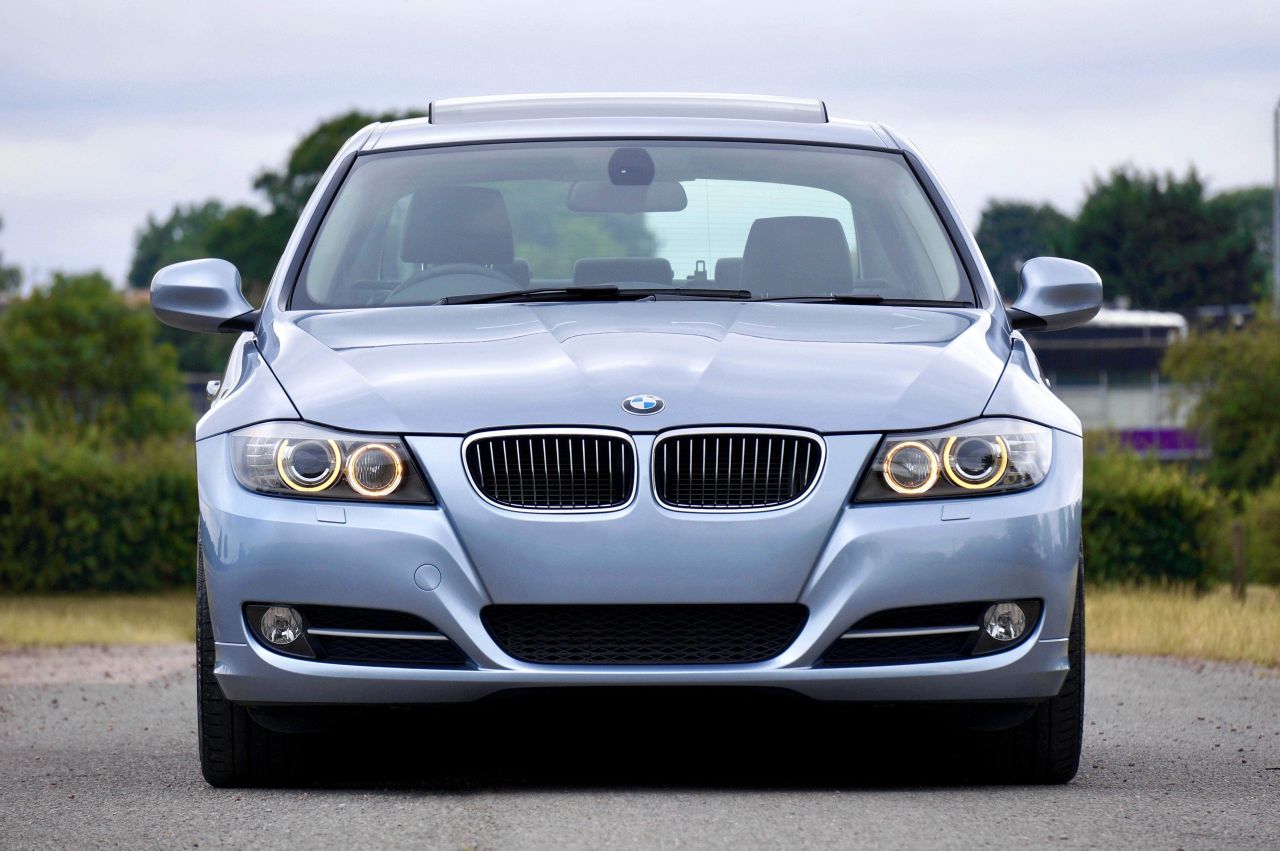
Xenon headlights, also known as HID (High-Intensity Discharge) headlights, are automotive lighting systems that produce light by creating an electrical arc inside a gas-filled discharge bulb rather than heating a traditional filament like a halogen bulb.
Xenon headlights became popular because they can produce a bright, high-intensity light with a different color and light distribution compared with conventional halogen systems.
A Bi-Xenon system is a more advanced HID configuration that can provide both low-beam and high-beam functions using a single xenon light source, usually by mechanically changing the position of a shield or reflector inside the headlamp.
The names are often used interchangeably in everyday conversation, but Xenon and Bi-Xenon do not describe exactly the same thing.
The main difference is how the HID light source is used for the low- and high-beam functions.
What Is a Xenon HID Headlight?
A Xenon HID headlight uses a discharge bulb containing xenon gas and other materials.
Unlike a halogen bulb, there is no conventional glowing filament.
Instead, a high-voltage electrical system creates an arc between two electrodes inside the bulb.
The resulting arc produces intense light.
A typical HID headlight system includes:
-
Xenon HID bulb
-
Ballast
-
Igniter or integrated ignition circuitry
-
Headlamp housing
-
Reflector or projector
-
Wiring and connectors
-
Vehicle control electronics
Some vehicles also use:
-
Automatic headlight leveling
-
Steering-responsive lighting
-
Headlamp washers
-
Cornering-light functions
The exact design varies by vehicle.
How Does a Xenon HID Headlight Work?
When the headlights are switched on, the vehicle supplies power to the HID control system.
The ballast and ignition circuitry generate the electrical conditions required to start the discharge arc inside the bulb.
Starting the bulb requires a much higher ignition voltage than the voltage used during normal operation.
Once the arc is established, the ballast regulates the electrical power supplied to the bulb so that the discharge remains stable.
The bulb then reaches its normal operating condition and produces a strong light output.
This process is different from a halogen bulb, which can reach operating temperature almost immediately.
What Is a Xenon Ballast?
The ballast is one of the most important components in an HID lighting system.
It controls the electrical power supplied to the xenon bulb.
The ballast performs several important functions, including:
-
Providing the required starting conditions
-
Controlling electrical current
-
Stabilizing the discharge arc
-
Protecting the system from abnormal electrical conditions
-
Maintaining stable bulb operation
A ballast failure can prevent the xenon bulb from starting even when the bulb itself is still good.
Some HID systems have separate ignition components, while others integrate the ignition function into the ballast.
What Is the Xenon Igniter?
The igniter is responsible for generating the high-voltage pulse required to start the discharge inside the xenon bulb.
Depending on the vehicle design, the igniter may be:
-
Integrated into the ballast
-
Mounted separately
-
Integrated into the headlamp assembly
Because HID systems operate with very high ignition voltages, the components should not be handled or tested casually while energized.
Proper manufacturer procedures should always be followed when working on an HID system.
What Is a Xenon Bulb?
The xenon bulb contains a gas-discharge system rather than a conventional filament.
The electrical arc between the electrodes generates the light.
Over time, HID bulbs can lose performance even if they have not completely failed.
An aging bulb may:
-
Become dimmer
-
Change color
-
Take longer to reach normal brightness
-
Flicker
-
Shut off intermittently
For this reason, an HID bulb does not have to be completely dead before replacement becomes necessary.
What Is Bi-Xenon?
Bi-Xenon refers to an HID headlight system capable of providing both low beam and high beam using the same xenon light source.
A common Bi-Xenon projector uses a movable internal shield.
For low beam, the shield blocks part of the light and creates the required cutoff.
When high beam is selected, the shield moves to change the light pattern and allow more light to project forward.
The exact mechanism differs between manufacturers.
Therefore, Bi-Xenon does not necessarily mean that the vehicle has two separate xenon bulbs for low and high beam.
In many systems, one HID projector performs both functions.
How Does Bi-Xenon Change From Low Beam to High Beam?
In a typical projector-type Bi-Xenon system, an electrically controlled mechanism changes the position of an internal shield.
During low beam operation, the shield creates a defined cutoff so that light is directed below the appropriate level.
When high beam is activated, the shield moves out of the way or changes position.
This increases the usable forward light output.
The switching mechanism may use:
-
Solenoid actuator
-
Mechanical linkage
-
Movable shield
A failure of this mechanism can result in low beam working normally while high beam does not operate correctly.
What Is the Difference Between Xenon and Bi-Xenon?
The key difference is the beam function.
A conventional Xenon HID setup may use a xenon bulb for the low beam while another light source is used for high beam.
A Bi-Xenon system uses the HID light source for both low and high beam functions, typically by changing the optical path with a movable mechanism.
Therefore:
Xenon describes the HID lighting technology.
Bi-Xenon describes an arrangement in which one HID light source is used for both low and high beam functions.
This distinction is important when diagnosing a lighting problem.
Are Xenon Headlights Brighter Than Halogen Headlights?
Factory-designed HID headlights can produce substantially different light output characteristics from traditional halogen systems.
However, brightness alone is not the only factor determining headlight performance.
The optical design of the headlamp is extremely important.
A well-designed projector with correct optics can provide a useful and controlled beam pattern.
Simply installing a high-output bulb into an unsuitable housing does not automatically produce a better headlight.
In fact, an incompatible retrofit can create glare for other road users.
Do Xenon Headlights Take Time to Reach Full Brightness?
Yes.
Unlike an LED system, an HID bulb normally requires a warm-up period to reach stable operating conditions.
Immediately after ignition, the light output can change as the discharge stabilizes.
A healthy HID system reaches its normal operating state relatively quickly.
If one headlight consistently takes much longer than the other to become bright, the bulb, ballast, igniter, electrical supply, or related components may need to be checked.
What Are the Symptoms of Xenon Headlight Failure?
Xenon and Bi-Xenon systems can develop several types of faults.
Common symptoms include:
-
Headlight does not turn on
-
One headlight is dimmer than the other
-
Headlight flickers
-
Headlight turns off intermittently
-
Headlight changes color
-
Headlight takes too long to reach full brightness
-
High beam does not work
-
Low beam does not work
-
Headlight warning appears
-
Automatic leveling warning appears
-
Headlight range is incorrect
-
Headlamp shuts off after warming up
The specific symptom can provide useful clues about which component may be responsible.
One Xenon Headlight Does Not Work
If one HID headlight is completely off while the other operates normally, possible causes include:
-
Failed bulb
-
Failed ballast
-
Igniter problem
-
Blown fuse
-
Wiring fault
-
Connector problem
-
Control-module problem
-
Ground problem
The bulb should not automatically be blamed.
A diagnostic process should determine whether the bulb is receiving the correct electrical control and whether the ballast is functioning.
Xenon Headlight Flickers
Flickering is a common complaint with aging HID systems.
Possible causes include:
-
Aging HID bulb
-
Ballast failure
-
Igniter problem
-
Poor electrical connection
-
Voltage instability
-
Damaged connector
-
Wiring problem
If the bulb has been used for many years, bulb aging is one possibility.
If a replacement bulb does not solve the problem, the ballast and electrical circuit should be investigated.
Xenon Headlight Turns Off After a Few Minutes
This symptom can be particularly useful diagnostically.
A bulb or ballast may work correctly when cold but develop a fault as its operating temperature increases.
Possible causes include:
-
Aging bulb
-
Ballast thermal failure
-
Igniter problem
-
Internal electrical fault
-
Voltage instability
A system that fails only after warming up should not automatically be diagnosed as a simple bulb failure.
Xenon Headlight Is Purple, Pink, or Different From the Other Side
An HID bulb can change color as it ages.
A bulb that becomes noticeably purple, pink, or otherwise different from the opposite side may be approaching the end of its service life.
Color change can therefore be an important warning sign.
If one bulb looks significantly different from the other, replacing only the electrical module may not solve the problem.
Why Do Xenon Bulbs Become Dim Over Time?
HID bulbs can gradually lose their original performance.
The internal discharge environment changes as the bulb ages.
Electrode wear and changes inside the discharge chamber can affect light output and color.
This means an HID bulb can become unsuitable for effective nighttime driving before it completely stops working.
What Causes Xenon Headlight Failure?
Xenon systems can fail for many reasons.
Common causes include:
Aging bulb
The discharge bulb may gradually lose brightness or eventually stop operating.
Ballast failure
The ballast may fail to start or properly regulate the bulb.
Igniter failure
The high-voltage starting circuit may stop functioning correctly.
Wiring problems
Damaged wires, poor grounds, or high-resistance connections can interfere with operation.
Connector corrosion
Moisture can cause corrosion inside connectors.
Water intrusion
Water entering the headlamp or electronic components can cause electrical problems.
Control-module faults
Some vehicles use sophisticated lighting control modules that can also develop faults.
Mechanical failure
Bi-Xenon systems contain moving components that can fail or become stuck.
What Are the Symptoms of a Bad Xenon Ballast?
A defective ballast can cause:
-
Headlight not starting
-
Intermittent operation
-
Flickering
-
Headlight shutting off
-
Repeated ignition attempts
-
Unequal operation between left and right headlights
However, these symptoms can also be caused by the bulb or wiring.
The ballast should therefore be diagnosed rather than replaced solely on the basis of symptoms.
What Are the Symptoms of a Bad Xenon Bulb?
A worn or defective HID bulb can cause:
-
Dim light
-
Color change
-
Flickering
-
Delayed startup
-
Intermittent operation
-
Complete failure
A bulb that has changed color or become significantly dimmer than the other side is particularly suspicious.
What Are the Symptoms of Bi-Xenon Failure?
A Bi-Xenon system can develop all the typical HID problems as well as faults specific to the beam-switching mechanism.
Possible symptoms include:
-
Low beam works but high beam does not
-
High beam works incorrectly
-
One side does not switch to high beam
-
Clicking or actuator noise
-
High beam warning
-
Projector mechanism stuck
-
Uneven beam pattern
If the HID bulb remains illuminated but the beam does not change when high beam is selected, the mechanical actuator or control circuit may need to be inspected.
Can the Bi-Xenon Shutter Fail?
Yes.
The movable shutter or shield is a mechanical component.
Over time, the actuator, linkage, spring, or internal mechanism can develop a fault.
Possible causes include:
-
Actuator failure
-
Mechanical binding
-
Damaged linkage
-
Internal corrosion
-
Electrical control problem
This can cause the low/high beam transition to stop functioning correctly.
What Is an Automatic Headlight Leveling System?
Many factory-installed HID systems are equipped with automatic headlight leveling.
The purpose of the leveling system is to maintain an appropriate headlamp aim as the vehicle's body angle changes.
For example, vehicle loading can alter the pitch of the vehicle.
Without appropriate leveling, the headlights could point too high or too low.
A leveling system can use information from suspension or body-height sensors and adjust the headlamp position through an actuator.
What Are the Symptoms of Headlight Leveling Failure?
A leveling fault may produce:
-
Headlights pointing too high
-
Headlights pointing too low
-
One headlight positioned differently from the other
-
Headlight leveling warning
-
Headlight movement during startup not occurring
-
Automatic leveling becoming unavailable
The fault may be related to:
-
Level sensor
-
Sensor linkage
-
Wiring
-
Headlamp actuator
-
Control module
-
Calibration
Can a Headlight Level Sensor Cause Xenon Problems?
Yes.
If the vehicle uses automatic headlight leveling, a defective level sensor can affect headlamp positioning.
The sensor itself may be functioning incorrectly, or its linkage may be damaged.
A suspension repair can also sometimes affect the sensor linkage.
This is why a headlight-leveling warning should not automatically be interpreted as a failed headlamp.
Why Do Some Xenon Systems Have Headlight Washers?
Many factory HID systems were equipped with headlamp cleaning systems in certain vehicle markets and configurations.
The purpose is to help keep the optical surface sufficiently clean so that dirt does not significantly affect the beam pattern.
The exact legal requirements for headlamp cleaning and leveling vary by market, vehicle type, approval system, and model year.
Therefore, these features should be considered part of the vehicle's original lighting configuration rather than universal requirements for every HID installation.
Can Moisture Cause Xenon Headlight Failure?
Yes.
Moisture inside a headlamp can affect electrical and optical components.
Possible consequences include:
-
Connector corrosion
-
Ballast damage
-
Igniter problems
-
Electrical shorts
-
Fogging
-
Reduced optical performance
A small amount of temporary condensation may occur in some headlamp designs and does not necessarily indicate a failure.
Persistent water accumulation, however, requires investigation.
Can a Cracked Headlight Housing Cause HID Problems?
Yes.
A cracked housing can allow moisture and contaminants to enter the headlamp.
This can eventually damage electrical components and affect the optical system.
If the headlamp has been damaged after a collision, the housing, seals, wiring, ballast, and connectors should all be inspected.
Can Low Battery Voltage Cause Xenon Problems?
Yes.
HID systems require specific electrical conditions for startup and operation.
Low vehicle voltage can interfere with the ignition process or cause electronic control modules to record faults.
If both headlights begin behaving abnormally at the same time, the vehicle's battery and charging system should be checked.
A problem affecting only one side is more likely to involve that headlamp's local components or wiring, although this is not an absolute rule.
How Are Xenon and Bi-Xenon Headlights Diagnosed?
Diagnosis should begin by determining exactly what the system is doing.
The technician may check:
-
Bulb condition
-
Ballast operation
-
Igniter function
-
Fuses
-
Power supply
-
Ground
-
Connectors
-
Wiring
-
Headlight control module
-
Level sensors
-
Actuators
-
Diagnostic trouble codes
The diagnostic approach should follow the manufacturer's service procedure.
Because HID systems use high-voltage ignition circuits, unsafe direct testing of energized components should be avoided.
Can You Test a Xenon Ballast by Swapping Components?
Component swapping can sometimes be useful as a diagnostic strategy when performed according to an appropriate service procedure and when the components are compatible.
For example, technicians may compare left and right components in systems where the design allows this.
However, this should not be done blindly.
Some ballast or control units may require coding, configuration, or specific testing procedures.
HID systems also contain high-voltage components, so direct manipulation of energized circuits is unsafe.
Should Xenon Bulbs Be Replaced in Pairs?
Replacing both bulbs at the same time is often a sensible approach when both are aging.
HID bulbs gradually change in brightness and color.
If only one old bulb is replaced, the new bulb may appear noticeably different from the older bulb on the opposite side.
Replacing both can help maintain more consistent illumination.
However, if only one bulb has failed prematurely and the other bulb is relatively new, replacing a single bulb may be appropriate.
Can Xenon Headlights Be Converted to LED?
A xenon headlamp can sometimes be modified with aftermarket LED components, but compatibility is not guaranteed.
The headlamp's optics were designed around a particular light source.
Replacing an HID discharge source with an LED retrofit can change:
-
Beam pattern
-
Focal position
-
Light distribution
-
Glare
-
Electrical behavior
Therefore, simply installing an LED replacement does not automatically improve a xenon headlamp.
The complete optical and electrical system must be considered.
Are Aftermarket Xenon Conversion Kits the Same as Factory Xenon?
No.
A factory-designed HID headlamp is engineered as a complete system.
It can include:
-
HID projector
-
Correct bulb
-
Ballast
-
Ignition system
-
Headlamp optics
-
Leveling
-
Vehicle control electronics
An aftermarket conversion kit may simply place an HID bulb and ballast into a headlamp originally designed for a different light source.
This can create poor beam control and excessive glare.
It can also create compliance problems depending on the country and vehicle approval requirements.
Are Xenon Headlights Legal?
Legality depends on the vehicle, lighting system approval, installation method, and jurisdiction.
Factory-approved HID systems are different from simply installing an aftermarket HID conversion kit into a halogen headlamp.
In Europe, headlamp systems must comply with the applicable vehicle lighting and type-approval requirements.
Therefore, a xenon bulb being physically capable of fitting into a headlamp does not automatically make the resulting lighting system road legal.
The complete lamp and its approval status matter.
Can Xenon Headlights Fail Vehicle Inspection?
They can, depending on the reason for the failure and the applicable inspection rules.
Potential inspection issues may include:
-
Incorrect beam pattern
-
Excessive glare
-
Incorrect headlamp aim
-
Non-compliant retrofit
-
Damaged headlamp
-
Missing required equipment for the approved configuration
-
Automatic leveling malfunction where applicable
-
Faulty or unstable light output
A factory HID system that is properly maintained is very different from an improperly installed aftermarket conversion.
What Is the Difference Between Xenon, Bi-Xenon, and LED?
Xenon and Bi-Xenon use a gas-discharge light source.
LED headlights use semiconductor light-emitting diodes.
Xenon systems generally require a ballast and high-voltage ignition system.
LED systems use electronic drivers and do not require an HID ignition arc.
Bi-Xenon refers primarily to the way the HID source is used for low and high beam.
LED headlights can also provide both low and high beam through different optical arrangements.
Therefore, these terms describe different aspects of automotive lighting technology.
Final Thoughts
Xenon headlights, also known as HID headlights, use an electrical discharge inside a gas-filled bulb to produce high-intensity light.
A conventional Xenon system may use the HID light source for one beam function, while a Bi-Xenon system can use the same xenon source for both low and high beam, typically through a movable projector shield or similar optical mechanism.
The most important components of an HID system include the bulb, ballast, ignition circuitry, optical assembly, wiring, and, on many factory systems, automatic headlight leveling.
Common Xenon and Bi-Xenon problems include failure to illuminate, flickering, dim light, unusual color changes, intermittent operation, delayed startup, and headlights that switch off after warming up.
Bi-Xenon systems can also experience specific problems with the internal shutter or actuator, resulting in a low beam that works normally while the high beam function does not operate correctly.
A failed Xenon bulb is not the only possible cause of an HID lighting problem. Ballast failure, igniter problems, wiring faults, poor electrical connections, low voltage, water intrusion, control-module faults, and leveling-system problems can produce similar symptoms.
For this reason, replacing the bulb should not always be the first or only repair.
The lighting system should be diagnosed systematically, particularly when the problem is intermittent or when a new bulb does not solve the issue.
Factory-installed Xenon and Bi-Xenon systems are also engineered as complete optical and electronic systems. Using an incompatible aftermarket conversion can affect beam pattern, glare, reliability, and legal compliance.
When correctly designed, installed, aimed, and maintained, Xenon and Bi-Xenon headlights can provide effective nighttime illumination. When a fault occurs, accurate diagnosis is essential because the problem may involve much more than the visible bulb itself.