TR
TR EN
EN

What Is a Headlight Leveling Motor? What Are the Symptoms of Failure?
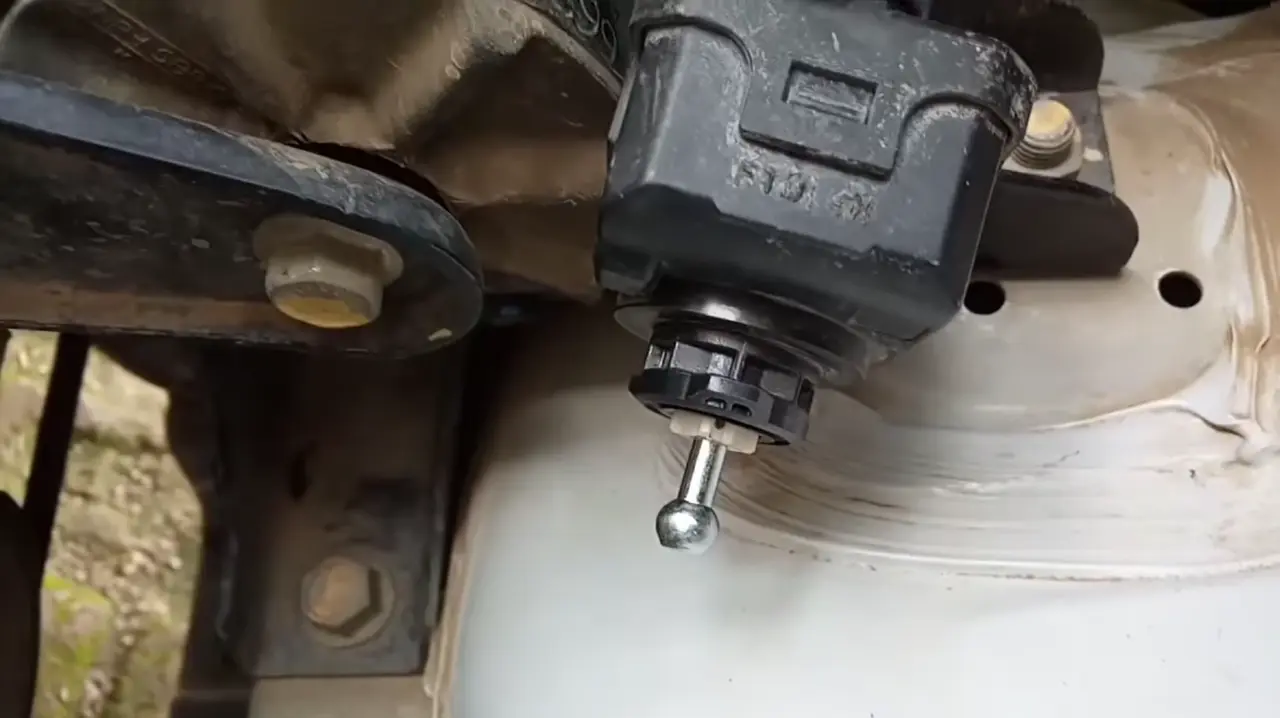
A headlight leveling motor is a small electric motor that adjusts the vertical position of a vehicle’s headlights. Its purpose is to keep the headlight beam at the correct height when the vehicle’s load or ride height changes.
For example, when several passengers sit in the rear seats or heavy items are placed in the trunk, the rear of the vehicle becomes lower. As the body tilts backward, the headlights can point higher than they should.
This can reduce the amount of road illuminated in front of the driver while also causing glare for oncoming traffic.
The headlight leveling motor compensates for these changes by moving the reflector or projector assembly inside the headlamp and changing the vertical direction of the light beam.
Although it is a relatively small component, it plays an important role in nighttime driving safety.
How Does a Headlight Leveling Motor Work?
The exact design varies between vehicles, but the basic operating principle is straightforward.
The motor is usually mounted inside or at the rear of the headlamp assembly. It is connected to an adjustment mechanism that moves the reflector or projector unit.
When the driver changes the headlight leveling setting, an electrical signal is sent to the motor. The motor rotates a small gear mechanism, which then moves the internal headlight assembly up or down.
Vehicles equipped with manual headlight leveling usually have a rotary control or switch on the dashboard.
Depending on the vehicle, the control may have positions such as:
0: Normal load or lightly loaded vehicle
1: Moderate load
2: Heavier load
3: Maximum load
The exact numbering and operation can vary between manufacturers.
One important point is that the entire headlight housing normally does not move. The housing remains fixed while the reflector or projector assembly inside the headlamp changes position.
How Does Automatic Headlight Leveling Work?
More advanced vehicles can adjust headlight height automatically without requiring the driver to operate a manual control.
An automatic headlight leveling system generally uses ride-height or suspension-position sensors to detect changes in the vehicle's attitude.
For example, if heavy luggage is placed in the trunk, the rear suspension compresses and the rear of the vehicle becomes lower.
A sensor detects this change and sends information to the relevant control unit. The system then commands the headlight leveling motors to move the light beam downward.
Automatic leveling is particularly important on vehicles equipped with certain xenon and advanced LED lighting systems, where maintaining the correct beam height is essential.
Where Is the Headlight Leveling Motor Located?
The location depends on the design of the headlight assembly.
In many vehicles, the leveling motor is mounted at the rear of the headlamp. In others, it is integrated directly into the headlight assembly.
The motor may therefore be difficult to access without removing a rear cover or other components.
It is generally a small electric unit with an electrical connector and a mechanical connection leading into the headlight's adjustment mechanism.
What Are the Symptoms of a Faulty Headlight Leveling Motor?
A headlight leveling motor can fail without triggering a warning light on the dashboard.
In many cases, the problem is first noticed when the headlights no longer respond correctly to the leveling control.
Some of the most common symptoms include the following.
The Headlight Level Adjustment Does Not Work
One of the clearest symptoms is that the headlight beam does not move when the leveling control is operated.
If the dashboard control is turned but the headlight position remains unchanged, the leveling motor could be faulty.
However, the motor should not immediately be blamed.
The fuse, wiring, connector, control switch, control module and mechanical adjustment mechanism should also be checked.
One Headlight Moves but the Other Does Not
This is a particularly useful symptom during diagnosis.
If one headlight responds to the leveling control while the other remains stationary, the problem may be limited to the non-operating side.
The affected motor, electrical connector and mechanical linkage should be inspected.
A problem affecting only one side does not necessarily mean that the complete headlight assembly needs to be replaced.
The Headlight Beam Keeps Moving Up and Down
If the headlights repeatedly move up and down while driving, there may be a problem with the automatic leveling system.
A disconnected ride-height sensor, damaged sensor linkage or incorrect sensor signal can cause the system to continuously make incorrect adjustments.
In this situation, the leveling motor itself may actually be working correctly.
The sensor and its mechanical connection should therefore be inspected before replacing the motor.
The Headlights Point Too High or Too Low
A leveling motor that becomes stuck can leave the headlight beam in an incorrect position.
If the headlights point too low, the driver may have a significantly reduced view of the road at night.
If they point too high, they can produce excessive glare for approaching drivers.
Both situations can reduce driving safety.
The Motor Makes Noise but the Headlight Does Not Move
Hearing an electric motor running while the headlight beam remains stationary can indicate a mechanical problem.
The motor may be operating, but its movement may not be reaching the reflector or projector assembly.
For example, internal plastic gears may be worn or broken, or the mechanical linkage between the motor and the headlight adjustment mechanism may have become disconnected.
Replacing the motor without checking the mechanical mechanism may therefore fail to solve the problem.
Clicking or Repeated Ticking From the Headlight
Unusual clicking, ticking or repeated motor noises during headlight adjustment can also indicate a problem.
If the motor continues running after the headlight has reached the end of its adjustment range, damaged or worn gears may be preventing the mechanism from stopping correctly.
A repeated clicking sound can be particularly noticeable when the leveling control is operated.
Why Do Headlight Leveling Motors Fail?
Headlight leveling motors are designed to operate for many years, but several factors can eventually cause failure.
Electrical connection problems
A loose connector, corroded terminal or damaged wire can prevent the motor from receiving the correct electrical signal.
Because headlights are exposed to moisture and temperature changes, corrosion can sometimes develop around electrical connections.
Internal motor failure
The electric motor itself can fail due to wear or an internal electrical fault.
Depending on the design, components such as brushes, windings or internal contacts can deteriorate over time.
Worn or damaged gears
Many leveling motors use small plastic gears.
If these gears become worn, stripped or broken, the motor may rotate without properly moving the headlight adjustment mechanism.
Impact damage
A collision or even a relatively minor impact can damage the internal adjustment mechanism.
The outside of the headlight may appear intact while the internal linkage or mounting points are damaged.
Water or moisture intrusion
Water entering the headlight can damage both the motor and its electrical connections.
A damaged rear cover, sealing problem or blocked ventilation system can increase the possibility of moisture-related problems.
Forced adjustment
Applying excessive force to the mechanical adjustment mechanism can damage the motor, gears or internal linkage.
What Should Be Checked Before Replacing the Motor?
If a headlight leveling motor stops working, replacing the motor immediately is not always the correct solution.
The first step should be to determine whether the problem is electrical, electronic or mechanical.
The leveling switch or control should be checked first.
The motor's electrical connector should then be inspected, and the supply voltage should be measured where appropriate.
The relevant fuse and wiring should also be checked.
If the motor receives the correct electrical signal but does not operate, the motor itself becomes a stronger suspect.
If the motor operates but the headlight does not move, the mechanical linkage inside the headlamp should be inspected.
On vehicles with automatic leveling, the ride-height sensors and their linkages should also be checked.
Are All Headlight Leveling Motors the Same?
No.
Headlight leveling motors vary considerably between vehicles.
Some systems use a relatively simple electric motor, while others integrate the motor into a more sophisticated lighting-control system.
The system can also differ depending on whether the vehicle uses halogen, xenon, LED or adaptive headlights.
For this reason, selecting a replacement motor based only on the vehicle's make and model may not always be sufficient.
The model year, headlight type and exact lighting configuration should also be considered.
Can a Headlight Leveling Motor Be Replaced?
In some vehicles, the leveling motor can be replaced separately.
In others, the motor is integrated into the headlight assembly and the manufacturer may specify replacement of the complete unit.
This depends entirely on the design of the particular headlamp.
When a separate replacement motor is available, it must be correctly connected to the internal leveling mechanism.
After replacement, the headlights may also need to be mechanically aligned.
Why Is Headlight Alignment Important After Repair?
Replacing the leveling motor is not the end of the repair.
The fact that the headlight moves does not necessarily mean that the beam is correctly aligned.
If the headlights are adjusted too low, the driver's visibility at night can be reduced.
If they are adjusted too high, they can cause glare for other drivers.
For this reason, the headlight alignment should be checked using appropriate equipment after replacing the motor or carrying out work on the headlight's internal mechanism.
Does a Faulty Leveling Motor Affect Driving Safety?
Yes.
Although the headlight leveling motor is a relatively small component, its failure can have a noticeable effect on nighttime visibility.
Incorrectly positioned headlights can illuminate too little of the road or direct excessive light toward oncoming traffic.
The problem becomes particularly important when the vehicle is carrying passengers or heavy cargo.
A functioning leveling system helps maintain the correct beam height as the vehicle's load changes.
What Should You Do If the Headlight Leveling Motor Fails?
A headlight that does not respond to leveling adjustments does not automatically mean that the motor itself needs to be replaced.
The problem may be caused by:
-
The headlight leveling switch
-
A blown fuse
-
Damaged wiring
-
A loose or corroded electrical connector
-
A ride-height sensor
-
A lighting control module
-
The internal headlight mechanism
-
The leveling motor itself
A proper diagnosis can therefore prevent unnecessary parts replacement.
On modern vehicles with automatic or electronically controlled headlight leveling, a diagnostic scan may also be necessary to identify stored faults and determine whether the problem is related to the motor, sensor or control system.
The headlight leveling motor may be small and hidden inside the lighting assembly, but it performs an important job. If the headlights no longer change position, one headlight behaves differently from the other, unusual clicking sounds are heard, or the beam remains pointed too high or too low, the entire leveling system should be inspected rather than assuming that the motor alone is defective.
A properly functioning headlight leveling system helps maintain useful nighttime visibility while reducing the risk of dazzling other drivers, especially when the vehicle's load changes.