TR
TR EN
EN

What Is a Throttle Cable? What Are the Symptoms of a Faulty Throttle Cable?
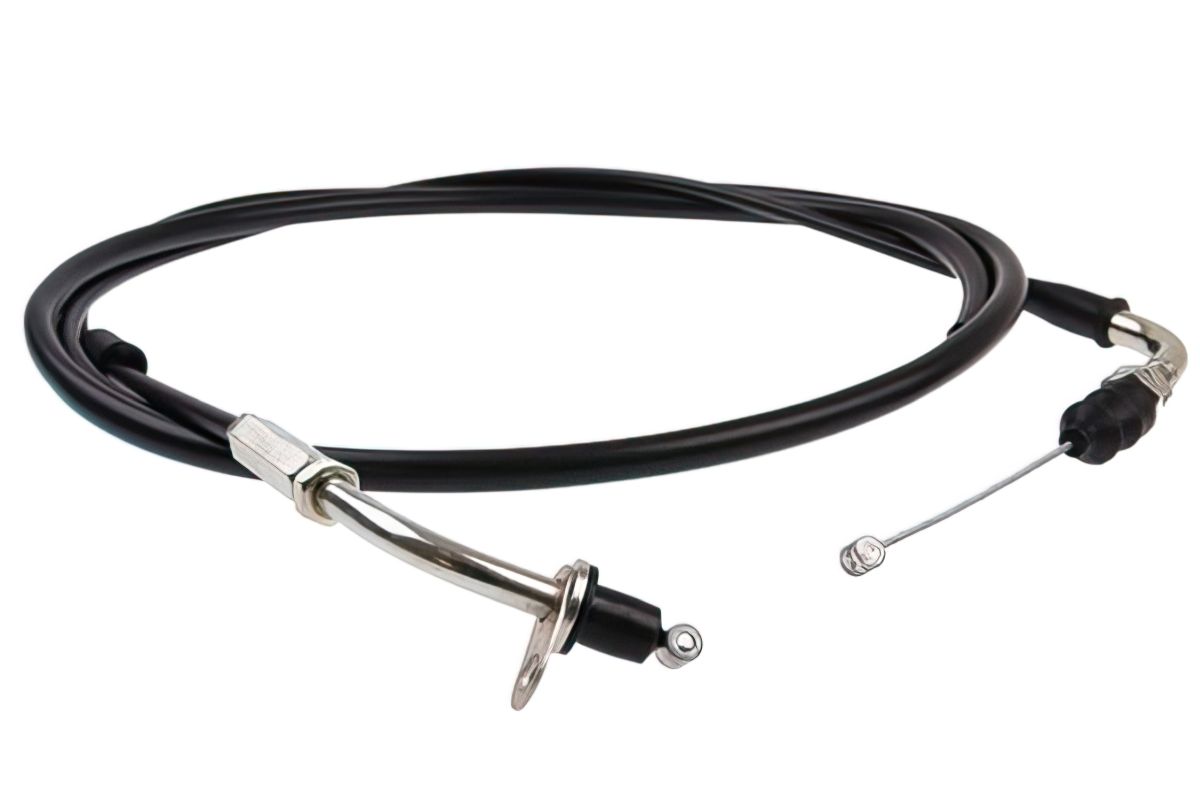
A throttle cable is a mechanical component used in older vehicles to transfer the movement of the accelerator pedal to the engine’s throttle mechanism. When the driver presses the accelerator pedal, the cable physically pulls the throttle mechanism open, allowing more air into the engine and increasing engine speed and power.
Throttle cables were widely used in older gasoline and diesel vehicles. Most modern vehicles, however, use an electronic accelerator pedal and electronic throttle control instead of a conventional mechanical cable.
In a vehicle equipped with a throttle cable, there is a direct mechanical connection between the accelerator pedal and the throttle mechanism.
How Does a Throttle Cable Work?
The operating principle of a throttle cable is relatively simple.
When the driver presses the accelerator pedal, the pedal mechanism pulls the cable. The other end of the cable is connected to the throttle mechanism on the engine. As the cable is pulled, the throttle opens.
When the driver releases the accelerator pedal, a return spring and the throttle mechanism return the throttle to its closed position.
The basic operating sequence is:
Accelerator pedal → Throttle cable → Throttle mechanism → Throttle opens → More air enters the engine → Engine speed and torque increase
On some older diesel engines, the throttle cable may operate the fuel control mechanism on the injection pump rather than a conventional throttle body. The exact arrangement therefore depends on the engine design.
Where Is the Throttle Cable Located?
One end of the throttle cable is normally connected to the accelerator pedal, while the other end is connected to the throttle mechanism in the engine compartment.

The cable usually consists of an inner metal cable running inside a protective outer sheath.
On the throttle-body side, the cable is normally attached to a lever or pulley. When the accelerator pedal is pressed, this mechanism should move smoothly.
It is important to note that many modern vehicles do not have a throttle cable at all. Instead, an accelerator pedal position sensor detects pedal movement and sends an electrical signal to the engine control unit.
What Are the Symptoms of a Bad Throttle Cable?
A throttle cable can wear out, corrode, become contaminated, kink, or start sticking inside its outer sheath.
Common symptoms include:
-
A stiff accelerator pedal
-
An accelerator pedal that sticks
-
Slow pedal return
-
The accelerator pedal not returning completely
-
Delayed engine response
-
Uneven or inconsistent throttle response
-
The engine not responding properly to pedal movement
-
The throttle not opening fully
-
The throttle not closing completely
-
Higher-than-normal idle speed
-
Difficulty controlling engine speed
-
Friction or scraping sensations from the pedal
-
A broken throttle cable
A noticeably heavier accelerator pedal is one of the more important signs that the cable or another part of the throttle mechanism may be developing excessive friction.
Can a Bad Throttle Cable Cause a Hard Accelerator Pedal?
Yes. On vehicles equipped with a mechanical throttle cable, increased pedal resistance can be caused by friction inside the cable sheath.
Water, dirt, corrosion, or damage can prevent the inner cable from moving freely.
As a result, the driver may have to apply considerably more force to the accelerator pedal.
However, a hard accelerator pedal does not automatically mean that the throttle cable is faulty. The throttle mechanism itself may be dirty or sticking, while the accelerator pedal assembly can also develop mechanical resistance.
The entire system should therefore be inspected rather than replacing the cable based solely on pedal stiffness.
What Happens If the Throttle Cable Gets Stuck?
A sticking throttle cable can be a serious safety problem.
If the cable becomes stuck inside its sheath, the throttle may not close immediately when the accelerator pedal is released. Engine speed can remain higher than expected, potentially causing unintended acceleration.
A sticking throttle mechanism can produce a similar symptom.
If the accelerator pedal does not return normally or the engine remains at high RPM after the pedal is released, the vehicle should not be driven until the problem has been properly diagnosed.
What Happens If the Throttle Cable Breaks?
If the throttle cable breaks, the throttle mechanism will usually return toward the closed position because of its return spring.
As a result, pressing the accelerator pedal may have little or no effect on engine speed.
Typical symptoms include:
-
The accelerator pedal suddenly becoming very light
-
The pedal feeling disconnected
-
The engine remaining at idle
-
Little or no acceleration
-
The engine not responding when the pedal is pressed
The exact result depends on the design of the throttle system and how the cable is connected.
Why Do Throttle Cables Fail?
Throttle cables can fail for several reasons.
Wear
The inner cable moves repeatedly every time the accelerator pedal is used. High mileage can eventually cause wear.
Corrosion
Water and moisture can cause the metal cable to rust. Corrosion increases friction and can eventually cause the cable to seize.
Damaged outer sheath
A cracked, split, or damaged sheath can allow water and dirt to enter the cable assembly.
Contamination
Dust, mud, and other contaminants can increase friction and interfere with smooth cable movement.
Incorrect routing
A cable installed with sharp bends or an incorrect routing path may develop excessive resistance.
Sticking throttle mechanism
Sometimes the cable is not the problem. The throttle mechanism itself may be dirty, damaged, or partially seized.
Accelerator pedal problems
The pedal hinge or linkage can also become stiff and create symptoms that resemble a throttle cable failure.
How Do You Check a Throttle Cable?
The throttle cable should be checked with the engine switched off and the vehicle in a safe condition.
Press the accelerator pedal and pay attention to whether the movement is smooth and consistent. When the pedal is released, it should return quickly and completely.
The throttle mechanism in the engine compartment should also be inspected.
Look for:
-
Sticking
-
Excessive friction
-
Excessive cable slack
-
Cracks in the outer sheath
-
Corrosion
-
Broken cable strands
-
Loose or disconnected fittings
-
Incorrect cable routing
-
A sticking throttle lever
-
Damaged return springs
If the cable itself feels rough or catches during movement, replacement may be necessary.
What Does Excessive Throttle Cable Slack Mean?
A small amount of adjustment clearance may be normal depending on the vehicle design. Excessive slack, however, can create a delay between accelerator pedal movement and throttle movement.
This may cause:
-
A dead zone at the beginning of accelerator pedal travel
-
Delayed throttle response
-
The throttle not reaching its full-open position
-
Poor response during acceleration
Some vehicles allow the throttle cable to be adjusted.
However, simply tightening the cable is not always the correct solution. Excessive tension can prevent the throttle from fully closing and may create a much more serious problem.
The manufacturer's specified adjustment procedure should always be followed.
Can a Throttle Cable Be Lubricated?
Some older throttle cable designs can be lubricated with a suitable lubricant.
However, not every throttle cable should be lubricated. Some cables use special internal coatings or designs that do not require lubrication.
If the cable has severe corrosion, internal damage, broken strands, or a damaged sheath, lubrication may only provide temporary improvement.
A badly damaged cable should generally be replaced rather than relying on lubrication.
How Is a Throttle Cable Replaced?
The replacement procedure varies between vehicles.
In general, the process involves:
-
Disconnecting the cable from the accelerator pedal.
-
Disconnecting the cable from the throttle mechanism.
-
Removing the cable's mounting clips and brackets.
-
Removing the old cable.
-
Routing the new cable through the original path.
-
Connecting both ends.
-
Adjusting the specified cable clearance if required.
-
Checking complete throttle opening and complete throttle closure.
Correct routing is particularly important. Sharp bends, excessive tension, or contact with hot engine components can cause the replacement cable to fail prematurely.
Throttle Cable vs. Electronic Accelerator Pedal
This distinction is very important during diagnosis.
In a mechanical throttle system, accelerator pedal movement is transmitted physically through the cable.
In an electronic throttle system, the accelerator pedal contains one or more position sensors. The pedal movement is converted into an electrical signal, and the engine control unit uses this information to control the electronic throttle body.
There is no physical cable between the accelerator pedal and throttle body in this type of system.
Therefore, a vehicle equipped with an electronic accelerator pedal does not have a conventional throttle cable that can fail.
Can a Throttle Cable Problem Set an OBD Code?
A conventional mechanical throttle cable normally does not generate a dedicated OBD-II fault code because the cable itself is a mechanical component and is not electronically monitored.
Modern electronic throttle systems are different.
The accelerator pedal position sensors, throttle position sensors, throttle actuator, and related circuits can be monitored by the engine control unit.
Problems in these systems can therefore produce diagnostic trouble codes related to throttle position, accelerator pedal position, or throttle actuator control.
Codes such as P0120, P0121, P0122, P0123, P0220, P0221, P0222, P0223, and P2100 can be associated with electronic throttle-control faults depending on the vehicle and manufacturer.
A fault code does not automatically prove that a particular component has failed. The wiring, connectors, reference voltage, ground, sensors, throttle body, and control module may all need to be checked.
Throttle Cable vs. Throttle Body
The throttle cable and throttle body perform different jobs.
The throttle cable transfers the driver's mechanical pedal movement to the throttle mechanism.
The throttle body controls the amount of air entering the engine.
A throttle cable can be in good condition while the throttle body is dirty or sticking. Conversely, the throttle body can work correctly while the cable is corroded, damaged, or broken.
This distinction is important when diagnosing acceleration problems.
How Is a Throttle Cable Fault Diagnosed?
A proper diagnosis should not focus only on the accelerator pedal.
The pedal assembly, throttle cable, cable routing, throttle mechanism, return spring, and throttle-body movement should be inspected together.
For example:
The pedal moves but the throttle does not move:
The cable may be broken, disconnected, or excessively loose.
The pedal is stiff but the throttle mechanism moves freely:
The cable or accelerator pedal assembly may have excessive friction.
The pedal moves normally but the throttle mechanism sticks:
The problem may be in the throttle mechanism rather than the cable.
The throttle moves normally but the engine does not respond correctly:
The problem may be related to the fuel, air, ignition, or engine management system rather than the throttle cable.
Is It Safe to Drive With a Bad Throttle Cable?
Even a mildly stiff throttle cable should not be ignored.
A cable that is only slightly difficult to operate today could become severely restricted, seize, or break later.
The vehicle should not be driven if:
-
The accelerator pedal sticks
-
The pedal does not return properly
-
Engine speed remains unusually high
-
The throttle does not close correctly
-
The throttle cable is broken
-
The cable has severe corrosion or visible damage
-
Accelerator response is unpredictable
Because the throttle directly controls vehicle acceleration, a mechanical problem in this system can become a significant safety issue.
Final Thoughts
A throttle cable is a simple but important component in vehicles that use a mechanical throttle-control system. It transfers accelerator pedal movement to the engine's throttle mechanism and allows the driver to control engine speed.
Wear, corrosion, contamination, incorrect adjustment, damaged cable housing, sticking mechanisms, and broken cables can cause symptoms such as a stiff accelerator pedal, sticking, delayed response, incomplete throttle opening, incomplete throttle closing, or complete loss of throttle control.
The most important point is that not every accelerator-pedal problem is caused by a throttle cable. Many modern vehicles use electronic throttle control and do not have a mechanical cable at all.
The first step in diagnosis is therefore to determine whether the vehicle uses a mechanical throttle cable or an electronic accelerator system. From there, the accelerator pedal, cable, throttle mechanism, sensors, wiring, and engine control system can be inspected systematically.