TR
TR EN
EN

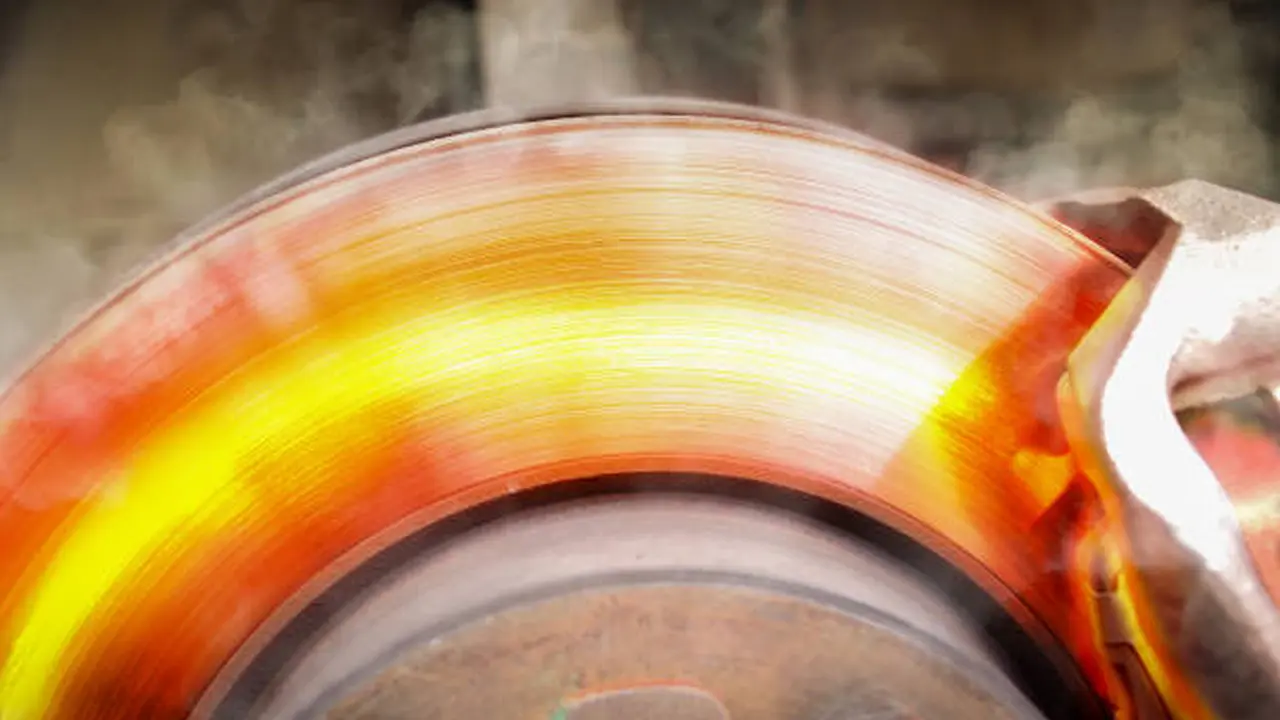
Brake Pad Overheating: Causes, Symptoms, Damage, and Consequences
Brake pads are designed to operate at high temperatures, but there is a limit to how much heat the braking system can absorb and dissipate.
During normal braking, friction between the brake pads and brake discs converts the vehicle's kinetic energy into heat. The harder, longer, or more frequently the vehicle is braked, the more heat is generated.
When the braking system cannot dissipate this heat quickly enough, temperatures can rise beyond the normal operating range. This condition is commonly described as brake overheating.
Brake pad overheating is not simply a problem with the pads themselves. Excessive heat can affect the brake discs, calipers, brake fluid, seals, wheel bearings, and other nearby components.
In severe cases, overheating can also cause a temporary or permanent reduction in braking performance.
How Do Brake Pads Get So Hot?
Every time you press the brake pedal, the brake pads are pushed against the rotating disc.
The vehicle's kinetic energy is converted into thermal energy through friction.
A passenger car can generate a surprising amount of heat during repeated braking. A heavy vehicle descending a long mountain road, for example, may need to dissipate enormous amounts of energy through its braking system.
Under normal conditions, the heat is transferred from the pads and discs into the surrounding air.
Problems occur when heat is being generated faster than it can be removed.
This can happen because of:
-
Repeated hard braking
-
Long downhill driving
-
Carrying heavy loads
-
Towing
-
Aggressive driving
-
A dragging brake
-
A seized caliper
-
Incorrectly installed brake pads
-
Poor-quality friction material
-
Insufficient cooling
-
Brake disc problems
Therefore, overheating does not always mean that the driver has used the brakes aggressively.
A mechanical fault can cause a brake to remain partially applied continuously.
What Is Brake Fade?
Brake fade is one of the most important consequences of excessive brake temperature.
It occurs when braking performance decreases as the brake system becomes excessively hot.
The driver may press the brake pedal with the usual amount of force but experience less braking effect than expected.
There are different mechanisms behind brake fade.
Friction-related fade
As the friction material becomes extremely hot, its friction characteristics can change. The pads may temporarily produce less braking force for a given pedal pressure.
Gas-related effects
Some friction materials can release gases or undergo chemical changes at very high temperatures. Historically, this phenomenon was sometimes associated with the idea of a gas layer between the pad and disc, although modern brake materials and designs have reduced this effect significantly.
Brake fluid fade
Excessive heat can also travel through the caliper and raise brake fluid temperature.
If the fluid reaches its boiling point, vapor bubbles can form.
Unlike brake fluid, vapor is compressible. The result can be a soft or spongy brake pedal and a major reduction in braking effectiveness.
Brake pad overheating and brake fluid boiling are therefore related but not identical problems.
What Are the Symptoms of Overheated Brake Pads?
Overheated brakes can produce several warning signs.
Common symptoms include:
-
Strong burning smell
-
Smoke from a wheel in severe cases
-
Excessive brake dust
-
Reduced braking performance
-
Brake pedal changes
-
Brake fade
-
Vehicle pulling to one side
-
Brake vibration
-
Abnormal noises
-
Discolored brake discs
-
Glazing on the brake pads
-
Excessive wheel temperature
One of the earliest warnings is often a strong, unusual smell after heavy braking.
A slight odor after severe braking does not automatically mean the brakes have been permanently damaged, but repeated or intense burning smells should not be ignored.
What Does an Overheated Brake Smell Like?
An overheated brake can produce a sharp, acrid, or chemical-like burning smell.
The exact odor depends on the brake pad material and how severely the system has overheated.
The smell may be especially noticeable after:
-
Descending a long hill
-
Repeated emergency braking
-
Driving with a loaded vehicle
-
Towing
-
Driving with a partially seized brake
If the smell comes from only one wheel, a mechanical problem deserves particular attention.
A single dragging brake can become much hotter than the other brakes even during normal driving.
Why Does One Brake Pad Overheat More Than the Others?
Uneven brake temperatures are often an important diagnostic clue.
If one wheel is much hotter than the others, possible causes include:
-
Seized caliper piston
-
Sticking guide pins
-
Restricted flexible brake hose
-
Parking brake mechanism not releasing
-
Incorrect pad installation
-
Corrosion in the pad carrier
-
Brake pad binding
-
Damaged brake hardware
A brake that remains partially applied continuously can generate heat even when the driver is not pressing the brake pedal.
This type of overheating should not be treated simply by installing new pads.
The cause of the dragging brake must be identified.
Can a Seized Caliper Cause Brake Pad Overheating?
Yes.
A seized caliper is one of the common mechanical causes of excessive brake temperature.
A caliper piston that does not retract appropriately can keep the pad in contact with the disc.
Similarly, seized guide pins on a floating caliper can prevent the caliper from moving correctly.
The result is continuous or excessive friction.
The brake pad then wears quickly and generates heat even during normal driving.
Can a Brake Hose Cause Overheating?
Yes.
A flexible brake hose can deteriorate internally.
In some failure conditions, the hose may allow hydraulic pressure to reach the caliper but restrict the return of pressure after the brake pedal is released.
The brake can then remain partially applied.
This can create a cycle of:
brake drag → heat → more brake drag → accelerated wear.
A restricted hose can therefore resemble a caliper problem.
What Happens to Brake Pads When They Overheat?
Excessive heat can change the physical and frictional properties of brake pad material.
One possible consequence is glazing.
Glazed brake pads can develop a hardened or shiny surface that may reduce their ability to produce consistent friction.
Possible symptoms include:
-
Reduced initial bite
-
Noisy braking
-
Less consistent braking
-
Increased pedal effort
-
Unusual friction characteristics
Severe overheating can also cause cracking, deterioration of the friction material, or separation problems depending on the pad construction and severity of the event.
What Is Brake Pad Glazing?
Brake pad glazing occurs when the friction surface becomes excessively smooth or hardened, often following high temperatures.
A glazed pad may look unusually shiny.
However, appearance alone is not always enough to determine whether a pad is safe or usable.
Glazing can be associated with:
-
Excessive heat
-
Incorrect bedding-in
-
Repeated light braking at elevated temperatures
-
Incorrect friction material
-
Brake drag
If the pad has suffered severe thermal damage, replacing it may be more appropriate than attempting to restore the friction surface.
Can Overheating Damage the Brake Disc?
Yes.
Brake discs are designed to withstand substantial temperature changes, but excessive thermal stress can damage them.
Potential consequences include:
-
Heat spots
-
Surface cracking
-
Disc distortion
-
Thickness variation
-
Blue or dark discoloration
-
Uneven friction surfaces
-
Accelerated wear
A disc that has experienced severe overheating should be inspected rather than automatically reused.
Does a Blue Brake Disc Mean It Is Ruined?
Not necessarily.
Blue or dark discoloration indicates that the disc has experienced elevated temperatures, but color alone does not provide a complete diagnosis.
The disc should be evaluated for:
-
Cracks
-
Excessive runout
-
Thickness variation
-
Surface condition
-
Heat checking
-
Manufacturer's minimum thickness specification
A disc can show discoloration and still be serviceable in some circumstances.
Conversely, a disc that looks relatively normal may still have a mechanical or dimensional problem.
Can Overheated Brakes Cause Brake Vibration?
They can.
Severe or repeated thermal loading can contribute to changes in disc surface condition or thickness variation.
The driver may subsequently experience steering-wheel or brake-pedal vibration during braking.
However, brake vibration is not proof of an overheated disc.
Other causes include:
-
Disc runout
-
Uneven pad deposits
-
Suspension problems
-
Wheel bearing play
-
Incorrect wheel installation
-
Hub runout
A proper inspection is required to identify the actual cause.
Can Overheating Damage the Brake Caliper?
Extreme heat can affect the caliper and its components.
Potentially affected parts include:
-
Piston seals
-
Dust boots
-
Caliper lubricant
-
Guide pin boots
-
Internal caliper components
Repeated extreme overheating can accelerate deterioration of rubber components and lubricants.
If the caliper has become extremely hot, it should be inspected for signs of heat damage and continued brake drag.
Can Brake Fluid Boil Because of Overheated Brake Pads?
Yes, indirectly.
The heat generated at the brake pad and disc can transfer through the caliper into the brake fluid.
If the fluid becomes excessively hot, it can reach its boiling point.
This is more likely under severe braking conditions, such as prolonged downhill driving or repeated high-energy stops.
Once vapor forms in the hydraulic system, the brake pedal can feel soft or spongy.
This is a more serious situation because braking performance can decrease significantly.
What Should You Do If the Brakes Overheat While Driving?
If you notice severe brake smell, smoke, or a sudden reduction in braking performance, do not continue driving normally.
Reduce the vehicle's speed safely and stop in a suitable location.
Allow the braking system to cool naturally.
Do not immediately pour cold water onto hot brake discs.
Rapid temperature changes can create additional thermal stress and potentially damage components.
If the vehicle has severe brake drag, smoke, or a significant loss of braking performance, professional inspection or recovery may be necessary.
Is It Safe to Drive After the Brakes Overheat?
It depends on the severity and the cause.
A brief temperature increase during hard braking does not necessarily mean that the braking system has been damaged.
However, if there was:
-
Smoke
-
Severe burning smell
-
Major brake fade
-
Very high wheel temperature
-
Visible disc discoloration
-
Brake fluid problems
-
Continuous brake drag
-
Abnormal noises
-
Significant vibration
the vehicle should be inspected before returning to normal driving.
The key question is not simply whether the brakes became hot, but how hot they became, why they became hot, and whether any components were damaged.
Why Do Brakes Overheat on Downhill Roads?
Long downhill roads are one of the classic causes of brake overheating.
If the driver continuously presses the brake pedal to maintain speed, the brakes must convert a large amount of kinetic and gravitational energy into heat.
This can eventually overwhelm the braking system's ability to dissipate heat.
Using an appropriate lower gear allows the engine to provide additional resistance, reducing the amount of work demanded from the service brakes.
This is commonly known as engine braking.
Engine braking does not eliminate the need for the brakes, but it can substantially reduce continuous brake loading during long descents.
Can Automatic Transmission Cars Overheat Their Brakes?
Yes.
Automatic transmissions can also experience brake overheating, especially during long descents or heavy-load driving.
Depending on the transmission and vehicle, an appropriate lower gear or manual gear-selection mode may help increase engine braking.
However, the exact procedure differs between vehicles.
The manufacturer's recommendations should be followed rather than assuming that every automatic transmission behaves in the same way.
Does Brake Pad Quality Affect Overheating?
Yes, friction material characteristics influence how a brake pad behaves at different temperatures.
Brake pads are engineered for particular operating ranges and vehicle applications.
A pad that is inappropriate for the vehicle or operating conditions may provide different friction behavior, wear characteristics, and thermal performance.
This does not mean that the most expensive brake pad is automatically the best choice.
The correct pad should match the vehicle, braking system, intended use, and manufacturer's specifications.
Can New Brake Pads Overheat?
New brake pads can become excessively hot if they are subjected to severe braking before proper bedding-in.
During the bedding-in process, the friction surfaces gradually establish a suitable contact pattern.
Aggressive braking immediately after installation can produce excessive temperatures and may result in uneven friction material transfer or other problems.
For this reason, the bedding procedure recommended by the brake manufacturer should be followed whenever applicable.
What Is Brake Pad Bedding-In?
Bedding-in is the process of gradually establishing the appropriate friction relationship between the new brake pads and discs.
It normally involves controlled braking cycles followed by cooling periods.
The exact procedure varies according to the brake pad and vehicle manufacturer.
There is no single universal bedding procedure that is appropriate for every brake system.
The goal is to avoid unnecessary thermal shock while establishing consistent friction behavior.
Can Overheated Brake Pads Wear Faster?
Yes.
Excessive temperatures can accelerate friction material degradation.
If overheating is caused by brake drag, the wear can become especially severe because the pad is continuously rubbing against the disc.
This can produce an important combination of symptoms:
-
Rapid pad wear
-
High brake temperature
-
Burning smell
-
Poor fuel economy
-
Wheel or brake discoloration
-
Vehicle pulling
When these symptoms appear together, the underlying mechanical cause should be investigated.
Can Brake Overheating Affect Fuel Consumption?
A dragging brake creates additional rolling resistance.
The engine must produce more power to maintain the same vehicle speed.
This can increase fuel consumption.
If a driver notices an unexplained reduction in fuel economy together with a hot wheel or burning brake smell, a dragging brake should be considered.
How Can You Check for an Overheating Brake?
A useful first step is comparing the temperature of the wheels after a controlled drive.
Professional technicians may use an infrared thermometer or thermal imaging equipment to compare brake temperatures.
However, extreme caution is required.
Do not touch the brake disc or caliper with your hand after driving.
Brake components can remain dangerously hot even after the vehicle has stopped.
A temperature difference between the left and right sides can provide useful information, but temperature alone does not identify the failed component.
How Is Brake Overheating Diagnosed Professionally?
A complete inspection may include:
-
Brake pad thickness measurement
-
Pad wear pattern inspection
-
Brake disc inspection
-
Disc thickness measurement
-
Runout measurement
-
Caliper piston inspection
-
Guide pin inspection
-
Brake hose inspection
-
Parking brake mechanism inspection
-
Brake fluid condition assessment
-
Hydraulic pressure testing when necessary
-
Wheel bearing inspection
-
Brake temperature comparison
The technician should determine whether the brake is overheating because of excessive braking demand or because a component is causing continuous brake application.
Should Overheated Brake Pads Always Be Replaced?
Not automatically.
The decision depends on the severity of the overheating and the condition of the pads.
A professional inspection should look for:
-
Glazing
-
Cracking
-
Disintegration
-
Uneven wear
-
Contamination
-
Severe discoloration
-
Friction material damage
If the friction material has been significantly heat-damaged, replacement is generally the safer option.
If the pads are replaced, the discs and the cause of overheating should also be evaluated.
Replacing only the pads without repairing a dragging caliper or restricted hose will not solve the underlying problem.
Should Both Brake Pads on an Axle Be Replaced?
Brake pads are normally replaced as an axle set.
If one pad has been severely overheated, the condition of the pad on the opposite side should also be checked.
Uneven wear can indicate a mechanical problem that needs to be corrected before fitting new pads.
It is not good practice to replace only one brake pad on an axle simply because one side looks worse.
How Can Brake Pad Overheating Be Prevented?
Preventing excessive brake temperature starts with both driving technique and proper maintenance.
Useful practices include:
-
Avoid unnecessary hard braking
-
Use engine braking on long descents
-
Maintain a safe following distance
-
Avoid continuously riding the brake pedal downhill
-
Do not overload the vehicle
-
Follow towing recommendations
-
Inspect brake components regularly
-
Replace damaged brake hoses
-
Keep caliper guide pins properly maintained
-
Repair dragging brakes promptly
-
Use correctly specified brake pads and discs
-
Follow proper bedding-in procedures
Good brake maintenance is especially important before long mountain trips or heavy-load journeys.
The Difference Between Normal Brake Heat and Dangerous Overheating
Brake components are supposed to become hot.
A brake disc that is warm after driving is not necessarily a problem.
The concern begins when the temperature becomes excessive relative to the operating conditions or when overheating is accompanied by symptoms such as brake fade, smoke, severe odor, continuous brake drag, or visible thermal damage.
The same braking temperature may be perfectly normal during one driving condition and excessive during another.
For example, repeated high-speed stops naturally produce much more heat than gentle braking in city traffic.
Therefore, temperature should always be evaluated in context.
Final Thoughts
Brake pads are designed to operate under considerable thermal stress, but excessive heat can eventually exceed the limits of the braking system.
Overheating can cause brake fade, glazing, accelerated pad wear, disc heat damage, caliper problems, and—under severe conditions—brake fluid boiling.
One of the most important points is that overheated brake pads are not always the root cause of the problem.
If one wheel repeatedly becomes much hotter than the others, the real issue may be a seized caliper, restricted brake hose, sticking guide pins, parking brake mechanism, or another form of brake drag.
Likewise, brake overheating after repeated hard stops or a long downhill descent may simply indicate that the braking system has been subjected to more thermal load than it can continuously dissipate.
The safest approach is to identify why the brakes overheated, not simply replace the brake pads.
A properly functioning braking system should be able to generate heat when stopping the vehicle and then dissipate that heat effectively. When heat generation consistently exceeds heat dissipation, brake performance and component life can suffer—and that is when overheating becomes a serious problem.