TR
TR EN
EN

Why Does the Parking Brake Get Stuck? How to Release a Stuck Parking Brake?
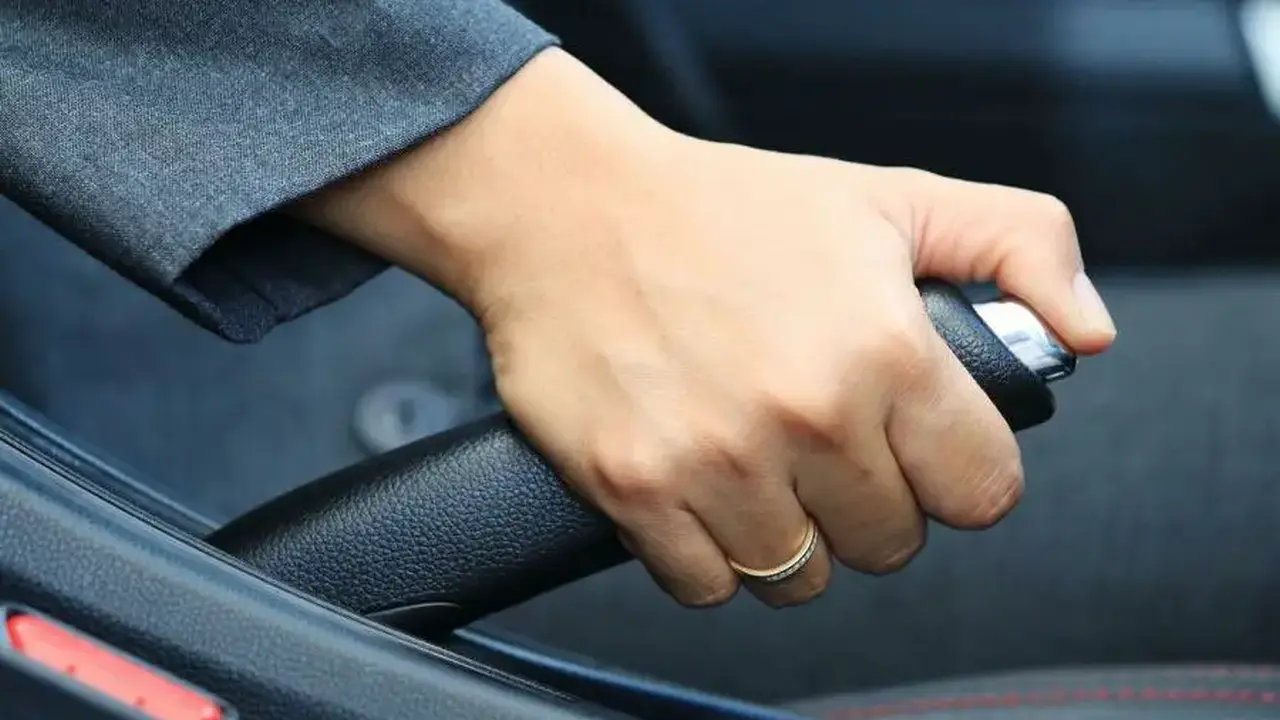
A parking brake, commonly called a handbrake, is a relatively simple but important part of a vehicle's braking system. Its primary purpose is to keep the vehicle stationary when parked, but it can also become stuck and refuse to release.
A stuck parking brake can happen after the vehicle has been parked for a long time, during freezing weather, after driving through water, or because of corrosion and mechanical problems inside the brake mechanism.
Sometimes the brake releases after a simple movement of the lever or pedal. In other cases, the cable, brake caliper, drum mechanism, or electronic parking brake actuator may be seized.
Understanding why the parking brake becomes stuck is important because repeatedly forcing the lever may damage the mechanism or leave the brakes partially applied.
What Does It Mean When the Parking Brake Is Stuck?
A stuck parking brake means the parking brake mechanism does not return completely to its released position.
Depending on the vehicle, the parking brake may operate through:
-
A mechanical cable
-
Rear drum brake mechanisms
-
Parking-brake mechanisms integrated into rear disc calipers
-
An electronic parking brake actuator
-
A combination of cables, springs, levers, and electronic actuators
The symptoms can therefore vary considerably between vehicles.
You may release the handbrake normally, but the vehicle may still feel as if the brakes are applied. The car may be difficult to move, the rear wheels may remain partially locked, or you may notice a burning smell after driving a short distance.
Why Does the Parking Brake Get Stuck?
There is not one single cause of a stuck handbrake. The most common causes are mechanical corrosion, frozen cables, seized brake components, and problems with the parking brake actuator.
Corroded Parking Brake Cable
Mechanical parking brakes commonly use cables running from the handbrake lever or pedal toward the rear brakes.
Over time, moisture can enter the cable housing. Corrosion can then develop inside the cable assembly.
A damaged cable may become difficult to move. The return mechanism may not have enough force to pull the cable back after the parking brake is released.
In this situation, the lever inside the vehicle may appear to work normally, while the rear brake remains partially applied.
Frozen Parking Brake Cable
Cold weather can cause a parking brake to freeze, particularly when moisture has entered the cable housing or accumulated around the rear brake mechanism.
Water can enter after driving through rain, washing the vehicle, or driving through standing water. If temperatures subsequently fall below freezing, the moisture can freeze.
This can make the parking brake cable or brake mechanism temporarily immobile.
Rust and Corrosion in the Rear Brake Mechanism
Corrosion is another common reason for a parking brake to remain engaged.
Vehicles that spend considerable time outside, especially in wet or salty environments, are more susceptible to corrosion around the rear brake components.
The parking brake lever on a rear caliper or the internal mechanism of a drum brake can become seized.
Seized Rear Brake Caliper
On many vehicles with rear disc brakes, the parking brake mechanism is incorporated into the rear brake caliper.
If the parking brake lever or internal mechanism becomes seized, releasing the handbrake lever inside the cabin may not fully release the brake at the wheel.
This can result in brake drag, excessive heat, uneven pad wear, and sometimes a strong burning smell.
Brake Drum Mechanism Sticking
Vehicles equipped with rear drum brakes may use an internal parking brake lever and linkage.
Rust, dirt, damaged springs, worn components, or corrosion inside the drum can prevent the mechanism from returning properly.
A drum brake can therefore remain partially applied even when the handbrake lever or pedal has been released.
Broken or Weak Return Spring
Mechanical parking brake systems use springs to return components to their released positions.
If a spring becomes weak, damaged, displaced, or broken, the parking brake mechanism may not return completely.
A weak return spring does not necessarily mean the spring itself is the only problem. Corrosion, excessive cable friction, or a seized brake mechanism can also prevent the spring from doing its job.
Damaged Parking Brake Cable Housing
The outer covering of a parking brake cable protects the inner cable from water and contamination.
If the housing is cracked, crushed, improperly routed, or otherwise damaged, water and dirt can enter.
The result can be increased friction, corrosion, or freezing.
Why Does the Parking Brake Get Stuck in Cold Weather?
Freezing temperatures are one of the most recognizable causes of a stuck handbrake.
Imagine that the vehicle is parked overnight after driving in wet weather. Moisture may remain inside or around the parking brake cable and rear brake assembly.
When the temperature falls below freezing, that moisture can turn into ice.
The next morning, you may lower the handbrake lever normally, but the rear brakes remain engaged.
This does not necessarily mean that a major brake component has failed. In some cases, the mechanism may release after the ice melts.
However, repeatedly forcing the vehicle forward or backward is not a good solution because it can place unnecessary loads on the brake components and drivetrain.
How Can You Tell if the Parking Brake Is Still Engaged?
The first indication is often that the vehicle does not move normally after the parking brake has been released.
Possible signs include:
-
The vehicle is difficult to move
-
The engine seems to work harder when moving off
-
The rear wheels appear to drag
-
The car pulls or feels unusually resistant
-
A burning smell develops
-
One rear wheel becomes much hotter than the other
-
The vehicle does not roll freely
-
The parking brake warning remains illuminated
-
The parking brake lever or pedal does not return normally
-
An electronic parking brake reports a fault
One particularly useful clue is abnormal heat from one rear wheel.
If one wheel is significantly hotter than the opposite side after a short drive, a brake may be dragging. Do not touch the brake disc or caliper directly because they can become extremely hot.
How to Release a Stuck Mechanical Parking Brake
If the vehicle has a conventional mechanical handbrake, there are several things you can try depending on the cause.
First, Make Sure the Vehicle Is Safe
Before attempting to release a stuck parking brake, keep the vehicle on level ground whenever possible.
Do not crawl underneath a vehicle that is supported only by a jack.
If the vehicle must be lifted for diagnosis, use properly rated jack stands or appropriate lifting equipment.
Fully Release the Handbrake
Lower the handbrake lever completely or release the parking brake pedal according to the vehicle design.
Do not repeatedly yank the lever with excessive force.
If the mechanism is frozen or seized, excessive force can damage the cable, lever, ratchet mechanism, or related components.
Rock the Vehicle Gently
If the parking brake appears to be frozen rather than mechanically seized, gentle movement may sometimes help free the mechanism.
With the transmission in the appropriate gear or neutral, depending on the situation, the vehicle can sometimes be moved very slightly forward and backward.
The key word is gently.
Do not attempt to overcome a severely seized brake using high engine torque. If the wheel is locked, forcing the vehicle to move can damage tires, brakes, or drivetrain components.
Allow Ice to Melt Naturally
If freezing is suspected, allowing the vehicle to warm up may release the mechanism.
Moving the vehicle into a warmer location can also help.
Do not use an open flame to heat a brake cable, tire, brake component, or the underside of the vehicle.
A controlled source of warm air may be appropriate when used safely and according to the vehicle manufacturer's recommendations, but heating brake components excessively can be dangerous.
What If the Handbrake Does Not Release?
If the parking brake remains stuck after basic attempts, the next step is diagnosis rather than more force.
The problem may be located at several points:
-
Handbrake lever or pedal
-
Parking brake cable
-
Cable equalizer
-
Rear brake caliper
-
Drum brake mechanism
-
Return spring
-
Brake pad or shoe hardware
-
Electronic parking brake actuator
-
Electrical wiring or control system
A mechanic can determine where the mechanism is actually stuck.
For a mechanical system, separating the cable from the rear brake mechanism can help determine whether the cable or the brake itself is causing the problem.
If the brake releases when the cable is disconnected, the cable may be seized.
If the brake remains applied, the problem may be within the caliper or drum brake assembly.
Can You Drive With a Stuck Parking Brake?
Driving with a partially applied parking brake is not recommended.
Even if the vehicle can move, the brake may continue generating friction.
This can cause:
-
Excessive brake temperature
-
Accelerated brake pad or shoe wear
-
Brake disc damage
-
Brake drum damage
-
Wheel bearing heat exposure
-
Reduced braking performance
-
Increased fuel consumption
-
Tire-related problems in severe cases
-
Brake fluid overheating in extreme situations
A severely dragging brake can become hot enough to damage surrounding components.
If you notice smoke, a strong burning smell, or extremely high brake temperatures, stop driving and have the vehicle inspected.
Why Does the Parking Brake Sometimes Release but Get Stuck Again?
An intermittent problem often points toward corrosion, cable friction, or a mechanism that is beginning to seize.
For example, a cable may still move when cold and dry but become difficult to operate after rain.
Similarly, a rear caliper parking brake mechanism may work normally most of the time but occasionally fail to return completely.
This is an important distinction.
If the parking brake eventually releases by itself, that does not necessarily mean the problem has disappeared.
A component that intermittently sticks can eventually become completely seized.
How Is a Stuck Parking Brake Diagnosed?
A proper diagnosis begins by determining whether the problem is before or after the parking brake cable.
For a mechanical system, a technician may inspect:
-
Parking brake lever travel
-
Cable movement
-
Cable condition
-
Cable routing
-
Return springs
-
Rear caliper levers
-
Brake drum mechanisms
-
Brake pad or shoe movement
-
Caliper piston operation
-
Corrosion
-
Wheel temperature
-
Brake disc or drum condition
The technician may also compare the left and right rear brake mechanisms.
If one side is significantly more difficult to release than the other, that can provide an important diagnostic clue.
How to Fix a Seized Parking Brake Cable
If the cable is internally corroded or damaged, replacement is generally the proper repair.
Lubricating the exposed end of a badly corroded cable may temporarily improve movement, but it does not restore the cable's internal condition.
Some parking brake cables are designed with specific seals or constructions and should not be treated with arbitrary lubricants.
The correct repair depends on the cable design and the manufacturer's service procedure.
If the cable is physically damaged, kinked, frayed, or internally seized, replacing it is usually preferable to trying to restore it.
How to Fix a Stuck Rear Brake Caliper
A seized parking brake mechanism inside a rear caliper requires more careful diagnosis.
Depending on the design and severity of the problem, the solution may involve:
-
Cleaning the external mechanism
-
Repairing or replacing the caliper mechanism
-
Rebuilding the caliper where appropriate
-
Replacing the caliper
-
Replacing damaged pads
-
Replacing damaged discs
-
Checking the brake hose
-
Checking the caliper piston
-
Checking guide pins and related hardware
Simply replacing the brake pads without finding the reason for the seizure may allow the problem to return.
What About Electronic Parking Brakes?
Modern vehicles increasingly use an Electronic Parking Brake (EPB) instead of a conventional handbrake lever and cable.
An EPB can use an electric motor mounted on the rear caliper or a separate actuator mechanism.
When an electronic parking brake gets stuck, the procedure is different from a conventional mechanical handbrake.
Possible causes include:
-
Weak vehicle battery
-
Faulty actuator
-
Seized rear brake mechanism
-
Damaged wiring
-
Connector problems
-
Parking brake control module faults
-
Communication problems
-
Software-related faults
-
Brake system faults that prevent release
An electronic parking brake should not automatically be assumed to have a failed motor.
The system should be scanned for diagnostic trouble codes and inspected according to the manufacturer's procedure.
Some vehicles also require a specific service mode before the rear brakes can be removed.
Can Disconnecting the Battery Release an Electronic Handbrake?
Disconnecting the battery is not a universal method for releasing an electronic parking brake.
In some vehicles, the EPB may require a functioning electrical system and a specific electronic release procedure.
Disconnecting the battery without understanding the vehicle's system can also create additional faults or prevent normal operation until the system is reinitialized.
For an EPB that will not release, consult the vehicle-specific service procedure rather than treating battery disconnection as a general reset method.
Should You Use a Hammer to Release a Stuck Brake?
You may sometimes see advice recommending hitting the brake drum or other components with a hammer.
There are situations in professional brake repair where controlled mechanical force is used to free specific components, but indiscriminate hammering is not a safe general solution.
Hitting a brake disc, caliper, wheel bearing, ABS sensor, or other component can cause damage.
If corrosion has seized a brake mechanism, proper disassembly and inspection are usually safer than repeatedly striking components.
Is a Stuck Parking Brake the Same as a Stuck Brake Caliper?
Not necessarily.
A stuck parking brake can originate from the parking brake mechanism itself, while a dragging brake can also be caused by:
-
A seized caliper piston
-
Sticking guide pins
-
A restricted brake hose
-
Incorrect pad installation
-
Corrosion in the pad carrier
-
A damaged brake pad
-
Problems inside a drum brake
This distinction matters because replacing the parking brake cable will not solve a seized caliper piston, and replacing the caliper will not necessarily solve a corroded cable.
Why Does One Rear Wheel Lock While the Other Works Normally?
A one-sided problem often suggests a localized mechanical fault.
For example, the parking brake cable on one side may be seized, the caliper mechanism may be stuck, or the drum brake hardware may have become corroded.
A problem affecting both rear wheels may point toward a shared mechanism, such as the parking brake lever, equalizer, control system, or—in an electronic system—the EPB control circuit.
However, this is not an absolute rule. Proper inspection is still necessary.
How Can You Prevent the Parking Brake From Sticking?
Regular maintenance can significantly reduce the risk of parking brake problems.
Useful practices include:
-
Inspect the parking brake cables periodically
-
Check cable boots and protective coverings
-
Inspect rear brake components
-
Keep brake components free from excessive corrosion
-
Replace damaged cables rather than ignoring them
-
Maintain the braking system properly
-
Avoid leaving the vehicle with a known dragging brake
-
Follow the manufacturer's procedure for EPB maintenance
-
Address unusual brake noises or heat early
In regions where freezing temperatures are common, additional care may be necessary after driving through water or washing the vehicle.
Should You Leave the Parking Brake Applied When Parking?
For most vehicles, the parking brake is designed to be used whenever the vehicle is parked.
However, special circumstances can change the best practice.
If a conventional mechanical parking brake is known to be vulnerable to freezing because of moisture or a damaged cable, leaving it engaged overnight in freezing conditions may allow the mechanism to freeze in the applied position.
The appropriate procedure depends on the vehicle, parking conditions, slope, transmission type, and manufacturer's recommendations.
A vehicle should always be secured against movement. On a manual-transmission vehicle, leaving the transmission in an appropriate gear may provide additional security, but it should not be considered a substitute for a properly functioning parking brake.
When Should You Stop Trying to Release It Yourself?
You should stop attempting to free the parking brake and seek professional assistance if:
-
The rear wheel remains completely locked
-
The vehicle cannot move safely
-
You smell burning brakes
-
Smoke is visible
-
One wheel becomes extremely hot
-
The cable appears broken or severely corroded
-
The rear caliper is seized
-
An electronic parking brake displays a fault
-
The EPB will not release electronically
-
The vehicle moves only with significant engine force
-
You hear severe mechanical noises
A stuck parking brake is not simply an inconvenience. A brake that remains applied can become a serious safety and mechanical problem.
Final Thoughts
A stuck parking brake can be caused by something as simple as frozen moisture or as serious as a seized brake mechanism.
On conventional systems, the parking brake cable, return springs, rear caliper, and drum brake mechanism are common areas to inspect. On vehicles with Electronic Parking Brakes, the actuator, wiring, battery condition, control module, and mechanical brake components must also be considered.
The safest approach is not to force the vehicle to move and hope the brake releases. First determine why the parking brake is stuck.
If it is frozen, allowing the mechanism to thaw may solve the immediate problem. If the cable or brake mechanism is corroded or seized, however, the underlying fault needs to be repaired.
Most importantly, a parking brake that releases only intermittently should not be ignored. Intermittent sticking is often an early warning that a cable, caliper, drum mechanism, or actuator is beginning to fail.