TR
TR EN
EN

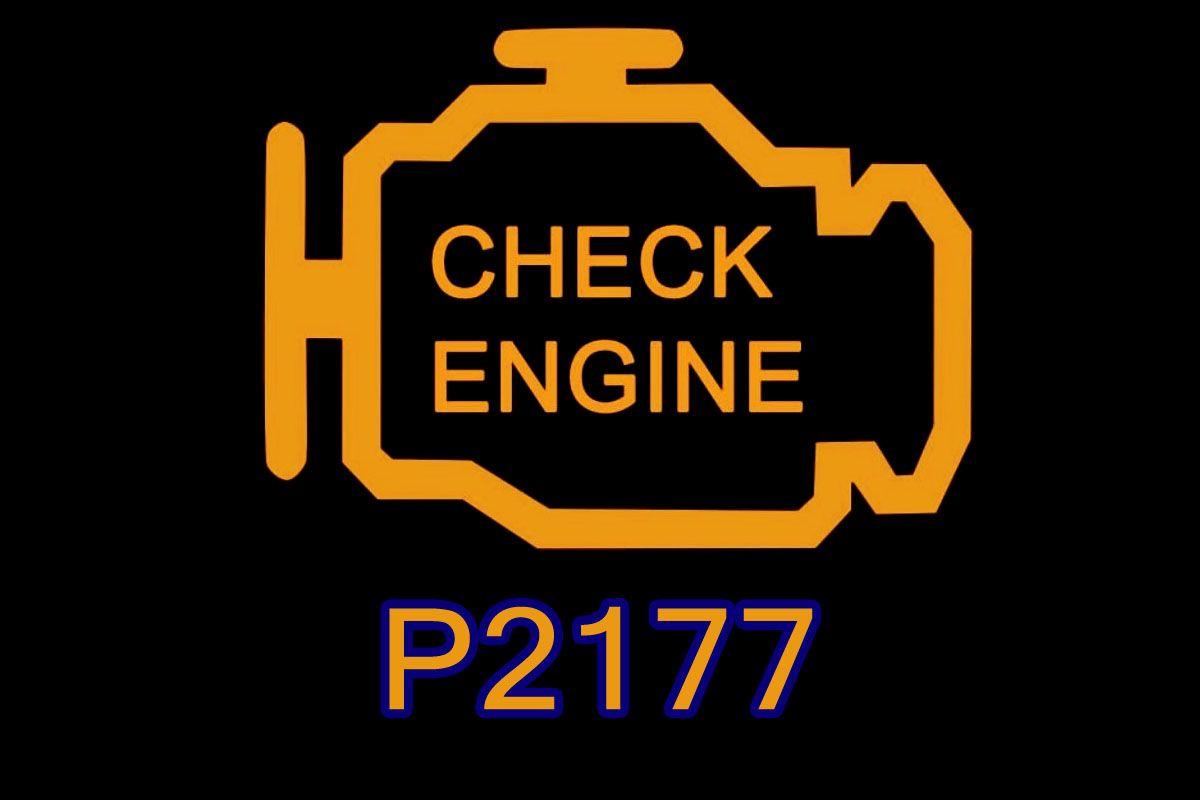
P2177 System Too Lean Off Idle (Bank 1)
P2177 is an engine management code that indicates the ECU has detected a lean air-fuel condition on Bank 1 when the engine is operating off idle.
The important part of this code is “Off Idle.” This separates P2177 from codes that specifically describe a lean condition at idle. The engine may appear to run reasonably well while idling, yet the mixture becomes too lean as soon as the throttle opens and the engine begins to take on more load.
A lean condition means the ECU believes there is too much air or not enough fuel for the operating conditions. However, the code does not tell you which of those possibilities is responsible.
It is therefore a mistake to immediately replace the oxygen sensor, MAF sensor, fuel pump, or injectors simply because P2177 is stored.
What Does Bank 1 Mean?
Bank 1 is the side of the engine containing cylinder number 1.
On a four-cylinder inline engine, there is normally only one cylinder bank, so Bank 1 represents the entire engine.
On V6, V8 and other multi-bank engines, Bank 1 is specifically the cylinder bank containing cylinder 1.
This distinction becomes important when comparing fuel trims and oxygen/A/F sensor data between banks.
What Does “Too Lean Off Idle” Mean?
The ECU continuously estimates whether the engine is receiving the correct amount of fuel for the amount of air entering the engine.
When the ECU detects a lean condition, it generally responds by increasing fuel delivery. This correction can be seen through Short-Term Fuel Trim (STFT) and Long-Term Fuel Trim (LTFT) data.
For example, if the engine needs more fuel than expected, fuel trims may become increasingly positive.
P2177 means the ECU has determined that the mixture is too lean under conditions where the engine is above its idle operating state.
This distinction is useful diagnostically.
If the engine is lean primarily at idle, an intake vacuum leak is often high on the suspect list.
If the mixture becomes lean as engine speed and load increase, the diagnostic direction can change considerably.
Why Can an Engine Be Lean Off Idle?
There are several possibilities, and they should be separated into two broad categories:
The engine is actually receiving too much air.
or
The engine is not receiving enough fuel for the amount of air entering it.
There is also a third possibility:
The ECU is being given incorrect information and believes the engine is lean when the actual mixture is different.
This is why P2177 should be approached as a fuel-mixture diagnosis, rather than as a specific sensor replacement code.
MAF Sensor Problems
The Mass Air Flow sensor is one of the first components worth investigating.
The ECU uses MAF information to estimate how much air is entering the engine. If the MAF reports less air than is actually entering, the ECU may initially command too little fuel.
As engine speed and airflow increase, the error can become more noticeable.
A contaminated or drifting MAF can therefore produce symptoms such as:
-
Hesitation during acceleration
-
Lean fuel trims
-
Poor throttle response
-
Lack of power
-
Surging
-
Increased fuel consumption
-
P2177
-
Sometimes additional MAF-related codes
However, a MAF sensor should not automatically be replaced.
The airbox, filter, MAF housing, intake duct, electrical connector, wiring and air leaks around the intake system should also be inspected.
An incorrectly installed aftermarket intake system can also disturb airflow around the MAF and create implausible readings.
Fuel Pressure or Fuel Volume Problems
The other major diagnostic direction is insufficient fuel delivery.
An engine may have normal fuel pressure at idle but fail to maintain adequate fuel supply as demand increases.
Possible causes include:
-
Weak fuel pump
-
Restricted fuel filter
-
Restricted fuel pickup or strainer
-
Fuel pressure regulator problem
-
Electrical voltage loss at the fuel pump
-
Poor pump ground
-
Restricted fuel supply
-
Fuel pressure control problem
-
Fuel system contamination
This is particularly important with a code that occurs off idle.
If fuel trims look acceptable at idle but become strongly positive during acceleration or under load, fuel delivery deserves serious attention.
A fuel pressure test should be performed according to the vehicle manufacturer's specifications. On systems where pressure varies electronically, commanded and actual pressure should also be compared.
A Fuel Pump Can Be Weak Without Causing a Low-Pressure Code
This is an important point.
A weak fuel pump does not necessarily create a separate fuel-pressure DTC.
The engine ECU may simply recognize the resulting mixture problem through oxygen/A/F sensor feedback and eventually set a lean code such as P2177.
For example, a pump may provide enough fuel for:
-
Idle
-
Light cruising
-
Low engine load
but fail to provide sufficient volume during:
-
Hard acceleration
-
High RPM
-
Uphill driving
-
Heavy engine load
In this situation, measuring fuel pressure only at idle can give a misleading result.
The fuel system needs to be evaluated under the conditions where the problem occurs.
Fuel Injectors Can Also Cause P2177
A partially restricted injector may still operate normally enough at idle but fail to deliver the required amount of fuel as demand increases.
Possible injector-related problems include:
-
Restricted injector nozzle
-
Contaminated fuel
-
Poor injector spray pattern
-
Reduced injector flow
-
Electrical problems
-
Connector or wiring problems
-
Incorrect injector installation
-
Injector balance problems
If only one cylinder is affected, the engine may also develop a misfire.
If several cylinders or the entire bank are affected, the problem may be more related to fuel pressure, MAF measurement, intake air calculation or a common fuel supply issue.
Intake Air Leaks Are Still Possible
Although vacuum leaks are often associated with idle-related lean codes, an intake leak can also contribute to P2177.
Look for leaks around:
-
Intake manifold gasket
-
Throttle body gasket
-
PCV hoses
-
Crankcase ventilation components
-
Brake booster hose
-
EVAP purge connections
-
Intake ducting
-
Vacuum lines
-
Turbocharger inlet plumbing on turbocharged engines
The location of the leak matters.
A relatively small leak may have a much greater effect at idle, while a leak after the MAF on a forced-induction engine can become particularly significant under certain operating conditions.
A smoke test can be very useful when an air leak is suspected.
EVAP Purge Valve Problems
The EVAP purge system can sometimes create a lean condition that is easy to overlook.
If the purge valve allows too much vapor or unmetered air into the intake when it should not, the mixture can be disturbed.
A purge valve that is mechanically stuck open can cause:
-
Unstable idle
-
Difficult starting
-
Lean fuel trims
-
Hesitation
-
Rough running
-
P2177
The exact effect depends on the EVAP system design and operating strategy.
The purge valve should therefore be tested rather than simply replaced.
Exhaust Leaks Can Mislead the ECU
An exhaust leak upstream of the oxygen sensor can allow outside air to enter the exhaust stream.
That additional oxygen can make the sensor indicate a leaner mixture than actually exists.
The ECU may then increase fuel delivery in response.
This creates an important diagnostic trap:
The engine may not actually be lean. The sensor may simply be reporting a lean condition because of an exhaust leak.
Check the exhaust manifold, manifold gasket, upstream exhaust joints and oxygen-sensor area for signs of leakage.
Soot marks can sometimes provide a useful clue, although the absence of visible soot does not completely rule out a small leak.
Oxygen or Air-Fuel Sensor Problems
The oxygen sensor or air-fuel ratio sensor provides the ECU with information about combustion mixture.
A sensor can become:
-
Slow
-
Contaminated
-
Biased
-
Electrically unstable
-
Affected by wiring problems
-
Affected by exhaust leaks
However, replacing the sensor immediately after seeing P2177 is usually poor diagnostic practice.
The sensor is reporting information to the ECU, and that information must first be verified against other engine data.
If fuel trims indicate a lean condition while fuel pressure, MAF, intake system and other relevant systems appear normal, sensor operation becomes more important.
The exact signal characteristics depend on whether the vehicle uses a conventional narrowband oxygen sensor or a wideband/air-fuel-ratio sensor.
There is no single voltage range that can be applied to every vehicle.
Engine Misfire Can Mimic a Lean Condition
A misfire is another possibility that should not be ignored.
When a cylinder fails to burn its air-fuel mixture properly, oxygen can remain in the exhaust.
The oxygen sensor may interpret this as a lean condition even though the original problem is actually ignition, fuel delivery or mechanical combustion.
Potential causes include:
-
Spark plug problems
-
Ignition coil problems
-
Injector problems
-
Low compression
-
Valve problems
-
Camshaft timing problems
-
Excessive air entering one cylinder
-
Fuel pressure problems
If P2177 is accompanied by P0300 or cylinder-specific P030x codes, the misfire needs to be investigated before assuming the oxygen sensor is defective.
What Fuel Trims Can Tell You
Fuel-trim data is extremely useful when diagnosing P2177.
Start by looking at:
-
STFT Bank 1
-
LTFT Bank 1
-
Engine RPM
-
Engine load
-
MAF
-
MAP
-
Coolant temperature
-
Oxygen/A/F sensor data
-
Throttle position
-
Fuel pressure, where available
The important question is not simply whether the fuel trim is positive.
The important question is how it changes when engine speed and load change.
For example, suppose the fuel trim is significantly positive at idle and improves when the engine is raised to a higher RPM.
That pattern can point toward an unmetered-air or vacuum-leak problem.
Now consider the opposite situation.
Fuel trims are relatively normal at idle, but become increasingly positive when the accelerator is pressed and engine load increases.
That pattern makes fuel delivery limitations, MAF measurement problems and other load-related issues more interesting.
This is much more informative than simply reading the stored P2177 code.
Compare Fuel Trims With Engine Load
A useful diagnostic approach is to observe the vehicle under several operating conditions.
Check the fuel trims at:
Idle
Then compare them with:
Steady cruise
Then:
Moderate acceleration
And, where safe and appropriate:
Higher engine load
The trend can reveal whether the problem is primarily related to air entering the engine, fuel supply, airflow measurement or another control issue.
A vehicle that becomes lean only under significant load deserves a different investigation from one that is lean continuously.
Check the Freeze-Frame Data
Before clearing P2177, inspect the freeze-frame information if your scan tool provides it.
Look for:
-
Engine RPM
-
Vehicle speed
-
Coolant temperature
-
Engine load
-
MAF reading
-
Fuel trims
-
Throttle position
-
Intake pressure
-
Fuel pressure
-
Oxygen/A/F sensor information
This can tell you what the engine was doing when the ECU decided the lean condition was significant enough to set the code.
For example, if the freeze frame shows relatively high RPM and high calculated load, fuel delivery becomes particularly interesting.
If it shows a low-load operating condition, intake-air measurement and other mixture-control factors may deserve greater attention.
A Practical Diagnostic Sequence
Rather than replacing parts one at a time, a technician can approach P2177 in a logical sequence.
First, scan all modules.
Look for additional fuel, MAF, MAP, oxygen sensor, injector, misfire, EVAP or low-voltage codes.
Next, inspect the intake system.
Check the air filter, airbox, MAF installation, intake duct, hoses, PCV system and vacuum connections.
Then examine live fuel-trim data.
Determine whether the lean correction is present at idle, cruise, acceleration or mainly under load.
After that, verify MAF/MAP plausibility.
The airflow reading should make sense relative to engine speed, throttle position, intake pressure, temperature and calculated load.
Then test fuel delivery.
Measure fuel pressure and, where appropriate, fuel volume under the operating conditions specified by the manufacturer.
Inspect the injectors if the evidence points in that direction.
Injector balance or flow testing may be necessary.
Check for exhaust leaks.
Pay particular attention to the exhaust area before the upstream oxygen/A/F sensor.
Evaluate the oxygen/A/F sensor only after the rest of the system has been considered.
If the sensor response or reported mixture does not agree with verified engine conditions, sensor testing becomes justified.
What If P2177 Appears Together With P0171?
These codes can be related.
P0171 generally indicates a lean condition on Bank 1, while P2177 identifies a lean condition occurring off idle.
If both are present, examine the operating conditions associated with each code.
The combination can provide more information than either code alone.
If the engine is lean across a broad range of operating conditions, a common cause such as MAF measurement, fuel supply or a significant air leak becomes more important.
If the problem is strongly dependent on engine load, the diagnosis should focus on systems whose behavior changes significantly with airflow and fuel demand.
Can a Dirty Air Filter Cause P2177?
A severely restricted air filter generally limits airflow rather than creating a classic lean condition.
Therefore, replacing an air filter simply because P2177 is present is not a reliable diagnosis.
However, the entire intake system should still be inspected because a damaged filter, incorrectly installed airbox, disconnected duct or improperly fitted MAF housing can affect airflow measurement.
The distinction is important:
An airflow restriction and an airflow measurement error are not the same problem.
Can Low Fuel Cause P2177?
Running with very little fuel can sometimes contribute to fuel starvation under acceleration, cornering or heavy load.
If the fuel level is extremely low and P2177 appears during hard acceleration, this possibility should be considered.
However, P2177 does not mean that the fuel tank is simply empty.
A weak pump, restricted pickup, damaged fuel strainer or fuel delivery problem can produce similar behavior even with a reasonable amount of fuel in the tank.
Can P2177 Cause Reduced Engine Power?
It can, depending on the vehicle's control strategy.
If the ECU detects a significant or persistent mixture problem, it may alter throttle control, fuel delivery, ignition timing or other engine-management strategies.
The driver may notice:
-
Reduced acceleration
-
Hesitation
-
Poor throttle response
-
Engine surging
-
Limited power
-
Increased fuel consumption
-
Engine warning light
The exact response is manufacturer-specific.
Should You Keep Driving With P2177?
A vehicle with P2177 may continue to drive relatively normally, but that does not mean the condition should be ignored.
A mild lean condition may primarily cause poor drivability and fuel economy.
A severe lean condition can contribute to:
-
Misfire
-
Excessive combustion temperature
-
Poor engine performance
-
Catalytic-converter problems
-
Engine damage in extreme circumstances
If the check-engine light is flashing, the engine is misfiring badly, power is severely reduced, or the engine is knocking or overheating, driving should be minimized until the cause is identified.
The Most Important Diagnostic Clue
The most useful question with P2177 is not:
“Which part causes this code?”
It is:
“When does the engine become lean?”
If it is lean primarily at idle, investigate unmetered air and vacuum-related problems.
If it becomes lean as RPM and load increase, investigate fuel pressure, fuel volume, injector delivery and airflow measurement.
If both banks are affected, look for a common cause.
If only Bank 1 is affected on a multi-bank engine, concentrate more heavily on that bank's intake, injectors, exhaust and sensor-related systems.
This approach prevents a common diagnostic mistake: replacing an oxygen sensor simply because the ECU reported a lean mixture.
Final Diagnosis
P2177 – System Too Lean Off Idle (Bank 1) is best understood as a mixture-control problem that becomes significant once the engine moves away from idle.
The ECU has determined that Bank 1 is running lean enough under off-idle conditions to require more fuel correction than expected.
The root cause may be insufficient fuel, excessive/unmetered air, incorrect airflow measurement, an exhaust leak, sensor error, injector problems, EVAP operation, or even a misfire.
The most effective diagnosis is therefore based on fuel-trim behavior, freeze-frame data, MAF/MAP plausibility, fuel pressure and volume, intake inspection, exhaust-leak testing and sensor verification.
Most importantly, P2177 does not by itself prove that the MAF sensor, oxygen sensor, fuel pump, injector or ECU is defective. The actual cause should be demonstrated through testing before parts are replaced.