TR
TR EN
EN

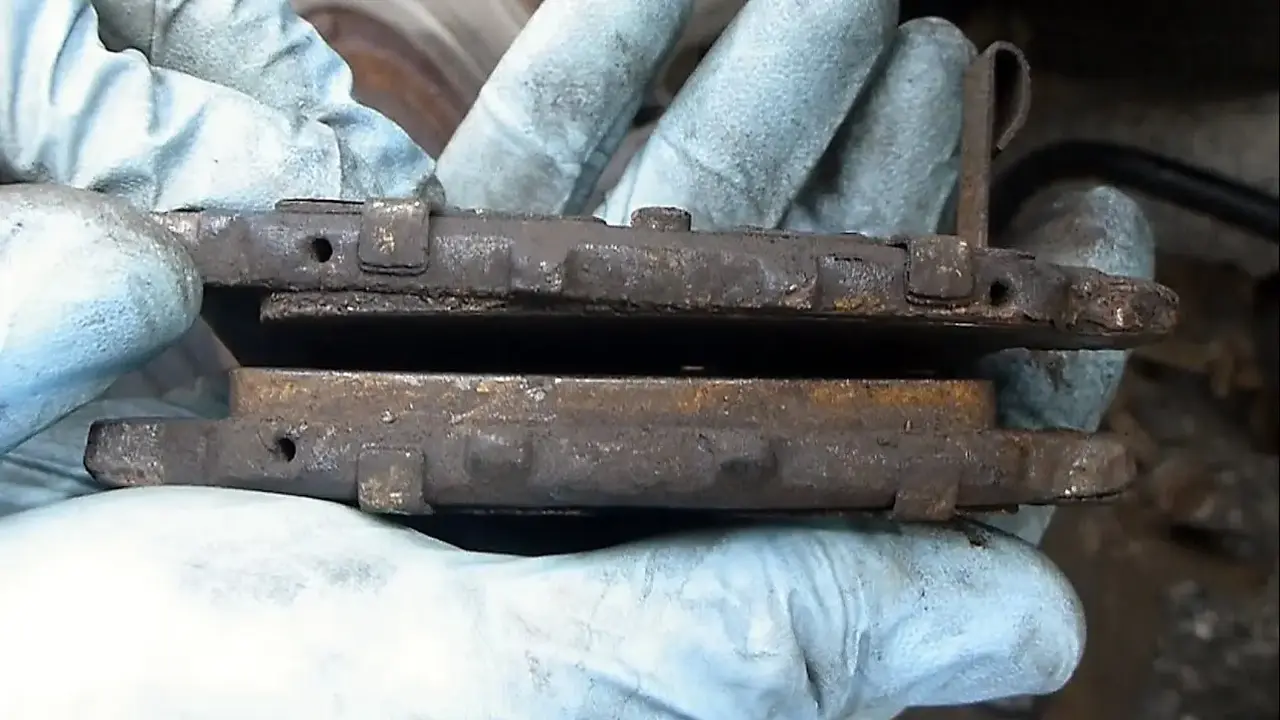
Causes of Uneven Brake Pad Wear: Symptoms, Diagnosis, and Solutions
Brake pads are designed to wear gradually as they convert the vehicle's kinetic energy into heat through friction. Under normal conditions, the pads on the same axle should wear at a reasonably similar rate.
They do not always wear at exactly the same speed, and a small difference can sometimes be normal. However, a significant difference between the inner and outer pad, or between the left and right sides, can indicate a problem that needs attention.
Uneven brake pad wear is not simply a cosmetic issue. It can reduce braking efficiency, increase operating temperatures, produce noise, damage the brake disc, and in severe cases create a safety risk.
The important point is that uneven pad wear is a symptom, not a diagnosis.
The underlying cause may be mechanical, hydraulic, electrical, related to the brake pad installation, or caused by another component in the braking system.
What Is Uneven Brake Pad Wear?
Uneven brake pad wear occurs when brake pads that should normally have similar wear rates become noticeably different in thickness.
There are several different patterns.
One pad may be significantly thinner than the pad on the opposite side of the same caliper.
The inner pad may wear faster than the outer pad.
The outer pad may wear faster than the inner pad.
One front wheel may have considerably more pad wear than the other front wheel.
A pad may also wear unevenly across its own surface, with one end or section becoming thinner than the rest.
Each pattern can provide a clue about the underlying problem.
Is a Small Difference in Pad Thickness Normal?
Not necessarily every difference indicates a fault.
On some floating-caliper systems, the inner and outer pads may not wear at precisely the same rate.
Differences can result from normal manufacturing tolerances, driving conditions, pad material, or the design of the caliper.
However, a large or progressively increasing difference should not be considered normal without investigation.
The more important question is whether the wear pattern is consistent with the design of the brake system and whether other symptoms are present.
The Most Common Cause: A Sticking Caliper
A sticking brake caliper is one of the most common causes of uneven brake pad wear.
A caliper must be able to move and release correctly after the brake pedal is released.
If the caliper piston becomes restricted or the caliper slides cannot move freely, one pad may remain in contact with the disc more than it should.
This creates continuous friction and accelerates pad wear.
A sticking caliper can also cause:
-
Excessive brake heat
-
Burning smell
-
Brake drag
-
Reduced fuel economy
-
Vehicle pulling
-
Premature disc wear
-
Brake noise
However, it is important to determine whether the piston or the caliper's sliding mechanism is actually responsible.
Sticking Caliper Guide Pins
On a floating or sliding caliper, the guide pins allow the caliper body to move relative to the carrier.
If one or both guide pins become seized, contaminated, corroded, or inadequately lubricated, the caliper may not move as designed.
This can produce a characteristic uneven-wear pattern.
For example, one pad may wear much faster than the other because the caliper cannot release or center itself properly.
Possible causes include:
-
Corrosion
-
Contaminated lubricant
-
Incorrect lubricant
-
Damaged guide-pin boots
-
Water intrusion
-
Lack of maintenance
-
Bent or damaged components
During brake service, guide pins should be checked for free movement and serviced according to the manufacturer's procedure.
A Seized Brake Caliper Piston
The piston is responsible for converting hydraulic pressure into mechanical force.
If it becomes corroded or restricted, it may not move normally.
A piston can cause problems in two different ways.
It may fail to apply sufficient force, reducing braking at that wheel.
Or it may move outward during braking but fail to retract sufficiently afterward, causing the brake pad to remain partially applied.
The second situation is particularly likely to produce rapid pad wear and excessive heat.
Damaged Caliper Piston Dust Boot
The rubber dust boot protects the piston area from contamination.
If the boot becomes torn, cracked, displaced, or incorrectly installed, water and road debris can reach the piston.
Over time, corrosion can develop.
The piston may then become difficult to move smoothly.
A damaged dust boot should not be ignored simply because there is no visible brake fluid leak.
The boot's job is preventive as well as protective.
Restricted or Damaged Brake Hose
A flexible brake hose can also be responsible for symptoms that look like a caliper problem.
As a hose ages, its internal structure can deteriorate.
In some cases, the internal lining can restrict brake-fluid flow.
This may allow hydraulic pressure to reach the caliper when the brake pedal is pressed but prevent pressure from returning normally after the pedal is released.
The result can be a dragging brake.
A restricted hose can therefore produce:
-
Rapid pad wear
-
Excessive heat
-
Brake drag
-
Vehicle pulling
-
Difficulty releasing the brake
This is one reason a caliper should not automatically be replaced whenever a brake remains partially applied.
Brake Pad Installed Incorrectly
Incorrect installation can also cause uneven wear.
Brake pads must move correctly within their mounting positions.
If a pad is installed incorrectly, or if the retaining hardware is damaged or incorrectly positioned, the pad may not contact or release from the disc properly.
Possible installation-related problems include:
-
Incorrect pad orientation
-
Incorrect hardware
-
Missing anti-rattle components
-
Incorrectly installed wear indicators
-
Pad binding in the carrier
-
Incorrect piston contact
-
Improperly fitted retaining clips
Brake components should always be installed according to the vehicle-specific procedure.
Rust or Corrosion in the Brake Pad Carrier
The brake pad must be able to move within its carrier.
Rust can build up underneath the pad support points, particularly in areas exposed to road salt and moisture.
This corrosion can reduce the available clearance around the pad.
The result can be a pad that becomes partially stuck.
The pad may then remain against the disc instead of releasing normally.
This problem can be particularly common in vehicles used in regions where roads are regularly exposed to salt.
Simply installing new pads without addressing corrosion can allow the same problem to return.
Incorrect or Contaminated Brake Pad Hardware
Brake pad hardware is not merely decorative.
Clips, shims, springs, and other components can help position the pads correctly and control movement and noise.
If hardware is:
-
Bent
-
Corroded
-
Missing
-
Incorrect for the application
-
Installed incorrectly
the pad may not move correctly.
This can result in uneven contact and accelerated wear.
Brake Disc Problems
A brake disc in poor condition can contribute to abnormal pad wear.
Potential disc-related problems include:
-
Excessive thickness variation
-
Severe surface irregularities
-
Heat damage
-
Deep grooves
-
Corrosion
-
Runout
-
Uneven deposits
A severely damaged disc can prevent the pad from making consistent contact with the friction surface.
If new brake pads are installed against a disc that is outside the manufacturer's specifications, the new pads may wear abnormally.
Brake Disc Runout
Disc runout refers to variation in the disc's position as it rotates.
Excessive runout can cause the disc to move laterally relative to the caliper.
Depending on the severity, this can contribute to pedal pulsation, uneven pad contact, and abnormal wear.
Runout can be caused by:
-
Disc distortion
-
Incorrect mounting
-
Dirt or corrosion between the hub and disc
-
Hub problems
-
Wheel installation issues
The disc should therefore be mounted against a clean and correctly prepared hub surface.
Brake Disc Thickness Variation
Brake discs are designed to maintain a relatively consistent thickness.
If thickness varies significantly around the disc, the brake pads can be pushed apart and back together as the disc rotates.
This can contribute to:
-
Brake pedal pulsation
-
Steering-wheel vibration during braking
-
Uneven pad contact
-
Abnormal pad wear
Thickness variation should be measured using the appropriate procedure rather than judged only by visual inspection.
Poor-Quality or Incorrect Brake Pads
Not all brake pads are manufactured to the same standard.
Using pads that are incorrect for the vehicle can result in poor contact characteristics and abnormal wear.
Potential problems include:
-
Incorrect pad dimensions
-
Incorrect friction material
-
Poor backing-plate quality
-
Manufacturing defects
-
Incorrect application
-
Poor fit within the caliper carrier
Brake pads should be selected using the correct vehicle and brake-system specifications.
Mixing Different Brake Pads
Installing different pad types on the same axle can create inconsistent friction characteristics.
For example, using one type of friction material on one side and another type on the opposite side is not appropriate.
Brake pads should normally be replaced as an axle set using compatible components.
Brake Pad Contamination
Oil, grease, brake fluid, or other substances can contaminate the friction material.
A contaminated pad may behave differently from the other pad.
It may produce:
-
Reduced friction
-
Noise
-
Uneven wear
-
Glazing
-
Abnormal heat generation
A contaminated friction material generally should not simply be cleaned and returned to service unless the manufacturer specifically provides an appropriate procedure.
Incorrect Brake Bedding-In
New brake pads and discs may require a bedding-in procedure.
During bedding-in, the friction surfaces gradually establish the intended contact characteristics.
If new brakes are subjected immediately to repeated severe braking, excessive heat can be generated.
This can contribute to:
-
Uneven deposits
-
Glazing
-
Noise
-
Reduced braking performance
-
Abnormal wear
The correct bedding procedure depends on the brake manufacturer and vehicle application.
Driving Conditions Can Cause Uneven Wear
Not every difference in brake-pad wear is caused by a mechanical fault.
Driving style and operating conditions have a significant effect on brake wear.
Examples include:
-
Frequent hard braking
-
Stop-and-go traffic
-
Mountain driving
-
Heavy vehicle loads
-
Towing
-
Long downhill descents
-
Urban driving
-
Repeated short trips
However, driving conditions generally affect both sides of an axle. If one wheel shows dramatically different wear from the other, a mechanical or hydraulic issue should be considered.
Why Does the Inner Brake Pad Wear Faster?
A faster-wearing inner pad can be associated with several conditions.
On a floating caliper, restricted caliper movement or piston problems can affect the relationship between the inner and outer pads.
A sticking piston may keep the inner pad closer to the disc.
A seized guide pin can also prevent the caliper from moving correctly.
Other possibilities include pad-carrier corrosion, incorrect hardware, and brake hose problems.
The wear pattern should therefore be examined together with the condition and movement of the caliper.
Why Does the Outer Brake Pad Wear Faster?
Outer-pad wear can also occur.
If the caliper cannot slide correctly, the outer pad may not release as intended.
Corrosion in the pad carrier, seized guide pins, damaged hardware, or caliper movement problems can all contribute.
The exact diagnosis depends on the caliper design and the observed wear pattern.
Why Do Brake Pads Wear Differently on the Left and Right?
When one side of the same axle wears significantly faster than the other, the brake assemblies should be compared.
Possible causes include:
-
One sticking caliper
-
One restricted brake hose
-
Uneven caliper movement
-
Different pad contamination
-
Uneven disc condition
-
Mechanical damage
-
Hydraulic pressure problems
Tire, suspension, or wheel-related problems can sometimes influence braking behavior as well.
The complete axle should be inspected rather than replacing only the worn pad.
Can a Wheel Bearing Cause Uneven Brake Pad Wear?
A severely worn wheel bearing can allow excessive wheel or hub movement.
In extreme cases, this can influence disc-to-pad alignment and contribute to abnormal brake behavior.
However, a wheel bearing is not among the most common causes of uneven brake pad wear.
If uneven wear is accompanied by:
-
Wheel play
-
Humming noise
-
Grinding
-
Vibration
-
Abnormal hub movement
the wheel bearing and hub assembly should also be inspected.
Can Suspension Problems Cause Uneven Brake Pad Wear?
Suspension problems do not normally cause a simple inner-versus-outer pad wear pattern by themselves.
However, worn suspension or steering components can affect wheel alignment, tire contact, vehicle stability, and braking behavior.
Problems with:
-
Ball joints
-
Control-arm bushings
-
Tie-rod ends
-
Wheel alignment
-
Strut components
may therefore contribute to abnormal braking symptoms.
They should be considered if brake wear is accompanied by steering or suspension problems.
Can ABS Problems Cause Uneven Brake Pad Wear?
ABS controls hydraulic brake pressure to individual wheels during situations where wheel lockup is detected.
A faulty wheel-speed sensor or ABS component can cause abnormal electronic intervention in some circumstances.
However, uneven mechanical pad wear is more commonly associated with caliper movement, pad binding, brake hoses, or disc conditions.
If the ABS warning light is illuminated or the ABS system activates unexpectedly, the electronic system should be diagnosed separately.
How Can You Tell What Is Causing Uneven Pad Wear?
The wear pattern is one of the most useful diagnostic clues.
A technician should compare:
-
Inner pad thickness
-
Outer pad thickness
-
Left-side pad thickness
-
Right-side pad thickness
-
Disc surface
-
Caliper piston movement
-
Caliper guide-pin movement
-
Pad movement in the carrier
-
Brake hose condition
The brake temperature can also provide useful information after controlled driving.
If one wheel is significantly hotter than the others, that can indicate excessive brake drag.
However, temperature alone cannot identify the exact cause.
How Is a Sticking Brake Diagnosed?
A proper diagnosis usually involves checking whether the brake releases normally after the pedal is released.
Depending on the system, a technician may compare wheel resistance and inspect hydraulic pressure.
If pressure remains at the caliper after the brake pedal is released, the hydraulic side of the system should be investigated.
If pressure is released normally but the brake remains mechanically stuck, the caliper, guide pins, pad carrier, or pad hardware may be responsible.
This distinction can prevent unnecessary replacement of expensive components.
Should Uneven Brake Pads Be Replaced Immediately?
If the pads have significant uneven wear, the cause should be identified before simply installing new pads.
Replacing the pads without repairing the underlying problem can result in the new pads wearing unevenly again.
The condition of the brake disc should also be checked.
Depending on the amount of wear and the manufacturer's specifications, replacing brake pads may also require inspection or replacement of the discs and associated hardware.
Should Brake Pads Always Be Replaced in Pairs?
Brake pads on the same axle are generally replaced as an axle set.
Replacing only one pad on an axle can create a significant difference in friction characteristics and remaining thickness.
The exact service procedure depends on the vehicle and brake design, but brake work should generally be performed symmetrically across the axle unless a manufacturer-specific procedure says otherwise.
What Happens If Uneven Brake Pad Wear Is Ignored?
Continuing to drive with severe uneven wear can create progressively more expensive problems.
Possible consequences include:
-
Premature brake pad failure
-
Disc damage
-
Excessive brake heat
-
Brake fade
-
Reduced braking performance
-
Vehicle pulling
-
Increased stopping distance
-
Caliper damage
-
Brake fluid overheating
In extreme cases, a severely dragging brake can become dangerously hot.
How to Prevent Uneven Brake Pad Wear
Regular inspection is the best prevention.
During brake service, it is useful to check:
-
Pad thickness
-
Pad wear pattern
-
Disc condition
-
Caliper piston
-
Guide pins
-
Dust boots
-
Pad carrier
-
Hardware
-
Flexible brake hoses
-
Brake fluid
Corrosion should be addressed before it prevents normal pad movement.
Correct brake components should also be used, and the manufacturer's installation and lubrication procedures should be followed.
Why You Should Not Ignore a Torn Caliper Dust Boot
A torn dust boot may seem like a minor issue because it does not necessarily cause an immediate braking problem.
However, it can allow water and contaminants to reach the piston.
Once corrosion develops, the piston may become difficult to move.
The result can eventually be a sticking caliper and uneven pad wear.
Replacing a damaged protective boot at the appropriate time can therefore prevent a much more expensive caliper problem later.
Uneven Brake Pad Wear Is a Diagnostic Clue
One of the most important things to understand is that the pad wear pattern itself can tell a story.
A pad that is worn almost to the backing plate while its partner still has substantial material remaining suggests that something is preventing normal caliper or pad movement.
A large difference between the left and right sides suggests that the two brake assemblies are not behaving identically.
A tapered pad can indicate alignment or movement problems.
A pad with unusual glazing or contamination suggests a different type of issue.
The wear pattern should therefore be documented before the old pads are discarded.
Final Thoughts
Uneven brake pad wear is a common brake-system problem, but there is no single cause.
A sticking caliper piston, seized guide pin, damaged flexible brake hose, corroded pad carrier, incorrect hardware, contaminated friction material, disc problems, or incorrect installation can all produce abnormal wear.
Driving conditions can also influence brake wear, but significant differences between the two sides of the same axle should generally be investigated rather than dismissed as normal.
The most effective diagnosis begins by studying how the pads are wearing, not simply how much material remains.
Comparing the inner and outer pads, left and right sides, disc condition, caliper movement, guide pins, pad hardware, and hydraulic operation can help identify the real source of the problem.
Most importantly, replacing worn brake pads without correcting the underlying cause is not a complete repair. If a caliper is sticking or a pad is binding in its carrier, the new pads may quickly develop the same uneven wear.
Because the braking system is directly responsible for controlling and stopping the vehicle, significant uneven pad wear should be inspected promptly. Correct diagnosis and proper repair can restore even braking performance while preventing unnecessary wear and damage to other brake components.