TR
TR EN
EN

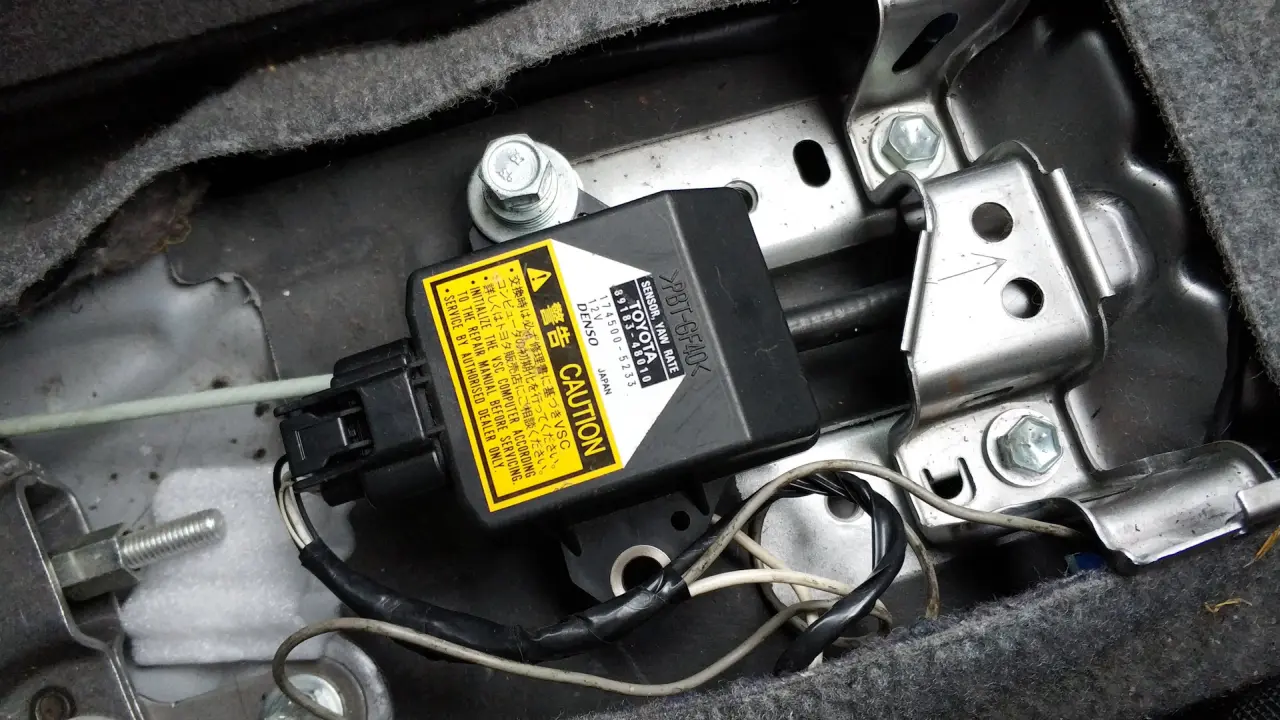
What Is a Yaw Rate Sensor? How Does It Work and What Are the Symptoms of Failure?
Modern vehicles use numerous sensors to understand what the vehicle is doing while it is being driven. One of the most important sensors in the electronic stability control system is the yaw rate sensor, also known in some translations as the deviation rate sensor.
The yaw rate sensor measures how quickly the vehicle is rotating around its vertical axis.
This information is extremely important for systems such as:
-
Electronic Stability Control (ESC)
-
Electronic Stability Program (ESP)
-
Traction Control System (TCS)
-
Anti-lock Braking System (ABS)
-
Vehicle Dynamics Control
-
Active Torque Vectoring
-
Some all-wheel-drive systems
The sensor helps the vehicle determine whether it is actually following the direction intended by the driver.
For example, when the driver turns the steering wheel to the left, the vehicle should begin rotating toward the left. If the vehicle starts rotating more or less than expected, the stability-control system can detect the difference and intervene.
A faulty yaw rate sensor can therefore affect much more than one isolated function. It can cause warning lights, disable stability-control functions, activate traction-control intervention unnecessarily, or make several driver-assistance systems unavailable.
What Is a Yaw Rate Sensor?
The yaw rate sensor is an electronic sensor that measures the vehicle's rotational movement around its vertical axis.
Imagine looking at the vehicle from above.
If the front of the vehicle rotates toward the left or right while the vehicle remains on the road, the vehicle is experiencing yaw.
The rate at which this rotational movement occurs is called the yaw rate.
The sensor measures this rotational rate and sends the information to an electronic control module.
The stability-control system then compares the measured yaw rate with other information, such as:
-
Steering wheel angle
-
Individual wheel speeds
-
Vehicle speed
-
Lateral acceleration
-
Longitudinal acceleration
-
Brake pressure
-
Engine torque
By comparing these values, the control system can determine whether the vehicle is behaving as expected.
What Does "Yaw" Mean?
Yaw is one of the three basic rotational movements of a vehicle.
A vehicle can rotate around three different axes:
Yaw
Rotation around the vertical axis. This is the movement associated with the vehicle turning left or right.
Pitch
Rotation around the lateral axis. This is the movement you notice when the front of the vehicle rises or falls during acceleration or braking.
Roll
Rotation around the longitudinal axis. This is the body movement that occurs when the vehicle leans toward one side during cornering.
The yaw rate sensor specifically measures rotational movement around the vertical axis.
Some modern vehicles use integrated inertial measurement units containing multiple sensors that can measure yaw rate, acceleration, and other vehicle movements together.
Where Is the Yaw Rate Sensor Located?
The yaw rate sensor is usually mounted close to the vehicle's center of gravity.
A common location is:
-
Under the center console
-
Beneath the front seats
-
Near the vehicle floor
-
Around the transmission tunnel
-
Near the center of the vehicle body
The exact location varies by vehicle.
Mounting the sensor close to the vehicle's center of gravity helps the control system obtain a more representative measurement of the vehicle's rotational movement.
Because the sensor's orientation is important, it must be installed in the correct position.
Even a correctly functioning sensor can provide incorrect information if it is improperly mounted or calibrated.
How Does a Yaw Rate Sensor Work?
Modern yaw rate sensors generally use MEMS technology.
MEMS stands for Micro-Electro-Mechanical Systems.
Inside the sensor is a very small mechanical structure that can respond to rotational movement.
When the vehicle rotates, the internal sensing element experiences forces associated with that movement. The electronics convert this physical movement into an electrical signal.
The control module interprets the signal as a yaw-rate value.
The measurement is commonly expressed in degrees per second.
For example, a value close to zero generally indicates little rotational movement around the vertical axis, while a higher positive or negative value indicates faster rotation in one direction or the other.
The actual signal format and calibration strategy vary by vehicle manufacturer.
What Is the Difference Between a Yaw Rate Sensor and a Steering Angle Sensor?
These two sensors provide very different information.
The steering angle sensor tells the vehicle what the driver is requesting through the steering wheel.
The yaw rate sensor tells the vehicle how the vehicle is actually rotating.
This distinction is extremely important.
Imagine that the driver turns the steering wheel to the left.
The steering angle sensor reports the steering input.
The yaw rate sensor reports the actual rotational response of the vehicle.
The ESC system can then compare the expected behavior with the actual behavior.
If the vehicle is not rotating as expected, the system can intervene.
How Does the ESC System Use the Yaw Rate Sensor?
The yaw rate sensor is a key part of electronic stability control.
The ESC system continuously compares the driver's intended direction with the vehicle's actual movement.
Suppose the driver turns the steering wheel while traveling through a corner.
The control system can use the steering angle, vehicle speed, and other information to estimate how the vehicle should respond.
The yaw rate sensor then reports what is actually happening.
If there is a significant difference, the system can determine that the vehicle may be losing directional stability.
It can then selectively apply individual brakes and, depending on the vehicle, reduce engine torque or modify drivetrain torque distribution.
Yaw Rate Sensor and Understeer
Understeer occurs when the vehicle does not turn as much as the driver expects based on the steering input.
The front tires may reach their available lateral grip and the vehicle begins to follow a wider path through the corner.
The steering angle sensor indicates what the driver is requesting.
The yaw rate sensor indicates how much the vehicle is actually rotating.
The ESC system can compare these values and determine that the vehicle's actual yaw response is lower than expected.
Depending on the vehicle's control strategy, the system can intervene to help restore stability.
The yaw rate sensor does not physically correct understeer by itself. It provides critical information that allows the electronic stability-control system to make decisions.
Yaw Rate Sensor and Oversteer
Oversteer is essentially the opposite situation.
The rear of the vehicle may begin rotating outward, causing the vehicle to rotate more than the driver intended.
The yaw rate sensor can detect the increased rotational movement.
The ESC system can then use individual brake intervention and engine or drivetrain torque management to help bring the vehicle closer to the intended path.
Again, the sensor does not control the brakes itself.
It provides information to the control system.
Why Is the Yaw Rate Sensor Important?
The vehicle cannot reliably control stability if it does not know how the vehicle is actually moving.
Wheel-speed sensors tell the system how fast the individual wheels are rotating.
The steering angle sensor tells it what direction the driver intends to travel.
The yaw rate sensor tells it how quickly the vehicle is rotating.
Lateral acceleration sensors provide additional information about the vehicle's movement across the road.
Together, these measurements allow the ESC system to build a much more accurate picture of vehicle dynamics.
Symptoms of a Faulty Yaw Rate Sensor
A yaw rate sensor problem can produce different symptoms depending on the vehicle and the type of failure.
Common possibilities include:
-
ESP/ESC warning light
-
Stability-control warning message
-
ABS warning light
-
Traction-control warning light
-
Steering warning in some vehicles
-
AWD or drivetrain warning in certain vehicles
-
Stability-control system becoming unavailable
-
Traction control being disabled
-
Unexpected electronic braking intervention
-
Reduced vehicle-dynamics assistance
-
Diagnostic trouble codes related to yaw rate
-
Warning messages after starting the vehicle
The symptoms can vary considerably.
A sensor that is completely disconnected may produce a different fault from a sensor that remains electrically functional but reports an incorrect value.
ESP or ESC Warning Light
One of the most common signs of a yaw rate sensor problem is a stability-control warning.
Depending on the manufacturer, the warning may appear as:
-
ESP
-
ESC
-
DSC
-
VSC
-
Stability Control
-
Traction Control
Different manufacturers use different names for similar vehicle-dynamics systems.
If the control module detects implausible yaw-rate information, it may deactivate some stability-control functions and illuminate a warning indicator.
ABS and Traction Control Warning Lights
A yaw rate sensor is closely integrated with ABS and stability-control systems.
A fault may therefore trigger several warning lights simultaneously.
You might see:
-
ABS
-
ESC/ESP
-
Traction Control
at the same time.
This does not necessarily mean that all three systems have independently failed.
One faulty sensor or one communication problem can cause multiple systems to report that their required information is unavailable.
Stability Control May Stop Working
When a yaw-rate signal is unreliable, the ESC system may disable itself or operate with limited functionality.
The vehicle may still have normal mechanical braking.
However, the electronic system may no longer be able to provide its full stability-control function.
Some vehicles will display a message such as:
"ESC unavailable"
or a similar manufacturer-specific warning.
Unexpected Stability-Control Intervention
A particularly confusing symptom can occur when the sensor does not fail completely but provides an incorrect value.
If the control system believes the vehicle is rotating when it actually is not, it may interpret normal driving as an unstable condition.
This can potentially result in inappropriate intervention.
Possible sensations may include:
-
A brief braking sensation
-
Reduced engine power
-
Traction-control intervention
-
Vehicle behavior that feels different during cornering
Such symptoms require careful diagnosis because wheel-speed sensors, steering-angle sensors, ABS components, and other systems can also cause false stability-control intervention.
Vehicle Feels Normal but Warning Light Is On
A yaw rate sensor fault does not necessarily make the vehicle feel obviously different during normal driving.
If the ESC system detects unreliable sensor information, it may simply disable the affected assistance functions.
The vehicle may continue to drive normally under ordinary conditions.
The problem becomes more significant when driving on:
-
Wet roads
-
Snow
-
Ice
-
Gravel
-
High-speed corners
-
Sudden evasive maneuvers
This is because the electronic stability system may not be available when it is most useful.
What Causes a Yaw Rate Sensor to Fail?
Several problems can affect yaw-rate measurement.
Sensor internal failure
The MEMS sensing element or its electronic circuitry can fail.
This can cause incorrect, unstable, or missing measurements.
Wiring problems
Damaged wiring can interrupt the sensor signal.
Possible causes include:
-
Broken wires
-
Short circuits
-
Open circuits
-
Corrosion
-
Poor connections
-
Damaged connectors
Power supply problems
The sensor requires an appropriate power supply and ground.
A voltage problem can make the sensor appear defective even when the sensor itself is healthy.
Communication problems
Some systems communicate through the vehicle's CAN network or another electronic communication system.
A network fault can prevent the control module from receiving valid yaw-rate information.
Incorrect calibration
A sensor may be functioning correctly but have an incorrect zero point.
This can happen after certain repairs, sensor replacement, chassis work, or battery-related events depending on the vehicle.
Incorrect installation
Because orientation matters, installing the sensor incorrectly can result in implausible readings.
Physical damage
A severe impact, accident, water intrusion, or improper handling can damage the sensor.
What Is Yaw Rate Sensor Calibration?
A yaw rate sensor has a reference or zero point.
When the vehicle is stationary on a suitable level surface, the sensor should normally report a value corresponding to little or no yaw rotation.
If the zero point is incorrect, the control system may interpret normal conditions as vehicle rotation.
Calibration establishes the appropriate reference value.
The exact calibration procedure varies by vehicle.
Some vehicles require a diagnostic scan tool and a specified calibration routine.
Others may combine calibration with steering-angle or stability-control procedures.
When Does a Yaw Rate Sensor Need Recalibration?
Depending on the vehicle, calibration may be required after:
-
Yaw sensor replacement
-
Steering-angle sensor replacement
-
ABS/ESC module replacement
-
Certain suspension repairs
-
Wheel alignment
-
Accident repairs
-
Changes to sensor mounting
-
Other procedures specified by the manufacturer
Not every wheel alignment automatically requires yaw sensor calibration.
The correct procedure should be determined from the vehicle manufacturer's service information.
Can a Bad Wheel Alignment Cause a Yaw Rate Sensor Fault?
Wheel alignment problems do not necessarily damage the yaw rate sensor.
However, alignment and steering-angle calibration are related to how the vehicle interprets steering input and movement.
If the steering wheel is not centered correctly or the steering-angle sensor does not agree with the actual steering position, the ESC system can detect inconsistencies.
This can produce fault codes or warning lights that may be incorrectly attributed to the yaw sensor.
Therefore, the sensor itself should not be replaced until the complete system has been checked.
Can a Weak Battery Cause a Yaw Rate Sensor Warning?
Yes, in some vehicles.
Low system voltage can cause electronic control units and sensors to behave abnormally.
A weak battery, poor battery connection, charging-system problem, or voltage drop during starting can produce temporary or stored faults.
If multiple unrelated warning lights appear immediately after starting, system voltage should be checked before assuming that several components have failed simultaneously.
How Is a Yaw Rate Sensor Diagnosed?
A proper diagnosis normally begins with reading the vehicle's diagnostic trouble codes.
A professional scan tool can access the ABS/ESC module and display relevant information.
The technician may examine:
-
Yaw-rate sensor fault codes
-
Live yaw-rate data
-
Sensor supply voltage
-
Ground
-
Communication signals
-
Steering angle
-
Individual wheel speeds
-
Lateral acceleration
-
Brake pressure
-
ESC system status
The vehicle should normally be stationary when checking the sensor's zero-point behavior, following the manufacturer's diagnostic procedure.
Can a Multimeter Diagnose a Yaw Rate Sensor?
A multimeter can help check certain electrical problems, such as:
-
Power supply
-
Ground
-
Continuity
-
Certain wiring faults
However, it may not be sufficient to determine whether the sensor is accurately measuring yaw.
A sensor can have correct power and ground but still produce an incorrect signal.
For this reason, live-data analysis with a suitable diagnostic scanner is often much more informative.
What Does a Yaw Rate Sensor Fault Code Mean?
A diagnostic code associated with yaw rate does not automatically mean that the sensor itself must be replaced.
The fault may indicate:
-
Signal too high
-
Signal too low
-
Implausible signal
-
Signal missing
-
Internal sensor fault
-
Calibration problem
-
Communication problem
-
Sensor correlation problem
The exact diagnostic code and vehicle-specific test procedure are important.
The wiring, connectors, power supply, ground, mounting position, calibration, and related sensors should be checked before replacing the component.
Can a Yaw Rate Sensor Be Repaired?
In most cases, the sensor is treated as a replaceable electronic component rather than something that is internally repaired.
However, replacement is not always the first step.
If the actual problem is:
-
Damaged wiring
-
Poor connector contact
-
Corrosion
-
Incorrect calibration
-
Incorrect mounting
-
Low system voltage
repairing the underlying problem may restore normal operation without replacing the sensor.
If the internal MEMS sensor has failed, replacement is generally the appropriate repair.
What Happens After Replacing a Yaw Rate Sensor?
A replacement sensor may require calibration or initialization.
The exact process depends on the vehicle.
Possible procedures include:
-
Zero-point calibration
-
Steering-angle calibration
-
ESC initialization
-
Diagnostic fault-code clearing
-
Controlled road test
-
Verification of live data
Simply installing the sensor and clearing the fault code may not be sufficient on some vehicles.
Can You Drive With a Faulty Yaw Rate Sensor?
The answer depends on the symptoms and vehicle.
If the yaw-rate sensor is faulty and the ESC system has been disabled, the vehicle may still have conventional braking and steering, but some electronic stability assistance may not be available.
This is particularly important during:
-
Emergency maneuvers
-
Wet-road driving
-
Snow or ice
-
Sudden lane changes
-
High-speed cornering
If the vehicle shows multiple warning lights, unusual braking behavior, steering problems, or other serious symptoms, it should be inspected promptly.
A stability-control warning should not simply be ignored because the vehicle still appears to drive normally.
Yaw Rate Sensor vs. Lateral Acceleration Sensor
These sensors are closely related but measure different physical quantities.
The yaw rate sensor measures how quickly the vehicle rotates around its vertical axis.
The lateral acceleration sensor measures acceleration acting sideways relative to the vehicle.
For example, during a corner, the vehicle can experience significant lateral acceleration while also rotating around its vertical axis.
The ESC system can use both measurements to understand the vehicle's dynamic behavior.
Some modern sensor assemblies combine yaw-rate and acceleration sensing into a single inertial measurement unit.
Yaw Rate Sensor and Torque Vectoring
Advanced torque-vectoring systems can also use yaw-rate information.
The system can compare the driver's steering input with the vehicle's actual rotational response.
If the vehicle is not rotating as expected, the control system can modify torque distribution.
Depending on the vehicle, this may involve:
-
Active differentials
-
Brake-based torque vectoring
-
Front-to-rear torque distribution
-
Individual electric motors
The yaw-rate sensor therefore provides important feedback for modern vehicle-dynamics systems.
Why Tire Condition Still Matters
A correctly functioning yaw-rate sensor cannot compensate for tires that have inadequate grip.
The vehicle's stability system works within the physical limits of available traction.
Problems such as:
-
Worn tires
-
Incorrect tire pressure
-
Different tire sizes
-
Large differences in tread depth
-
Poor-quality tires
-
Low-grip road surfaces
can significantly affect vehicle behavior.
Electronic stability systems are designed to help manage these conditions, not eliminate the laws of physics.
How to Prevent Yaw Rate Sensor Problems
The sensor itself generally does not require routine maintenance.
However, several practices can help prevent related problems:
-
Keep electrical connectors protected from moisture.
-
Repair damaged wiring promptly.
-
Maintain a healthy battery and charging system.
-
Follow correct procedures after suspension or steering repairs.
-
Perform required sensor calibrations.
-
Use appropriate diagnostic procedures after accident repairs.
-
Keep tires correctly inflated and properly matched.
-
Do not ignore ABS or ESC warning lights.
Because the yaw-rate sensor is part of a larger electronic stability system, maintaining the entire vehicle is more important than servicing the sensor itself.
Final Thoughts
The yaw rate sensor, sometimes translated as a deviation rate sensor, is an important part of modern vehicle stability control.
Its job is to measure how quickly the vehicle rotates around its vertical axis and provide that information to the vehicle's electronic control systems.
The sensor works together with the steering-angle sensor, wheel-speed sensors, acceleration sensors, ABS system, and ESC control unit to determine whether the vehicle is responding to the driver's steering input as expected.
A faulty yaw-rate sensor can cause ABS, ESP, ESC, or traction-control warning lights, disable stability-control functions, produce unexpected electronic intervention, or generate diagnostic trouble codes.
However, a yaw-rate sensor warning does not automatically mean that the sensor itself is defective.
Wiring problems, low voltage, connector corrosion, communication faults, incorrect mounting, steering-angle problems, and calibration errors can produce similar symptoms.
For this reason, proper diagnosis should include fault-code analysis, live-data inspection, electrical checks, and calibration verification before replacing the sensor.
Because the yaw-rate sensor contributes directly to electronic stability control, a confirmed fault should not be ignored. The vehicle may continue to operate normally under ordinary conditions, but the loss of stability assistance can become important during sudden maneuvers or low-traction driving.
A correctly functioning yaw-rate sensor allows modern safety systems to understand not only where the driver wants the vehicle to go, but also how the vehicle is actually moving.