TR
TR EN
EN

What Is a Wheel Rim? What Are the Different Types of Wheel Rims?
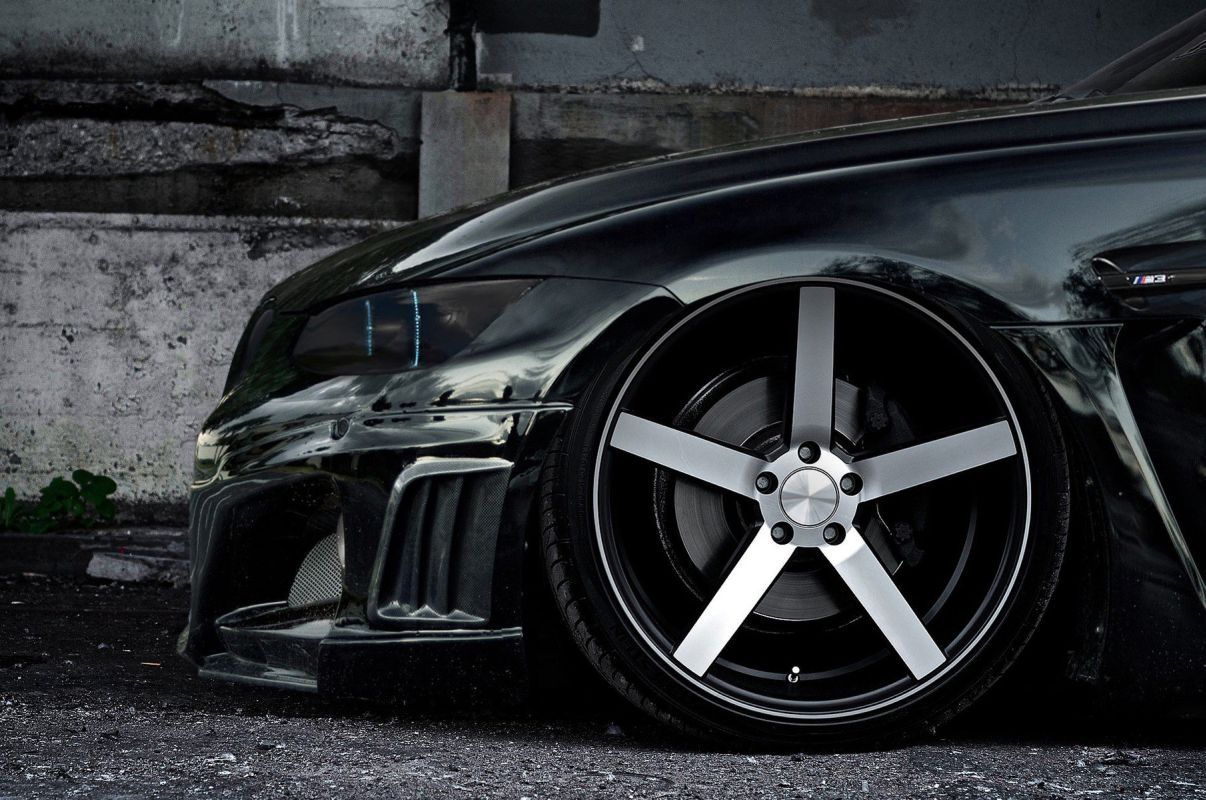
A wheel rim is the structural component that connects the tire to the vehicle's wheel hub. It supports the tire, transfers driving and braking forces, and plays an important role in the vehicle's handling, ride comfort, braking performance, and overall appearance.
Although the terms wheel and rim are often used interchangeably in everyday language, technically they are not always exactly the same. The rim is the outer part on which the tire is mounted, while a complete wheel assembly also includes the center section and spokes that connect the rim to the hub.
Wheel rims are available in different materials, manufacturing methods, sizes, widths, and designs. Choosing the correct rim requires more than simply selecting a visually attractive design. Diameter, width, offset, bolt pattern, center bore, load capacity, and compatibility with the vehicle must all be considered.
What Does a Wheel Rim Do?
The main function of a wheel rim is to provide a secure mounting surface for the tire.
However, its responsibilities go beyond holding the tire.
A wheel rim:
-
Supports the tire
-
Transfers engine torque to the road
-
Transfers braking forces
-
Carries part of the vehicle's weight
-
Works with the suspension system
-
Helps dissipate heat generated by the brakes
-
Influences steering and handling characteristics
-
Contributes to ride comfort
-
Affects the vehicle's appearance
The rim therefore plays an important mechanical role in the overall wheel and tire system.
Main Parts of a Wheel
A modern wheel consists of several important sections.
Rim
The outer cylindrical section where the tire is mounted is the rim. It includes the bead seat areas that hold the tire bead in position.
Center section
The center of the wheel connects the wheel to the vehicle's hub.
Spokes
Spokes connect the center section to the outer rim. Their number, shape, and design vary considerably between different wheels.
Bolt holes
These are the mounting holes through which the wheel is attached to the hub using wheel bolts or lug nuts.
Center bore
The center bore is the hole in the middle of the wheel that fits over the vehicle's hub.
Steel Wheel Rims
Steel wheels are one of the most traditional types of automotive wheels.
They are manufactured primarily from stamped and formed steel components and are widely used on passenger cars, commercial vehicles, vans, and trucks.
Their major advantages include:
-
High durability
-
Good resistance to impact
-
Relatively low manufacturing cost
-
Easy availability
-
Practicality in harsh conditions
Steel wheels are generally heavier than alloy wheels. This additional weight increases unsprung mass, which can have an effect on suspension response and handling.
They are often preferred for vehicles used in demanding conditions because minor impacts may bend the wheel rather than causing the type of cracking that can occur with some alloy wheels.
A bent steel wheel can sometimes be repaired, although the safety and suitability of repair depend on the extent and location of the damage.
Alloy Wheel Rims
Alloy wheels are manufactured from aluminum-based alloys and are among the most common alternatives to steel wheels.
They are popular because they can combine relatively low weight with attractive designs.
Advantages can include:
-
Lower weight compared with many steel wheels
-
Improved appearance
-
Better heat dissipation
-
Large variety of designs
-
Greater flexibility in wheel styling
Reducing unsprung weight can help the suspension respond more effectively to changes in the road surface.
However, alloy wheels are not automatically stronger than steel wheels in every situation. Their durability depends on the alloy, design, manufacturing method, wheel dimensions, and construction quality.
Cast Alloy Wheels
Cast wheels are produced by pouring molten alloy into a mold.
This is one of the most widely used manufacturing methods because it allows manufacturers to produce complex wheel designs relatively efficiently.
Cast wheels can offer:
-
Many design possibilities
-
Reasonable production cost
-
Good strength for normal road use
-
Wide availability
However, the final strength of a cast wheel depends heavily on the alloy composition, casting quality, heat treatment, and design.
Not all cast wheels have the same quality or durability.
Forged Wheel Rims
Forged wheels are manufactured using a different process.
Instead of simply pouring molten metal into a mold, a solid aluminum billet or other suitable material is shaped under high pressure.
Forged wheels can provide:
-
High strength
-
Lower weight
-
Excellent structural properties
-
High resistance to deformation
-
High-performance characteristics
Their manufacturing process is more expensive, which makes forged wheels considerably more expensive than many cast wheels.
They are particularly common in high-performance, motorsport, luxury, and enthusiast applications.
Flow-Formed or Rotary-Forged Wheels
Flow forming is a manufacturing process that sits between conventional casting and full forging in terms of production technique.
The wheel is initially cast, and the barrel is then formed and strengthened through controlled mechanical pressure and rotation.
This process can provide:
-
Lower weight than many conventional cast wheels
-
Improved strength
-
Good durability
-
More affordable pricing than many fully forged wheels
Flow-formed wheels have become increasingly popular because they offer a useful compromise between cost, weight, and performance.
One-Piece Wheels
A one-piece wheel is manufactured as a single structural unit.
The center, spokes, and rim are integrated into one piece.
These wheels are common on passenger cars and are available in many different designs and manufacturing methods.
Their main advantages are:
-
Simple construction
-
Good structural integrity
-
Easy maintenance
-
Wide range of applications
Multi-Piece Wheels
Multi-piece wheels consist of separate structural components that are assembled together.
Depending on the design, a wheel may have:
-
A center section
-
An outer rim
-
An inner barrel
These components are typically joined using bolts and other specialized hardware.
Multi-piece wheels offer significant flexibility in terms of width, offset, and design.
They are commonly associated with performance vehicles, motorsport applications, and custom builds.
However, they require careful assembly and maintenance. Incorrect assembly or damaged hardware can create serious safety problems.
Split-Rim Wheels
Split-rim designs use multiple components to create the wheel assembly.
Historically, certain heavy-duty and specialized vehicles used multi-component wheel systems because of their practical advantages during tire servicing.
However, some split-rim systems can be extremely dangerous if incorrectly serviced because stored mechanical energy can cause components to separate violently.
Specialized multi-piece wheel systems should therefore only be serviced using the correct equipment and procedures.
Chrome-Plated Wheels
Chrome wheels are not necessarily a separate structural type of wheel.
Chrome is generally a surface finish applied to a wheel.
The underlying wheel may be steel or aluminum alloy, while the chrome layer provides a highly reflective appearance.
Chrome finishes can offer an attractive appearance, but damage to the finish can lead to corrosion or peeling if not properly maintained.
Painted and Powder-Coated Wheels
Many alloy wheels use painted or powder-coated finishes.
These finishes protect the wheel surface while also providing different colors and appearances.
Common finishes include:
-
Gloss black
-
Satin black
-
Silver
-
Gunmetal
-
White
-
Bronze
-
Two-tone finishes
Powder coating is particularly popular for refinishing wheels because it can provide a durable surface when correctly applied.
Diamond-Cut Wheels
Diamond-cut wheels have a machined face that creates a bright metallic appearance.
A precision cutting process removes a very thin layer of material from selected areas of the wheel surface.
The result is a distinctive contrast between the machined metallic face and the painted sections.
However, diamond-cut wheels can be more difficult to repair cosmetically after damage. Improper refinishing can alter the original appearance and potentially affect the machined surface.
What Do Wheel Size Numbers Mean?
Wheel dimensions are usually expressed in inches.
For example, a wheel described as 17 × 7.5 means approximately:
-
17 inches in diameter
-
7.5 inches in width
Wheel diameter is measured across the bead seat area rather than simply measuring the wheel's external diameter.
The diameter must match the tire's specified rim diameter.
A tire designed for a 17-inch wheel cannot simply be mounted on an 18-inch wheel.
What Is Wheel Width?
Wheel width determines how wide a tire can be appropriately mounted.
For example, a 7-inch-wide wheel and an 8-inch-wide wheel can have different recommended tire-size ranges.
Changing wheel width without considering tire compatibility can affect:
-
Steering response
-
Tire sidewall shape
-
Grip
-
Ride comfort
-
Tire wear
-
Handling balance
The correct combination should always be selected according to the tire manufacturer's approved range.
What Is Wheel Offset?
Offset is one of the most important wheel specifications.
It describes the position of the wheel's mounting surface relative to the wheel's centerline.
Offset is generally expressed as ET followed by a number.
For example:
-
ET35
-
ET40
-
ET45
A higher positive offset generally places the wheel farther inward toward the vehicle, while a lower positive offset moves the wheel farther outward.
Incorrect offset can cause the tire or wheel to contact:
-
Suspension components
-
Brake components
-
Inner fender areas
-
Outer fenders
Offset also affects steering geometry and bearing loads, so it should not be changed significantly without considering the vehicle's specifications.
What Is the Bolt Pattern?
The bolt pattern describes the number of mounting holes and the diameter of the circle on which those holes are positioned.
It may be written in a format such as:
5×112
This indicates five mounting holes arranged on a 112 mm pitch circle diameter.
The bolt pattern must match the vehicle's hub specification.
A wheel with an incorrect bolt pattern should not be installed simply because it appears to fit.
What Is Center Bore?
The center bore is the central opening in the wheel.
It must be compatible with the vehicle's hub.
If the wheel's center bore is larger than the hub, hub-centric rings may sometimes be used where appropriate to provide the correct centering.
If the center bore is smaller than the vehicle's hub, the wheel generally cannot be installed without modification.
Wheel centering is important because an improperly centered wheel can contribute to vibration and installation problems.
What Happens If the Wrong Wheel Is Installed?
A wheel can physically appear to fit while still being technically incompatible.
Problems can occur when:
-
Offset is incorrect
-
Bolt pattern is incorrect
-
Center bore is incorrect
-
Wheel width is unsuitable
-
Brake clearance is insufficient
-
Load capacity is inadequate
-
Tire size is incompatible
Potential consequences include:
-
Tire rubbing
-
Steering problems
-
Vibration
-
Uneven tire wear
-
Increased bearing loads
-
Suspension interference
-
Brake clearance problems
-
Reduced handling stability
For this reason, wheel selection should always be based on technical specifications rather than appearance alone.
Wheel Diameter and Vehicle Performance
Larger wheels are often chosen for visual reasons, but increasing wheel diameter can also change the vehicle's driving characteristics.
When a larger wheel is installed while maintaining a similar overall tire diameter, the tire generally needs a lower-profile sidewall.
This can produce:
-
Sharper steering response
-
More direct handling
-
Less sidewall flex
-
A sportier appearance
However, lower-profile tires generally provide less sidewall cushioning.
As a result, the vehicle may feel:
-
Firmer
-
Less comfortable over potholes
-
More sensitive to road imperfections
The risk of wheel and tire damage can also increase when using very low-profile tires on poor roads.
Lightweight Wheels and Unsprung Weight
Wheel weight is an important performance consideration.
Wheels are part of the vehicle's unsprung mass, along with components such as tires, brakes, and portions of the suspension.
Reducing unnecessary wheel weight can help the suspension control wheel movement more effectively.
Potential benefits include:
-
Better suspension response
-
Improved steering response
-
Better acceleration
-
Improved braking response
-
Greater road contact over uneven surfaces
However, low weight should never be considered more important than structural strength and load capacity.
How Do Wheel Rims Get Damaged?
Wheel damage can occur for many reasons.
Common causes include:
-
Potholes
-
Road debris
-
Curbs
-
Incorrect tire pressure
-
Heavy impacts
-
Overloaded vehicles
-
Corrosion
-
Incorrect tire mounting equipment
A wheel can become bent without immediately producing an obvious visual sign.
Possible symptoms include:
-
Steering wheel vibration
-
Vehicle vibration at certain speeds
-
Tire pressure loss
-
Uneven tire wear
-
Air leakage
-
Difficulty balancing the wheel
A damaged wheel should be inspected before continuing to use the vehicle at high speeds.
Can a Bent Wheel Be Repaired?
Some bent wheels can be straightened, but repairability depends on the type and severity of the damage.
A minor bend may sometimes be repaired by a qualified wheel repair specialist.
However, wheels with serious cracks, major deformation, or structural damage may not be safely repairable.
Simply making a damaged wheel look straight does not necessarily restore its original structural properties.
For safety-critical wheel damage, replacement is often the better option.
Wheel Balancing Is Important
Even a correctly manufactured wheel can require balancing once a tire is mounted.
The tire and wheel assembly may have small differences in mass distribution.
Wheel balancing compensates for these differences using balancing weights.
An unbalanced wheel can cause:
-
Steering wheel vibration
-
Vehicle vibration
-
Uneven tire wear
-
Increased suspension stress
-
Reduced driving comfort
If vibration appears after changing tires or wheels, wheel balance should be one of the first things checked.
Wheel Maintenance
Wheel maintenance is relatively simple but important.
Regularly inspect the wheels for:
-
Cracks
-
Bends
-
Corrosion
-
Paint damage
-
Loose mounting hardware
-
Scratches around the bead area
-
Damage around bolt holes
Wheel bolts or lug nuts should be tightened to the vehicle manufacturer's specified torque.
Over-tightening can damage mounting components, while insufficient tightening can allow the wheel to loosen.
Which Type of Wheel Rim Is Best?
There is no single wheel type that is best for every vehicle.
The ideal choice depends on the intended use.
Steel wheels are practical, durable, and generally economical.
Cast alloy wheels offer a good balance between appearance, cost, and everyday performance.
Flow-formed wheels can provide lower weight and improved strength without the price of many fully forged wheels.
Forged wheels are attractive for high-performance applications where low weight and high strength are priorities.
The most important factor is not simply the material or appearance. The wheel must have the correct dimensions, load rating, mounting specifications, and vehicle compatibility.
Final Thoughts
Wheel rims are much more than a styling component. They form a critical connection between the tire, suspension, brakes, and vehicle body.
Steel, cast alloy, flow-formed, forged, one-piece, and multi-piece wheels each have different characteristics and applications.
When choosing a wheel, diameter and design should not be the only considerations. Width, offset, bolt pattern, center bore, load capacity, brake clearance, and tire compatibility are equally important.
A properly selected and correctly installed wheel improves reliability, handling, and safety while also giving the vehicle the desired appearance.