TR
TR EN
EN

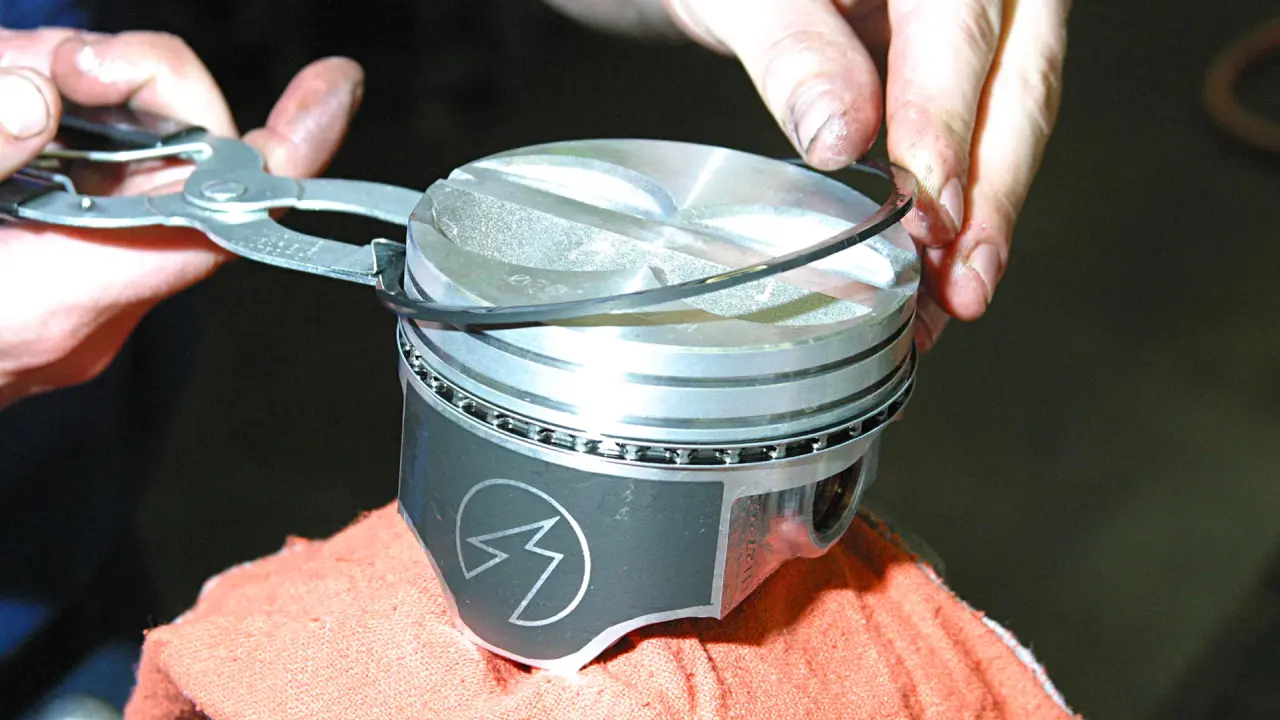
What Are Pistons and Piston Rings? Symptoms of Piston and Piston Ring Failure
The piston and piston rings are among the most important components inside an internal combustion engine. They work together to convert the pressure created by combustion into mechanical movement while also helping control engine oil and maintain compression inside the cylinder.
Although pistons and piston rings are designed to withstand extremely high temperatures, pressures, and continuous movement, they can eventually wear or become damaged. When this happens, engine performance can deteriorate significantly.
Problems with piston rings are particularly important because they can cause increased oil consumption, blue exhaust smoke, low compression, poor engine performance, and excessive crankcase pressure. More serious piston damage can lead to knocking noises, misfires, compression loss, or even complete engine failure.
Understanding what the piston and piston rings do makes it easier to recognize these problems before they develop into major engine damage.
What Is a Piston?
A piston is a cylindrical component that moves up and down inside an engine cylinder.
In a conventional four-stroke engine, the piston travels between the top of the cylinder and the bottom of the cylinder. This movement is connected to the crankshaft through the connecting rod.
The piston is directly exposed to the combustion process. When the air-fuel mixture is ignited in a gasoline engine, or fuel is injected into highly compressed air in a diesel engine, combustion creates extremely high pressure.
This pressure pushes the piston downward.
The connecting rod transfers this movement to the crankshaft, which converts the piston's reciprocating motion into rotational motion.
This rotational movement is ultimately used to drive the vehicle.
A piston therefore plays a central role in the process of converting combustion energy into mechanical power.
What Does a Piston Do?
The piston has several important functions inside the engine.
Its main responsibilities include:
-
Receiving combustion pressure
-
Transferring combustion force to the connecting rod
-
Helping maintain compression inside the cylinder
-
Supporting the piston rings
-
Controlling the movement of gases between the combustion chamber and crankcase
-
Helping transfer heat from the combustion area toward the cylinder wall and engine structure
The piston must operate under extremely demanding conditions.
Depending on the engine design and operating conditions, the piston crown can be exposed to very high temperatures and pressures. At the same time, it must move thousands of times per minute with very small clearances between itself and the cylinder wall.
This is why piston design, lubrication, cooling, and manufacturing tolerances are extremely important.
What Are Piston Rings?
Piston rings are circular metal rings installed in grooves around the piston.
They sit between the piston and the cylinder wall and perform several critical functions.
Although they are small compared with the piston itself, piston rings have a major effect on engine compression, oil consumption, emissions, and overall performance.
A typical piston uses several rings, with their exact number and design depending on the engine.
The rings are generally divided into two main functional groups:
Compression rings
These rings help seal the combustion chamber and prevent combustion gases from escaping excessively into the crankcase.
Oil control rings
These rings regulate the amount of engine oil remaining on the cylinder wall. They allow enough oil to remain for lubrication while preventing excessive oil from entering the combustion chamber.
Some piston designs also use additional ring arrangements or specialized ring configurations.
Why Are Piston Rings Important?
The piston does not normally make a completely gas-tight seal against the cylinder wall by itself.
The piston rings provide the necessary sealing function.
During combustion, extremely high-pressure gases attempt to move past the piston and into the crankcase. The compression rings limit this gas leakage.
At the same time, the oil control ring removes excess oil from the cylinder wall as the piston moves.
If the rings become worn, stuck, broken, or damaged, both functions can be affected.
The result may be:
-
Lower compression
-
Increased oil consumption
-
Blue exhaust smoke
-
Reduced engine power
-
Increased crankcase pressure
-
Blow-by gases
-
Poor fuel economy
-
Engine misfires
-
Increased emissions
How Do Piston Rings Work?
Piston rings are designed to maintain contact with the cylinder wall while the piston moves rapidly up and down.
Their sealing ability is not based simply on the ring physically touching the cylinder wall.
Combustion pressure can also act behind the compression ring and help press it against the cylinder wall. This allows the ring to maintain an effective seal under operating conditions.
The ring must therefore be able to move slightly within its piston groove while maintaining the correct relationship with the cylinder wall.
The cylinder surface itself is also important.
A properly honed cylinder has a controlled surface texture that helps retain a thin layer of engine oil. This supports lubrication and allows the piston rings to operate correctly.
If the cylinder surface is excessively worn, damaged, glazed, or distorted, new piston rings alone may not solve the problem.
What Is Blow-By?
Blow-by is the leakage of combustion gases past the piston rings into the crankcase.
A small amount of blow-by is normal in every piston engine.
The engine's crankcase ventilation system is designed to manage these gases and return them to the intake system in many modern engines.
The problem occurs when excessive blow-by develops.
Worn or damaged piston rings can allow substantially more combustion gas to enter the crankcase.
Excessive blow-by can increase crankcase pressure and may contribute to oil leaks, increased oil consumption, and problems with the crankcase ventilation system.
Symptoms of Worn or Damaged Piston Rings
Piston ring failure does not always produce exactly the same symptoms.
The symptoms depend on whether the compression rings, oil control rings, piston grooves, or cylinder surfaces are affected.
Some of the most common warning signs include the following.
Increased Engine Oil Consumption
One of the most common symptoms associated with worn or stuck oil control rings is excessive oil consumption.
If the oil control rings cannot properly remove excess oil from the cylinder wall, more oil may remain on the cylinder surface.
That oil can enter the combustion chamber and burn.
The driver may notice that the engine requires frequent oil top-ups even though there is no obvious external oil leak.
However, increased oil consumption does not automatically mean the piston rings are faulty.
Valve stem seals, turbocharger problems, crankcase ventilation faults, external oil leaks, and other engine problems can also cause oil consumption.
Proper diagnosis is therefore important.
Blue Smoke From the Exhaust
Blue or blue-gray exhaust smoke can indicate that engine oil is being burned.
When excessive oil enters the combustion chamber through worn piston rings or other pathways, it can burn along with the fuel.
Depending on the engine design and the exact fault, smoke may be more noticeable during acceleration, deceleration, startup, or after the engine has been idling.
Persistent blue smoke should not be ignored.
It indicates that oil is reaching the combustion process in a way that may eventually damage the engine or emissions system.
Reduced Engine Compression
Worn, broken, or improperly sealing piston rings can allow combustion pressure to escape into the crankcase.
This can result in reduced cylinder compression.
Low compression may cause:
-
Difficult starting
-
Rough idle
-
Reduced power
-
Misfires
-
Poor acceleration
-
Uneven engine operation
A compression test can provide useful information, although the results must be interpreted according to the engine manufacturer's specifications.
Poor Engine Performance
When cylinder sealing deteriorates, the engine may no longer produce its normal combustion pressure.
The vehicle may feel weak during acceleration, especially under load.
Drivers may notice that the engine struggles to maintain performance when climbing hills or carrying heavy loads.
In severe cases, one or more cylinders may contribute significantly less power than the others.
Increased Crankcase Pressure
Excessive blow-by can cause crankcase pressure to rise.
This can place additional stress on seals and gaskets and may contribute to oil leaks.
It can also affect the operation of the crankcase ventilation system.
If the crankcase ventilation system becomes overwhelmed or malfunctioning, symptoms may become more complicated because ventilation problems themselves can create abnormal crankcase pressure.
Engine Misfires
Piston or piston ring problems can sometimes contribute to engine misfires.
Low compression in a cylinder can make proper combustion difficult.
However, misfires are much more commonly associated with ignition, fuel injection, air intake, sensor, or other engine management problems.
A misfire code alone is therefore not proof of piston or piston ring failure.
Compression and cylinder-specific testing should be used to investigate mechanical causes.
Difficult Cold Starting
An engine with significantly reduced compression may be harder to start, particularly when cold.
This can be especially noticeable in diesel engines because diesel combustion depends heavily on achieving sufficient compression temperature.
However, difficult starting has many possible causes, including a weak battery, starter problems, fuel system faults, glow plug problems, incorrect injection timing, and sensor issues.
Mechanical compression should be tested before blaming the piston rings.
What Causes Piston Ring Failure?
Piston rings can last for a very long time when the engine is properly lubricated and maintained.
However, several conditions can accelerate their wear.
Insufficient lubrication
Low engine oil level, poor-quality oil, incorrect oil viscosity, or inadequate oil circulation can increase friction and wear.
Dirty engine oil
Contaminated oil can accelerate wear on piston rings, cylinder walls, and other engine components.
Extended oil-change intervals can allow deposits and contaminants to accumulate.
Engine overheating
Excessive heat can damage pistons, piston rings, ring grooves, and cylinder surfaces.
Severe overheating may cause piston distortion or scuffing.
Carbon deposits
Carbon deposits can build up around piston rings and their grooves.
A ring may become stuck in its groove instead of moving freely.
A stuck oil control ring can cause significant oil consumption.
Poor-quality or incorrect engine oil
The engine should use oil that meets the manufacturer's required specifications.
Using an unsuitable lubricant can negatively affect lubrication, deposits, and ring operation.
Dust entering the engine
A damaged or poorly sealed air intake system can allow abrasive particles to enter the engine.
These particles can accelerate wear of the cylinder walls and piston rings.
This is one reason a properly maintained air filter and intake system are important.
Improper engine tuning
Incorrect fueling, excessive boost pressure, abnormal combustion, or aggressive modifications can place additional thermal and mechanical stress on pistons and rings.
This is particularly relevant to highly modified turbocharged engines.
What Causes Piston Damage?
Piston problems are not limited to normal wear.
A piston can be damaged by severe operating conditions or other engine faults.
Possible causes include:
-
Severe overheating
-
Detonation
-
Pre-ignition
-
Excessive cylinder pressure
-
Incorrect fuel injection
-
Incorrect ignition timing
-
Injector problems
-
Turbocharger-related overboost
-
Insufficient lubrication
-
Foreign objects entering the cylinder
-
Excessive engine speed
-
Manufacturing defects
-
Incorrect engine assembly
A damaged piston may develop cracks, melting, scoring, broken ring lands, or other forms of structural damage.
What Is a Broken Piston Ring?
A piston ring can crack or break into multiple pieces.
A broken compression ring can cause major compression loss and increased blow-by.
A broken oil control ring can result in severe oil consumption.
In some cases, a broken ring can also damage the piston groove and cylinder wall.
The consequences can become much more serious if broken metal fragments move around inside the cylinder.
For this reason, suspected broken piston rings should be investigated promptly.
What Is a Stuck Piston Ring?
A piston ring is considered stuck when it cannot move correctly within its groove.
Carbon deposits are one common cause.
Instead of responding correctly to cylinder pressure and piston movement, the ring becomes restricted by deposits or other contamination.
A stuck oil control ring can be particularly troublesome because it may allow excessive oil to remain on the cylinder wall.
The engine may then burn oil even though the basic dimensions of the ring have not necessarily worn beyond their limits.
Can a Piston Ring Problem Cause Low Oil Pressure?
Piston ring wear does not normally directly cause low engine oil pressure.
Oil pressure is primarily determined by the lubrication system, oil pump, clearances, oil viscosity, pressure-regulating components, and other factors.
However, severe engine wear can increase overall oil consumption and may coexist with worn crankshaft bearings or other components that can reduce oil pressure.
Therefore, low oil pressure should be diagnosed separately rather than automatically attributed to piston rings.
How Are Piston and Piston Ring Problems Diagnosed?
Correct diagnosis is important because many piston-ring symptoms overlap with other engine problems.
A mechanic may begin with a basic inspection and then perform mechanical tests.
Check engine oil consumption
Determine how much oil the engine is consuming over a known distance or operating period.
The manufacturer's acceptable consumption specification should be used whenever available.
Inspect the exhaust
Look for abnormal blue smoke and determine when it occurs.
Smoke behavior can provide useful diagnostic clues.
Perform a compression test
A compression test compares cylinder pressure and can identify cylinders with unusually low compression.
The results should be compared with manufacturer specifications and with the other cylinders.
Perform a leak-down test
A cylinder leak-down test can provide more detailed information about where compression is escaping.
Depending on where the escaping air can be heard, the technician may distinguish between problems involving piston rings, valves, the head gasket, or other sealing components.
For example, significant air heard through the crankcase can suggest leakage past the piston rings.
Inspect crankcase pressure
Excessive crankcase pressure can support the suspicion of excessive blow-by.
However, the crankcase ventilation system must also be checked because a blocked or malfunctioning ventilation system can itself produce abnormal pressure.
Inspect the spark plugs
On gasoline engines, spark plug condition can provide clues about oil entering the combustion chamber.
An oil-fouled plug may indicate an oil-control problem, although valve seals, head gasket problems, and other causes must also be considered.
Use a borescope
A borescope inserted through the spark plug or injector opening can allow the technician to inspect the combustion chamber without immediately removing the cylinder head.
It may reveal piston damage, abnormal deposits, cylinder wall damage, or other abnormalities.
Compression Test vs. Leak-Down Test
These two tests provide different information.
A compression test measures the pressure produced by the cylinder during cranking.
A leak-down test introduces compressed air into the cylinder at a controlled piston position and measures how quickly that air escapes.
A leak-down test is particularly useful when trying to determine the source of compression loss.
For example, air escaping through the crankcase can point toward piston ring or piston-related leakage, while air heard through the intake or exhaust can indicate valve sealing problems.
Neither test should be interpreted in isolation.
Engine temperature, throttle position, battery condition, test equipment, valve timing, and the manufacturer's testing procedure can all influence results.
Can a Car Drive With Worn Piston Rings?
A vehicle may continue to operate for some time with worn piston rings, but this does not mean it is safe to ignore the problem.
If the engine is consuming oil, the oil level can fall dangerously low.
Burning oil can also affect emissions components.
In severe cases, continued operation can increase cylinder wear, piston damage, catalytic converter damage, or other engine problems.
If the piston rings are severely damaged, driving can turn a repairable problem into a much more expensive engine rebuild or replacement.
How Are Piston Rings Replaced?
Replacing piston rings is not normally a simple external repair.
The engine generally needs to be partially or fully disassembled to access the pistons.
The cylinder head and oil pan may need to be removed, followed by removal of the connecting rods and pistons, depending on the engine design.
Once the pistons are removed, the technician can inspect:
-
Piston rings
-
Ring grooves
-
Piston skirts
-
Ring lands
-
Cylinder walls
-
Connecting rods
-
Bearings
-
Cylinder dimensions
The cylinder condition is particularly important.
If the cylinder walls are worn, tapered, oval, scored, or otherwise outside specification, simply installing new rings may not provide a durable repair.
Depending on the condition of the engine, machining or cylinder honing may be required.
Should You Replace Only the Piston Rings?
Not necessarily.
A piston ring replacement should be based on the actual condition of the engine.
If the rings are worn but the pistons and cylinders remain within acceptable specifications, replacing the rings may be appropriate.
If the piston grooves are damaged or the cylinder walls are excessively worn, additional parts or machining may be necessary.
In a high-mileage engine undergoing a major rebuild, technicians may inspect and replace other components at the same time.
The correct repair depends on measurements rather than simply replacing parts based on symptoms.
How Can Piston Ring Problems Be Prevented?
Piston rings are internal engine components, but their service life is strongly influenced by routine maintenance.
Good practices include:
-
Change engine oil at the correct interval.
-
Use oil that meets the manufacturer's specifications.
-
Maintain the correct engine oil level.
-
Replace the oil filter regularly.
-
Keep the air filter clean and properly sealed.
-
Repair intake leaks or damaged airbox components.
-
Avoid prolonged operation with an overheating engine.
-
Keep the cooling system in good condition.
-
Address injector and fueling problems promptly.
-
Avoid unnecessary aggressive engine tuning.
-
Allow the engine to reach normal operating temperature during regular use.
-
Investigate abnormal oil consumption early.
One of the most important points is not to continue driving for a long time with unexplained oil consumption.
Finding the cause early can prevent much more expensive internal engine damage.
Piston Problems vs. Piston Ring Problems
Piston and piston ring faults can produce similar symptoms, but they are not the same problem.
A damaged piston may have a cracked crown, damaged ring lands, scoring, melting, or other structural damage.
A piston ring problem may involve normal wear, breakage, sticking, incorrect ring seating, or excessive clearance.
Cylinder wall wear can also create symptoms that resemble piston ring failure.
This is why compression testing, leak-down testing, crankcase pressure testing, oil consumption measurements, and visual inspection are valuable when diagnosing a suspected internal engine problem.
Do New Piston Rings Always Fix Oil Consumption?
No.
If the real cause of oil consumption is worn cylinder walls, damaged pistons, valve stem seals, a turbocharger problem, excessive crankcase pressure, or another fault, installing new rings alone may not solve the problem.
There is also an important distinction between replacing rings and properly rebuilding an engine.
The cylinder dimensions, piston-to-cylinder clearance, ring end gap, ring groove condition, and cylinder surface finish all need to be correct.
Incorrect assembly can cause poor sealing, excessive oil consumption, premature wear, or even engine damage.
When Should Piston or Piston Ring Problems Be Taken Seriously?
Some symptoms should prompt an immediate mechanical inspection.
Pay particular attention to:
-
Rapidly increasing oil consumption
-
Continuous blue exhaust smoke
-
Severe loss of engine power
-
Very low compression in one or more cylinders
-
Excessive crankcase pressure
-
Persistent misfires accompanied by compression loss
-
Unusual piston or engine noises
-
Evidence of metal contamination in engine oil
-
Severe overheating followed by new engine symptoms
The sooner the cause is identified, the greater the chance of preventing additional internal damage.
Final Thoughts
The piston and piston rings work together to create the seal required for efficient combustion, control engine oil, and transfer combustion force to the crankshaft.
The piston withstands enormous mechanical and thermal loads, while the piston rings perform the critical tasks of combustion sealing and oil control.
When piston rings become worn, stuck, or damaged, common symptoms can include increased oil consumption, blue exhaust smoke, reduced compression, excessive blow-by, poor engine performance, and difficult starting.
However, these symptoms are not exclusive to piston ring failure.
Valve seals, turbochargers, crankcase ventilation systems, injectors, cylinder wear, valves, head gasket problems, and other engine components can produce similar symptoms.
For this reason, piston or piston ring failure should be confirmed through proper testing rather than diagnosed from a single symptom.
Compression testing, leak-down testing, crankcase pressure measurement, oil consumption monitoring, and internal inspection can help determine whether the problem is actually inside the piston-and-ring assembly.
A well-maintained engine can provide very long piston and piston ring service life. Regular oil and filter changes, proper lubrication, a clean intake system, correct cooling system operation, and early attention to abnormal engine symptoms are among the best ways to protect these critical internal components.