TR
TR EN
EN

Why Do Diesel Cars Produce Black Smoke From the Exhaust?
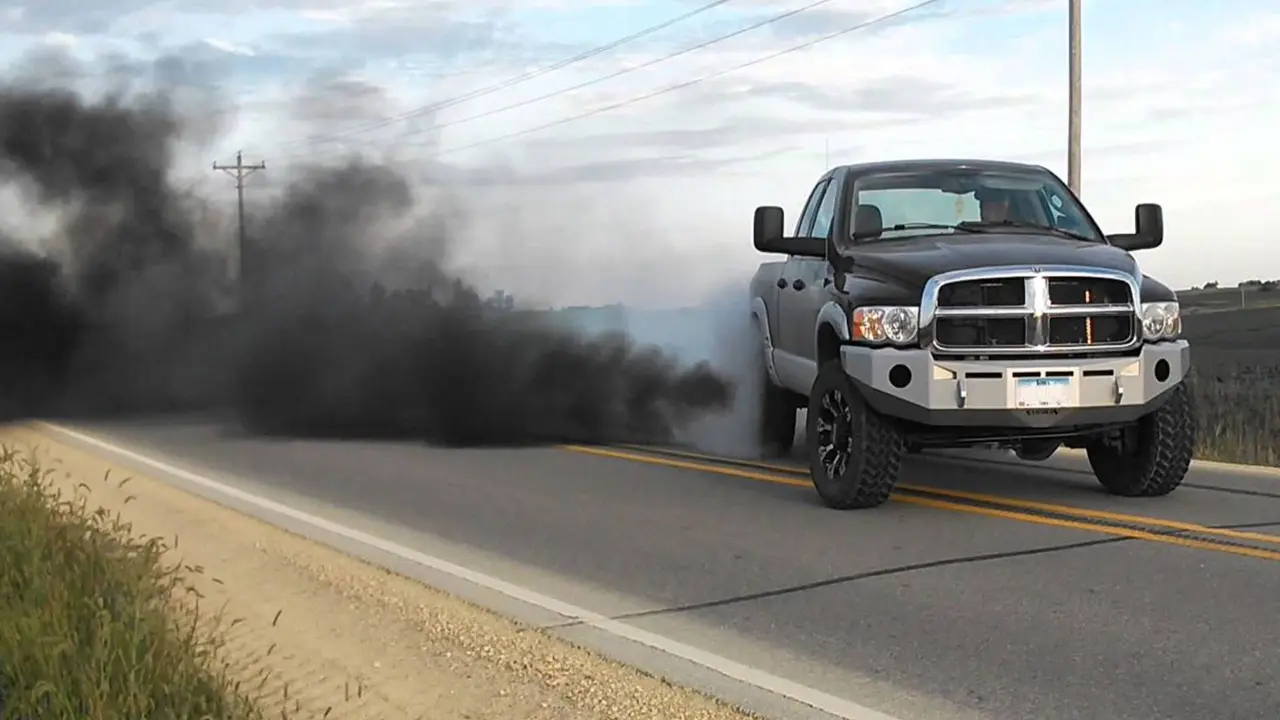
Black smoke coming from the exhaust is one of the most recognizable signs of a diesel engine that is not burning fuel efficiently.
A small amount of dark exhaust under certain operating conditions may occur on some older diesel engines, particularly during hard acceleration. However, thick or persistent black smoke is generally a sign that the combustion process is receiving too much fuel, too little air, or that the fuel is not being burned correctly.
The important point is that black smoke is not a diagnosis by itself. It is a symptom.
A diesel engine can produce black smoke because of a restricted air intake, turbocharger problem, EGR malfunction, dirty air filter, injector problem, incorrect sensor readings, excessive fueling, or a problem with the exhaust after-treatment system.
Modern diesel engines are generally designed to control soot very effectively. Therefore, significant visible black smoke from a newer diesel vehicle deserves investigation.
What Does Black Smoke From a Diesel Exhaust Mean?
Black smoke is primarily associated with soot, which consists largely of carbon-rich particles produced during incomplete combustion.
A diesel engine needs the correct relationship between fuel injection and the amount of oxygen available for combustion.
When more fuel is injected than the available oxygen can effectively burn, combustion becomes incomplete.
This can produce larger quantities of soot.
Under these conditions, the exhaust may appear:
-
Gray
-
Dark gray
-
Black
-
Thick black
The darker and denser the smoke, the more likely it is that the engine is producing excessive particulate matter.
Why Does a Diesel Engine Produce Soot?
Diesel combustion is different from gasoline combustion.
Diesel fuel is injected directly into highly compressed air. The fuel does not instantly mix uniformly throughout the combustion chamber.
Instead, combustion occurs in localized regions around the injected fuel.
If the fuel spray, air movement, injection timing, injection quantity, or available oxygen is incorrect, some areas of the combustion chamber can become excessively fuel-rich.
These fuel-rich regions can produce soot.
Under normal conditions, the engine control system is designed to minimize soot formation.
When something disrupts that balance, black smoke can become visible.
The Most Common Cause: Not Enough Air
One of the simplest ways to understand diesel smoke is to think about the relationship between fuel and air.
If the engine receives significantly less air than expected while fuel delivery remains high, the mixture in parts of the combustion process becomes too rich.
This can happen because of:
-
A dirty air filter
-
Restricted intake piping
-
A failed turbocharger
-
Boost leaks
-
EGR problems
-
A malfunctioning air-flow sensor
-
Intake carbon deposits
-
A stuck intake component
This is why checking the air side of the engine is often an important first step when diagnosing black smoke.
Can a Dirty Air Filter Cause Black Smoke?
Yes.
A heavily restricted air filter can reduce the amount of air entering the engine.
The effect is especially noticeable when the engine is under load because the engine requires a large amount of air to burn the injected fuel efficiently.
A restricted filter may therefore contribute to:
-
Black smoke
-
Reduced acceleration
-
Poor engine response
-
Increased fuel consumption
-
Reduced maximum power
However, modern engine management systems can compensate for some changes in airflow, so a dirty filter does not necessarily produce heavy black smoke immediately.
The filter should be inspected rather than automatically blamed.
Turbocharger Problems and Black Smoke
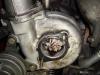
The turbocharger has a major role in supplying air to many modern diesel engines.
By compressing intake air, the turbocharger allows more oxygen to enter the engine.
If the turbocharger fails to produce the expected boost pressure, the engine may have insufficient air for the amount of fuel being injected.
This can produce black smoke, particularly during acceleration.
Possible turbo-related causes include:
-
Worn turbocharger
-
Damaged compressor
-
Sticking variable geometry mechanism
-
Wastegate problem
-
Vacuum actuator failure
-
Electronic actuator failure
-
Boost control problem
-
Turbocharger bearing damage
A turbocharger itself is not always the problem.
The control system that regulates boost may be at fault.
Boost Leaks Can Produce Black Smoke
A turbocharger may be operating correctly while pressurized air is escaping before reaching the engine.
This can happen through:
-
Split intercooler hoses
-
Loose hose connections
-
Cracked charge-air pipes
-
Damaged intercooler
-
Faulty seals
-
Leaking intake connections
The turbocharger may generate the expected pressure, but part of that air escapes.
The engine therefore receives less air than the control system expects.
This can lead to poor performance and black smoke.
A boost leak can sometimes be accompanied by a hissing or whooshing sound during acceleration.
Can an Intercooler Problem Cause Black Smoke?
Yes.
The intercooler reduces the temperature of compressed intake air before it enters the engine.
A damaged or leaking intercooler can reduce the amount of air actually reaching the engine.
If the intercooler has a significant leak, symptoms may include:
-
Black smoke
-
Reduced power
-
Poor acceleration
-
Increased turbocharger noise
-
Boost pressure problems
-
Oil residue around the leak
A small amount of oily residue around charge-air connections can be normal on some turbocharged engines, but a wet, heavily contaminated area can indicate a significant problem.
EGR Problems and Black Smoke
The Exhaust Gas Recirculation (EGR) system redirects a controlled amount of exhaust gas into the intake under specific operating conditions.
This reduces combustion temperature and helps control NOx emissions.
However, an EGR valve that is stuck open or otherwise malfunctioning can alter the amount of fresh air entering the engine.
An excessive amount of exhaust gas can reduce the available oxygen.
This may contribute to:
-
Black smoke
-
Rough running
-
Hesitation
-
Reduced performance
-
Increased soot production
An EGR problem can therefore affect both emissions and drivability.
However, black smoke alone does not prove that the EGR valve is faulty.
Carbon Deposits in the Intake System
Diesel engines can accumulate carbon and oil deposits in the intake system over time.
The combination of EGR gases and oil vapor from the crankcase ventilation system can contribute to deposits.
In severe cases, deposits can restrict airflow through:
-
Intake manifold passages
-
EGR passages
-
Intake valves
-
Throttle or air-control components
If airflow becomes significantly restricted, the engine may not receive the expected amount of fresh air.
This can contribute to black smoke and reduced performance.
Faulty Diesel Injectors
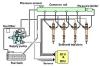
The fuel injectors have a critical role in diesel combustion.
They must deliver the correct amount of fuel at the correct time and with the correct spray pattern.
An injector that is worn, leaking, contaminated, or mechanically damaged may not atomize fuel correctly.
Possible injector-related problems include:
-
Excessive fuel delivery
-
Poor atomization
-
Incorrect spray pattern
-
Injector leakage
-
Sticking injector
-
Incorrect injection quantity
-
Uneven cylinder fueling
Poor atomization can create locally rich areas in the combustion chamber and increase soot production.
Black smoke accompanied by rough running, difficult starting, increased fuel consumption, or abnormal combustion noises may justify injector testing.
Can Bad Injector Timing Cause Black Smoke?
Yes.
Injection timing affects combustion efficiency.
If fuel is injected too early or too late, combustion may not occur under the intended conditions.
Depending on the engine and the specific fault, incorrect injection timing can contribute to:
-
Black smoke
-
Poor power
-
Increased fuel consumption
-
Rough running
-
Difficult starting
-
Increased emissions
On electronically controlled engines, injection timing is determined by the engine control system using sensor information and programmed strategies.
Therefore, a timing-related problem does not necessarily mean that a mechanical timing component has moved.
Faulty Airflow Sensors
Modern diesel engines rely on sensors to estimate and control engine airflow and fueling.
One important sensor is the Mass Air Flow (MAF) sensor.
If the MAF sensor provides an incorrect signal, the engine control module may receive inaccurate information about the amount of air entering the engine.
This can affect EGR control and fuel injection strategies.
Depending on the system, a faulty MAF sensor can contribute to:
-
Black smoke
-
Poor acceleration
-
Rough operation
-
Increased fuel consumption
-
EGR-related faults
-
Check Engine Light
A MAF sensor should be tested using actual data and manufacturer specifications rather than replaced solely because black smoke is present.
MAP Sensor Problems
The Manifold Absolute Pressure (MAP) sensor provides information about pressure inside the intake system.
Turbocharged diesel engines rely heavily on intake pressure information for boost and fueling control.
If the MAP sensor reports an incorrect pressure, the engine control system may misunderstand the actual boost condition.
This can contribute to incorrect fueling or boost control.
Possible symptoms include:
-
Black smoke
-
Lack of power
-
Poor acceleration
-
Turbocharger control problems
-
Check Engine Light
Again, sensor-related symptoms overlap with many mechanical problems, so diagnostic data should be checked before replacing the sensor.
Excessive Fuel Delivery
Black smoke can also occur when the engine receives more fuel than it can efficiently burn.
This may be caused by:
-
Incorrect injector calibration
-
Faulty fuel-pressure control
-
ECU calibration problems
-
Incorrect modifications
-
Tuning that commands excessive fuel
-
Injector problems
This is particularly relevant to modified diesel vehicles.
Increasing fuel delivery without providing sufficient air can significantly increase soot production.
Diesel Tuning and Black Smoke
Some modified diesel engines produce black smoke because of aggressive fueling strategies.
A tune that increases fuel delivery can produce more power when sufficient air is available.
However, if fueling is increased beyond what the engine's available airflow can support, the result may be excessive soot.
Visible black smoke should not be treated as proof of increased performance.
In fact, heavy smoke can indicate that fuel is being wasted and combustion is not optimized.
DPF and Black Smoke
The Diesel Particulate Filter (DPF) is designed to capture soot from diesel exhaust.
This means a modern diesel vehicle equipped with a functioning DPF should normally produce very little visible particulate smoke from the tailpipe.
If heavy black smoke is coming from the exhaust of a DPF-equipped vehicle, the situation deserves particular attention.
Possible causes can include:
-
DPF damage
-
DPF removal
-
DPF bypass
-
Incorrect exhaust modifications
-
Engine producing excessive soot
-
Regeneration problems
-
Exhaust-system faults
A DPF does not create the soot; it captures particulate matter produced by the engine.
If the engine is generating excessive soot, the underlying combustion problem should still be diagnosed.
Can a Clogged DPF Cause Black Smoke?
A heavily loaded or malfunctioning DPF can cause significant exhaust backpressure and engine performance problems.
However, a normally functioning DPF is designed to retain soot rather than allow large quantities of black particulate matter to exit the tailpipe.
Therefore, visible black smoke should not simply be explained as “the DPF is clogged.”
A clogged DPF can cause:
-
Reduced engine power
-
Increased exhaust backpressure
-
Regeneration problems
-
Warning lights
-
Increased fuel consumption
-
Limp mode
The exact symptoms depend on the vehicle and the severity of the restriction.
Black Smoke During Acceleration
Some older diesel engines can produce a brief puff of dark smoke when the accelerator is suddenly pressed.
This can occur because fuel delivery increases rapidly before the available air and turbocharger boost fully respond.
This transient effect is more common on older diesel technology.
However, thick black smoke that continues throughout acceleration is different.
Persistent smoke suggests that the engine is producing excessive soot or that the exhaust after-treatment system is not functioning as intended.
Black Smoke Under Heavy Load
Black smoke that appears mainly during:
-
Uphill driving
-
Towing
-
Hard acceleration
-
High engine load
often points toward an air-delivery or fueling problem.
The engine needs substantially more air under heavy load.
If the turbocharger cannot supply the required air, or if the intake system is restricted, soot production can increase.
This makes load-dependent smoke particularly useful as a diagnostic clue.
Black Smoke at Idle
Black smoke at idle can have a different diagnostic direction.
Possible causes include:
-
Injector problems
-
Incorrect fueling
-
EGR malfunction
-
Airflow problems
-
Engine-management faults
-
Poor combustion
-
Excessive fuel delivery
Heavy black smoke continuously coming from a diesel engine while idling is not considered normal operation.
The engine should be diagnosed rather than simply driven until the symptom becomes worse.
Black Smoke and Poor Fuel Economy
If black smoke is accompanied by noticeably increased fuel consumption, excessive fueling or inefficient combustion becomes an important consideration.
The engine may be injecting fuel that is not being converted into useful power efficiently.
However, poor fuel economy can have many unrelated causes.
Tire pressure, vehicle load, driving style, brake drag, thermostat problems, and other mechanical faults can also increase fuel consumption.
Can a Bad Glow Plug Cause Black Smoke?
Glow plugs primarily assist cold starting and cold combustion on diesel engines.
A defective glow plug can cause:
-
Difficult cold starting
-
Rough running immediately after startup
-
White or gray smoke during cold operation
-
Increased emissions
Black smoke is generally not the characteristic symptom of a glow plug problem.
Therefore, replacing glow plugs simply because a diesel engine produces black smoke is usually not the correct diagnostic approach.
Can a Bad Turbo Cause Black Smoke and Blue Smoke?
Turbocharger problems can produce different types of exhaust smoke depending on the failure.
A lack of boost can contribute to black smoke because insufficient air is available for combustion.
A turbocharger with an oil-sealing problem can allow engine oil into the intake or exhaust system, which may produce blue or blue-gray smoke.
Therefore:
Black smoke generally points toward a soot/fueling/air problem.
Blue smoke generally points more toward oil entering the combustion or exhaust process.
The colors can sometimes overlap, so smoke color should be treated as a diagnostic clue rather than absolute proof.
Is Black Smoke Harmful to the Engine?
The smoke itself is a visible sign of incomplete combustion, but the underlying cause is the bigger concern.
Continuous excessive soot production can contribute to:
-
Intake deposits
-
EGR contamination
-
DPF loading
-
Turbocharger contamination
-
Increased engine oil contamination
-
Increased fuel consumption
-
Higher emissions
If the engine continues operating with an unresolved combustion problem, secondary failures can become more likely.
How Is Excessive Black Smoke Diagnosed?
A good diagnosis should begin with the basics.
The technician should determine:
-
When the smoke appears
-
Whether it occurs only under load
-
Whether it occurs at idle
-
Whether the engine has lost power
-
Whether fuel consumption has changed
-
Whether warning lights are present
-
Whether the vehicle has a DPF
The diagnostic scan should then be used to check stored and pending fault codes and live data.
Depending on the vehicle, useful parameters may include:
-
MAF readings
-
MAP pressure
-
Boost pressure
-
Fuel pressure
-
EGR command and feedback
-
Injector correction values
-
DPF differential pressure
-
Exhaust temperature
-
Engine load
The intake and boost system should also be physically inspected for restrictions and leaks.
What Should Be Checked First?
There is no universal order that fits every engine, but a practical inspection often begins with relatively simple causes.
Check the air filter and intake path.
Inspect turbocharger hoses and intercooler connections.
Look for obvious boost leaks.
Inspect vacuum lines or electronic turbo-control components where applicable.
Check the EGR system.
Then evaluate sensor data and injector performance.
If the engine is equipped with a DPF, its condition and differential pressure should also be evaluated.
This approach is usually more effective than replacing expensive components one by one.
How to Prevent Black Smoke From a Diesel Engine
Regular maintenance is one of the best ways to minimize excessive soot production.
Use the correct engine oil and fuel specified for the vehicle.
Replace the air filter at the appropriate service interval.
Do not ignore Check Engine or emissions-system warnings.
Inspect turbocharger and intercooler hoses during servicing.
Keep the EGR and intake system in proper working condition.
On DPF-equipped vehicles, allow the vehicle to complete its normal regeneration strategy and investigate repeated regeneration failures rather than repeatedly forcing regenerations without finding the underlying cause.
Injector condition is also important, particularly on high-mileage diesel engines.
Should You Keep Driving a Diesel Car That Produces Black Smoke?
It depends on the severity.
A brief puff from an older diesel engine during hard acceleration may not indicate an immediate catastrophic problem.
Heavy, continuous black smoke is different.
If the vehicle has suddenly started producing thick smoke, has lost power, is consuming excessive fuel, or has entered limp mode, the vehicle should be inspected as soon as possible.
If the engine temperature rises abnormally, warning lights appear, or other serious symptoms occur, continuing to drive may cause additional damage.
Final Thoughts
Black smoke from a diesel exhaust is usually a sign that the combustion process is producing excessive soot.
The most common underlying principle is an imbalance between fuel and available air, but many different faults can create that imbalance.
A dirty air filter, restricted intake, boost leak, turbocharger problem, EGR malfunction, carbon buildup, faulty MAF or MAP sensor, injector problem, excessive fueling, or engine-management fault can all be involved.
On modern diesel vehicles equipped with a DPF, heavy visible black smoke is particularly abnormal because the particulate filter is designed to capture soot before it reaches the tailpipe.
The correct repair therefore depends on finding the reason why the engine is producing excessive soot or why the exhaust after-treatment system is failing to control it.
Black smoke should not simply be treated as a cosmetic issue. It is a useful warning that the diesel engine's air supply, fuel delivery, combustion process, or emissions-control system needs attention.