TR
TR EN
EN

What Is a Central Door Lock Relay? What Are Its Failure Symptoms?
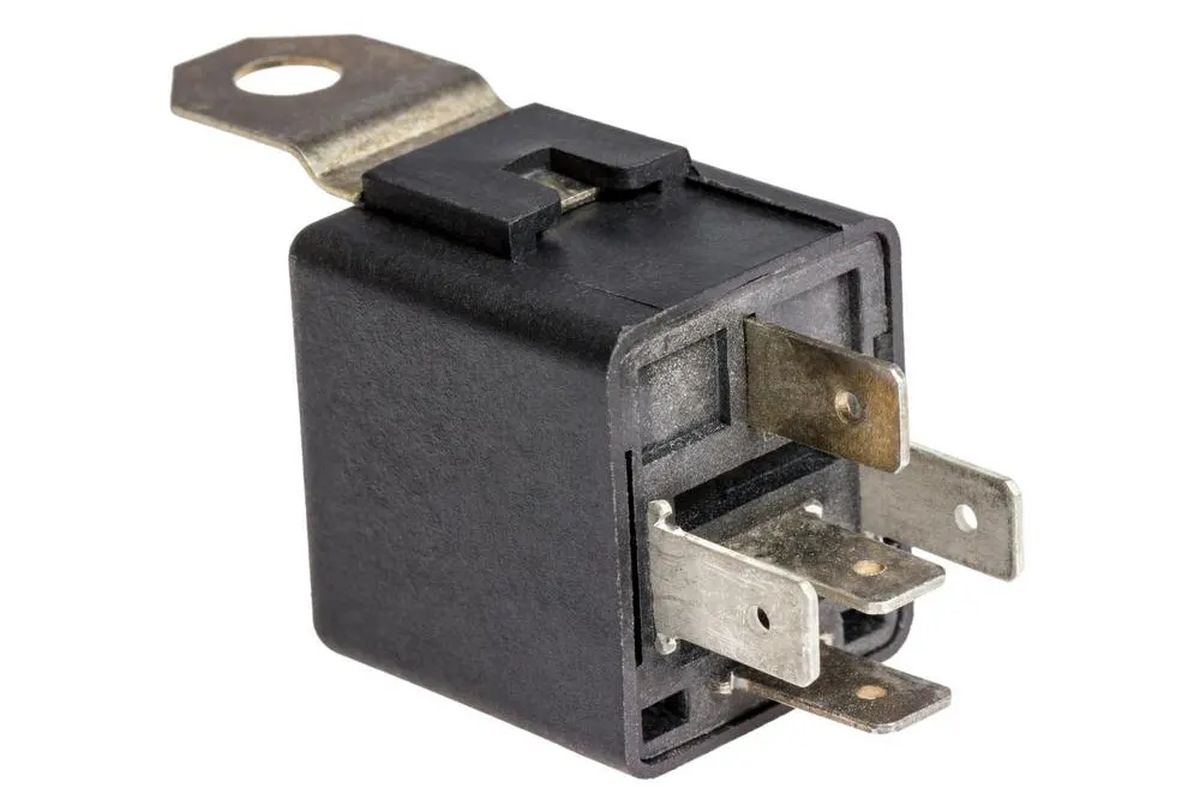
The central door lock relay is an electrical switching component used in some vehicle central locking systems to control the power supplied to the door-lock actuators. When you press the key fob, remote control, or interior central-locking button, the vehicle's control system can activate the relay to send electrical power to the door-locking mechanism.
Although the relay itself is relatively simple, a failure can affect several doors at the same time. However, modern vehicles increasingly use Body Control Modules (BCM), door control modules, or integrated electronic circuits instead of a traditional standalone central locking relay.
For this reason, the first step in diagnosis is determining how the particular vehicle's central locking system is designed.
How Does the Central Door Lock Relay Work?
A conventional relay works essentially as an electrically controlled switch.
When the central locking system receives a lock or unlock command, a control module or switching circuit activates the appropriate relay.
The relay then switches electrical power to the door-lock actuators.
Depending on the vehicle, there may be:
-
A lock relay
-
An unlock relay
-
Separate relays for different circuits
-
A relay integrated into a fuse/relay box
-
A relay controlled by the BCM
-
Electronic switching instead of a conventional relay
The basic operating sequence can be thought of as:
Remote/key/button → control module → relay or electronic switch → door-lock actuator → lock/unlock
The actual architecture varies significantly between manufacturers.
What Does the Central Locking Relay Control?
The relay may be responsible for supplying power to the motors or actuators that physically lock and unlock the doors.
Depending on the vehicle, the central locking system can control:
-
Driver's door
-
Passenger doors
-
Rear doors
-
Trunk or tailgate
-
Fuel-filler door
-
Interior locking functions
-
Remote locking
-
Remote unlocking
Some vehicles use separate circuits for different doors, while others control multiple actuators through a shared circuit.
Central Door Lock Relay Failure Symptoms
A faulty relay can produce several recognizable symptoms.
Common signs include:
-
Central locking does not work
-
Doors do not lock using the remote
-
Doors do not unlock using the remote
-
All doors stop responding
-
Locks work intermittently
-
Locking works but unlocking does not
-
Unlocking works but locking does not
-
A clicking sound comes from the relay area
-
Doors lock and immediately unlock
-
Central locking fuse repeatedly blows
-
Only some doors respond
-
Interior central-locking button does not work
The exact symptom depends on whether the relay is responsible for the entire locking system or only one part of it.
Central Locking Completely Stops Working
If none of the doors respond to the remote or interior locking switch, a relay problem is one possibility.
However, several other faults can produce exactly the same symptom.
For example:
-
Blown fuse
-
Weak vehicle battery
-
Remote-control problem
-
BCM fault
-
Damaged wiring
-
Poor ground connection
-
Door-lock control module failure
-
Failed actuator
-
Communication problem between modules
Therefore, all doors failing at once does not automatically prove that the relay is defective.
Locking Works but Unlocking Does Not
This symptom can provide a useful diagnostic clue.
If the doors lock correctly but do not unlock, the problem may be associated with the unlock circuit.
On vehicles with separate lock and unlock relays, the unlock relay or its control circuit could be faulty.
However, the same symptom can also be caused by:
-
Unlock switch failure
-
BCM control problem
-
Wiring damage
-
Door-lock actuator problems
-
Remote-control programming issues
The electrical architecture must be checked before replacing a relay.
Unlocking Works but Locking Does Not
The opposite situation is also possible.
If the doors unlock normally but refuse to lock, the lock circuit may have a problem.
Possible causes include:
-
Lock relay failure
-
Control-side fault
-
Wiring problem
-
Fuse or power-supply problem
-
Door-lock actuator fault
-
BCM fault
-
Mechanical door-lock resistance
Again, the relay is only one part of the system.
Intermittent Central Locking
An intermittent fault is particularly common with aging electrical components.
The doors may:
-
Work normally in the morning
-
Fail occasionally
-
Work again after several attempts
-
Operate differently depending on temperature
-
Work from the interior switch but not the remote
Possible causes include:
-
Relay contacts wearing or oxidizing
-
Loose relay terminals
-
Corroded connectors
-
Damaged wiring
-
Poor ground
-
BCM communication problems
-
Door-jamb wiring damage
-
Weak vehicle battery
If tapping or moving the relay/fuse-box area temporarily restores operation, that can be a clue, but it is not a definitive diagnosis.
Does a Clicking Relay Mean the Relay Is Good?
No.
A relay can click and still fail to deliver the required electrical power.
The coil inside the relay may operate normally while the power contacts are:
-
Burned
-
Oxidized
-
Worn
-
High resistance
-
Mechanically damaged
A clicking sound only indicates that the relay mechanism is moving. It does not prove that the switched circuit is functioning correctly.
This is why measuring the output of the relay under the appropriate conditions is more useful than relying only on the sound.
Common Causes of Central Door Lock Relay Failure
Worn relay contacts
Repeatedly switching the current required by door-lock actuators can eventually wear the relay contacts.
Electrical arcing
When a relay switches an inductive load such as a door-lock motor, electrical arcing can occur at the contacts. Over time, this can damage the contact surfaces.
Corrosion
Moisture can enter relay boxes and connectors, causing corrosion and poor electrical contact.
Overloaded circuit
A failing door-lock actuator may draw excessive current. This can put additional stress on the relay and eventually damage it.
Short circuit
A shorted wire or actuator can cause excessive current through the locking circuit and may blow a fuse or damage switching components.
Loose relay connection
A loose terminal can create resistance and heat, causing intermittent operation or connector damage.
Water intrusion
Water entering the fuse/relay box can create multiple electrical problems, including central-locking faults.
Can a Door-Lock Actuator Damage the Relay?
Yes.
This is an important point when replacing a relay.
A worn or partially seized door-lock actuator can draw more current than normal.
If the underlying actuator problem is not corrected, the replacement relay may eventually suffer the same problem.
For this reason, if a relay has failed, the technician should consider checking the current draw and operation of the door-lock actuators rather than simply installing another relay.
Central Locking Relay vs Door-Lock Actuator
These components perform completely different jobs.
The relay is an electrical switching device.
The door-lock actuator is the component that physically moves the locking mechanism.
A simplified example is:
Relay = supplies/switches electrical power
Actuator = converts electrical power into mechanical movement
If you hear a click from the relay but the door does not move, the actuator, wiring, mechanical lock mechanism, or power delivery should also be investigated.
Where Is the Central Door Lock Relay Located?
There is no universal location.
Depending on the vehicle, the relay may be found:
-
In the engine-compartment fuse box
-
Inside the passenger-compartment fuse box
-
Under the dashboard
-
Behind the glove box
-
Inside a body-control module
-
Integrated into an electronic control unit
Some vehicles do not have a replaceable central-locking relay at all.
The relay may be soldered onto a circuit board or replaced by an electronic transistor/MOSFET-based switching circuit.
This is particularly common in newer vehicles.
How Is a Central Door Lock Relay Diagnosed?
A proper diagnosis should begin with the vehicle's electrical architecture.
Check the basic power supply
Inspect the relevant fuses and verify that the vehicle battery voltage and main grounds are healthy.
A low-voltage condition can cause strange central-locking behavior and may be mistaken for a relay failure.
Check whether the control module receives the command
Use a diagnostic scanner where supported.
Depending on the vehicle, you may be able to see whether the BCM or another module recognizes:
-
Lock command
-
Unlock command
-
Door status
-
Key/remote input
Check relay operation
If the vehicle uses a conventional relay, determine whether the relay receives the correct control command and whether it switches power to the output circuit.
Do not assume that a clicking sound proves the relay is functioning correctly.
Check voltage at the actuator
If the relay or electronic switching circuit operates but the actuator receives no appropriate voltage, investigate the wiring between the switching device and the door.
Check the actuator
If the correct electrical command reaches the actuator but the lock does not move, the actuator or mechanical locking mechanism becomes a stronger suspect.
Can You Test a Central Locking Relay With a Multimeter?
Yes, when the vehicle uses a conventional removable relay.
A technician can test:
-
Coil continuity
-
Control voltage
-
Ground/control-side operation
-
Switched output
-
Voltage drop
-
Contact operation under load
However, relay pin layouts differ between vehicles.
The correct wiring diagram should always be used rather than assuming that a particular terminal has a universal function.
A relay can also pass a simple continuity test but fail under load because its contacts have excessive resistance.
Why Does the Central Locking Fuse Keep Blowing?
A repeatedly blown fuse should not be solved simply by installing a larger fuse.
The fuse is protecting the wiring and electrical system.
If it repeatedly blows, possible causes include:
-
Shorted wiring
-
Failed door-lock actuator
-
Seized locking mechanism
-
Damaged door-jamb wiring
-
Water intrusion
-
Incorrect accessory installation
-
Faulty electronic control module
A higher-rated fuse can allow excessive current to flow and potentially damage the wiring.
Door-Jamb Wiring Can Cause Central Locking Problems
The wiring between the vehicle body and doors is exposed to repeated flexing every time a door opens and closes.
Over time, wires can break internally or their insulation can become damaged.
This can cause:
-
One door not locking
-
One door not unlocking
-
Intermittent operation
-
Locking problems that change when the door moves
-
Communication faults with a door module
Therefore, if only one particular door has a central-locking problem, inspect its wiring and actuator before assuming the main central-locking relay has failed.
Can You Drive With a Faulty Central Locking Relay?
Usually, a central locking problem does not directly affect the engine or braking system.
However, it can create practical and security problems.
Depending on the vehicle, a central-locking fault may also affect:
-
Alarm system
-
Immobilizer-related functions
-
Keyless-entry system
-
Anti-theft functions
-
Automatic locking features
If the doors cannot reliably lock or unlock, the problem should be repaired rather than ignored.
The Important Diagnostic Distinction
A central door locking problem does not automatically mean the central locking relay is defective.
The system may contain several components working together:
Remote/key → receiver → BCM/control module → relay/electronic switch → wiring → actuator → mechanical lock
A failure anywhere along this chain can produce similar symptoms.
This is particularly important on modern vehicles because many manufacturers have replaced traditional relays with electronic switching inside the Body Control Module.
The most reliable diagnosis is therefore to determine whether the vehicle actually uses a separate central locking relay, verify the control command, check power and ground, test the switched output, and then inspect the actuator and wiring.
A relay should only be replaced after confirming that the relay itself is the cause of the problem—not simply because the central locking system has stopped working.