TR
TR EN
EN

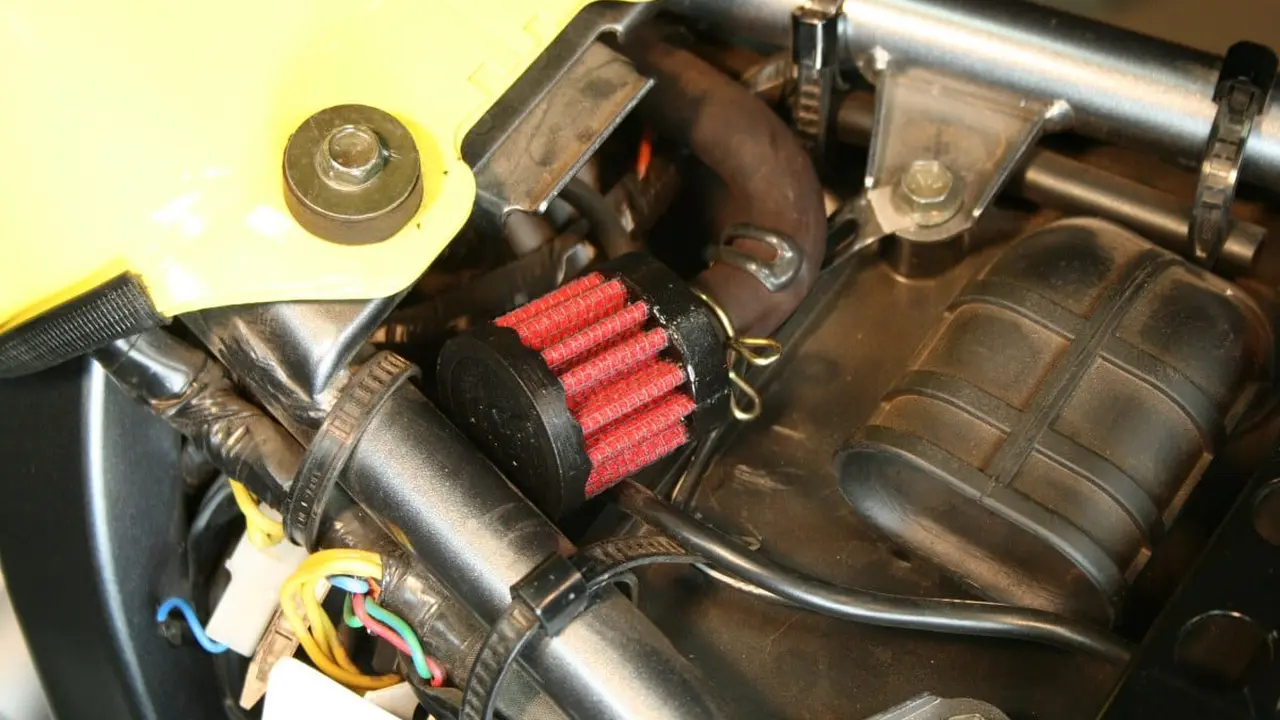
What Is a Crankcase Ventilation Filter?
The crankcase ventilation system is one of the engine components that often goes unnoticed until it starts causing problems. Although the crankcase ventilation filter is relatively simple compared with major engine components, its condition can have a significant effect on engine performance, oil consumption, emissions, and crankcase pressure.
A clogged crankcase ventilation filter can cause pressure to build up inside the engine. Depending on the engine design, this may lead to oil leaks, increased oil consumption, rough running, intake contamination, or even damage to seals and gaskets.
But what exactly does the crankcase ventilation filter do? Why does it become clogged? Can it be cleaned instead of replaced? What symptoms indicate that it is blocked, and when should it be replaced?
What Is a Crankcase Ventilation Filter?
The crankcase ventilation filter is a component used to control and clean the gases and oil vapors leaving the engine crankcase.
During normal engine operation, a small amount of combustion gas escapes past the piston rings and enters the crankcase. These gases are commonly referred to as blow-by gases.
Blow-by gases contain a mixture of:
-
Combustion gases
-
Fuel vapors
-
Water vapor
-
Oil mist
-
Unburned hydrocarbons
-
Other combustion by-products
These gases cannot simply be allowed to accumulate inside the crankcase because they would increase crankcase pressure.
The crankcase ventilation system therefore routes these gases away from the crankcase. In modern engines, they are usually directed back into the intake system so that they can be burned in the engine.
The crankcase ventilation filter, where fitted as a separate serviceable component, helps separate oil droplets and contaminants from the ventilation flow.
It may also be called a:
-
Crankcase breather filter
-
Engine breather filter
-
PCV filter
-
Crankcase ventilation filter
-
Breather element
-
Oil separator filter
However, these terms are not always interchangeable. Some engines use a simple breather filter, while others use a sophisticated oil separator or PCV assembly that incorporates filtration and pressure regulation into one housing.
How Does the Crankcase Ventilation System Work?
The basic principle is relatively simple.
As the engine runs, combustion gases inevitably pass the piston rings in small quantities. These gases enter the crankcase and mix with oil vapors.
If they were trapped inside the crankcase, pressure would continue to increase.
The ventilation system provides a controlled path for these gases to leave.
Depending on the engine, the system may use:
-
A PCV valve
-
A crankcase breather
-
An oil separator
-
A diaphragm
-
A pressure regulating valve
-
Internal baffles
-
A replaceable filter element
-
Ventilation hoses
In a typical gasoline engine, crankcase gases are drawn into the intake manifold under certain operating conditions.
In turbocharged engines and diesel engines, the system can be more complex because intake pressure changes significantly between operating conditions.
The system must therefore control crankcase pressure rather than simply allowing unrestricted airflow.
Why Is the Crankcase Ventilation Filter Important?
The crankcase ventilation system performs several important functions.
First, it prevents excessive pressure from developing inside the crankcase.
Second, it reduces the amount of oil mist entering the intake system.
Third, it helps return combustible crankcase vapors to the engine so they can be burned rather than released directly into the atmosphere.
A properly functioning system therefore contributes to:
-
Correct crankcase pressure
-
Reduced oil contamination of the intake
-
Lower emissions
-
Better oil control
-
Reduced risk of oil leaks
-
More stable engine operation
A problem with the filter or the rest of the ventilation system can affect several of these functions simultaneously.
Why Does a Crankcase Ventilation Filter Become Clogged?
A crankcase ventilation filter is exposed to an oily and contaminated gas stream. Over time, deposits can accumulate in the filter or oil separator.
The most common causes include the following.
Oil vapor accumulation
Oil mist is a normal part of crankcase ventilation. Over time, oil can accumulate on the filter material and restrict airflow.
Excessive blow-by
Worn piston rings, cylinder wear, or other internal engine problems can increase the amount of combustion gas entering the crankcase.
More blow-by means more gas, oil vapor, and combustion contaminants passing through the ventilation system.
This can cause the filter to become contaminated much faster.
Sludge and deposits
Poor-quality oil, incorrect oil-change intervals, excessive engine temperatures, or unsuitable engine oil can contribute to sludge formation.
These deposits can eventually restrict ventilation passages.
Short-distance driving
Frequent short trips may prevent the engine and oil from reaching and maintaining their proper operating temperatures.
Moisture and fuel contamination can then accumulate in the crankcase and ventilation system.
Incorrect engine oil
Using an oil that does not meet the manufacturer's required specification can contribute to deposits and abnormal oil vapor behavior.
The correct oil specification is therefore more important than simply choosing an oil with the correct viscosity.
Blocked or damaged ventilation hoses
Sometimes the filter itself is not the real problem.
A ventilation hose can become:
-
Blocked
-
Collapsed
-
Cracked
-
Restricted by sludge
-
Frozen in extremely cold conditions
-
Incorrectly installed
A restricted hose can produce symptoms similar to a clogged filter.
What Causes Excessive Crankcase Pressure?
A clogged filter is not the only possible cause of crankcase pressure.
This distinction is important when diagnosing the problem.
Excessive pressure can also result from:
-
A blocked PCV valve
-
A blocked breather hose
-
A failed crankcase pressure regulator
-
A damaged diaphragm
-
Excessive engine blow-by
-
A restricted oil separator
-
Incorrectly assembled ventilation components
If the crankcase pressure is abnormally high, simply replacing the filter may temporarily hide the symptom without solving the underlying problem.
Symptoms of a Clogged Crankcase Ventilation Filter
A restricted crankcase ventilation filter can produce different symptoms depending on the engine design and how severe the restriction is.
One of the most important signs is abnormally high crankcase pressure.
Other possible symptoms include the following.
Oil leaks
When crankcase pressure rises, oil may be forced past seals and gaskets that normally would not leak.
Oil may begin appearing around:
-
Valve cover seals
-
Crankshaft seals
-
Camshaft seals
-
Other engine joints
However, an oil leak does not automatically mean the crankcase ventilation system is blocked. A worn seal can leak independently.
Increased oil consumption
A ventilation problem can alter the pressure balance of the engine and increase the amount of oil entering the intake system.
In some cases, this can contribute to increased oil consumption.
Oil inside the intake system
A small amount of oil vapor or oil residue in the intake system can be normal on many engines.
However, excessive oil accumulation may indicate a problem with crankcase ventilation, oil separation, turbocharger sealing, or another component.
Whistling or unusual noises
A damaged PCV diaphragm or pressure-control component can produce whistling, hissing, or other unusual noises.
This symptom should not automatically be attributed to the filter itself.
Rough idle
On some engines, a malfunctioning crankcase ventilation system can introduce an incorrect amount of air into the intake system.
This can contribute to:
-
Rough idle
-
Unstable idle speed
-
Engine hesitation
-
Stalling
The exact effect depends heavily on the engine's ventilation design.
Engine warning light
If the ventilation problem changes the air-fuel mixture or creates an intake air leak, the engine control module may detect abnormal operating conditions and store diagnostic trouble codes.
A clogged breather filter itself does not necessarily generate a specific universal fault code.
Oil leaks appearing after other repairs
If an engine suddenly begins developing oil leaks after the ventilation system becomes restricted, crankcase pressure should be considered as one possible cause.
Can a Crankcase Ventilation Filter Be Cleaned?
This is one of the most common questions.
The answer is:
It depends on the design of the filter.
Some crankcase breather filters are designed to be replaced rather than cleaned.
If the manufacturer specifies a replacement interval or provides the filter as a replaceable service part, replacement is generally the correct approach.
Some reusable or washable breather elements may be cleaned if the manufacturer specifically permits it.
However, simply washing every type of crankcase ventilation filter is not recommended.
A filter may contain a specific material designed to capture oil droplets while maintaining a particular airflow rate. Cleaning it incorrectly can damage the filter or leave solvent and contaminants behind.
Should You Wash the Filter With Brake Cleaner?
Using aggressive solvents such as brake cleaner is generally not a good universal solution.
Some filter materials, rubber components, diaphragms, plastics, and seals can be damaged by strong solvents.
The correct cleaning method depends on the material and the manufacturer's instructions.
If the filter is inexpensive and designed as a replaceable service item, replacing it is usually safer and more reliable than attempting to restore it with chemicals.
What About an Oil Separator?
Modern engines often use an oil separator instead of a traditional filter.
An oil separator uses internal chambers, baffles, meshes, cyclonic separation, or other methods to remove oil droplets from crankcase gases.
Some systems can be cleaned.
Others are designed as sealed or semi-integrated assemblies and are intended to be replaced.
This is why the phrase "crankcase ventilation filter" can be misleading when applied to every engine.
Two engines may perform the same crankcase ventilation function using completely different hardware.
How Can You Tell If the Filter Is Clogged?
Diagnosis should begin with the entire crankcase ventilation system rather than immediately replacing the filter.
A technician may inspect:
-
The breather filter
-
PCV valve
-
Oil separator
-
Ventilation hoses
-
Diaphragm
-
Intake connections
-
Crankcase pressure
-
Signs of excessive blow-by
-
Oil contamination
-
Vacuum conditions
A crankcase pressure measurement can be particularly useful.
The correct pressure or vacuum specification varies considerably between engines, so there is no single universal value that applies to every vehicle.
This is an important point because a pressure condition that is normal for one engine may indicate a problem on another.
Can a Clogged Crankcase Filter Damage the Engine?
Yes, prolonged restriction can contribute to serious problems.
The most immediate concern is excessive crankcase pressure.
Continued pressure buildup can contribute to:
-
Oil leaks
-
Seal damage
-
Increased oil consumption
-
Oil contamination of the intake
-
Poor engine operation
-
Increased emissions
In severe cases, the resulting oil loss or lubrication problems can create much more serious engine damage.
A blocked ventilation system should therefore not be ignored simply because the vehicle continues to run.
When Should the Crankcase Ventilation Filter Be Replaced?
There is no universal replacement mileage that applies to every vehicle.
The correct interval depends on the manufacturer's maintenance schedule and the specific ventilation system.
Some vehicles specify replacement at a certain mileage or service interval.
Other vehicles do not have a separate replaceable filter because the oil separator or PCV system is integrated into another component.
Replacement may be appropriate when:
-
The filter is visibly contaminated
-
Airflow is restricted
-
The manufacturer specifies replacement
-
The filter is damaged
-
Crankcase pressure is abnormal because of the restriction
-
The ventilation system has excessive oil contamination
-
The component cannot be properly cleaned
-
The filter has reached its specified service interval
If the vehicle has an integrated PCV or oil separator assembly, the entire assembly may need to be serviced instead of replacing a small filter element.
Is It Possible to Replace the Filter Too Early?
Yes.
Replacing a filter unnecessarily is not always useful.
If the real problem is excessive blow-by caused by engine wear, the new filter can become contaminated again relatively quickly.
Likewise, if a ventilation hose is blocked or a pressure-control diaphragm has failed, replacing the filter alone will not solve the problem.
For this reason, repeated filter contamination should be treated as a diagnostic clue rather than simply a maintenance inconvenience.
Why Does a New Filter Become Dirty Very Quickly?
A new crankcase ventilation filter becoming heavily contaminated shortly after installation deserves attention.
Possible causes include:
-
Excessive engine blow-by
-
High oil consumption
-
Worn piston rings
-
Excessive cylinder wear
-
Incorrect engine oil
-
Overfilled engine oil
-
Failed PCV components
-
Blocked ventilation passages
-
Faulty oil separation
-
Turbocharger-related oil problems on turbocharged engines
The filter may be functioning correctly but receiving an unusually large amount of oil and combustion contamination.
In such a case, repeatedly replacing the filter without investigating the cause can become expensive and ineffective.
Does a Clogged Crankcase Filter Increase Oil Consumption?
It can, depending on the engine design and the nature of the restriction.
A restricted ventilation system changes the pressure balance within the crankcase.
This can affect oil control and may encourage oil to escape through seals or enter the intake system.
However, increased oil consumption has many possible causes, including:
-
Worn piston rings
-
Valve stem seals
-
Turbocharger problems
-
External oil leaks
-
Incorrect oil viscosity
-
Overfilling
-
Cylinder wear
Therefore, a clogged crankcase filter should be considered as one possible cause rather than automatically being blamed for every oil-consumption problem.
Crankcase Ventilation Problems in Diesel Engines
Diesel engines can produce significant amounts of blow-by and oil mist, particularly as mileage increases.
Their crankcase ventilation systems may therefore use sophisticated oil separation systems.
A restricted ventilation system on a diesel engine can cause increased crankcase pressure and oil leakage.
In some modern diesel engines, excessive oil entering the intake can also complicate the diagnosis of turbocharger and intake-system problems.
For this reason, the entire ventilation system should be inspected rather than focusing only on the filter.
Crankcase Ventilation Problems in Turbocharged Engines
Turbocharged engines require particular attention because intake pressure varies substantially.
The crankcase ventilation system must maintain appropriate pressure control under both vacuum and boost conditions.
A malfunctioning PCV valve, diaphragm, oil separator, or breather system can therefore produce unusual symptoms.
Possible signs include:
-
Oil accumulation in intake pipes
-
Increased oil consumption
-
Boost-related oil leaks
-
Whistling noises
-
Rough idle
-
Crankcase pressure abnormalities
Again, these symptoms can have other causes, so proper diagnosis is essential.
What Happens If You Continue Driving With a Clogged Filter?
The consequences depend on how severely the system is restricted.
A mildly restricted filter may initially produce only minor symptoms.
As the restriction becomes worse, crankcase pressure can increase.
Continued driving may then contribute to oil leaks and increased oil consumption.
If enough oil is lost or the engine begins operating outside its normal lubrication conditions, the consequences can become much more serious.
For that reason, a suspected crankcase ventilation restriction should be addressed before it develops into a secondary engine problem.
How to Prevent Crankcase Ventilation Filter Problems
Good engine maintenance can significantly reduce the risk of ventilation problems.
Use the engine oil specified by the vehicle manufacturer and follow the correct oil-change interval.
Avoid extending oil-change intervals excessively, especially when the vehicle is frequently used for short trips, heavy loads, or severe operating conditions.
It is also useful to inspect the ventilation hoses and related components during routine maintenance.
Pay attention to:
-
New oil leaks
-
Unusual crankcase noises
-
Excessive oil consumption
-
Oil inside intake components
-
Rough idle
-
Repeated PCV-related faults
-
Rapid filter contamination
These signs can provide an early warning before the problem becomes more serious.
Final Thoughts
The crankcase ventilation filter is a small component, but it plays an important role in maintaining the correct pressure balance inside the engine and controlling oil vapors and blow-by gases.
A clogged filter can contribute to excessive crankcase pressure, oil leaks, increased oil consumption, intake contamination, and abnormal engine operation.
Whether the filter can be cleaned depends entirely on its design. Some elements are serviceable and reusable, while many are designed to be replaced. Modern engines may not even have a separate filter because the ventilation and oil-separation functions are integrated into a PCV or oil separator assembly.
There is also no universal replacement interval. The manufacturer's maintenance schedule and the actual condition of the ventilation system should determine when service is required.
Most importantly, do not assume that a dirty or clogged crankcase filter is always the root cause. Excessive blow-by, worn engine components, blocked hoses, failed PCV valves, damaged diaphragms, and oil-separator problems can all create similar symptoms.
A proper diagnosis should therefore evaluate the entire crankcase ventilation system, not just the filter.
A clean and correctly functioning ventilation system helps the engine maintain proper crankcase pressure, control oil vapors, reduce emissions, and operate as intended.