TR
TR EN
EN

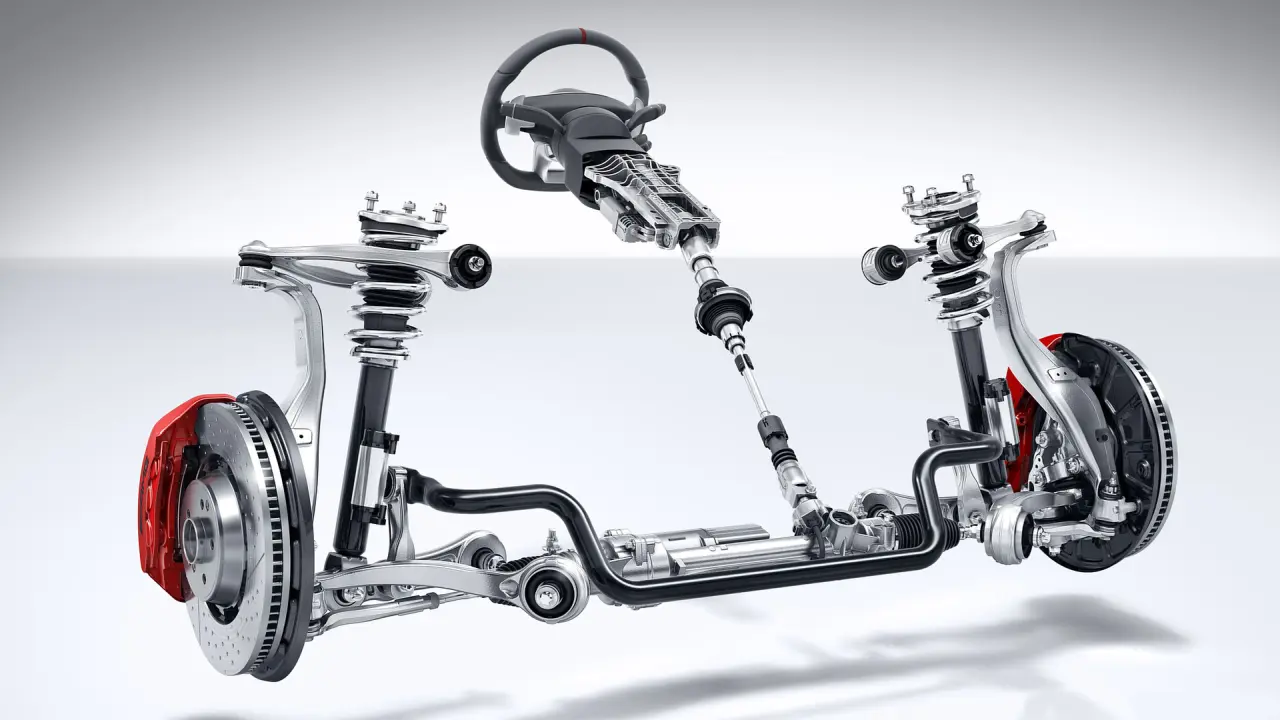
Electric Power Steering vs. Hydraulic Power Steering: Which Is Better?
Steering is one of the most important systems in a vehicle. The driver expects the steering wheel to turn smoothly, accurately, and predictably while also providing enough assistance to make parking and low-speed maneuvering easy.
For decades, hydraulic power steering was the dominant solution in passenger cars. Today, however, Electric Power Steering (EPS) has become increasingly common, especially in newer vehicles.
Both systems have the same basic purpose: reducing the effort required to turn the steering wheel.
The way they achieve this is completely different.
Hydraulic power steering uses an engine-driven pump, hydraulic fluid, hoses, and a steering assist mechanism. Electric power steering uses an electric motor and electronic control system to provide assistance when needed.
So which system is better?
There is no universal answer. Each has advantages and disadvantages, and the best system depends on the vehicle, its intended use, efficiency requirements, steering characteristics, and manufacturer priorities.
What Is Power Steering?
Power steering is a system designed to make steering easier.
Without power assistance, turning the steering wheel requires significantly more physical effort, particularly when the vehicle is stationary or moving slowly.
Power steering provides additional force to help the driver turn the steering mechanism.
The driver still controls the direction of the vehicle, but the assistance system reduces the amount of effort required at the steering wheel.
Two of the most important power steering technologies are:
-
Hydraulic Power Steering (HPS)
-
Electric Power Steering (EPS)
Some vehicles have also used electro-hydraulic systems, which combine elements of both technologies.
How Does Hydraulic Power Steering Work?
A traditional hydraulic power steering system uses pressurized fluid to assist steering.
A typical system includes:
-
Hydraulic power steering pump
-
Power steering fluid
-
Steering gear or rack
-
Hydraulic control valve
-
High-pressure and return hoses
-
Reservoir
-
Engine-driven pulley and belt
The hydraulic pump is usually driven by the engine through a belt.
When the engine is running, the pump continuously circulates power steering fluid and creates hydraulic pressure.
When the driver turns the steering wheel, the steering system detects the direction and amount of steering input.
A hydraulic control mechanism directs pressurized fluid to the appropriate side of the steering assist mechanism.
The hydraulic pressure then helps move the steering rack or steering gear.
The result is lighter steering effort.
How Does Electric Power Steering Work?
Electric Power Steering uses an electric motor rather than an engine-driven hydraulic pump.
The system generally includes:
-
Electric steering motor
-
Steering torque sensor
-
Steering angle sensor or steering position information
-
Electronic control unit
-
Steering rack or steering column components
-
Wiring and electrical connections
When the driver turns the steering wheel, the torque sensor detects the amount and direction of force being applied.
The control unit analyzes this information along with other vehicle data.
Depending on the vehicle, the system may consider:
-
Vehicle speed
-
Steering angle
-
Steering torque
-
Yaw or stability information
-
Driving mode
-
Other electronic control inputs
The electric motor then provides the appropriate amount of steering assistance.
One of the major advantages is that the motor does not have to provide maximum assistance continuously.
It can provide more assistance at low speeds and less assistance at higher speeds.
The Biggest Difference Between EPS and Hydraulic Steering
The fundamental difference is where the assistance energy comes from.
Hydraulic steering uses engine power to drive a hydraulic pump.
Electric steering uses electrical energy to operate an electric motor.
This difference affects almost every other characteristic of the two systems.
Hydraulic steering has mechanical and hydraulic components that operate continuously while the engine is running.
EPS can provide assistance only when it is needed.
This makes electric steering particularly attractive for modern vehicles where fuel efficiency, emissions, packaging, and electronic driver-assistance systems are important.
Steering Feel: Which One Feels Better?
This is one of the most debated differences between the two systems.
Traditional hydraulic steering is often praised for its natural and communicative steering feel.
Because the hydraulic system provides a relatively direct mechanical connection between the driver and the road, some drivers feel that it gives better feedback through the steering wheel.
This can be especially noticeable in performance-oriented vehicles.
Electric steering has historically been criticized for feeling less natural or less communicative.
Some early EPS systems could feel overly light or artificially filtered.
However, modern electric steering systems have improved considerably.
Manufacturers can electronically adjust steering assistance according to speed and driving conditions.
As a result, a well-tuned modern EPS system can provide precise and predictable steering.
The quality of the steering calibration is therefore just as important as the underlying technology.
Electric Steering and Fuel Economy
This is one of the strongest advantages of EPS.
A traditional hydraulic pump is usually driven by the engine continuously.
Even when the driver is traveling straight and does not need steering assistance, the pump may still consume some engine power.
That creates a parasitic load.
Electric power steering does not require a continuously running hydraulic pump.
The electric motor operates primarily when assistance is required.
This can reduce the amount of mechanical power taken from the engine and contribute to improved fuel efficiency.
The actual fuel-economy benefit varies depending on the vehicle and system design, so EPS should not be considered a guarantee of a specific fuel saving.
Hydraulic Steering and Engine Load
Hydraulic steering creates a continuous mechanical load on the engine.
The steering pump is driven through a belt or similar mechanical arrangement.
When the steering system requires more hydraulic pressure, the pump can impose additional load on the engine.
This effect is particularly noticeable during low-speed steering or when maneuvering at very low speeds.
It is one of the reasons hydraulic systems gradually became less attractive as manufacturers pursued greater efficiency.
Hydraulic Steering Has a Different Character
Although hydraulic systems are older, they have important advantages.
A well-designed hydraulic steering system can provide:
-
Natural steering feedback
-
Predictable assistance
-
Strong road feel
-
Relatively simple control characteristics
-
Proven long-term durability
For this reason, hydraulic steering remains appreciated by many enthusiasts and is still relevant when discussing older vehicles and certain performance applications.
Older does not automatically mean worse.
In some vehicles, the hydraulic system may provide a steering feel that drivers prefer over an electronically assisted system.
Maintenance Requirements
The maintenance requirements of the two systems are significantly different.
Hydraulic power steering
Hydraulic systems contain fluid and multiple components that can leak or wear.
Possible maintenance items include:
-
Power steering fluid
-
Hydraulic hoses
-
Pump
-
Reservoir
-
Seals
-
Steering rack
-
Drive belt
The fluid may become contaminated or degraded over time.
Some vehicles specify power steering fluid replacement, while others do not require routine replacement under normal conditions.
The manufacturer's maintenance instructions should always be followed.
Electric power steering
EPS does not use conventional power steering fluid.
This eliminates several potential maintenance issues.
There is no hydraulic pump fluid reservoir or hydraulic pressure hose system in a typical fully electric EPS setup.
However, EPS has its own electronic components that can fail.
Possible problems include:
-
Electric motor failure
-
Torque sensor failure
-
Steering control module problems
-
Wiring faults
-
Connector corrosion
-
Power supply problems
-
Software or calibration issues
So EPS generally requires less fluid-related maintenance, but it is not maintenance-free.
Which System Has More Potential Leak Problems?
Hydraulic power steering clearly has more opportunities for fluid leaks.
A hydraulic system contains pressurized fluid, hoses, seals, and connections.
Leaks can develop from:
-
Power steering hoses
-
Steering rack seals
-
Pump seals
-
Reservoir connections
-
Hydraulic fittings
A leaking hydraulic system can gradually lose steering assistance.
Electric power steering does not use hydraulic fluid in the typical EPS configuration, so it does not suffer from conventional power steering fluid leaks.
This is a major advantage in terms of maintenance.
Common Hydraulic Power Steering Problems
Hydraulic systems can develop several characteristic faults.
Power steering fluid leak
A leak may cause the fluid level to fall and eventually reduce steering assistance.
Whining or groaning noise
A hydraulic pump that is worn, starved of fluid, or operating under abnormal conditions may produce whining or groaning noises.
Heavy steering
Loss of hydraulic pressure can make the steering wheel considerably harder to turn.
Possible causes include:
-
Low fluid level
-
Failed pump
-
Broken drive belt
-
Restricted hose
-
Internal steering rack problem
Foamy power steering fluid
Air entering the hydraulic system can cause the fluid to become aerated or foamy.
This may indicate a leak or another problem in the hydraulic circuit.
Common Electric Power Steering Problems
EPS problems tend to be different.
Steering becomes heavy
A failure of the electric motor, control module, sensor, or electrical power supply can cause the system to reduce or completely lose steering assistance.
EPS warning light
Many vehicles have a dedicated EPS or steering warning light.
If the system detects a fault, the warning light may illuminate.
Intermittent steering assistance
Electrical connections, voltage problems, sensors, or control modules can sometimes cause intermittent EPS operation.
Steering feels inconsistent
Incorrect calibration, sensor problems, mechanical issues, or electronic faults can change steering feel.
Battery or charging system problems
This is an important consideration with electric steering.
EPS depends on the vehicle's electrical system.
If battery voltage is too low or the charging system is malfunctioning, the steering system may be affected.
This does not mean that every weak battery will cause an EPS failure, but electrical supply should be considered when diagnosing an electronic steering fault.
Which System Is More Reliable?
There is no simple winner.
Hydraulic steering has many mechanical and hydraulic components, so there are more opportunities for fluid leaks, pump wear, hose deterioration, and seal problems.
EPS eliminates many of these components but introduces electric motors, sensors, control modules, and electronic circuits.
A well-maintained hydraulic system can last for a very long time.
A properly designed EPS system can also provide excellent long-term reliability.
Reliability depends on:
-
System design
-
Component quality
-
Vehicle age
-
Operating conditions
-
Maintenance
-
Electrical system condition
-
Manufacturing quality
Therefore, it is inaccurate to say that one technology is always more reliable.
Which One Is Easier to Repair?
Hydraulic systems can sometimes be easier to understand and diagnose mechanically.
A technician can inspect the fluid, check for leaks, test pump operation, and examine belts and hoses.
Some hydraulic components can also be rebuilt or replaced individually.
EPS diagnosis often requires diagnostic equipment.
A technician may need to inspect:
-
Diagnostic trouble codes
-
Live sensor data
-
Steering torque values
-
Motor operation
-
Battery voltage
-
Charging voltage
-
Wiring
-
Control module communication
Some EPS components are also expensive to replace.
However, electronic diagnostic tools have made modern steering diagnosis considerably more sophisticated.
Electric Steering and Driver Assistance Systems
One of the biggest advantages of EPS is its ability to communicate with other electronic vehicle systems.
Modern driver-assistance technologies can use the electric steering motor to make controlled steering corrections.
Examples include:
-
Lane keeping assistance
-
Lane centering
-
Automated parking
-
Steering assist
-
Some collision-avoidance functions
-
Advanced driver-assistance systems
This is much more difficult to implement with a conventional purely hydraulic steering system.
EPS therefore plays an important role in the development of modern vehicle automation.
EPS and Autonomous Driving Technology
Electric steering is also highly compatible with advanced vehicle control systems.
A computer can command the electric steering motor to make a steering adjustment without requiring a traditional hydraulic control mechanism.
This does not mean that every EPS-equipped car is autonomous.
It simply means that electric steering provides a convenient interface between electronic control systems and the steering mechanism.
As vehicles become increasingly software-defined, this capability becomes more important.
Which System Is Better for Performance Cars?
The answer depends on what kind of performance is being prioritized.
Hydraulic steering has traditionally been favored by driving enthusiasts because of its steering feedback.
A good hydraulic system can communicate road conditions through the steering wheel in a very natural way.
However, modern EPS systems can also be extremely capable.
Manufacturers can program different levels of assistance and steering response for different driving modes.
Some high-performance cars therefore use highly sophisticated electric steering systems.
Performance alone is not enough to determine which technology is better.
The calibration and mechanical design of the entire steering system matter greatly.
Which System Is Better for City Driving?
EPS has several advantages in urban environments.
Low-speed maneuvering requires significant steering assistance.
Electric systems can increase assistance at low speeds, making parking easier.
Because the electric motor does not need to run continuously like an engine-driven hydraulic pump, efficiency can also be improved.
For modern city cars, EPS is therefore a very practical solution.
Which System Is Better for Long-Distance Driving?
Both can work very well.
At highway speeds, excessive steering assistance is undesirable because the driver needs stability and precise control.
EPS can reduce assistance as vehicle speed increases.
Hydraulic systems can also be designed to provide appropriate steering characteristics at higher speeds.
The actual highway performance depends more on system tuning, steering geometry, tires, suspension, and vehicle design than simply whether the car uses hydraulic or electric assistance.
What About Electro-Hydraulic Power Steering?
There is another system that sits between the two technologies.
It is called electro-hydraulic power steering.
Instead of using the engine directly to drive the hydraulic pump, an electric motor drives the hydraulic pump.
This means the system retains hydraulic steering assistance but can control the pump independently of engine speed.
It can therefore reduce some of the efficiency disadvantages of conventional hydraulic steering.
However, it still contains hydraulic fluid, hoses, seals, and a pump.
It is therefore not the same as a fully electric EPS system.
Electric vs. Hydraulic Steering in Cold Weather
Both systems can be affected by extreme temperatures, but in different ways.
Hydraulic systems contain fluid whose viscosity changes with temperature.
Very cold conditions can make the fluid thicker and increase the effort required by the pump until the system warms up.
Electric steering does not have this particular hydraulic-fluid issue.
However, EPS depends heavily on electrical power, and very low temperatures can affect battery performance.
Therefore, neither technology is completely immune to cold-weather effects.
Can You Convert Hydraulic Steering to Electric Steering?
In some vehicles, conversion may be technically possible.
However, it is not normally a simple matter of removing the hydraulic pump and installing an electric motor.
The steering rack, control electronics, wiring, sensors, power supply, and vehicle communication systems may all be different.
A conversion can therefore require substantial engineering work.
For a road-going vehicle, modifications to the steering system should be approached very carefully because steering is a critical safety system.
What Happens If Power Steering Assistance Fails?
The exact behavior depends on the vehicle.
When power assistance is lost, the mechanical steering connection may remain functional, but the steering wheel can become significantly harder to turn.
This is particularly noticeable at low speeds.
In both hydraulic and electric systems, loss of assistance does not necessarily mean that the steering mechanism itself has completely failed.
However, a sudden change in steering effort is a serious warning sign.
If steering assistance is lost while driving, the driver should maintain control, reduce speed safely, and have the vehicle inspected as soon as possible.
Which One Should You Choose?
If you are buying a modern vehicle, you will usually have little choice because the manufacturer determines the steering system.
From a technical perspective, however, each system has a different set of strengths.
Hydraulic power steering is attractive because it offers:
-
Traditional steering feel
-
Strong road feedback
-
Proven mechanical technology
-
Straightforward hydraulic operation
Electric power steering is attractive because it offers:
-
Better efficiency potential
-
No conventional power steering fluid
-
Fewer hydraulic components
-
Flexible steering assistance
-
Easier integration with electronic systems
-
Compatibility with advanced driver assistance
-
Greater freedom in steering calibration
Final Verdict: Electric or Hydraulic?
For modern passenger vehicles, Electric Power Steering generally has the greater overall advantage.
Its efficiency, reduced hydraulic maintenance, packaging flexibility, electronic controllability, and compatibility with driver-assistance systems make it particularly suitable for modern vehicles.
However, hydraulic power steering should not be dismissed as outdated or inferior.
A well-designed hydraulic system can provide excellent steering feel, durability, and road feedback. For some enthusiasts, that natural steering character remains one of its biggest advantages.
Ultimately, the quality of the entire steering system matters more than the technology name alone.
A poorly calibrated electric steering system can feel worse than a well-designed hydraulic system, while a modern, carefully tuned EPS system can provide excellent precision and feedback.
Final Thoughts
Electric and hydraulic power steering systems solve the same basic problem, but they approach it in completely different ways.
Hydraulic steering relies on pressurized fluid generated by a pump, while electric steering uses sensors, electronics, and an electric motor.
Hydraulic systems can provide excellent steering feel but require additional mechanical components and hydraulic maintenance.
Electric systems can reduce parasitic engine load, eliminate conventional power steering fluid, and integrate naturally with modern electronic vehicle systems.
The growing use of EPS is therefore not simply a matter of replacing an old technology with a new one. It reflects the changing requirements of modern vehicles, where efficiency, electronic control, driver assistance, and software integration are increasingly important.
For drivers who value traditional road feel, a good hydraulic system can still be very appealing.
For modern vehicle design, however, electric power steering offers a broader range of possibilities and is likely to remain the dominant technology for many years to come.