TR
TR EN
EN

What Is an EGR Vacuum Tube? Symptoms of a Faulty EGR Vacuum Tube
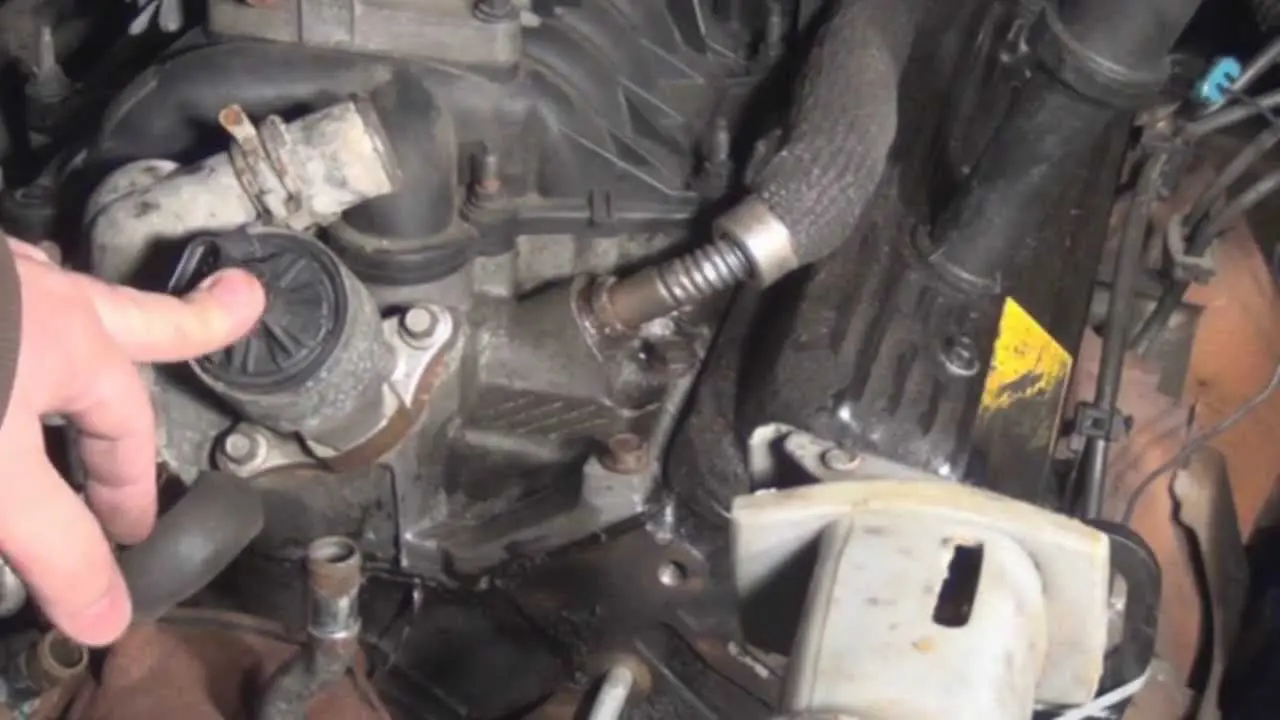
The EGR system plays an important role in reducing nitrogen oxide (NOx) emissions from an internal combustion engine. While many modern vehicles use electronically controlled EGR valves, numerous diesel and gasoline engines use, or have historically used, vacuum-operated EGR systems.
In these systems, a small component can have a surprisingly large effect on engine operation: the EGR vacuum tube.
The vacuum tube may look like nothing more than a small rubber or plastic hose, but it is responsible for transmitting vacuum from the vacuum source or control solenoid to the EGR valve. If the tube becomes cracked, disconnected, blocked, collapsed, or leaks vacuum, the EGR valve may not operate correctly.
This can lead to engine performance problems, increased emissions, warning lights, and symptoms that may initially appear to be caused by the EGR valve itself.
What Is an EGR Vacuum Tube?
An EGR vacuum tube is a small hose or tube used to carry vacuum to a vacuum-operated EGR valve or an EGR control device.
The tube provides a path through which negative pressure can be transferred from a vacuum source to the actuator that controls the EGR valve.
Depending on the vehicle, the vacuum may come from:
-
An engine-driven vacuum pump
-
Intake manifold vacuum
-
A vacuum reservoir
-
Another vacuum source in the engine's control system
A vacuum control solenoid may be installed between the vacuum source and the EGR valve.
In this arrangement, the engine control module can control the EGR valve indirectly by controlling the vacuum supplied through the solenoid.
The basic chain can therefore be understood as:
Vacuum source → EGR vacuum control → EGR vacuum tube → EGR actuator → EGR valve
The exact arrangement varies between engines.
What Does the EGR Vacuum Tube Do?
The primary job of the tube is to transfer vacuum without allowing air to enter the system.
A vacuum-operated EGR valve depends on the correct vacuum signal to move its diaphragm or actuator.
When the engine control system determines that EGR flow is required, the appropriate control valve can apply vacuum to the EGR actuator.
The actuator then moves the EGR valve.
The valve opens and allows a controlled amount of exhaust gas to enter the intake system.
When EGR operation is no longer required, the vacuum signal is reduced or removed and the EGR valve returns toward its closed position.
Therefore, the vacuum tube itself does not control EGR flow electronically. Its role is to transmit the vacuum signal required by the actuator.
Why Does the Engine Need EGR?
EGR stands for Exhaust Gas Recirculation.
The system recirculates a controlled amount of exhaust gas back into the intake under specific operating conditions.
Exhaust gas contains less oxygen than fresh intake air. Introducing a controlled amount of exhaust gas into the combustion process can reduce peak combustion temperatures.
This helps reduce the formation of nitrogen oxides, commonly known as NOx.
The EGR system is therefore primarily an emissions-control system.
However, because it directly affects the air entering the engine, a malfunction can also affect drivability.
How Does a Vacuum-Controlled EGR System Work?
A typical vacuum-operated system contains several components.
The EGR valve controls the physical flow of exhaust gas.
The vacuum actuator provides the mechanical movement needed to open the valve.
The vacuum tube transfers vacuum.
An EGR vacuum control solenoid regulates when and how much vacuum reaches the actuator.
The engine control module determines when EGR operation is appropriate based on information from various sensors and operating conditions.
These may include:
-
Engine speed
-
Engine coolant temperature
-
Accelerator position
-
Engine load
-
Intake airflow
-
Intake pressure
-
Vehicle speed
-
Exhaust conditions
The system is therefore more complex than simply opening and closing the EGR valve.
A problem in any part of the vacuum circuit can affect the final EGR operation.
What Happens When the EGR Vacuum Tube Leaks?
A leaking vacuum tube cannot maintain the vacuum required by the EGR actuator.
Instead of receiving the correct vacuum signal, the actuator may receive insufficient or unstable vacuum.
As a result, the EGR valve may:
-
Fail to open
-
Open only partially
-
Open at the wrong time
-
Operate inconsistently
-
Fail to respond to the control command
The symptoms depend on the specific engine and the location and severity of the leak.
A very small leak may initially be difficult to notice, while a completely disconnected tube can cause an immediate and obvious change in engine behavior.
Common Symptoms of a Faulty EGR Vacuum Tube
A damaged EGR vacuum tube can produce several different symptoms.
It is important to understand that these symptoms do not prove the tube itself is faulty. Other EGR and vacuum-system components can create similar problems.
Loss of engine performance
If the EGR system cannot operate correctly, the engine may not behave as expected under certain operating conditions.
The driver may notice:
-
Reduced acceleration
-
Poor throttle response
-
Hesitation
-
Lack of power
-
Unstable engine operation
On turbocharged diesel engines, the problem can sometimes be more noticeable under load.
Rough idle
An EGR system that is operating when it should not can introduce exhaust gas into the intake at an inappropriate time.
Depending on the engine, this may contribute to:
-
Rough idle
-
Engine vibration
-
Unstable idle speed
-
Stalling
However, rough idle has many possible causes and should not automatically be blamed on the EGR vacuum tube.
Engine hesitation
A vacuum leak can cause the EGR valve to respond incorrectly.
If EGR flow changes unexpectedly during acceleration or changes in engine load, the driver may feel hesitation or an uneven response.
Check Engine Light
If the engine control module detects that commanded EGR operation does not match expected system behavior, it may store a diagnostic trouble code and illuminate the Check Engine Light.
The exact code depends on the vehicle manufacturer and engine design.
A vacuum leak may therefore appear as an EGR-related fault even though the EGR valve itself is mechanically functional.
Increased emissions
Because the EGR system is designed to control NOx emissions, an improperly functioning system can cause emissions to rise.
A vacuum leak may prevent the EGR valve from opening sufficiently when EGR flow is required.
Poor fuel economy
In some circumstances, incorrect EGR operation can affect combustion efficiency and fuel consumption.
However, fuel economy changes should never be used alone to diagnose an EGR vacuum problem.
Many other engine and vehicle conditions can produce the same symptom.
Unusual hissing noise
A significant vacuum leak may sometimes produce a faint hissing sound.
The noise can be difficult to hear because the engine compartment contains many other sources of sound.
Listening for a vacuum leak can therefore be useful, but it should be followed by a proper inspection.
What Causes an EGR Vacuum Tube to Fail?
The tube operates in a demanding engine-compartment environment.
Several factors can eventually cause deterioration.
Heat
High temperatures can harden rubber hoses and make them brittle.
Repeated heating and cooling cycles accelerate material degradation.
Age
Rubber vacuum hoses naturally deteriorate over time.
An old hose may develop small cracks that are difficult to see when it is installed.
Oil contamination
Oil vapors and other contaminants can affect some hose materials.
The effect depends on the material used by the manufacturer.
Physical damage
A tube can be damaged during maintenance or engine repairs.
It may be:
-
Pulled loose
-
Pinched
-
Cut
-
Incorrectly routed
-
Crushed against another component
Improper installation
A vacuum hose that is connected to the wrong port can create an EGR problem even though the hose itself is in perfect condition.
Correct routing is therefore important.
What Does a Cracked EGR Vacuum Tube Look Like?
A damaged tube may show obvious signs such as:
-
Visible cracks
-
Splits around the ends
-
Hardened rubber
-
Soft or swollen sections
-
Collapsed areas
-
Loose connections
-
Broken plastic fittings
However, not every vacuum leak is visible.
A small crack may open only when the hose bends or when the engine compartment becomes hot.
This is why visual inspection alone may not always identify the problem.
Can an EGR Vacuum Tube Become Blocked?
Yes.
Although leakage is often the more common concern, a vacuum tube can also become restricted.
Possible causes include:
-
Dirt
-
Oil deposits
-
Carbon contamination
-
Internal deterioration
-
Debris
-
A damaged hose collapsing internally
If the tube is blocked, the required vacuum signal may not reach the EGR actuator correctly.
The result can resemble a vacuum leak or a failed EGR valve.
Can You Drive With a Damaged EGR Vacuum Tube?
The vehicle may continue to run, but driving for an extended period with an unresolved EGR vacuum problem is not recommended.
The engine may experience:
-
Reduced performance
-
Increased emissions
-
Poor drivability
-
Increased fuel consumption
-
Incorrect EGR operation
-
Additional diagnostic faults
The severity depends on the engine and the nature of the failure.
A small vacuum leak may produce relatively mild symptoms, while a major problem can significantly affect engine operation.
How Is an EGR Vacuum Tube Diagnosed?
Diagnosis should begin with the complete EGR vacuum circuit.
A technician may inspect the tube for visible damage and verify that the connections are secure.
The vacuum circuit can then be tested to determine whether it can hold the required vacuum.
A hand-operated vacuum pump can be particularly useful on vacuum-controlled systems.
The technician can apply vacuum directly to the EGR actuator and observe whether:
-
The actuator moves
-
The valve responds correctly
-
The system holds vacuum
-
Vacuum disappears too quickly
The vacuum control solenoid should also be tested.
This is important because a faulty solenoid can create symptoms that look exactly like a damaged vacuum tube.
How Do You Know Whether the Problem Is the Tube or the EGR Valve?
This is where proper diagnosis becomes important.
If the EGR actuator responds correctly when vacuum is applied directly, but the required vacuum does not reach the actuator through the vehicle's control circuit, the problem may be in:
-
The vacuum tube
-
The vacuum control solenoid
-
The vacuum source
-
A connection
-
The control system
If the actuator does not respond correctly even when the correct vacuum is applied directly, the EGR valve or actuator may have a mechanical problem.
This simple distinction can prevent unnecessary EGR valve replacement.
Should a Damaged EGR Vacuum Tube Be Repaired or Replaced?
In most cases, replacement is preferable.
Vacuum tubes are relatively simple components, and a temporary repair may not remain reliable in the high-temperature engine compartment.
Cutting off a damaged end and reconnecting the remaining hose may sometimes be acceptable if the manufacturer-approved hose length and connection remain correct, but replacing a deteriorated hose is generally the better long-term solution.
The replacement hose must also be suitable for vacuum service and compatible with the temperatures and chemicals present in the engine compartment.
Ordinary low-quality tubing should not automatically be used as a substitute.
What Happens After Replacing the EGR Vacuum Tube?
If the tube was the actual cause of the problem, restoring the correct vacuum signal should allow the EGR system to operate normally again.
Depending on the vehicle, the Check Engine Light may remain illuminated until the stored fault is cleared or the control module completes enough successful drive cycles to turn it off automatically.
If an EGR-related fault remains after replacing the hose, further diagnosis is necessary.
The EGR valve, vacuum solenoid, vacuum source, sensors, wiring, and control strategy may need to be checked.
EGR Vacuum Tube vs. EGR Valve: What Is the Difference?
These components perform completely different jobs.
The EGR valve physically controls the flow of exhaust gas.
The EGR vacuum tube transfers the vacuum signal used to operate the valve on vacuum-controlled systems.
This distinction is important because replacing the EGR valve when the actual problem is a leaking hose will not solve the underlying problem.
Likewise, replacing a vacuum tube will not fix an EGR valve that is mechanically stuck with carbon deposits.
Do Modern Cars Still Use EGR Vacuum Tubes?
Some do, but not all.
Modern EGR systems increasingly use electronically controlled valves.
In an electronically actuated EGR system, the valve position may be controlled directly by an electric motor or another electronic actuator rather than engine vacuum.
Such systems may not have a conventional EGR vacuum tube at all.
Older diesel engines and many vacuum-controlled EGR systems, however, can rely heavily on vacuum hoses and control solenoids.
Therefore, whether your vehicle has an EGR vacuum tube depends on the engine and EGR system design.
Can a Vacuum Leak Cause Other Problems?
Yes.
A vacuum leak in an engine compartment can sometimes affect systems other than EGR, especially when multiple components share the same vacuum source.
Depending on the vehicle, vacuum may also be used for:
-
Turbocharger control
-
Brake assistance
-
Vacuum reservoirs
-
Intake control mechanisms
-
Other emission-control devices
This means a damaged hose should not be assumed to affect only the EGR system.
The entire vacuum network should be checked when a significant leak is found.
How to Prevent EGR Vacuum Tube Problems
There is usually no complicated maintenance procedure for a vacuum tube.
The most effective approach is regular inspection.
During routine servicing, check the hose for:
-
Cracks
-
Hardening
-
Loose connections
-
Heat damage
-
Oil contamination
-
Abrasion
-
Incorrect routing
Pay particular attention to hoses located close to hot exhaust components.
Replacing an inexpensive deteriorated vacuum hose before it fails completely can prevent drivability problems and unnecessary diagnostic work.
Final Thoughts
The EGR vacuum tube may be a small component, but in a vacuum-operated EGR system it has an essential role.
It transfers the vacuum signal required to operate the EGR valve. If the tube leaks, becomes blocked, collapses, or disconnects, the EGR valve may no longer operate according to the engine control system's commands.
Possible symptoms include reduced engine performance, hesitation, rough idle, increased emissions, poor fuel economy, unusual hissing noises, and an illuminated Check Engine Light.
However, these symptoms are not exclusive to a faulty vacuum tube. A defective EGR valve, vacuum control solenoid, vacuum pump, blocked passage, or another engine problem can produce similar symptoms.
For this reason, the most effective approach is to test the vacuum system rather than replacing parts based only on symptoms.
On vehicles equipped with vacuum-operated EGR systems, a small and inexpensive vacuum tube can sometimes be the cause of a surprisingly large engine-management problem.