TR
TR EN
EN

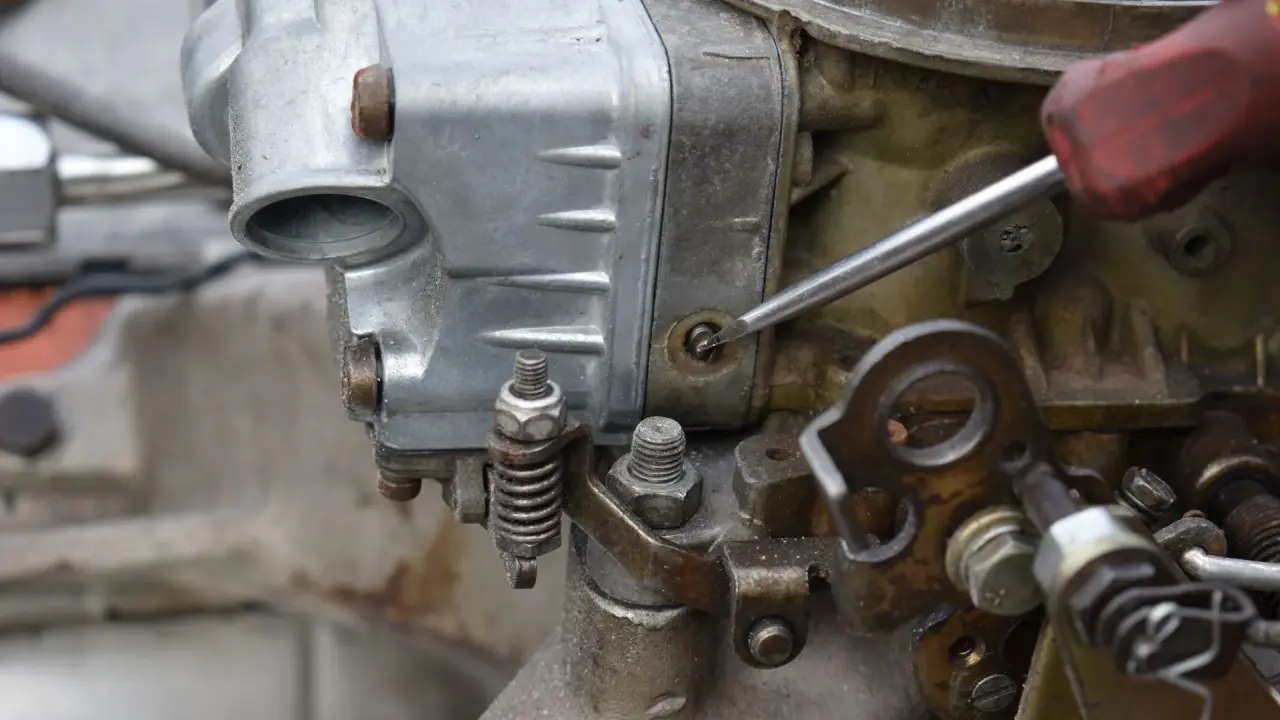
How to Adjust a Carburetor? When Is Carburetor Adjustment Necessary?
Before electronic fuel injection became standard, carburetors were used on millions of gasoline engines to control the air-fuel mixture.
A carburetor may look relatively simple compared with a modern fuel-injection system, but its adjustment can have a major effect on engine performance. An incorrectly adjusted carburetor can cause rough idle, difficult starting, hesitation, excessive fuel consumption, poor acceleration, black smoke, or even engine stalling.
So, how is a carburetor adjusted?
The answer depends on the carburetor design. There is no single adjustment procedure that applies to every carburetor. Some carburetors have adjustable idle mixture and idle-speed screws, while others use fixed jets or require adjustments to the float level, choke mechanism, accelerator pump, or secondary system.
Before making any adjustment, the carburetor must be identified and the manufacturer's specifications should be checked.
What Is a Carburetor Adjustment?
Carburetor adjustment is the process of setting the carburetor so that the engine receives the correct amount of fuel and air under different operating conditions.
Depending on the carburetor, adjustment may involve:
-
Idle speed
-
Idle air-fuel mixture
-
Float level
-
Choke operation
-
Throttle opening
-
Accelerator pump
-
Secondary throttle operation
-
Fuel pressure
-
Linkage adjustments
The objective is not simply to make the engine run.
The objective is to make the engine run with the correct air-fuel mixture and stable operating characteristics.
How Does a Carburetor Work?
A carburetor uses airflow and pressure differences to draw fuel into the incoming air stream.
As air passes through the carburetor's venturi, its velocity increases and pressure decreases. This pressure difference allows fuel to be drawn from the float bowl through calibrated passages and jets.
The resulting air-fuel mixture then enters the engine through the intake manifold.
Unlike a modern fuel-injection system, a traditional carburetor does not use electronic injectors to continuously calculate and meter fuel based on sensor data.
Instead, it relies on mechanical components, calibrated passages, jets, vacuum signals, and throttle position.
This is why correct mechanical adjustment is so important.
When Does a Carburetor Need Adjustment?
A carburetor may require adjustment when the engine's operating behavior changes or when the carburetor has been rebuilt, replaced, or modified.
Common situations include:
-
Unstable idle
-
Excessively high or low idle
-
Difficult starting
-
Engine stalling at idle
-
Hesitation during acceleration
-
Poor throttle response
-
Excessive fuel consumption
-
Black exhaust smoke
-
Lean running symptoms
-
Backfiring
-
Poor cold-start behavior
-
Carburetor rebuilding
-
Jet replacement
-
Air filter or intake modifications
-
Exhaust modifications
However, not every one of these symptoms means that the carburetor simply needs adjustment.
A blocked jet, damaged diaphragm, leaking gasket, incorrect float level, vacuum leak, ignition problem, or fuel-delivery problem may produce similar symptoms.
Do Not Adjust the Carburetor Before Checking the Engine
This is one of the most important rules.
Carburetor adjustment should not be used to compensate for another engine problem.
Before adjusting the carburetor, the engine should be in good mechanical condition.
Check the following first:
-
Spark plugs
-
Ignition timing
-
Distributor and ignition components where applicable
-
Air filter
-
Fuel filter
-
Fuel pressure
-
Intake manifold condition
-
Vacuum hoses
-
Carburetor mounting gasket
-
Engine compression
-
Choke operation
If there is a vacuum leak, for example, turning the mixture screw may temporarily change the engine's behavior but will not fix the actual problem.
Step 1: Warm Up the Engine
For a normal idle adjustment, the engine should generally be at its normal operating temperature.
Start the engine and allow it to warm up.
The choke should be fully disengaged once the engine reaches normal operating temperature.
A cold engine requires a different mixture strategy from a warm engine, so adjusting the carburetor while the engine is cold can produce an incorrect setting.
If the engine has a coolant temperature gauge, wait until it reaches its normal operating range.
Step 2: Identify the Adjustment Screws
Before turning anything, identify exactly what each adjustment screw controls.
Common adjustment points include:
Idle speed screw
This controls the mechanical opening of the throttle plate at idle and therefore affects engine idle speed.
Idle mixture screw
Depending on the carburetor design, this may control the amount of fuel or air in the idle circuit.
This distinction is important because turning the screw in may make the mixture richer on one carburetor and leaner on another.
Never assume the direction without checking the carburetor design or service information.
Choke adjustment
The choke controls the mixture during cold starting and warm-up.
A choke that does not open fully can make a warm engine run excessively rich.
Step 3: Set the Basic Idle Speed
The manufacturer's specified idle speed should be used whenever available.
If the specification is, for example, 800 RPM, the idle-speed screw should be adjusted so that the engine operates close to the specified speed under the specified conditions.
The exact idle speed varies considerably between engines.
Do not assume that every carbureted engine should idle at the same RPM.
A tachometer is useful for accurate adjustment.
The dashboard tachometer, if equipped, may not be precise enough for detailed carburetor tuning.
Step 4: Adjust the Idle Mixture
The idle mixture adjustment is usually performed after the engine has reached operating temperature.
A common basic procedure is:
-
Establish the correct base idle speed.
-
Adjust the mixture screw gradually.
-
Observe engine RPM and smoothness.
-
Find the position where the engine runs most smoothly.
-
Readjust the idle speed if necessary.
-
Repeat the process until both idle speed and mixture are stable.
The adjustment should be made in small increments.
Turning the screw several turns at once makes it difficult to determine what changed.
Some carburetors use a fuel mixture screw, while others use an air bleed or air mixture screw. The correct direction therefore depends on the design.
What Does a Mixture Screw Actually Do?
This depends on where the screw is located in the carburetor's circuit.
On a fuel mixture screw, opening the passage may increase fuel flow and enrich the mixture.
On an air mixture screw, opening the passage may increase air flow and lean the mixture.
This is why generic instructions such as “turn the screw clockwise to make it richer” are not universally correct.
The carburetor's design must be identified first.
Step 5: Find the Best Idle Position
When adjusting the mixture screw, the goal is generally to find a stable and smooth idle rather than simply choosing the position that produces the highest RPM.
Turn the adjustment slowly and observe how the engine responds.
If the mixture becomes excessively rich, the engine may begin to run unevenly, produce a strong fuel smell, or emit dark exhaust smoke.
If the mixture becomes excessively lean, the engine may hesitate, surge, or become unstable.
The correct setting should produce stable combustion and an idle speed close to the manufacturer's specification.
Step 6: Recheck Idle Speed
Changing the mixture can change engine RPM.
Therefore, the idle-speed screw may need to be readjusted after the mixture has been optimized.
This process may need to be repeated.
A typical adjustment sequence is:
-
Set mixture
-
Check RPM
-
Correct idle speed
-
Recheck mixture
-
Confirm stable idle
The exact procedure depends on the carburetor.
Step 7: Check Throttle Response
Once the engine idles correctly, the throttle response should be checked.
Open the throttle gradually and then more quickly.
The engine should respond smoothly without excessive hesitation, bogging, or stalling.
If the engine hesitates only during rapid acceleration, the problem may not be the idle mixture.
It could involve the accelerator pump, transition circuit, fuel supply, or ignition system.
Step 8: Check the Choke
A properly adjusted choke is essential for cold starting.
When the engine is cold, the choke restricts airflow and creates a richer mixture.
As the engine warms up, the choke should gradually open.
If the choke remains partially closed after the engine warms up, the mixture can become too rich.
Possible symptoms include:
-
Rough running
-
High fuel consumption
-
Black exhaust smoke
-
Poor acceleration
-
Strong fuel smell
-
Fouled spark plugs
If the engine runs normally when warm but poorly during cold starting, the choke system should be inspected.
Float Level Is Extremely Important
The float controls the fuel level inside the carburetor's float bowl.
If the fuel level is too high, the carburetor may supply too much fuel.
This can produce a rich mixture and may even cause fuel to leak into the intake.
If the fuel level is too low, the engine may run lean or experience fuel starvation during acceleration.
Incorrect float level can therefore mimic a mixture-adjustment problem.
Float height should be adjusted according to the carburetor manufacturer's specifications.
Do not guess the float height.
What Happens If the Carburetor Runs Too Rich?
A rich mixture contains more fuel than required for the available amount of air.
Common symptoms include:
-
Black exhaust smoke
-
Strong fuel smell
-
Poor fuel economy
-
Rough idle
-
Fouled spark plugs
-
Difficult hot starting
-
Poor throttle response
-
Carbon buildup
A rich mixture can have several causes.
Possible causes include:
-
Incorrect mixture adjustment
-
High float level
-
Stuck choke
-
Leaking needle valve
-
Incorrect jet
-
Excessive fuel pressure
-
Carburetor internal problems
Simply turning the mixture screw may not solve the problem.
What Happens If the Carburetor Runs Too Lean?
A lean mixture contains too much air or too little fuel.
Possible symptoms include:
-
Hesitation
-
Poor acceleration
-
Surging
-
Rough idle
-
Difficult starting
-
Backfiring through the intake
-
Excessive combustion temperature
-
Engine stalling
A lean condition may be caused by:
-
Incorrect mixture adjustment
-
Vacuum leaks
-
Blocked fuel passages
-
Restricted jets
-
Low fuel pressure
-
Incorrect float level
-
Air leaks around the carburetor
-
Incorrectly fitted components
Again, adjustment is only appropriate after the cause has been identified.
Can a Vacuum Leak Be Mistaken for a Carburetor Adjustment Problem?
Absolutely.
A vacuum leak is one of the most important things to check before adjusting a carburetor.
A leak around the intake manifold, carburetor base, vacuum hose, or related component can allow additional air into the engine.
This can create a lean condition, especially at idle.
The driver may then attempt to enrich the mixture to compensate.
The engine might temporarily run better, but the underlying vacuum leak remains.
Once the leak becomes worse, the adjustment will no longer compensate for it.
Fuel Pressure Also Matters
Carburetors are designed to operate within a specific fuel-pressure range.
Too much fuel pressure can overcome the float and needle valve system, causing excessive fuel delivery.
Too little fuel pressure can cause fuel starvation.
Therefore, fuel pressure should be checked against the carburetor and vehicle manufacturer's specifications when diagnosing fuel-related problems.
Installing an incorrect fuel pump or pressure regulator can also create carburetor problems.
Does Changing the Air Filter Require Carburetor Adjustment?
Not necessarily.
Replacing a dirty air filter with the correct original-specification filter normally should not require major carburetor adjustment.
However, significant changes to the intake system can affect airflow.
For example, replacing the original airbox with a substantially different intake system can change the carburetor's operating conditions.
Modified engines may require jetting changes rather than simply adjusting the idle mixture screw.
Does a Performance Exhaust Require Carburetor Adjustment?
Sometimes.
Changing the exhaust system can alter airflow characteristics.
On a heavily modified engine, changes to the intake and exhaust systems may require different jets or other carburetor calibration.
However, simply turning the idle mixture screw is not a substitute for proper jet selection.
If the engine has been significantly modified, the carburetor may need to be tuned across multiple operating ranges rather than only at idle.
Can Carburetor Adjustment Fix Poor Acceleration?
Sometimes, but not always.
Poor acceleration can result from incorrect mixture settings, but it can also be caused by:
-
Weak accelerator pump
-
Blocked main jet
-
Incorrect float level
-
Fuel starvation
-
Ignition timing problems
-
Vacuum leaks
-
Incorrect secondary operation
-
Mechanical engine problems
If the engine idles perfectly but falls flat when the throttle is opened quickly, the idle mixture screw may not be the correct place to start.
The transition and acceleration circuits should be investigated.
How Do You Know the Carburetor Is Properly Adjusted?
A correctly adjusted carburetor should generally allow the engine to:
-
Start normally
-
Maintain a stable idle
-
Respond smoothly to throttle input
-
Accelerate without excessive hesitation
-
Return to idle without stalling
-
Maintain reasonable fuel consumption
-
Operate without excessive smoke
-
Transition smoothly between operating conditions
The exact characteristics depend on the engine and carburetor.
A carburetor should always be evaluated according to the specifications of the particular engine.
Can a Carburetor Be Adjusted Without a Tachometer?
Basic adjustment is possible on some engines, but a tachometer makes the process much more accurate.
Listening to engine speed can help, but it is not a precise measurement.
For accurate tuning, especially when the manufacturer specifies a particular idle RPM, a tachometer should be used.
On some engines, additional equipment such as a vacuum gauge, exhaust gas analyzer, or specialized carburetor synchronizer may also be useful.
Multi-Carburetor Engines Require Synchronization
Some engines use two or more carburetors.
In such systems, simply adjusting each carburetor's mixture screw is not enough.
The carburetors may need to be synchronized so that each cylinder receives the appropriate airflow at the same throttle position.
Poor synchronization can cause:
-
Uneven idle
-
Vibration
-
Poor throttle response
-
Uneven cylinder operation
-
Increased fuel consumption
A vacuum gauge or dedicated synchronization tool can be used depending on the engine design.
When Should You Stop Adjusting and Repair the Carburetor?
If repeated adjustment cannot produce a stable idle, there may be a mechanical problem inside the carburetor.
Possible causes include:
-
Worn throttle shaft
-
Damaged gaskets
-
Blocked passages
-
Worn needle and seat
-
Damaged float
-
Sticking choke
-
Diaphragm failure
-
Incorrect jets
-
Internal corrosion
-
Warped carburetor body
At this point, continued adjustment is unlikely to solve the problem.
The carburetor may need cleaning, rebuilding, or replacement.
Should You Adjust a Carburetor Yourself?
A basic idle adjustment can be performed by an experienced vehicle owner if the carburetor design is understood and the manufacturer's specifications are available.
However, carburetors contain fuel, and incorrect adjustments can create both drivability and safety problems.
Work should be performed in a well-ventilated area away from open flames and ignition sources.
Fuel leaks should never be ignored.
If fuel is leaking from the carburetor or the engine is running extremely rich, the vehicle should be repaired before continued use.
Final Thoughts
Carburetor adjustment is not simply a matter of turning a screw until the engine sounds better.
A proper adjustment requires understanding how the carburetor meters fuel, how the idle circuit works, how the float controls fuel level, and how the choke and acceleration circuits affect engine operation.
The basic adjustment process usually involves warming the engine, checking the carburetor's condition, setting the correct idle speed, adjusting the appropriate mixture control, and then rechecking throttle response and idle stability.
However, adjustment should only be performed after ruling out problems such as vacuum leaks, ignition faults, fuel-pressure problems, blocked jets, incorrect float level, and mechanical engine faults.
If the carburetor is correctly adjusted and the engine still runs poorly, the solution may be cleaning, rebuilding, replacing worn components, or correcting another engine-system problem.
The most important rule is simple: do not use carburetor adjustment to hide an underlying mechanical or fuel-system fault.
A properly maintained and correctly adjusted carburetor can provide reliable engine operation, good throttle response, stable idle quality, and reasonable fuel economy.