TR
TR EN
EN

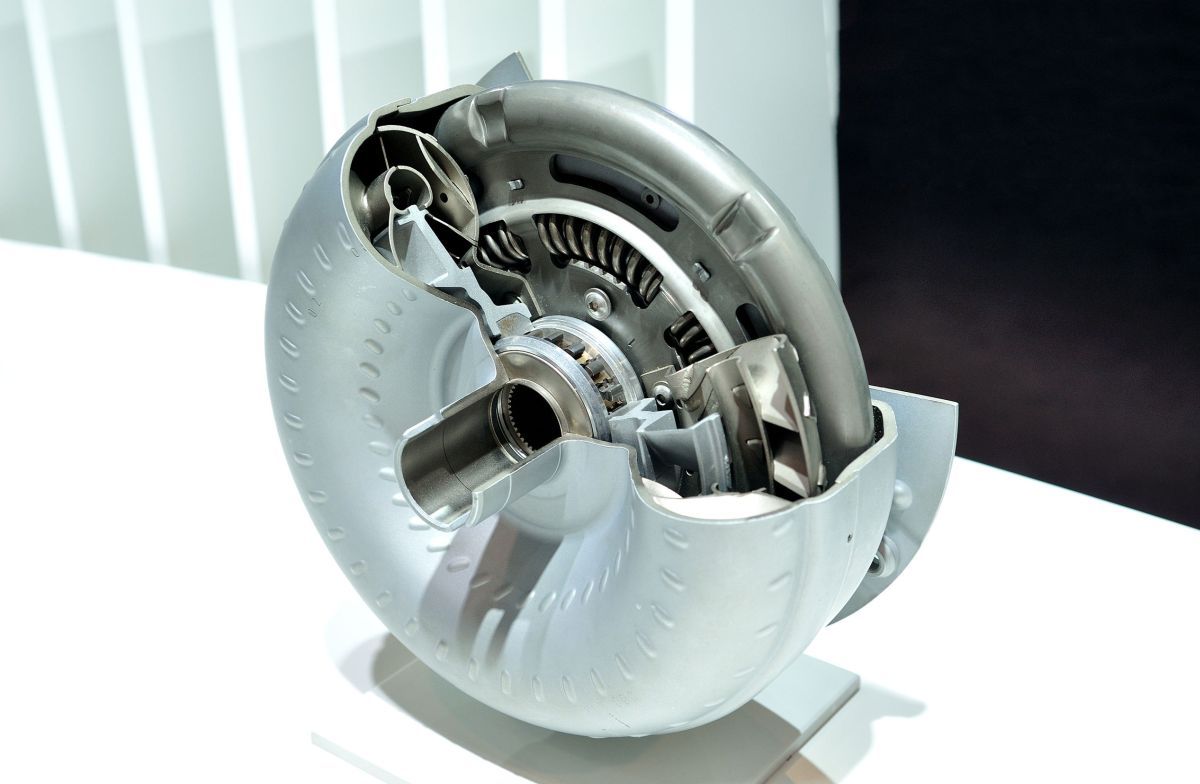
What Is a Torque Converter? What Are the Symptoms of Torque Converter Failure?
A torque converter is one of the most important components in a traditional automatic transmission. It transfers engine power to the transmission without a conventional mechanical clutch between the engine and gearbox.
Unlike a manual transmission clutch, a torque converter uses transmission fluid to transfer power. It also allows the engine to continue running while the vehicle is stopped with the transmission in Drive.
When the vehicle starts moving, the torque converter can multiply engine torque and provide smooth takeoff. At higher speeds, a lock-up clutch can mechanically connect the engine and transmission to reduce slip and improve fuel economy.
When the torque converter develops a problem, the symptoms can sometimes be confused with transmission failure. Shuddering, slipping, delayed engagement, overheating, abnormal RPM changes, and poor acceleration can all be related to the torque converter.
How Does a Torque Converter Work?


A conventional torque converter is located between the engine and automatic transmission.
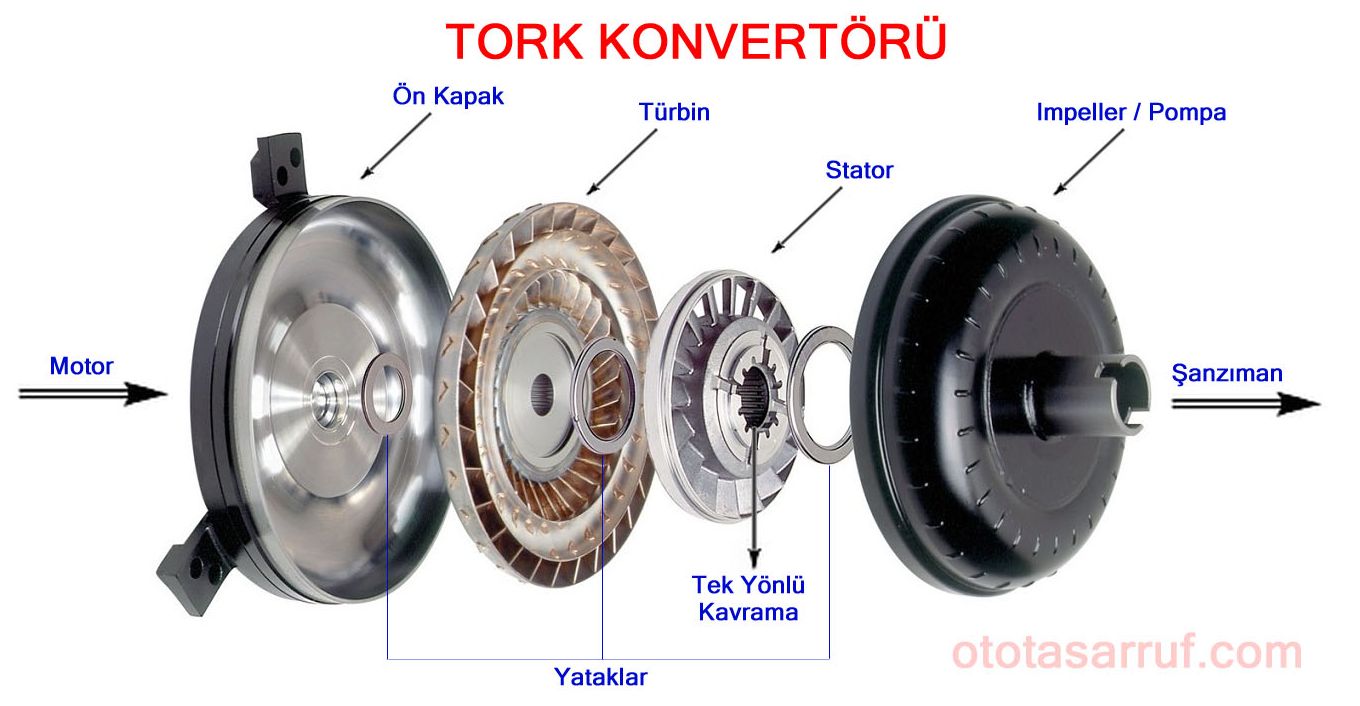
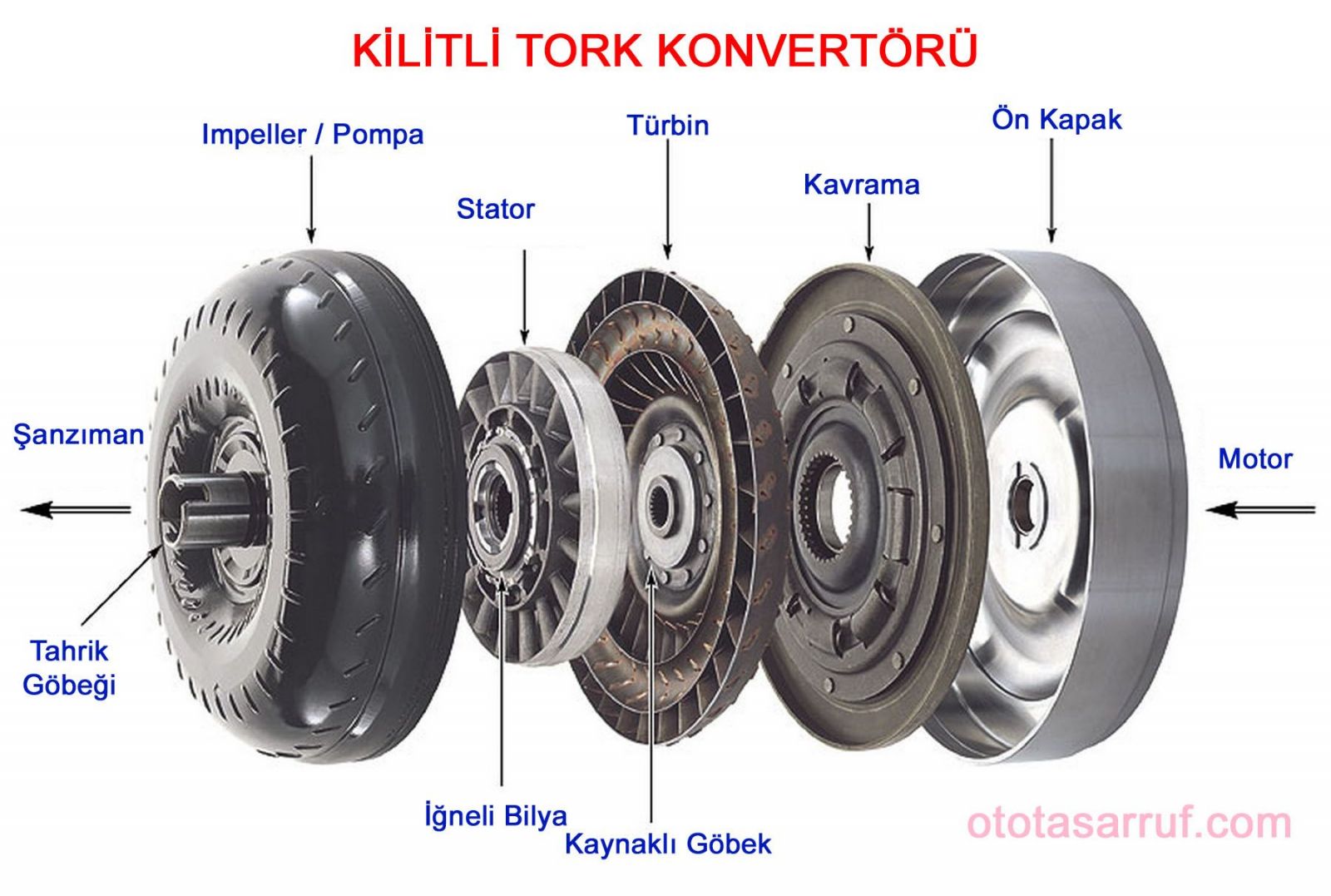
It is filled with automatic transmission fluid (ATF) and contains several main components:
-
Impeller or pump
-
Turbine
-
Stator
-
Lock-up clutch
-
One-way clutch
-
Torque converter housing

The engine rotates the impeller, which moves transmission fluid toward the turbine.
The fluid causes the turbine to rotate, transferring engine power into the transmission.
The stator redirects the fluid under certain operating conditions and helps increase torque during vehicle launch.
This hydraulic power transfer is what allows the vehicle to move without using a traditional manual clutch.
Why Does a Torque Converter Multiply Torque?
One of the important advantages of a torque converter is its ability to multiply torque during low-speed operation.
When the vehicle is stationary or just beginning to move, there can be a significant difference in speed between the impeller and turbine.
The stator redirects the fluid in a way that increases the torque delivered to the transmission.
This additional torque helps the vehicle:
-
Move away smoothly from a stop
-
Start on an incline
-
Accelerate without excessive clutch engagement
-
Reduce the risk of engine stalling
As the vehicle speed increases and the speed difference between the impeller and turbine decreases, torque multiplication becomes less important.
What Is the Torque Converter Lock-Up Clutch?
Modern automatic transmissions generally use a lock-up clutch inside the torque converter.
Without lock-up, there is always some degree of fluid slip between the engine and transmission.
That slip allows smooth operation but also creates heat and wastes some energy.
At suitable driving conditions, the transmission control system activates the lock-up clutch.
The clutch creates a more direct mechanical connection between the engine and transmission.
This can:
-
Reduce transmission slip
-
Improve fuel economy
-
Reduce heat generation
-
Improve cruising efficiency
-
Lower engine RPM at steady speeds
The lock-up clutch is therefore a major part of modern torque converter operation.
What Are the Symptoms of Torque Converter Failure?
A failing torque converter can produce different symptoms depending on which component or operating function has developed a problem.
Common symptoms include:
-
Shuddering or vibration
-
Transmission slipping
-
Abnormal RPM fluctuations
-
Delayed engagement
-
Poor acceleration
-
Overheating
-
Stalling when coming to a stop
-
Difficulty maintaining a steady speed
-
Abnormal noises
-
Transmission fluid contamination
-
Check engine or transmission warning light
Some failures appear only under specific conditions, such as light acceleration, highway cruising, or when the lock-up clutch engages.
Torque Converter Shudder
One of the most characteristic symptoms is torque converter shudder.
The vehicle may feel as though it is driving over a series of small bumps or rough pavement even though the road surface is smooth.
The vibration can occur:
-
During light acceleration
-
At steady cruising speeds
-
When the lock-up clutch engages
-
At a particular RPM range
-
When the transmission is fully warmed up
A torque converter lock-up clutch that repeatedly engages and slips can produce this sensation.
However, shudder does not automatically prove that the torque converter itself is defective.
Incorrect or degraded transmission fluid, transmission solenoid problems, engine misfires, worn mounts, and internal transmission problems can create similar vibrations.
RPM Fluctuation
Another common symptom is unstable engine RPM during steady driving.
For example, while cruising at a constant speed, the tachometer may repeatedly move up and down slightly.
This can happen when the lock-up clutch is attempting to engage but cannot maintain a stable connection.
The transmission control module may repeatedly apply and release the clutch.
This can create a noticeable cycle of:
RPM rises → RPM falls → RPM rises again
The exact behavior depends on the transmission and the severity of the problem.
Transmission Slipping
Torque converter problems can sometimes feel like transmission slipping.
The engine RPM may increase without a corresponding increase in vehicle speed.
This can occur because the torque converter is allowing excessive slip or because the lock-up clutch is not functioning correctly.
However, conventional transmission clutch packs can also slip.
Therefore, a slipping transmission should not automatically be diagnosed as a torque converter failure.
The transmission's hydraulic pressure, clutch operation, fluid condition, and converter slip data should be evaluated.
Delayed Engagement
A delayed engagement occurs when the driver selects Drive or Reverse and the vehicle does not respond immediately.
There may be a noticeable delay before the transmission begins moving the vehicle.
Possible causes include:
-
Low transmission fluid
-
Incorrect fluid level
-
Low hydraulic pressure
-
Transmission pump problems
-
Valve-body problems
-
Solenoid faults
-
Internal clutch wear
-
Torque converter problems
A delayed engagement is therefore a transmission-system symptom rather than a torque-converter-specific symptom.
Vehicle Shudders When Coming to a Stop
A torque converter with a lock-up clutch problem can sometimes fail to release the clutch when the vehicle slows down.
If the engine and transmission remain mechanically connected when the vehicle reaches very low speed, the engine may struggle to maintain idle.
The result can be:
-
Severe shudder
-
RPM dropping suddenly
-
Engine stalling
-
Rough stopping
This behavior can resemble stopping a manual-transmission vehicle without depressing the clutch pedal.
A malfunctioning lock-up clutch is one possible cause.
Engine Stalls When Selecting Drive
If the torque converter has a serious mechanical problem, the engine may struggle when a gear is selected.
The engine normally experiences an additional load when Drive or Reverse is engaged.
If the converter or lock-up clutch is malfunctioning, that load can become excessive.
Possible symptoms include:
-
RPM dropping sharply
-
Engine shaking
-
Engine stalling
-
Difficult engagement into Drive
-
Difficult engagement into Reverse
However, low idle speed, engine-management problems, vacuum leaks, and other faults can also cause stalling when a gear is selected.
Poor Acceleration
A damaged torque converter can reduce the amount of engine power effectively delivered to the transmission.
The vehicle may feel weak during acceleration.
Possible symptoms include:
-
Slow takeoff
-
Poor response from a stop
-
High RPM with little acceleration
-
Delayed power delivery
-
Reduced performance when climbing hills
A torque converter problem can be particularly noticeable during low-speed acceleration because torque multiplication is most important in this operating range.
Transmission Overheating
The torque converter naturally generates some heat because it relies on fluid movement and controlled slip.
If excessive slip occurs, more energy is converted into heat.
This can raise transmission fluid temperature.
Possible signs include:
-
Transmission temperature warning
-
Burning transmission-fluid smell
-
Reduced transmission performance
-
Harsh shifting
-
Limp mode
-
Dark or degraded ATF
Continued operation with excessive converter slip can cause additional transmission damage.
Burning Transmission Fluid Smell
Overheated transmission fluid can develop a strong burnt smell.
A torque converter that is slipping excessively can contribute to overheating.
However, a burning smell can also originate from:
-
Worn transmission clutches
-
Low fluid level
-
Incorrect fluid
-
Transmission overheating
-
Brake problems
-
Other mechanical components
The smell should therefore be treated as a warning rather than proof of a converter failure.
Abnormal Noise From the Torque Converter
A damaged torque converter can produce unusual sounds.
Depending on the problem, the driver may hear:
-
Whining
-
Grinding
-
Rattling
-
Humming
-
Metallic noises
The noise may change when:
-
Selecting Drive
-
Selecting Reverse
-
Increasing engine RPM
-
Applying the brakes while in Drive
-
The transmission changes gear
However, transmission pumps, bearings, planetary gears, differential components, and other parts can make similar noises.
Locating the noise accurately is important.
What Causes Torque Converter Failure?
Several factors can contribute to torque converter problems.
Common causes include:
Worn lock-up clutch
The lock-up clutch operates repeatedly during normal driving and can eventually wear.
Incorrect or degraded transmission fluid
The torque converter depends on the correct fluid for hydraulic operation, lubrication, cooling, and clutch friction characteristics.
Using the wrong ATF can cause abnormal operation.
Low transmission fluid
Low fluid can affect hydraulic pressure and cooling.
It can also increase aeration and contribute to poor converter operation.
Transmission overheating
Excessive temperature accelerates fluid degradation and can damage internal components.
Contaminated fluid
Metal particles, clutch material, and other debris can circulate through the transmission and torque converter.
Damaged stator or one-way clutch
A mechanical failure in the stator assembly can affect torque multiplication and fluid flow.
Internal bearing damage
Worn bearings can create noise and abnormal operation.
Transmission pump or valve-body problems
Hydraulic problems can prevent the torque converter clutch from receiving the correct pressure.
Can Bad Transmission Fluid Cause Torque Converter Shudder?
Yes.
This is an important diagnostic point.
A torque converter shudder does not necessarily mean that the converter needs to be replaced.
The lock-up clutch operates against a specific friction environment created by the transmission fluid.
If the fluid is degraded, contaminated, incorrect, or incompatible with the transmission, the clutch may engage and release abnormally.
This can produce shudder that feels very similar to a mechanically damaged torque converter.
The correct fluid specification is therefore extremely important.
Can Low Transmission Fluid Damage the Torque Converter?
Low fluid can contribute to torque converter and transmission problems.
The transmission fluid performs several functions:
-
Hydraulic pressure generation
-
Lubrication
-
Cooling
-
Torque transfer
-
Clutch operation
If the fluid level is too low, the transmission may not maintain the required hydraulic conditions.
Air can also become mixed with the fluid, reducing the effectiveness of the hydraulic system.
Long-term operation with low fluid can lead to extensive transmission damage.
Can a Torque Converter Cause Transmission Error Codes?
Yes.
Modern transmissions continuously monitor torque converter operation.
The control system can compare expected and actual converter slip and monitor the operation of the lock-up clutch.
Depending on the transmission, faults may be associated with:
-
Torque converter clutch performance
-
Torque converter clutch solenoid
-
Excessive converter slip
-
Lock-up clutch engagement
-
Hydraulic pressure
A diagnostic code should be interpreted together with live data rather than used as an automatic instruction to replace the torque converter.
Torque Converter vs. Transmission Clutch Pack
These components perform different jobs.
The torque converter transfers power from the engine to the transmission using fluid and, when commanded, its lock-up clutch.
Inside the transmission, clutch packs are used to select and hold different gear ratios.
A vehicle that slips during acceleration can therefore have either a converter problem or internal transmission clutch wear.
Proper diagnosis is necessary before deciding which component requires repair.
How Is a Torque Converter Diagnosed?
Diagnosis generally starts with a road test and a transmission-capable diagnostic scanner.
The technician may examine:
-
Transmission fault codes
-
Converter slip RPM
-
Lock-up clutch command
-
Lock-up clutch actual operation
-
Transmission fluid temperature
-
Engine RPM
-
Turbine speed
-
Input and output shaft speeds
-
Hydraulic pressure
-
Shift behavior
A scan tool can be particularly useful for determining whether the lock-up clutch is being commanded on and whether the expected amount of slip is actually occurring.
Transmission Fluid Inspection
The fluid should be checked according to the manufacturer's procedure.
Not every automatic transmission uses the same method for checking fluid level.
Some transmissions have a dipstick, while others require the fluid to be checked at a specific temperature through a service port.
The inspection should consider:
-
Fluid level
-
Fluid specification
-
Fluid color
-
Burnt smell
-
Contamination
-
Metal particles
-
Clutch material
Fluid condition can provide valuable clues about the condition of the transmission and torque converter.
Does a Torque Converter Need to Be Replaced for Every Shudder?
No.
This is one of the most important points when diagnosing torque converter symptoms.
A shudder can be caused by:
-
Incorrect ATF
-
Old ATF
-
Contaminated ATF
-
Lock-up control problems
-
Solenoid problems
-
Valve-body issues
-
Engine misfire
-
Worn engine or transmission mounts
-
Internal transmission faults
The underlying cause should be identified before the torque converter is replaced.
In some cases, correcting the fluid specification or repairing the lock-up control system can resolve the problem.
Can a Torque Converter Be Repaired?
Yes, torque converters can be professionally rebuilt or remanufactured.
Depending on the design and damage, a specialist may replace or repair components such as:
-
Lock-up clutch
-
Bearings
-
Seals
-
Stator components
-
One-way clutch components
-
Internal friction surfaces
However, repairability depends on the converter design and the extent of the damage.
In some cases, replacing the converter with a quality remanufactured or new unit is the more practical solution.
What Happens If You Continue Driving With a Bad Torque Converter?
Continuing to drive with a severely damaged torque converter can cause additional transmission problems.
Excessive slip generates heat, while damaged friction material can contaminate the transmission fluid.
That contamination can circulate through:
-
Valve body
-
Solenoids
-
Transmission pump
-
Clutch packs
-
Bearings
-
Hydraulic passages
A problem that initially involves the converter can therefore eventually become a much larger transmission repair.
Is a Torque Converter Used in Every Automatic Transmission?
No.
Traditional automatic transmissions commonly use torque converters, but not every automatic transmission does.
For example, many dual-clutch transmissions use conventional clutch assemblies instead of a torque converter.
Continuously variable transmissions also use different designs, although some CVTs may use a torque converter depending on the application.
Therefore, the symptoms and diagnostic procedure depend on the specific transmission type.
Final Thoughts
The torque converter is a key component in a conventional automatic transmission. It transfers engine power to the transmission, provides torque multiplication during takeoff, and uses a lock-up clutch to create a more efficient mechanical connection during suitable driving conditions.
The most common symptoms associated with torque converter problems include shuddering, abnormal RPM fluctuations, slipping, delayed engagement, poor acceleration, overheating, unusual noises, and stalling when coming to a stop.
However, these symptoms are not exclusive to the torque converter. Transmission fluid problems, solenoids, valve-body faults, internal clutch wear, engine misfires, and transmission control issues can produce very similar behavior.
For this reason, a torque converter should not be replaced simply because the vehicle shudders or a transmission fault code is present. Checking the transmission fluid, converter slip data, lock-up clutch operation, hydraulic pressure, and related transmission components is essential for an accurate diagnosis.