TR
TR EN
EN

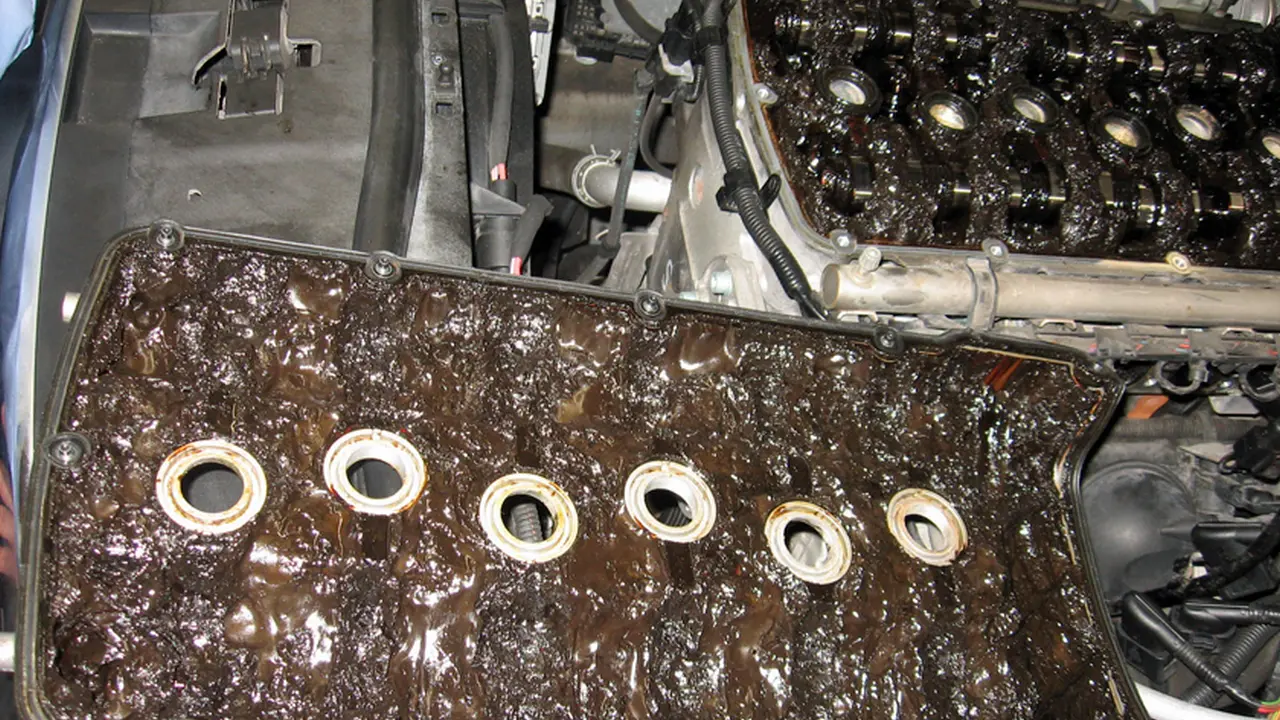
Engine Oil Sludge: Causes, Damage, Symptoms, and How to Prevent It
Engine oil is one of the most important fluids in an internal combustion engine. It reduces friction, carries heat away from moving components, protects metal surfaces against wear, and helps keep internal engine components clean.
However, engine oil does not remain in perfect condition forever. When oil becomes heavily degraded and contaminated, it can turn into a thick, sticky substance commonly known as engine oil sludge.
Oil sludge is much more serious than simply having dirty engine oil. As sludge accumulates, it can restrict oil passages, interfere with lubrication, reduce oil flow, and eventually contribute to major engine damage.
Understanding why sludge forms and recognizing the warning signs early can help prevent expensive repairs.
What Is Engine Oil Sludge?
Engine oil sludge is a thick, semi-solid deposit formed when engine oil becomes severely degraded and combines with contaminants inside the engine.
Fresh engine oil is relatively fluid and capable of circulating through narrow oil passages. Over time, however, heat, oxidation, fuel contamination, moisture, combustion by-products, and other contaminants can change the chemical structure of the oil.
The degraded oil may eventually form deposits that resemble:
-
Thick black or dark brown paste
-
Sticky tar-like material
-
Soft carbon deposits
-
Gel-like sludge
-
Thick deposits around the cylinder head and valve train
-
Heavy buildup inside the oil pan
Sludge can form gradually. In many cases, the driver may not notice a problem until the buildup becomes severe enough to affect oil circulation.
Why Does Engine Oil Turn Into Sludge?
There is rarely a single cause of oil sludge. It is usually the result of several conditions occurring over a long period.
Some engines are also more vulnerable to sludge formation because of their operating temperature, crankcase ventilation design, oil capacity, service interval, or engine-specific characteristics.
Extended oil change intervals
One of the most common causes is leaving engine oil in the engine for too long.
Oil additives are designed to keep contaminants suspended, control oxidation, prevent corrosion, and maintain lubrication performance. These additives gradually become depleted.
As the oil ages, its ability to resist oxidation and contamination decreases. Eventually, deposits can begin to accumulate.
Following the manufacturer's recommended oil change interval is therefore one of the most effective ways to reduce sludge formation.
Using the wrong engine oil
Engine oil is not a universal fluid.
Different engines require specific viscosity grades and performance specifications. Using oil with an inappropriate viscosity or specification can affect lubrication and oil stability.
For example, an engine designed for a particular low-viscosity synthetic oil may not respond well to an unsuitable lubricant, particularly under high-temperature or extended-service conditions.
The correct oil should always be selected according to the vehicle manufacturer's specifications.
Frequent short-distance driving
Short trips can contribute significantly to sludge formation.
When an engine is started cold, condensation forms inside the engine and exhaust system. Under normal operating conditions, much of this moisture eventually evaporates as the engine reaches sufficient temperature.
If the vehicle is repeatedly driven only for short distances, the engine may not stay hot long enough to remove accumulated moisture effectively.
This moisture can mix with oil and combustion contaminants, accelerating oil degradation.
Vehicles used mainly for:
-
Short urban trips
-
School runs
-
Very short commutes
-
Repeated cold starts
-
Stop-and-go driving
may require particular attention to oil condition and maintenance intervals.
Excessive engine heat
High engine temperatures accelerate oil oxidation.
When oil is repeatedly exposed to excessive heat, its chemical structure can deteriorate more quickly. This is particularly important around areas such as turbocharger bearings, piston rings, and other components exposed to high temperatures.
An overheating engine can therefore increase the risk of oil degradation and deposit formation.
Fuel contamination
Fuel can enter the engine oil under certain conditions.
This can happen because of incomplete combustion, excessive fuel enrichment, injector problems, worn piston rings, repeated cold operation, or certain engine-management problems.
Fuel-contaminated oil may lose some of its intended lubrication characteristics and can degrade more rapidly.
Poor crankcase ventilation
The Positive Crankcase Ventilation (PCV) system plays an important role in controlling crankcase vapors.
Combustion gases can pass the piston rings and enter the crankcase. This process is known as blow-by.
The PCV system helps remove these gases and route them back into the intake system.
If the PCV system becomes blocked, restricted, or defective, moisture and combustion by-products can accumulate inside the crankcase. This can contribute to sludge formation.
Low-quality or unsuitable oil
Modern engine oils contain carefully formulated additive packages.
These additives help control oxidation, suspend contaminants, prevent deposits, reduce corrosion, and maintain lubrication under different operating conditions.
Using poor-quality oil or an oil that does not meet the required specification can increase the risk of deposits, particularly when combined with long service intervals or severe driving conditions.
What Does Oil Sludge Look Like?
The appearance of sludge depends on its age and composition.
Freshly developing deposits may appear as thick brown or dark oil residue. More severe sludge can become almost black and resemble grease, tar, or thick paste.
You may find sludge:
-
Under the oil filler cap
-
Around the valve cover area
-
On the cylinder head
-
Inside the oil pan
-
Around oil return passages
-
Near oil pickup components
-
Around internal engine components
However, the material visible under the oil filler cap does not always represent the condition of the entire engine.
For example, condensation can sometimes create a light-colored creamy deposit beneath the oil cap, especially in vehicles used primarily for short trips.
Therefore, the presence of a small amount of residue under the cap does not automatically mean that the engine is severely sludged.
What Are the Symptoms of Engine Oil Sludge?
Oil sludge can produce different symptoms depending on where it accumulates and how severely it restricts oil circulation.
Low oil pressure
One of the most serious consequences is reduced oil pressure.
If sludge blocks an oil passage or restricts the oil pickup screen, the oil pump may not be able to deliver sufficient oil to the engine.
A low oil pressure warning should never be ignored.
Oil pressure warning light
The oil pressure warning light may illuminate when the engine is running.
This can indicate insufficient oil pressure, although there are several possible causes, including low oil level, a defective oil pressure sensor, oil pump problems, excessive bearing clearance, or restricted oil flow.
Sludge is one possible cause.
If the oil pressure warning light remains illuminated while the engine is running, the engine should be switched off as soon as it is safe to do so and the problem should be diagnosed promptly.
Increased engine noise
Insufficient lubrication can cause increased mechanical noise.
You may notice:
-
Ticking sounds
-
Tapping noises
-
Timing-chain noise
-
Hydraulic lifter noise
-
Bearing-related knocking
Sludge can restrict oil flow to components that depend on pressurized engine oil.
Variable valve timing problems
Many modern engines use oil pressure to operate variable valve timing systems.
Systems such as VVT, VCT, or similar technologies may use oil control valves and narrow oil passages.
Sludge can interfere with these components and cause:
-
Rough running
-
Poor acceleration
-
Reduced fuel economy
-
Check Engine Light illumination
-
Variable valve timing fault codes
-
Poor engine performance
Poor engine performance
Severe sludge can affect lubrication and the operation of oil-controlled components.
The engine may become less responsive, particularly if variable valve timing or other hydraulic mechanisms are affected.
Increased oil consumption
Sludge does not always directly cause oil consumption, but severe deposits can contribute to problems involving piston rings and oil control.
If oil control rings become restricted by deposits, their ability to control oil on the cylinder walls may decrease.
The result can be increased oil consumption and, in some cases, blue exhaust smoke.
Overheating
Oil contributes to engine cooling as well as lubrication.
If oil circulation becomes restricted, certain engine components may not receive adequate cooling and lubrication.
This can increase thermal stress and potentially contribute to overheating or localized hot spots.
Why Is Engine Oil Sludge Dangerous?
The greatest danger is that sludge can restrict the engine's lubrication system.
An internal combustion engine contains many small oil passages. Components such as camshafts, hydraulic lifters, turbocharger bearings, and variable valve timing mechanisms depend on adequate oil flow.
As sludge accumulates, it can narrow these passages.
In severe cases, deposits can also accumulate around the oil pickup screen.
If the pickup becomes restricted, the oil pump may receive insufficient oil.
This can cause a dangerous reduction in oil pressure.
The consequences can include accelerated wear of:
-
Main bearings
-
Connecting rod bearings
-
Camshaft journals
-
Turbocharger bearings
-
Timing components
-
Hydraulic lifters
-
Other internally lubricated components
In the worst-case scenario, insufficient lubrication can cause engine seizure.
Can Oil Sludge Damage a Turbocharger?
Yes.
Turbocharged engines can be particularly sensitive to oil quality and oil flow.
The turbocharger shaft can rotate at extremely high speeds and its bearings depend on proper lubrication.
If degraded oil or sludge restricts oil flow, the turbocharger may experience increased friction and temperature.
Possible consequences include:
-
Turbocharger bearing wear
-
Shaft damage
-
Increased turbocharger noise
-
Reduced boost pressure
-
Oil leakage
-
Blue exhaust smoke
-
Turbocharger failure
This is one reason why correct oil specification and timely oil changes are particularly important on turbocharged engines.
Can Sludge Block the Oil Pickup?
Yes, and this is one of the most dangerous effects of severe sludge accumulation.
The oil pickup is located inside the oil pan and draws oil toward the oil pump.
If sludge and deposits accumulate around the pickup screen, the amount of oil entering the pump can be reduced.
The engine may still contain plenty of oil, but the lubrication system may not receive enough of it.
This distinction is important:
Having enough oil in the engine does not necessarily mean that the engine has adequate oil pressure.
A blocked pickup can therefore cause serious engine damage even when the dipstick shows a normal oil level.
How Can You Check for Engine Oil Sludge?
A basic inspection can provide some clues, but it cannot always determine the full condition of an engine.
Check the oil filler cap
Remove the oil filler cap with the engine switched off and inspect the visible area.
Heavy black deposits or thick tar-like material can indicate sludge.
However, the absence of deposits in this area does not guarantee that the lower part of the engine is clean.
Inspect the drained oil
During an oil change, the drained oil can sometimes provide useful information.
Very thick oil, excessive deposits, unusual contamination, or visible particles may indicate an underlying problem.
However, the condition of the drained oil alone is not enough to diagnose internal sludge buildup.
Inspect the oil filter
The oil filter can sometimes reveal contamination that is not obvious from the oil itself.
A technician may inspect the old filter for excessive deposits or metallic particles.
Metal particles are particularly important because they can indicate internal engine wear rather than simple sludge formation.
Inspect the oil pan
For severe suspected sludge, removing the oil pan can provide a much better view of the oil pickup and lower engine area.
This is often more informative than simply looking under the oil filler cap.
Inspect the cylinder head
If necessary, a technician can inspect the upper engine through appropriate access points.
On some engines, deposits around the camshafts and valve train can be visually assessed after removing the valve cover.
Should You Flush a Sludge-Filled Engine?
This is an area where caution is important.
An engine with significant sludge should not automatically be subjected to an aggressive chemical flush.
A strong solvent may loosen large amounts of accumulated deposits at once. If those deposits move through the lubrication system, they can potentially contribute to blocked passages or oil pickup restrictions.
The correct approach depends on the severity of the sludge and the engine's condition.
For light contamination, a technician may recommend correcting the oil and maintenance routine and performing appropriate oil changes.
For severe sludge, mechanical inspection and cleaning may be safer and more effective than attempting to dissolve everything chemically.
Can Engine Oil Sludge Be Completely Removed?
Sometimes, yes, but the method depends on how severe the contamination is.
Light deposits may gradually be reduced through proper maintenance and repeated oil changes using the correct specification of oil.
Severe deposits may require mechanical cleaning.
In extreme cases, components such as the oil pan, valve cover, oil pickup, or other engine parts may need to be removed and cleaned manually.
The important point is that sludge removal should not create a new lubrication problem.
Aggressive cleaning is not always the best solution.
How to Prevent Engine Oil Sludge
Preventing sludge is considerably easier than repairing an engine damaged by sludge.
Change the oil at the correct interval
Do not rely solely on the longest possible service interval under all driving conditions.
If the vehicle is used under severe conditions, such as frequent short trips, heavy traffic, extreme temperatures, towing, or dusty environments, the manufacturer may specify a shorter maintenance interval.
Always follow the service information appropriate for the specific vehicle and engine.
Use the correct oil specification
Do not select engine oil based only on viscosity.
For example, two oils with the same viscosity grade may have different performance specifications and may not be interchangeable for every engine.
Use the viscosity and approval/specification required by the manufacturer.
Replace the oil filter
A new oil filter should normally be installed whenever the engine oil is changed.
The filter removes contaminants from the circulating oil, helping maintain oil cleanliness.
Allow the engine to reach normal operating temperature
If your vehicle is used mainly for very short trips, occasional longer drives can help the engine reach full operating temperature.
However, this should not be considered a substitute for proper maintenance.
Maintain the PCV system
The PCV system should be inspected if there are signs of excessive crankcase pressure, oil leaks, unusual oil consumption, or other related problems.
A restricted PCV system can contribute to moisture and vapor accumulation inside the crankcase.
Repair fuel and ignition problems
Misfires, injector problems, excessive fuel enrichment, and other combustion-related issues can accelerate oil contamination.
If the engine is running abnormally, changing the oil without fixing the underlying problem may only provide a temporary solution.
Does Synthetic Oil Prevent Sludge?
High-quality synthetic oil can provide excellent resistance to oxidation and thermal degradation, but it does not make an engine immune to sludge.
Synthetic oil can still become contaminated and degraded.
Sludge can develop if:
-
Oil changes are neglected
-
The engine has excessive blow-by
-
Fuel contaminates the oil
-
The PCV system is defective
-
The engine overheats
-
The wrong oil is used
-
The vehicle is operated under severe conditions
Therefore, synthetic oil is not a replacement for proper maintenance.
Can a Diesel Engine Develop Oil Sludge?
Yes.
Diesel engines can also develop sludge and heavy deposits.
Diesel combustion produces soot and other combustion by-products that can enter the engine oil, particularly as the oil becomes contaminated over time.
Modern diesel engines may also have additional considerations involving emissions systems, regeneration cycles, fuel dilution, and operating conditions.
Correct oil specification is particularly important because many modern diesel engines require oils meeting specific manufacturer and emissions-system requirements.
Does Oil Sludge Mean the Engine Is About to Fail?
Not necessarily.
The presence of sludge does not automatically mean that the engine is beyond repair.
The severity matters.
A small amount of deposit may be manageable if the underlying cause is corrected early.
Severe sludge combined with low oil pressure, engine noise, restricted oil pickup, or internal wear is much more concerning.
The best approach is to determine:
-
How much sludge is present
-
Where it is located
-
Why it formed
-
Whether oil flow is restricted
-
Whether the engine has already suffered internal damage
When Should You Have the Engine Inspected?
Professional inspection is recommended if you notice:
-
Persistent oil pressure warnings
-
Unusual engine ticking or knocking
-
Very thick deposits under the oil cap
-
Rapid oil degradation
-
Excessive oil consumption
-
Blue exhaust smoke
-
Variable valve timing faults
-
Repeated low oil pressure
-
Unexplained engine overheating
-
Sludge visible during an oil change
-
A history of severely neglected oil changes
A mechanic can determine whether the problem is limited to oil contamination or whether the lubrication system and internal engine components have already been affected.
Final Thoughts
Engine oil sludge is the result of prolonged oil degradation and contamination. It can develop slowly, often without obvious symptoms, until deposits begin interfering with oil circulation.
The most important causes include extended oil change intervals, frequent short-distance driving, excessive heat, fuel contamination, poor crankcase ventilation, and the use of unsuitable engine oil.
The consequences can be serious because sludge can restrict oil passages, interfere with oil-controlled components, reduce oil pressure, and contribute to accelerated engine wear.
Fortunately, preventing sludge is relatively straightforward.
Use the correct engine oil, replace the oil and filter at appropriate intervals, maintain the PCV system, address engine problems promptly, and pay attention to how the vehicle is used.
A clean lubrication system is not simply about keeping the engine looking clean inside. It is essential for maintaining proper oil flow, protecting expensive components, and extending the service life of the engine.