TR
TR EN
EN

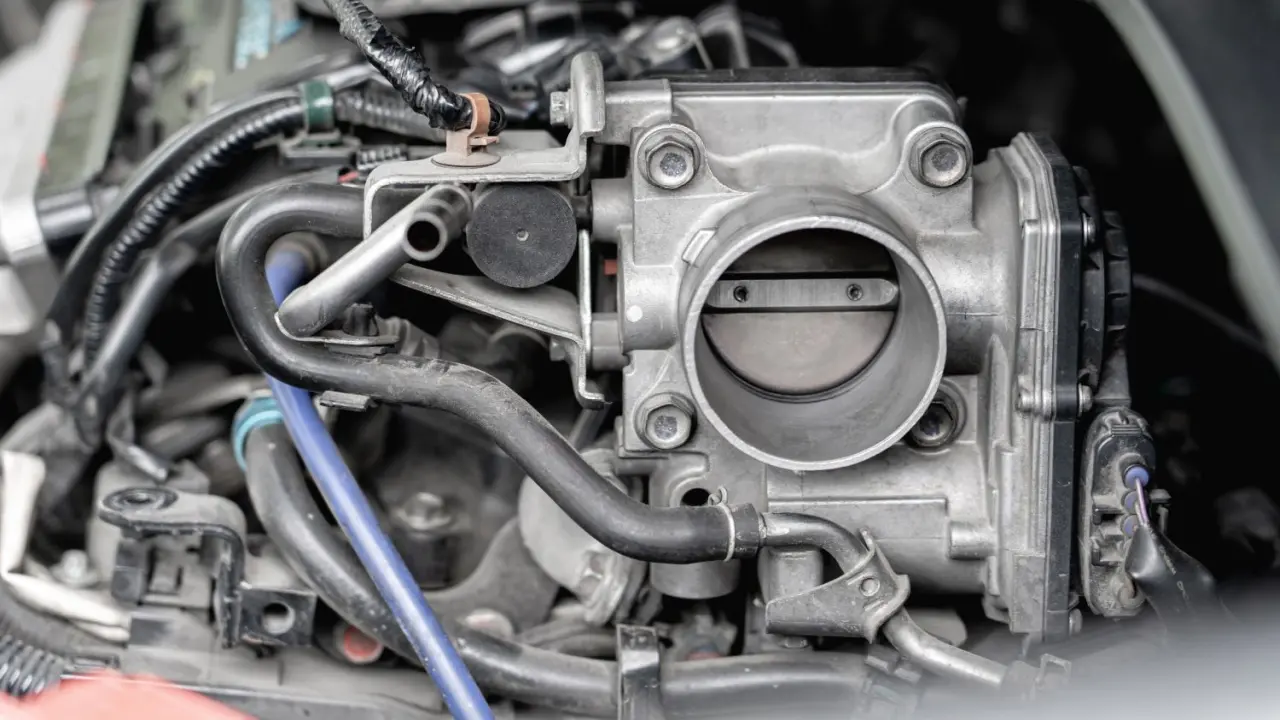
What Is a Throttle Body Temperature Sensor? What Are the Symptoms of Failure?
Modern engines rely on information from many different sensors to control fuel injection, air management, ignition, emissions, and overall engine operation. One of these temperature measurements may be located around the throttle body or within the intake system.
However, there is an important technical detail to understand before diagnosing this component.
A “throttle body temperature sensor” is not a standardized, separate sensor found in every vehicle. Depending on the engine design, the intake air temperature may be measured by a dedicated IAT (Intake Air Temperature) sensor, a sensor integrated into the MAP sensor, a temperature element inside the MAF sensor, or a sensor positioned near or integrated into the throttle body.
For this reason, when a vehicle is reported to have a “throttle body temperature sensor fault,” the first step should be identifying exactly which sensor the manufacturer uses to measure intake air temperature.
What Does a Throttle Body Temperature Sensor Do?
The temperature sensor associated with the throttle body or intake system measures the temperature of the air entering the engine.
Air density changes with temperature.
Cold air is denser and contains more oxygen molecules within the same volume. Warm air is less dense.
The engine control unit (ECU) uses temperature information together with data from other sensors to calculate the engine's operating conditions and adjust its control strategy.
Depending on the vehicle, the ECU may evaluate:
-
Intake air temperature
-
Manifold pressure
-
Engine RPM
-
Throttle position
-
Engine coolant temperature
-
Oxygen sensor readings
-
Fuel trims
-
Mass airflow
-
Accelerator pedal position
The temperature sensor therefore does not determine fuel injection by itself. Its information is one part of a much larger engine-management calculation.
How Does the Temperature Sensor Work?
Temperature measurements of this type commonly use an NTC thermistor.
NTC stands for “Negative Temperature Coefficient.”
With an NTC thermistor, electrical resistance decreases as temperature increases. When temperature decreases, resistance increases.
The ECU monitors the electrical characteristics of the sensor through its reference-voltage and measurement circuit.
The ECU then converts the sensor signal into an estimated temperature value.
If the sensor circuit becomes open, the ECU may interpret the signal as an extremely low temperature. If the signal is shorted to ground, the ECU may interpret it as an extremely high temperature.
The exact voltage and resistance values depend on the specific sensor and engine-management system. Generic internet specifications should therefore not be used as definitive diagnostic values.
Throttle Temperature Sensor vs. Throttle Position Sensor
These two components are often confused because their names sound similar, but they perform completely different functions.
The Throttle Position Sensor (TPS) tells the ECU how far the throttle plate is open.
A temperature sensor provides information about air temperature.
For example, a TPS might tell the ECU that the throttle is approximately 30 percent open, while the temperature sensor provides information about the temperature of the incoming air.
In an electronic throttle system, both types of information can be important, but they are used for different purposes.
What Happens When the Temperature Sensor Fails?
If the temperature sensor provides incorrect information, the ECU may receive an inaccurate representation of the air entering the engine.
Depending on the engine design and the severity of the error, this can affect fuel control and other engine-management strategies.
The symptoms can vary considerably.
A completely failed sensor may produce an obvious fault code, while a sensor that is only slightly inaccurate may cause subtle changes in engine behavior without immediately triggering a warning light.
Symptoms of a Faulty Throttle Body Temperature Sensor
1. Check Engine Light
One of the most common signs of an electrical or plausibility problem is the Check Engine Light.
If the ECU detects a temperature signal outside its expected range, it may store a diagnostic trouble code and illuminate the warning light.
A temperature reading that is physically implausible can be especially useful for identifying a sensor or circuit problem.
2. Rough or Unstable Idle
Incorrect temperature information can affect engine-management calculations under certain operating conditions.
As a result, some vehicles may develop an unstable idle, particularly during cold starting or during transitions between different temperature conditions.
However, rough idle should never automatically be blamed on a temperature sensor.
Vacuum leaks, a dirty throttle body, MAP or MAF problems, ignition faults, fuel-system problems, and air leaks can all produce similar symptoms.
3. Poor or Inconsistent Throttle Response
An incorrect intake-air temperature signal can affect engine operation under certain conditions.
The driver may notice:
-
Delayed throttle response
-
Hesitation during acceleration
-
A feeling that the engine is not responding normally
-
Intermittent loss of smooth acceleration
These symptoms do not prove that the temperature sensor itself has failed. Other components in the air and throttle-control system can create similar behavior.
4. Increased Fuel Consumption
Temperature information is one of the inputs used by the ECU when controlling the air-fuel mixture.
If the ECU believes the intake air is significantly colder or warmer than it really is, its calculations may be affected.
Depending on the failure mode, this can contribute to increased fuel consumption.
However, poor fuel economy has many possible causes, so the temperature sensor should not be replaced based on fuel consumption alone.
5. Difficult Cold Starting
Temperature information becomes particularly important during cold engine operation.
If the ECU receives incorrect temperature information, its cold-start strategy may not match the actual conditions.
Possible symptoms include:
-
Longer cranking time
-
Rough operation immediately after starting
-
Stalling shortly after starting
-
Unstable idle during the first few minutes
Again, these symptoms can also be caused by many other systems.
6. Reduced Engine Performance
Incorrect temperature information can influence certain engine-control strategies.
Under some conditions, the vehicle may feel less responsive or produce less power.
If the performance loss is significant, however, the diagnosis should also include the air-intake system, fuel system, ignition system, turbocharger system where applicable, and electronic throttle system.
7. Increased Emissions
Correct temperature information helps the ECU maintain appropriate engine-management parameters.
If the temperature signal is incorrect, combustion and fuel-control strategies can be affected.
This can contribute to increased exhaust emissions and abnormal fuel-trim behavior.
In some vehicles, an incorrect temperature signal can also contribute to additional diagnostic trouble codes.
Can a Faulty Temperature Sensor Cause Intermittent Problems?
Yes.
Not every sensor failure is permanent.
A sensor may work normally when the engine is cold but produce an incorrect signal after it becomes hot. Similarly, vibration or movement may temporarily interrupt a damaged wire or loose electrical connection.
This can create symptoms that appear and disappear.
For intermittent faults, live-data monitoring is particularly useful.
If the temperature value suddenly jumps from a realistic value to an extremely high or low value without a corresponding change in actual temperature, the sensor circuit should be investigated.
Does a Dirty Throttle Body Cause Temperature Sensor Symptoms?
A dirty throttle body can produce symptoms that may be confused with a sensor problem.
Carbon deposits around the throttle plate can affect airflow and idle control.
The resulting symptoms may include:
-
Rough idle
-
Poor throttle response
-
Hesitation
-
Stalling
-
Unstable engine speed
These symptoms can sometimes lead to unnecessary sensor replacement.
A dirty throttle body does not automatically mean that the temperature sensor is faulty.
The throttle body, temperature signal, airflow measurements, and other related systems should be evaluated separately.
Is the Throttle Body Temperature Sensor the Same as the IAT Sensor?
Not necessarily.
IAT stands for “Intake Air Temperature.”
Its job is to measure the temperature of the air entering the engine.
Depending on the vehicle, the IAT sensor may be:
-
A separate sensor
-
Integrated into the MAP sensor
-
Integrated into the MAF sensor
-
Located in the intake duct
-
Positioned near the throttle body
-
Integrated into another intake-system component
This is why it is important to identify the actual sensor configuration used by the engine before purchasing a replacement part.
The Relationship Between the MAP Sensor and Intake Air Temperature
Some MAP sensors measure more than manifold pressure.
A combined MAP/IAT sensor can contain separate sensing elements for manifold pressure and intake-air temperature.
This means that one physical component can provide two different types of information to the ECU.
In such a system, the pressure measurement may work correctly while the temperature measurement is faulty.
Alternatively, the temperature circuit may be functioning normally while the pressure measurement has a problem.
Therefore, a MAP-related fault should not automatically be interpreted as a pressure-only problem without checking the available live data.
How Is a Temperature Sensor Diagnosed?
One of the best diagnostic methods is to use an OBD diagnostic scanner and examine live data.
If the vehicle has been parked long enough for the engine and intake system to reach ambient temperature, the reported intake-air temperature should generally be reasonably close to the surrounding temperature.
For example, if a vehicle has been sitting overnight in an environment of approximately 20°C, an intake-air temperature reading close to that value would generally be plausible.
The reading should then change logically as the operating conditions change.
The most important point is not simply whether the sensor shows one particular temperature.
Its response to changing temperature is also important.
Testing the Sensor With a Multimeter
If the sensor is electrically accessible and its specifications are available, it can often be tested with a multimeter.
Resistance can be measured and compared with the manufacturer's temperature-resistance specifications.
For a typical NTC sensor:
-
Resistance decreases as temperature increases.
-
Resistance increases as temperature decreases.
However, the exact resistance at a particular temperature varies from one sensor to another.
Therefore, statements such as “the sensor must have exactly this many ohms at 20°C” should not be treated as universal specifications.
The manufacturer's service information should be used whenever possible.
Check the Wiring and Connector Before Replacing the Sensor
A sensor that appears to be faulty may actually be working correctly.
The problem can be caused by the electrical circuit.
Common possibilities include:
-
Corroded connector terminals
-
Loose pins
-
Broken wires
-
Damaged wiring insulation
-
Short circuits
-
Open circuits
-
Poor sensor ground
-
Reference-voltage problems
-
Excessive resistance in the wiring
This is particularly important in the engine compartment, where heat, vibration, moisture, oil, and cleaning chemicals can affect electrical connections.
Replacing the sensor without checking the wiring can result in an unnecessary repair.
Can a Temperature Sensor Be Tested With Live Data?
Yes, and live data can be extremely useful.
A scan tool can show the temperature value being reported to the ECU.
The technician can then compare that value with the actual conditions and observe whether it changes logically.
For example, a sensor reading that suddenly changes from a realistic value to an extremely low or high temperature without a physical reason can indicate an electrical or sensor problem.
Live data can also be compared with other available temperature measurements.
The more consistent the different sensor readings are with actual operating conditions, the more confidence there is in the diagnosis.
Should You Replace the Sensor Immediately?
No.
The sensor should not be replaced simply because the vehicle has rough idle, poor acceleration, high fuel consumption, or difficult starting.
These symptoms are not specific enough.
A proper diagnosis should include:
-
Reading stored diagnostic trouble codes
-
Checking live data
-
Comparing the reported temperature with actual conditions
-
Inspecting the connector
-
Checking the wiring
-
Measuring reference voltage where applicable
-
Checking the sensor ground
-
Testing sensor resistance when appropriate
-
Comparing the sensor behavior with manufacturer specifications
-
Checking related air-intake and engine-management systems
Only after the sensor itself has been confirmed as defective should replacement be considered.
Does a New Sensor Need Calibration?
Not always.
A simple NTC temperature sensor generally does not require a special calibration procedure after replacement.
However, if the temperature-sensing element is integrated into another component, the procedure can be different.
For example, if the temperature sensor is part of a MAP sensor, MAF sensor, or throttle-body assembly, the replacement of the complete component may involve additional procedures depending on the vehicle.
Some vehicles may require adaptation, relearning, or clearing stored diagnostic information.
The manufacturer's service procedure should therefore be followed.
Can You Drive With a Faulty Temperature Sensor?
It depends on the severity of the problem and the vehicle's response.
If the vehicle runs normally and only the Check Engine Light is illuminated, it may be possible to drive to a repair facility.
However, continued driving is less advisable if the vehicle has:
-
Severe loss of power
-
Major throttle-response problems
-
Repeated stalling
-
Severe rough running
-
Significant drivability problems
-
Multiple engine-management faults
-
Electronic throttle control problems
-
A limp-home mode
A temperature sensor fault itself may not make a vehicle immediately undriveable, but the underlying problem should still be diagnosed.
Does a Throttle Body Temperature Sensor Have a Replacement Interval?
Normally, no.
These sensors are generally not replaced at a specific mileage interval.
They are usually replaced only when testing confirms that the sensor or its electrical circuit is faulty.
A functioning sensor can often remain in service for the entire useful life of the vehicle.
Replacement may become necessary because of:
-
Electrical failure
-
Incorrect temperature readings
-
Open circuit
-
Short circuit
-
Physical damage
-
Internal sensor failure
-
Connector or wiring damage
A Common Diagnostic Mistake
One of the most common mistakes is replacing a sensor based solely on a symptom.
For example, increased fuel consumption does not automatically mean that the intake-air temperature sensor is faulty.
Likewise, hard starting, rough idle, hesitation, or reduced power can have dozens of possible causes.
The correct approach is to determine what temperature the ECU actually sees and whether that value makes sense under the current operating conditions.
This is much more reliable than replacing parts based on symptoms alone.
Final Thoughts
A throttle-body-area temperature sensor or intake-air temperature sensor provides important information to the engine management system.
However, the terminology can be confusing because not every vehicle uses a separate “throttle body temperature sensor.”
Depending on the design, intake-air temperature may be measured by a dedicated IAT sensor, a MAP sensor with an integrated temperature element, a MAF sensor, or another sensor positioned within the intake system.
A faulty temperature signal can contribute to symptoms such as an illuminated Check Engine Light, rough idle, difficult cold starting, hesitation, poor throttle response, increased fuel consumption, reduced performance, or increased emissions.
But none of these symptoms alone proves that the temperature sensor is defective.
The most reliable diagnosis combines OBD fault-code information, live-data analysis, electrical testing, wiring inspection, and comparison with manufacturer specifications.
In short, do not replace a temperature sensor simply because the engine is running poorly. First determine whether the ECU is actually receiving an incorrect temperature signal and whether the sensor, wiring, connector, or another related component is responsible for the problem.