TR
TR EN
EN

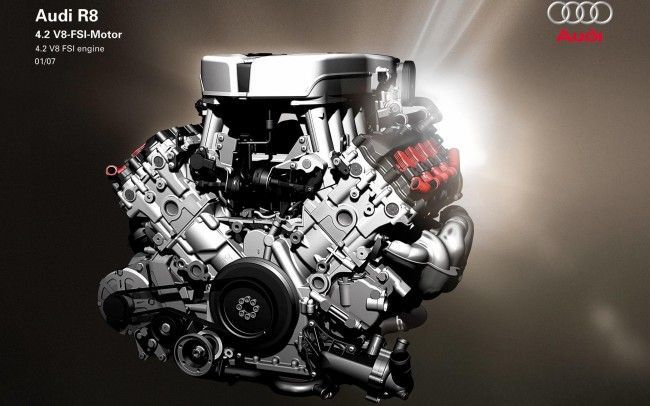
What Are FSI and TFSI Engines?
FSI and TFSI are gasoline engine technologies most commonly associated with Volkswagen Group brands such as Audi, Volkswagen, Škoda, and SEAT. Both technologies use direct fuel injection, meaning gasoline is injected directly into the combustion chamber rather than only into the intake port.
The basic distinction is often explained as:
FSI = Direct gasoline injection
TFSI = Turbocharging + direct gasoline injection
However, the technology is more complex than these short definitions suggest. Different engine generations can use different combinations of turbocharging, variable valve timing, variable valve lift, high-pressure fuel systems, intercooling, and advanced thermal management.
What Does FSI Mean?
FSI stands for Fuel Stratified Injection.
In a conventional port-injected gasoline engine, fuel is injected into the intake port before entering the cylinder. In an FSI engine, fuel is injected directly into the combustion chamber through high-pressure injectors.
This allows the engine control unit to control:
-
Fuel quantity
-
Injection timing
-
Injection pressure
-
Air-fuel mixture formation
-
Combustion strategy
with a high degree of precision.
Depending on the engine design and operating conditions, different injection strategies can be used to balance fuel economy, emissions, performance, and combustion stability.
How Does an FSI Engine Work?
An FSI engine uses a high-pressure fuel system to deliver gasoline directly into the cylinders.
The engine control unit continuously evaluates information from components such as:
-
Engine speed
-
Accelerator position
-
Engine load
-
Intake air pressure
-
Intake air temperature
-
Coolant temperature
-
Oxygen sensors
-
Fuel pressure sensors
-
Crankshaft position
-
Camshaft position
Based on this information, the ECU determines when and how much fuel should be injected.
Direct injection allows fuel delivery to be controlled much more precisely than in many older fuel-injection systems.
What Does TFSI Mean?
TFSI is commonly associated with Turbocharged Fuel Stratified Injection.
The important addition compared with the basic FSI concept is the use of a turbocharger.
The turbocharger forces more air into the engine. Since more oxygen is available, the engine can burn an appropriate additional amount of fuel and produce more power and torque.
This allows a relatively small-displacement engine to produce considerably more power than a naturally aspirated engine of similar size.
What Is the Difference Between FSI and TFSI?
The simplest distinction is the forced-induction system.
FSI describes Volkswagen Group's direct-injection gasoline technology, while TFSI generally refers to a turbocharged version of this concept.
However, this does not mean that every engine carrying an FSI badge is identical or that every TFSI engine uses exactly the same hardware.
Engine generation, engine code, production year, emissions requirements, and market can all affect the technology used.
Modern engines can include additional systems such as:
-
Variable valve timing
-
Variable valve lift
-
Intercoolers
-
High-pressure fuel pumps
-
Advanced boost control
-
Cylinder deactivation
-
Sophisticated thermal management
-
Internal EGR strategies
Therefore, the engine code is often more useful than the badge alone when identifying the exact system.
Why Does TFSI Use a Turbocharger?
A turbocharger uses energy from the exhaust gases to drive a turbine. The turbine is connected to a compressor, which compresses the incoming air.
The basic process is:
Exhaust gas → turbine → compressor → pressurized intake air → engine
Many turbocharged engines use an intercooler to reduce the temperature of the compressed air before it enters the engine.
Cooler air is denser, allowing more oxygen to enter the cylinders.
The ECU then adjusts fuel injection to match the increased amount of air.
This combination of turbocharging and direct injection is one of the main reasons modern TFSI engines can produce substantial power from relatively small engine displacements.
Advantages of FSI and TFSI Technology
Direct injection provides several potential advantages when combined with an appropriate engine design.
These include:
-
More precise fuel delivery
-
Improved combustion control
-
Better fuel efficiency under suitable operating conditions
-
Higher specific power
-
Improved throttle response
-
Reduced fuel consumption in some operating conditions
-
Better control of emissions
TFSI engines add the advantage of turbocharging, which can provide strong torque at relatively low and medium engine speeds.
This is one reason a small turbocharged TFSI engine can sometimes produce more usable torque than a significantly larger naturally aspirated engine.
Disadvantages of FSI and TFSI Engines
The increased efficiency and performance of direct-injection engines also come with greater system complexity.
Depending on the engine, the system may include:
-
High-pressure fuel pump
-
Direct injectors
-
Fuel pressure sensors
-
Turbocharger
-
Wastegate or electronic boost control
-
MAP and/or MAF sensors
-
PCV/crankcase ventilation system
-
EGR or internal EGR strategies
-
Intercooler
-
Multiple electronic actuators
-
Sophisticated engine control software
When a problem occurs, this means the component named in a diagnostic code is not necessarily the component that has failed.
Wiring, connectors, power supply, grounds, sensors, mechanical problems, fuel pressure, and control logic may all need to be checked.
Carbon Deposits on FSI and TFSI Engines
One of the most discussed issues with gasoline direct-injection engines is carbon buildup on the intake valves.
In a traditional port-injected engine, gasoline passes through the intake ports and can provide some cleaning effect around the intake valves.
With direct injection, the fuel is sprayed directly into the combustion chamber. Therefore, gasoline does not normally wash over the back of the intake valves.
Over time, deposits can form from sources such as:
-
Crankcase ventilation vapors
-
Oil mist
-
Blow-by gases
-
EGR or internal EGR flow
-
Other combustion-related contaminants
Heavy deposits can restrict airflow and interfere with normal air movement through the intake system.
Possible symptoms include:
-
Rough idle
-
Cold-start shaking
-
Misfires
-
Poor throttle response
-
Reduced engine performance
-
Increased fuel consumption
-
Check engine light
However, there is no universal mileage at which every FSI or TFSI engine must have its intake valves cleaned. Deposit formation depends on the specific engine design, driving conditions, oil consumption, PCV system, maintenance history, and other factors.
Turbocharger Problems on TFSI Engines
Because TFSI engines use turbocharging, the boost system becomes another important part of diagnosis.
Turbocharger-related problems can produce:
-
Loss of power
-
Slow acceleration
-
Low boost pressure
-
Unusual turbo noises
-
Increased oil consumption
-
Check engine light
-
Limp mode
-
Poor throttle response
A low-boost condition does not automatically mean that the turbocharger itself has failed.
Before replacing a turbocharger, technicians should consider:
-
Boost hoses
-
Intercooler connections
-
Vacuum lines where applicable
-
Wastegate operation
-
Boost control actuator
-
Boost control valve
-
MAP sensor
-
Intake leaks
-
Charge-air leaks
A leaking intercooler hose, for example, can create symptoms that look like a turbocharger problem even when the turbo itself is functioning correctly.
Fuel System in FSI and TFSI Engines
Direct-injection gasoline engines can use significantly higher fuel pressures than conventional port-injection systems.
The fuel system can generally be divided into a low-pressure side and a high-pressure side.
The fuel tank pump supplies gasoline toward the engine. A high-pressure fuel pump then increases the pressure to the level required by the direct injectors.
The high-pressure fuel system may include:
-
Low-pressure fuel pump
-
High-pressure fuel pump
-
Fuel rail
-
Fuel pressure sensor
-
Pressure-control components
-
Direct injectors
-
Electrical wiring and connectors
Problems in this system can cause:
-
Long cranking
-
Difficult starting
-
Misfires
-
Hesitation
-
Loss of power under load
-
Poor acceleration
-
Fuel-pressure-related diagnostic codes
-
Check engine light
A fuel-pressure problem should not automatically lead to replacement of the high-pressure pump. Low-pressure supply, wiring, sensors, control valves, fuel pressure, and injector operation should be checked systematically.
Injector Problems on FSI and TFSI Engines
Direct injectors operate under demanding conditions because they inject fuel directly into the combustion chamber.
A faulty injector can cause:
-
Rough idle
-
Misfires
-
Difficult starting
-
Increased fuel consumption
-
Reduced performance
-
Abnormal emissions
-
Check engine light
A cylinder-specific misfire code does not automatically prove that the injector is defective.
Depending on the engine, diagnosis may require checking:
-
Injector operation
-
Fuel pressure
-
Injector correction values
-
Electrical signals
-
Spark plug condition
-
Ignition coil operation
-
Compression
-
Intake leaks
Replacing parts without confirming the actual cause can easily lead to unnecessary repair costs.
Oil Consumption on FSI and TFSI Engines
Some FSI and TFSI engine families have become known for oil-consumption problems, particularly certain older engine generations.
However, it would be incorrect to say that all FSI or TFSI engines consume excessive oil.
Possible causes of excessive oil consumption include:
-
Piston rings
-
Cylinder wear
-
Valve stem seals
-
Turbocharger problems
-
PCV system faults
-
External oil leaks
The engine generation and engine code are extremely important when evaluating an oil-consumption complaint.
The Role of the PCV System
The PCV system controls crankcase ventilation.
During normal engine operation, some combustion gases pass the piston rings and enter the crankcase. These gases, together with oil vapors, need to be controlled and routed appropriately.
A faulty PCV system can cause:
-
Rough idle
-
Vacuum problems
-
Mixture-related faults
-
Increased oil consumption
-
Whistling or hissing noises
-
Check engine light
-
Unstable engine operation
PCV problems can sometimes imitate intake-air leaks or other fuel-mixture problems, so the system should be included in the diagnostic process.
What Fuel Should Be Used in FSI and TFSI Engines?
The most important rule is to use fuel that meets the octane rating and fuel specification required by the vehicle manufacturer.
Using a higher-octane fuel does not automatically increase power in every engine. The engine's compression ratio, ECU calibration, ignition strategy, and knock-control system determine whether higher octane can provide a practical benefit.
Using fuel below the manufacturer's recommended minimum octane rating can increase the likelihood of knock-control intervention and may reduce performance.
Fuel quality also matters, particularly in high-pressure direct-injection systems.
Maintenance of FSI and TFSI Engines
Maintenance involves more than simply changing engine oil and filters.
Depending on the engine, attention should be given to:
-
Correct engine oil specification
-
Oil change intervals
-
Air filter
-
Fuel system
-
PCV system
-
Turbocharger hoses
-
Intercooler connections
-
Spark plugs
-
Ignition coils
-
Cooling system
-
High-pressure fuel system
-
Intake system
-
Diagnostic fault history
When choosing engine oil, the manufacturer's required oil specification and approval are more important than viscosity alone.
Common FSI and TFSI Failure Symptoms
An FSI or TFSI engine may require further diagnosis if you notice:
-
Check engine light
-
Rough idle
-
Misfires
-
Difficult starting
-
Hesitation
-
Sudden loss of power
-
Low boost
-
Increased fuel consumption
-
Excessive oil consumption
-
Unusual exhaust smoke
-
Cold-start problems
-
Fuel-pressure faults
-
Poor acceleration
The same symptom can have several completely different causes.
For example, a misfire does not automatically mean that the ignition coil has failed. The problem could also involve the spark plug, injector, compression, fuel pressure, intake system, wiring, or engine timing.
Are FSI and TFSI Engines Reliable?
Reliability depends heavily on the specific engine generation, engine code, maintenance history, and operating conditions.
A properly maintained FSI or TFSI engine can provide long service life. On the other hand, neglected oil changes, poor-quality fuel, excessive carbon buildup, unresolved boost leaks, or ignored fuel-system problems can lead to expensive repairs.
For a used vehicle, the engine badge alone should not determine whether the car is a good purchase.
A proper inspection should include:
-
Cold-start behavior
-
Idle quality
-
Misfire data
-
Oil consumption
-
Turbocharger operation
-
Boost pressure
-
Fuel pressure
-
Intake system
-
PCV system
-
Cooling system
-
OBD fault history
-
Service records
FSI vs. TFSI in Simple Terms
The easiest way to understand the difference is to start with direct injection.
FSI is associated with Volkswagen Group's direct-injection gasoline technology.
TFSI generally combines direct injection with turbocharging.
The turbocharger allows a TFSI engine to produce more power and torque from a given engine displacement, but it also adds additional components and increases the complexity of the air and boost-control system.
Most importantly, FSI and TFSI should not be treated as two completely uniform engine types. Different generations can have significantly different designs, known problems, and maintenance requirements.
For diagnosis or when buying a used vehicle, the exact engine code and production generation are far more useful than simply seeing FSI or TFSI written on the vehicle.