TR
TR EN
EN

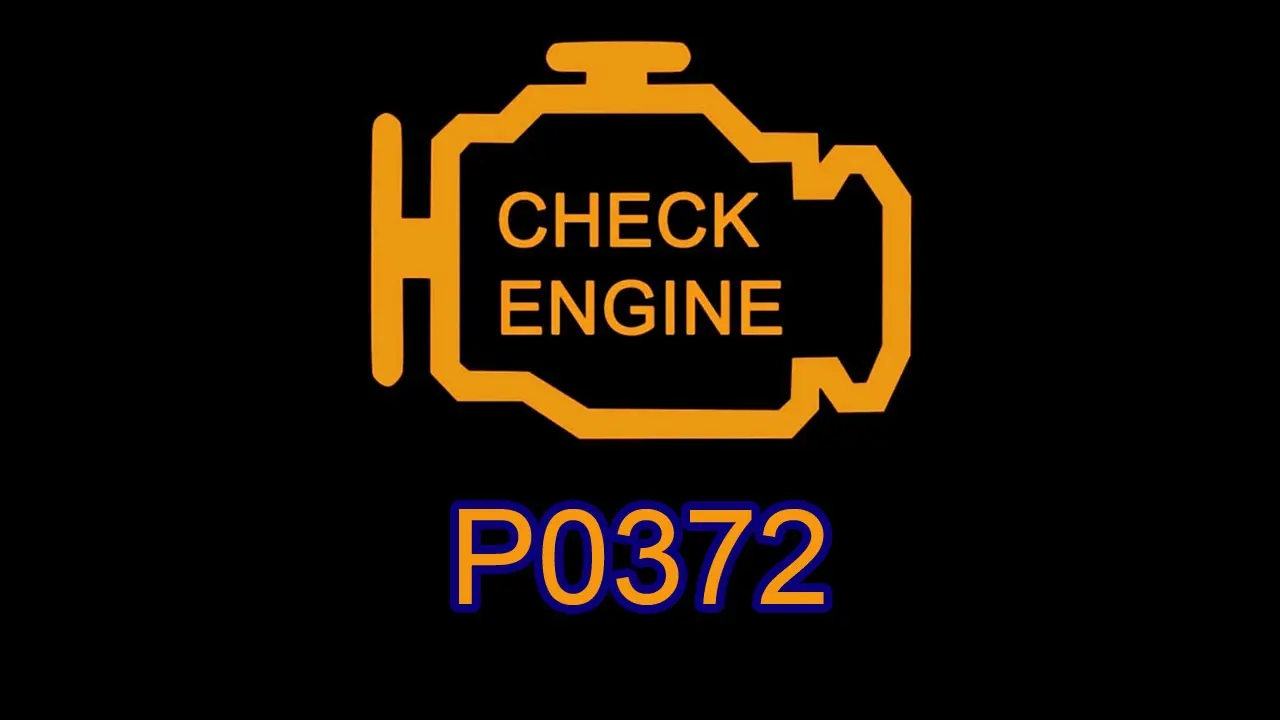
P0372 Timing Reference High Resolution Signal "A" Too Few Pulses
P0372 means the engine control module has detected that Timing Reference High Resolution Signal “A” is producing fewer pulses than the ECM expects.
This is different from P0374, where the ECM detects no pulses at all. With P0372, the signal is generally present, but the number of valid timing events reaching the ECM is lower than expected.
That distinction is important because the problem may not be a completely dead sensor. The sensor can still produce a signal while missing pulses, producing weak or distorted pulses, or losing individual timing events at certain engine speeds.
The exact component represented by Signal “A” is manufacturer-specific. Depending on the engine, it may be associated with a crankshaft/timing reference sensor or another high-resolution timing circuit. The vehicle's wiring diagram and service information should therefore be used to identify the actual circuit before replacing anything.
What Is a High-Resolution Timing Reference Signal?
The ECM needs accurate information about engine rotation to control fuel injection and ignition at the correct moment.
A high-resolution timing reference signal provides a large number of precisely spaced electrical pulses as the engine rotates. By counting and analyzing these pulses, the ECM can determine very small changes in crankshaft position and engine speed.
This information can be important for:
-
Fuel injection timing
-
Ignition timing
-
Engine synchronization
-
Misfire detection
-
Variable valve timing
-
RPM calculation
-
Injection control on diesel engines
-
Precise crankshaft position monitoring
The ECM expects a particular pulse pattern. If some of the expected pulses disappear, P0372 can be stored.
What Does “Too Few Pulses” Mean?
“Too few pulses” does not mean the engine is simply turning too slowly.
The ECM is comparing the timing signal it receives against an expected pulse pattern.
For example, a sensor may normally generate a continuous series of timing events. If several pulses are missing because of a weak sensor output, damaged trigger teeth, electrical interference or a signal interruption, the ECM may determine that fewer valid pulses were received than expected.
The signal therefore exists, but some of the timing information is missing.
This makes P0372 particularly interesting because the vehicle may still start and run relatively normally under some conditions.
Common Symptoms of P0372
The symptoms depend on the engine and how much timing information is being lost.
Possible symptoms include:
-
Check Engine Light
-
Hard starting
-
Extended cranking
-
Engine hesitation
-
Rough idle
-
Misfires
-
Engine stalling
-
Poor acceleration
-
Reduced engine performance
-
Unstable RPM readings
-
Intermittent no-start condition
-
Increased fuel consumption
-
Poor ignition or injection timing
A vehicle can also have very few noticeable symptoms if the missing pulses occur only briefly or only under particular operating conditions.
For example, the engine may run normally at idle but develop hesitation or misfire at higher RPM when the timing signal becomes less reliable.
What Causes P0372?
Failing timing reference sensor
A sensor can deteriorate without completely failing.
Instead of producing a completely dead signal, it may produce pulses that are too weak, distorted or inconsistent for the ECM to recognize reliably.
Temperature can also affect the problem. A sensor may work when cold and begin missing pulses after it heats up.
Damaged or contaminated trigger wheel
The sensor reads a toothed or otherwise patterned target. If the target is damaged, bent, contaminated or missing part of its expected pattern, the ECM may receive fewer valid timing events.
A damaged reluctor or trigger wheel can therefore produce a code even when the sensor itself is functioning correctly.
Incorrect sensor air gap
If the distance between the sensor and its trigger target is incorrect, the signal amplitude can become too weak.
This is particularly important with magnetic or variable-reluctance sensors.
A sensor that is installed incorrectly, mounted loosely or affected by a damaged mounting surface can produce an inconsistent waveform.
Wiring problems
A signal wire with excessive resistance, an intermittent open circuit or poor shielding can cause individual pulses to be lost.
The problem may become more obvious as engine speed increases because the timing events occur much more rapidly.
Connector or terminal problems
A connector may look physically intact while a terminal has poor contact pressure.
Vibration can then cause the signal to drop out momentarily.
Electrical interference
High-resolution timing signals can be particularly sensitive to electrical noise.
Incorrect wiring routing, damaged shielding or proximity to high-current circuits can introduce interference that causes the ECM to reject otherwise genuine timing pulses.
Sensor power or ground problems
If the sensor requires an external supply, unstable power or a poor ground can distort the output.
The result may be an apparently functioning sensor that periodically fails to produce valid pulses.
Mechanical timing problems
A damaged timing component, excessive timing-chain movement or a problem with the trigger target can affect the relationship between the engine's mechanical movement and the timing signal.
However, P0372 alone does not prove that the timing chain or timing belt is defective.
Mechanical timing should be investigated when the waveform or other diagnostic evidence supports that conclusion.
How P0372 Should Be Diagnosed
The first step is to scan the vehicle for all stored and pending codes, not just P0372.
Other crankshaft, camshaft, synchronization, VVT or engine-speed codes can provide important information.
The next step is to determine exactly what the manufacturer calls Timing Reference Signal A.
This matters because “Signal A” is not a universal description of one particular sensor across every vehicle.
Once the circuit is identified, inspect:
-
Sensor connector
-
Wiring
-
Terminal tension
-
Harness routing
-
Sensor mounting
-
Trigger target
-
Sensor-to-target clearance
-
Signs of oil or water contamination
-
Damage from heat or vibration
Test the Actual Signal
For P0372, an oscilloscope is often much more useful than simply checking whether the sensor has voltage.
The technician needs to determine whether the expected pulse train is actually being generated.
A scope can reveal:
-
Missing pulses
-
Weak pulses
-
Distorted pulses
-
Irregular pulse spacing
-
Electrical noise
-
Signal dropouts
-
RPM-dependent problems
-
Temperature-dependent failures
This can help distinguish a sensor problem from a wiring problem or mechanical trigger problem.
For example, if the waveform is already missing pulses directly at the sensor, the problem is upstream of the ECM.
If the sensor produces a clean and complete waveform but the ECM does not receive the same signal, the wiring or connector becomes much more suspicious.
Compare the Timing Signal With Another Reference
On systems where both crankshaft and camshaft signals are available, comparing the signals with an oscilloscope can be extremely useful.
The technician can determine whether:
-
The high-resolution signal is missing pulses.
-
The crankshaft reference is correct.
-
The camshaft relationship is correct.
-
The trigger pattern is physically damaged.
-
The problem occurs at a particular RPM.
-
The signal becomes abnormal only when the engine is hot.
This is much more reliable than guessing from the fault code alone.
Do Not Automatically Replace the Sensor
P0372 can tempt technicians into immediately replacing the timing reference sensor.
That is not always the correct repair.
A sensor may be perfectly capable of producing a signal while the real problem is:
-
Damaged wiring
-
Poor connector contact
-
Incorrect sensor clearance
-
Damaged reluctor
-
Missing trigger teeth
-
Electrical interference
-
Poor sensor ground
-
Incorrect sensor installation
Replacing the sensor without checking the waveform can therefore leave the original problem untouched.
Could a Timing Chain Cause P0372?
It can contribute to timing-related problems, but P0372 should not automatically be interpreted as a timing-chain failure.
A stretched timing chain, excessive chain movement or a damaged timing component can alter the relationship between the timing reference and the engine's mechanical position.
However, a genuine mechanical timing problem is normally supported by additional evidence, such as:
-
Cam/crank correlation codes
-
Abnormal synchronization
-
Unusual mechanical noise
-
Incorrect cam/crank waveform relationship
-
Evidence of excessive chain movement
-
Incorrect mechanical timing during inspection
If the electrical waveform itself is missing pulses, the sensor, trigger target and circuit should be investigated before condemning the timing chain.
P0372 vs P0374
These two codes are closely related but describe different signal conditions.
P0372 – Too Few Pulses
The ECM receives a timing signal but detects fewer valid pulses than expected.
P0374 – No Pulses
The ECM detects no valid pulses from the monitored Timing Reference Signal A.
This distinction can significantly change the diagnostic direction.
With P0374, a completely open circuit, missing sensor power or a dead sensor becomes more immediately plausible.
With P0372, the technician should pay particular attention to individual missing pulses, weak waveform sections, trigger-wheel damage, electrical interference and intermittent signal quality.
P0372 vs P0373
P0373 indicates an intermittent timing reference signal, while P0372 specifically indicates that the ECM detected too few pulses.
An intermittent wiring connection can potentially cause either code depending on how the ECM interprets the signal loss.
That is why the freeze-frame information and actual waveform are valuable.
Can P0372 Cause a No-Start?
Yes, depending on the engine.
If enough timing information is lost, the ECM may no longer be able to reliably synchronize fuel injection or ignition.
Some engines may continue running because another position signal provides sufficient backup information. Others may experience hard starting, stalling or a complete no-start condition.
The severity therefore depends on the specific engine-management architecture.
The Correct Repair
The repair depends on where the missing pulses originate.
Possible repairs include:
-
Replacing a defective timing reference sensor
-
Repairing damaged wiring
-
Replacing damaged connector terminals
-
Restoring sensor power or ground
-
Correcting sensor installation
-
Correcting sensor-to-target clearance
-
Repairing or replacing a damaged reluctor/trigger wheel
-
Correcting electrical interference or shielding problems
-
Repairing a mechanical timing problem
-
Repairing an ECM input circuit in rare cases
The important principle is that the missing pulses should be located before the component is replaced.
Final Diagnostic Summary
P0372 – Timing Reference High Resolution Signal “A” Too Few Pulses means the ECM is receiving the monitored timing reference signal, but it is detecting fewer valid timing pulses than expected.
Unlike P0374, the signal is not necessarily completely absent. Individual pulses may be missing because of a weak sensor, damaged trigger target, incorrect air gap, wiring resistance, connector problems, electrical interference or another signal-quality problem.
The most effective diagnosis is to identify exactly what Signal A represents on the vehicle, inspect the circuit, verify power and ground where applicable, and examine the actual waveform with an oscilloscope. If the signal is clean at the sensor but not at the ECM, concentrate on the wiring. If pulses are already missing at the sensor, investigate the sensor, air gap and trigger target.
P0372 is therefore a pulse-pattern problem, not an automatic instruction to replace the timing sensor or timing chain.