TR
TR EN
EN

What Is a Valve Lubrication System?
A valve lubrication system is an auxiliary system used mainly in some LPG-converted gasoline engines to help support the operating conditions of the engine valves and valve seats.
The system is particularly associated with LPG conversions because some engines may be more sensitive to valve and valve-seat wear when operated on LPG under certain conditions.
It is important to clarify that a valve lubrication system is not the same as the engine's normal lubrication system. Engine oil lubricates components such as the crankshaft, camshaft, bearings, and other internal parts, while a valve lubrication system generally delivers a specially formulated fluid into the intake system in controlled quantities.
How Does a Valve Lubrication System Work?
The operating principle is relatively simple.
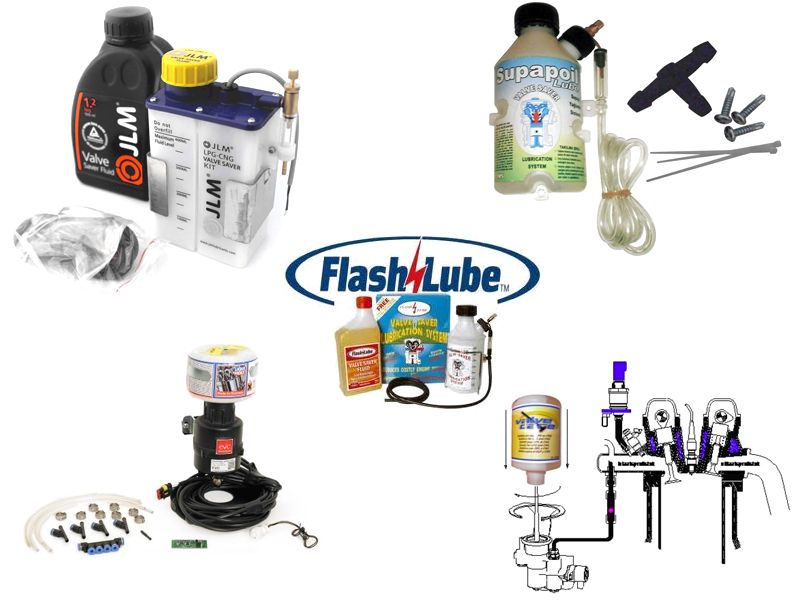
A special fluid is stored in a separate reservoir and is delivered through a dosing system to the intake manifold or intake system. The fluid is then carried into the cylinders together with the incoming air and fuel mixture.
Depending on the design, the system may use:
-
A fluid reservoir
-
A dosing unit or pump
-
Control electronics
-
Hoses
-
Intake manifold connections
-
A flow-control mechanism
Basic systems may use engine vacuum or airflow to control the amount of fluid being delivered. More advanced systems can use electronic control based on engine speed, load, or information from the LPG ECU.
The objective is not to flood the engine with lubricant. The system is designed to deliver a small and controlled amount of fluid.
Why Is Valve Lubrication Used With LPG?
The main reason is that some engines can be more sensitive to valve and valve-seat wear when converted to LPG.
LPG does not burn in exactly the same way as gasoline, and the thermal conditions inside the combustion chamber can vary depending on the engine design, mixture calibration, ignition timing, engine load, and operating temperature.
The exhaust valves and valve seats are exposed to particularly high temperatures and mechanical loads.
Some engines tolerate LPG very well without additional valve lubrication, while others may be more sensitive to valve-seat recession under certain operating conditions.
For this reason, a valve lubrication system may be installed as an additional precaution during an LPG conversion.
However, this does not mean that every LPG-powered engine needs one.
Does Every LPG Vehicle Need a Valve Lubrication System?
No.
This is one of the most important points to understand.
The presence of an LPG system does not automatically mean that a valve lubrication system is required. Many engines operate successfully on LPG for long periods without one.
The need depends on several factors, including:
-
Engine design
-
Valve and valve-seat materials
-
Manufacturer recommendations
-
Engine operating temperature
-
LPG calibration
-
Driving conditions
-
Engine speed and load
-
Previous LPG experience with the same engine
-
Valve clearance design
Some engines are naturally well suited to LPG operation, while others may require more attention to valve-seat durability.
Therefore, the decision should be based on the specific engine, rather than simply the fuel type.
Does Valve Lubrication Prevent Valve Damage?
It should not be considered a guarantee against valve damage.
Valve and valve-seat wear can be influenced by many factors. For example, an incorrectly calibrated LPG system can create operating conditions that are unfavorable for the engine regardless of whether a lubrication system is installed.
Important factors include:
LPG calibration: Incorrect mixture control can affect combustion temperatures and engine operation.
Engine temperature: Excessive operating temperatures increase thermal stress on valves and valve seats.
Engine load: Long periods of high load can create considerably more thermal stress than normal urban driving.
Engine speed: Extended high-RPM operation can increase the demands placed on the valve train.
Valve-seat material: The design and material of the valve seats can have a significant effect on durability.
Ignition timing: Incorrect ignition calibration can also affect combustion characteristics and engine temperatures.
For these reasons, valve lubrication should be viewed as an additional support system, not as a substitute for proper LPG installation and calibration.
Where Is the Lubrication Fluid Delivered?
The fluid is usually delivered into the intake manifold or intake tract.
The idea is to allow the fluid to enter the cylinders with the incoming air and fuel mixture.
However, the location of the injection point is important. On multi-cylinder engines, poor installation can result in uneven distribution, with some cylinders receiving more fluid than others.
This is why simply installing a reservoir and connecting a hose does not necessarily mean that the system is functioning correctly.
The dosing system and installation should be appropriate for the engine.
Which Engines May Benefit More From Valve Lubrication?
There is no universal list of engines that require valve lubrication.
When an engine is being converted to LPG, it is useful to investigate:
-
Whether the engine is known to be LPG-compatible
-
Manufacturer recommendations
-
Valve-seat construction
-
Valve materials
-
Operating temperature
-
Typical engine load
-
High-RPM usage
-
Whether the engine has adjustable valve clearances
-
Previous valve-seat issues on the same engine
Some engines use hydraulic valve lifters, while others use mechanically adjustable valve clearances. These designs can behave differently as valve-seat wear develops.
For that reason, the engine's specific design should be considered instead of relying on a general rule such as "every LPG engine needs valve lubrication."
Can an Engine Run on LPG Without Valve Lubrication?
Yes.
Many LPG-converted gasoline engines operate without a separate valve lubrication system.
In a properly designed conversion, the LPG system should provide the correct fuel quantity and maintain appropriate operating conditions across the engine's normal load and RPM range.
The condition of the gasoline engine before conversion is also important. An engine that already has compression problems, valve problems, overheating issues, or poor ignition performance should not be expected to become reliable simply by adding a valve lubrication system.
The engine should first be mechanically healthy and capable of operating correctly on gasoline.
What Happens If the Valve Lubrication System Runs Out of Fluid?
The consequences depend heavily on the particular engine and how dependent it is on the additional system.
If the reservoir becomes empty:
-
The additional fluid is no longer supplied.
-
The engine continues to operate on LPG if the LPG system itself remains functional.
-
The protective effect intended by the lubrication system is lost.
-
On a sensitive engine operated under demanding conditions, long-term valve-seat wear may become a greater concern.
This does not normally mean that the engine will immediately fail as soon as the reservoir becomes empty.
The system should therefore not be viewed as an emergency component that prevents instant engine damage. Its purpose is generally related to long-term operating conditions and wear management.
Can Too Much Valve Lubrication Fluid Cause Problems?
More fluid is not necessarily better.
The system is designed around a specific dosing rate. Excessive fluid delivery can be undesirable and may affect combustion or create unnecessary deposits in the intake or combustion system, depending on the product and engine.
The goal is controlled dosing, not maximum dosing.
For this reason, the system should be adjusted according to the manufacturer's specifications rather than simply increasing the flow rate for additional "protection."
Valve Lubrication Fluid Is Not Engine Oil
Valve lubrication fluid should never be confused with engine oil.
The engine's normal lubrication system is responsible for lubricating internal components such as:
-
Crankshaft bearings
-
Camshaft components
-
Pistons and cylinder walls
-
Timing components
-
Turbocharger components where applicable
A valve lubrication system is an additional system used in certain LPG applications.
Its fluid should not be poured into the engine oil filler or crankcase.
Likewise, engine oil should not be substituted for a purpose-made valve lubrication fluid unless the specific system manufacturer explicitly states that a particular fluid is suitable.
Does Valve Lubrication Increase LPG Fuel Consumption?
The effect on fuel consumption is generally small because the lubrication fluid is delivered in relatively small quantities.
More importantly, it should not be confused with LPG fuel consumption.
LPG consumption is influenced by factors such as:
-
LPG ECU calibration
-
Injector flow capacity
-
Regulator pressure
-
Engine efficiency
-
Ignition system condition
-
Driving style
-
Engine temperature
-
Vehicle weight
-
Tire pressure
-
Air-fuel mixture
The lubrication system has a different purpose and should not be used as an explanation for a significant increase in LPG consumption without further diagnosis.
What Are the Signs of Valve or Valve-Seat Wear?
Valve and valve-seat wear may develop gradually and may not produce obvious symptoms at first.
Possible symptoms at a more advanced stage can include:
-
Loss of compression
-
Rough idle
-
Misfires
-
Reduced engine performance
-
Difficult starting
-
Increased fuel consumption
-
Engine warning light
-
Changes in valve clearance
However, these symptoms are not specific to valve-seat problems.
For example, an ignition problem, injector problem, vacuum leak, compression problem, or incorrect LPG calibration can produce similar symptoms.
Proper diagnosis may require:
-
Compression testing
-
Leak-down testing
-
Valve clearance inspection
-
Cylinder-head inspection
-
Live-data analysis
-
LPG fuel-trim analysis
Replacing parts based only on symptoms can lead to unnecessary repairs.
How Is Valve-Seat Recession Diagnosed?
Valve-seat recession is generally investigated through a combination of mechanical measurements and engine symptoms.
On engines with adjustable valve clearances, a progressive reduction in valve clearance can sometimes provide an important diagnostic clue. As the valve seat wears, the valve can move deeper into the cylinder head, changing the clearance.
However, this should not be interpreted as a universal diagnostic rule because valve-train designs differ.
If there is a serious concern about valve-seat condition, compression and leak-down tests can provide useful information. In some cases, removing the cylinder head may ultimately be necessary for direct inspection.
Does Valve Lubrication Replace Proper LPG Calibration?
Absolutely not.
A valve lubrication system cannot compensate for an incorrectly installed or incorrectly calibrated LPG system.
A proper LPG conversion should have:
-
Correct injector capacity
-
Correct regulator capacity
-
Appropriate LPG pressure
-
Correct fuel mapping
-
Proper gasoline-to-LPG transition
-
Correct mixture control
-
Appropriate ignition strategy where applicable
-
Correct sensor integration
-
Proper installation and hose routing
If the LPG mixture becomes excessively lean under high load, simply adding more valve lubrication fluid is not a proper solution.
The underlying LPG calibration problem must be corrected.
Is Valve Lubrication Necessary for Turbocharged Engines?
Not automatically.
Turbocharged engines can place higher thermal and mechanical demands on the engine, especially under high boost and high load. However, whether a valve lubrication system is required depends on the specific engine design and its LPG compatibility.
For turbocharged engines, correct LPG injector capacity and regulator performance become particularly important.
The system must be able to deliver sufficient fuel under high load without excessive pressure drop or injector duty-cycle problems.
Therefore, on a turbocharged LPG vehicle, fuel-system capacity and calibration are at least as important as the presence of a valve lubrication system.
What Should Be Checked Before Installing a Valve Lubrication System?
Before adding the system, it is better to determine whether the engine actually benefits from it.
A sensible evaluation should include:
Engine compatibility: Determine whether the engine is known to be suitable for LPG.
Mechanical condition: Check compression, ignition, cooling system condition, and existing valve problems.
LPG system quality: Verify that the injectors, regulator, ECU, and other components are correctly matched.
Calibration: Make sure the mixture remains correct under idle, partial load, and high-load conditions.
Valve-train design: Determine whether valve clearance inspection is possible and whether the engine has known valve-seat sensitivity.
Driving conditions: A vehicle used mainly for short urban trips may experience very different thermal conditions from a vehicle regularly driven at high speed and high load.
Is a Valve Lubrication System Worth Installing?
There is no universal answer.
If the specific engine is known to be sensitive to valve-seat wear during LPG operation, a properly installed lubrication system may be a reasonable additional precaution.
For an engine that is already well suited to LPG and does not have a known valve-seat problem, installing the system may provide little practical benefit compared with simply ensuring that the LPG system is correctly selected and calibrated.
The important point is not to treat valve lubrication as a mandatory accessory for every LPG vehicle.
The Main Purpose of a Valve Lubrication System
A valve lubrication system is an auxiliary system designed to support valve and valve-seat operating conditions in certain LPG applications. It can be useful for some engines, but it is not a universal requirement and it does not guarantee that valves will never wear.
For a reliable LPG conversion, the bigger picture matters: the engine must be suitable for LPG, the fuel system must be correctly sized, the installation must be performed properly, and the LPG ECU must be accurately calibrated.
A valve lubrication system can complement these measures when appropriate, but it cannot replace them.