TR
TR EN
EN

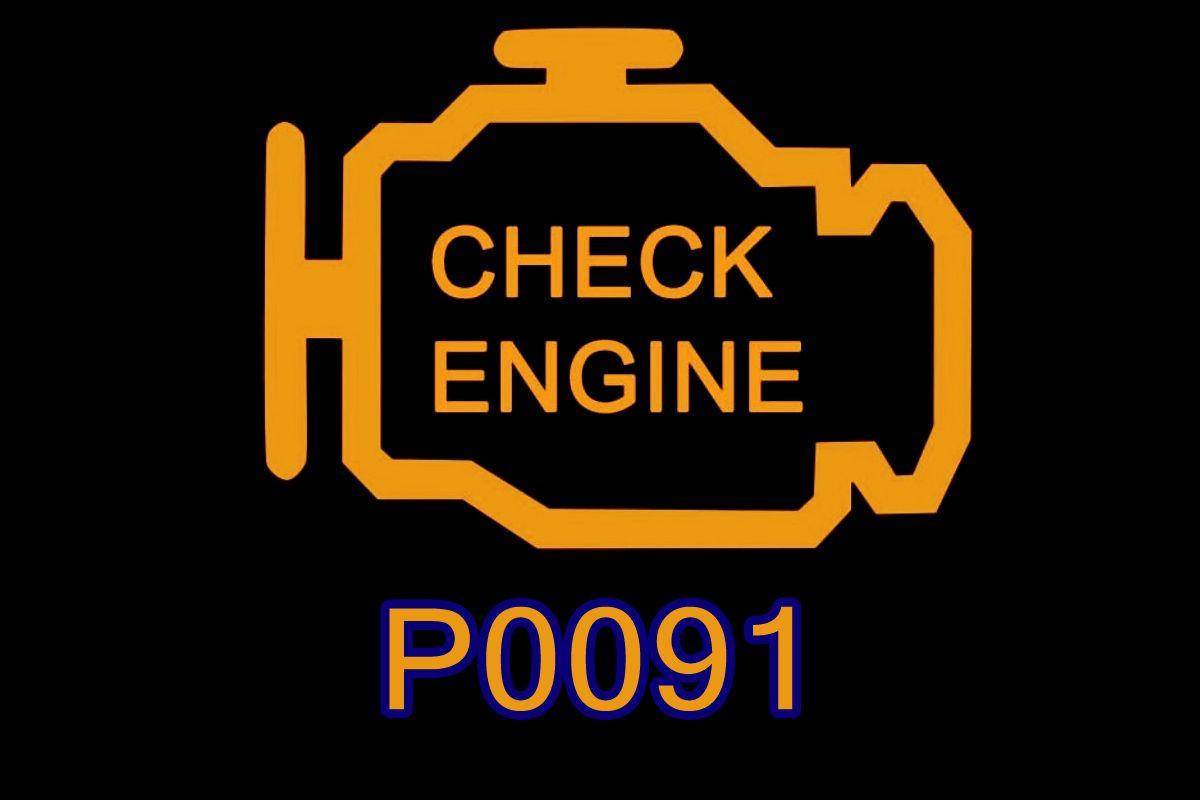
P0091 Fuel Pressure Regulator 1 Control Circuit Low
P0091 is set when the engine control module detects a low electrical signal in the Fuel Pressure Regulator 1 control circuit.
The important word here is “Circuit.” P0091 does not automatically mean that fuel pressure is physically too low, nor does it prove that the fuel pressure regulator itself has failed.
The ECM is reporting an electrical problem with the circuit it uses to control the regulator.
Depending on the engine, the regulator may control fuel pressure on a low-pressure fuel system, a high-pressure fuel pump, or another fuel-pressure control arrangement. The exact component and circuit design vary significantly between manufacturers.
Start with the electrical meaning of “Low”
A common mistake with P0091 is to interpret it as:
“Fuel pressure is low.”
That is not what the code directly says.
P0091 means the ECM has detected a control-circuit signal below the expected electrical range.
The actual fuel pressure may also be low, but that must be established with a pressure measurement or appropriate scan-tool data.
A low electrical control signal can result from:
-
Short to ground
-
Faulty regulator solenoid
-
Excessive electrical load
-
Damaged wiring
-
Poor connector
-
Incorrect power supply
-
Control-side circuit problem
-
ECM driver problem
The hydraulic fuel-pressure condition should therefore be evaluated separately from the electrical fault.
What is Fuel Pressure Regulator 1?
The fuel pressure regulator controls fuel pressure so that the engine receives the appropriate fuel supply under changing operating conditions.
Depending on the fuel system, it may regulate:
-
Fuel rail pressure
-
Fuel pump output
-
Fuel delivery pressure
-
High-pressure pump inlet or outlet conditions
Some systems use a mechanical regulator.
Others use an electronically controlled valve or solenoid operated by the ECM.
On certain direct-injection and diesel common-rail systems, the electronically controlled valve can be part of the high-pressure fuel pump assembly.
Because of these differences, the exact location and operating strategy of Fuel Pressure Regulator 1 must be confirmed for the particular vehicle.
Why does the ECM control fuel pressure?
The required fuel pressure changes with engine operating conditions.
At idle, the engine requires relatively little fuel.
During acceleration and high load, fuel demand increases substantially.
The ECM may therefore adjust the regulator according to information such as:
-
Engine speed
-
Engine load
-
Throttle position
-
Fuel temperature
-
Calculated fuel demand
-
Actual fuel pressure
-
Desired fuel pressure
-
Rail pressure, where applicable
The ECM continuously attempts to bring actual fuel pressure toward the commanded value.
How the control circuit can fail
An electronically controlled regulator generally contains an electrical coil or actuator.
The ECM controls this component through a dedicated circuit.
If the circuit develops a short, excessive resistance, poor connection, or an internal component failure, the current and voltage behavior can move outside the expected range.
The ECM detects this abnormal condition and stores P0091.
The exact electrical strategy differs between systems, so the wiring diagram is essential.
A short to ground is one important possibility
Because the code specifies Low, a control wire that is unintentionally pulled toward ground can be a strong suspect on systems where the ECM expects a higher control voltage.
Possible causes include:
-
Damaged insulation
-
Wire rubbing against the engine
-
Harness crushed during repair
-
Water contamination
-
Incorrect aftermarket wiring
-
Internally shorted regulator coil
However, the exact fault interpretation depends on the regulator's circuit design.
Do not assume that every P0091 system uses the same control strategy.
The regulator itself may be electrically defective
The regulator can develop an internal electrical failure.
For example, its coil may develop:
-
Internal short
-
Incorrect resistance
-
Partial winding failure
-
Heat-related failure
-
Intermittent electrical behavior
A regulator with an internally shorted coil can place an excessive load on the ECM driver circuit.
That can produce the low control-circuit condition represented by P0091.
Measure resistance only against the correct specification
If the regulator contains a measurable solenoid coil, resistance can provide useful information.
But there is no universal resistance value that can be applied to every fuel pressure regulator.
The correct procedure should specify:
-
Expected resistance
-
Test temperature
-
Connector terminals
-
Testing conditions
An apparently reasonable resistance reading does not necessarily prove that the regulator works correctly under operating conditions.
The actuator can behave differently when hot or under actual fuel-system pressure.
Check the connector carefully
Fuel-system components operate in a harsh environment.
Inspect the regulator connector for:
-
Corrosion
-
Fuel contamination
-
Water
-
Loose terminals
-
Bent pins
-
Poor terminal tension
-
Damaged locking mechanism
-
Broken wires immediately behind the connector
A terminal can make electrical contact during a static test but lose proper contact when the engine vibrates.
This is especially important if P0091 appears intermittently.
Wiring inspection should go beyond continuity
A continuity test can tell you that a wire is connected.
It does not necessarily tell you that the circuit can carry the required current correctly.
A damaged conductor can have enough continuity to pass a basic test but still have excessive resistance under load.
For this reason, depending on the manufacturer's procedure, useful tests may include:
-
Voltage measurement
-
Voltage-drop testing
-
Resistance testing
-
Short-to-ground testing
-
Short-to-power testing
-
Current measurement
-
Actuator activation
The objective is to evaluate the circuit under conditions that resemble actual operation.
Check the regulator's power supply
Many electronically controlled fuel regulators use a power supply and an ECM-controlled circuit, although the exact architecture varies.
Verify the relevant:
-
Fuse
-
Relay
-
Power feed
-
Ground/return
-
Control wire
Do not assume that the regulator receives battery voltage directly.
Some systems use different control strategies, and blindly applying battery voltage to an electronic fuel-control component can damage it.
Always follow the manufacturer's wiring diagram and test procedure.
Scan-tool data can separate electrical and hydraulic problems
P0091 becomes easier to understand when you look at both electrical control and actual fuel-pressure data.
Where supported, monitor:
-
Desired fuel pressure
-
Actual fuel pressure
-
Fuel pressure regulator command
-
Regulator duty cycle
-
Engine RPM
-
Engine load
-
Fuel temperature
-
Rail pressure
For example, if the ECM commands the regulator normally but actual fuel pressure remains low, the investigation may need to move toward the fuel supply or hydraulic side.
If the regulator command itself is electrically abnormal, the control circuit deserves priority.
Actual low fuel pressure can have many causes
If a pressure measurement confirms that fuel pressure really is low, don't automatically replace the regulator.
Other possibilities include:
-
Weak fuel pump
-
Restricted fuel filter
-
Blocked fuel line
-
Fuel tank pickup restriction
-
Insufficient pump voltage
-
Poor electrical ground
-
Fuel pressure sensor problem
-
Internal fuel leak
-
High-pressure pump problem
-
Mechanical regulator problem
P0091 tells you about the control circuit. It does not identify which hydraulic component is responsible for a pressure problem.
Low-pressure and high-pressure systems are not diagnosed the same way
This distinction is particularly important on modern vehicles.
A conventional port-injection system may operate at relatively modest fuel pressure.
A gasoline direct-injection or diesel common-rail system can operate at substantially higher pressures.
High-pressure fuel systems require appropriate safety procedures.
Never loosen a high-pressure fuel line simply to see whether fuel comes out.
High-pressure fuel can cause serious injury.
Follow the manufacturer's depressurization and safety procedures before opening any part of a high-pressure fuel system.
Possible symptoms
Depending on the vehicle and how the ECM responds, P0091 can cause:
-
Check Engine Light
-
Hard starting
-
Extended cranking
-
Rough idle
-
Hesitation
-
Poor acceleration
-
Reduced engine power
-
Engine misfire
-
Stalling
-
Poor fuel economy
-
Limp-home operation
If the ECM cannot maintain the required fuel pressure, the symptoms may become much more pronounced under heavy load.
Why the vehicle may still run normally
An electrical fault does not necessarily mean the regulator stops functioning completely.
The circuit may remain within an acceptable range under some conditions and become abnormal only when:
-
Engine temperature changes
-
Fuel demand increases
-
Electrical load increases
-
Engine vibration increases
-
The regulator reaches a particular operating position
The ECM may also use a backup strategy.
As a result, a vehicle with P0091 can sometimes start and drive apparently normally while still having a significant underlying problem.
Freeze-frame data can reveal when the fault occurs
Before clearing the code, examine the freeze-frame information.
Pay attention to:
-
Engine RPM
-
Engine load
-
Vehicle speed
-
Coolant temperature
-
Fuel temperature
-
Desired fuel pressure
-
Actual fuel pressure
-
Regulator command, if available
If P0091 was recorded during a high-load acceleration event, that can provide an important diagnostic direction.
If it occurs immediately during startup, the power supply, wiring and regulator circuit may deserve particular attention.
A useful diagnostic path
Begin with a complete scan.
Record all current, pending and stored codes and save the freeze-frame data.
Identify exactly which component the manufacturer calls Fuel Pressure Regulator 1.
Then inspect the regulator and connector.
Follow the wiring from the regulator back toward the ECM and power supply.
Look for damaged insulation, corrosion, stretched wiring and previous repair work.
Next, test the regulator electrically according to the manufacturer's specifications.
Check the circuit for shorts, excessive resistance and appropriate voltage behavior.
Where possible, use a scan tool to observe regulator command and actual fuel pressure simultaneously.
If electrical testing identifies a defective regulator or circuit, repair that problem first.
If the electrical circuit is correct but fuel pressure is still incorrect, continue with the hydraulic fuel-system diagnosis.
Don't condemn the fuel pump too quickly
A common diagnostic mistake is seeing a fuel-pressure-related code and immediately replacing the fuel pump.
The pump may be perfectly functional.
If the regulator's control circuit has an electrical fault, the pump may simply be responding incorrectly to an abnormal control signal.
Likewise, a genuine low-pressure condition does not prove that the regulator is faulty.
The electrical and hydraulic portions of the system need to be tested separately.
Don't overlook the fuel pressure sensor
The fuel pressure sensor and fuel pressure regulator perform different functions.
The regulator controls pressure.
The pressure sensor reports pressure to the ECM.
A faulty pressure sensor can cause the ECM to receive incorrect information and consequently command the fuel system incorrectly.
If P0091 appears together with fuel-pressure sensor codes or implausible pressure readings, the sensor circuit should also be investigated.
What about a weak battery or charging problem?
Fuel-system actuators depend on stable electrical power.
Low system voltage can interfere with actuator operation and ECM control.
Check:
-
Battery condition
-
Charging voltage
-
Voltage during cranking
-
Relevant fuse and relay circuits
-
Power and ground connections
However, a general low-voltage condition should be confirmed rather than assumed to be the cause of P0091.
If several unrelated electrical codes appeared at the same time, power supply problems become more significant.
When should the ECM be suspected?
The ECM controls the regulator circuit, so an internal ECM driver fault is technically possible.
But it should be considered only after the external circuit has been thoroughly verified.
Before condemning the ECM, confirm:
-
Correct regulator
-
Correct resistance
-
Connector condition
-
Power supply
-
Ground/return
-
Control-wire integrity
-
No short to ground
-
No short to power
-
Correct fuel-pressure sensor operation
-
Correct fuel pressure
If everything external is proven correct but the ECM fails to control the regulator as specified, the ECM driver circuit may require further investigation.
After the repair
Clear the code and perform a controlled road test.
Monitor the relationship between:
Commanded fuel pressure → regulator control → actual fuel pressure
The system should respond consistently as engine load changes.
Pay particular attention to acceleration and high-load operation because fuel demand increases substantially under those conditions.
A successful repair should not be judged solely by whether the Check Engine Light remains off. The regulator circuit and fuel pressure should behave correctly throughout the operating range.
The diagnostic takeaway
P0091 identifies a low electrical condition in the Fuel Pressure Regulator 1 control circuit.
It does not, by itself, prove that fuel pressure is low or that the regulator needs to be replaced.
The correct diagnostic approach is to establish what the ECM is commanding, determine how the regulator circuit is behaving electrically, and then verify the actual fuel pressure.
The most important checks are the regulator, connector, wiring, power supply, control circuit and fuel-pressure data. Only after those areas have been tested should the diagnosis move toward the ECM or major fuel-system components.