TR
TR EN
EN

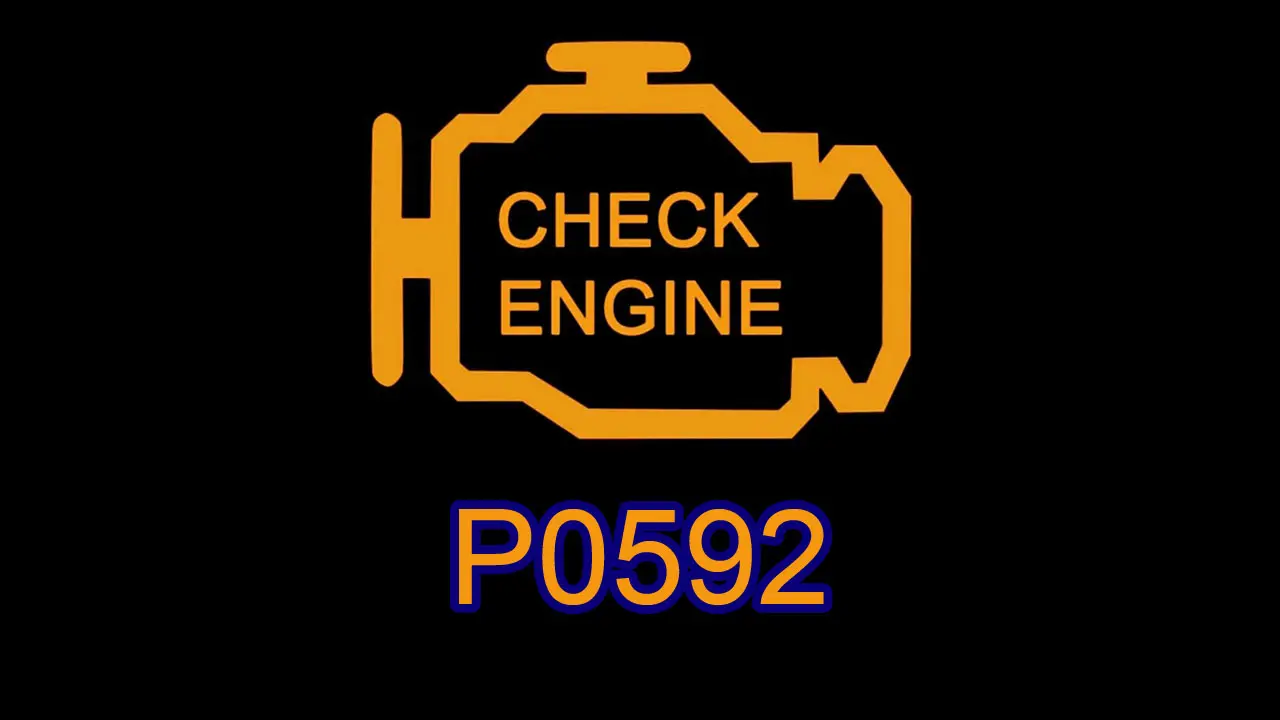
P0592 Cruise Control Multi-Function Input "B" Circuit Low
The P0592 – Cruise Control Multi-Function Input "B" Circuit Low diagnostic trouble code (DTC) indicates that the engine control module (ECM/PCM) has detected an electrically low signal in the cruise control multi-function input "B" circuit.
In simple terms:
The ECM/PCM is receiving a lower-than-expected voltage from one of the cruise-control switch input circuits.
This code generally points toward the cruise-control switch/input circuit, rather than the cruise-control actuator itself.
What Does P0592 Mean?
The cruise-control system uses switches to tell the ECM/PCM what the driver wants to do.
Depending on the vehicle, the multifunction switch may provide commands such as:
-
ON
-
OFF
-
SET
-
RESUME
-
CANCEL
-
COAST
-
ACCELERATE
These commands are transmitted to the ECM through one or more electrical circuits.
With P0592, the ECM has detected that the "B" input circuit voltage is lower than the expected range.
A simplified system looks like this:
Cruise-control switch → Input "B" circuit → ECM/PCM → Cruise-control system
If the electrical signal becomes abnormally low:
Low input signal → ECM detects circuit fault → P0592 stored
What Does "Circuit Low" Mean?
The word Low describes the electrical signal detected by the ECM/PCM.
It does not mean that the cruise-control speed is too low.
It also does not necessarily mean that the cruise-control system has a mechanical problem.
The ECM expects specific electrical values from the multifunction switch circuit. If the voltage falls below the expected threshold, P0592 may be stored.
Possible causes include:
-
Short to ground
-
Faulty cruise-control switch
-
Damaged wiring
-
Corroded connector
-
Poor terminal connection
-
Incorrect resistance in the switch circuit
-
Internal switch failure
-
ECM input-circuit problem
What Is the Cruise Control Multi-Function Input?
The cruise-control multifunction input is the electrical interface through which the ECM receives commands from the driver's cruise-control controls.
Some vehicles use individual wires for different switch functions.
Other vehicles use a resistor-based switch circuit, where different buttons produce different voltage levels.
For example, the ECM may distinguish between several commands based on different resistance values:
Button A → Voltage level 1
Button B → Voltage level 2
Button C → Voltage level 3
Button D → Voltage level 4
If the circuit is pulled too low, the ECM may interpret the signal as invalid and store P0592.
What Causes P0592?
Common causes include:
-
Faulty cruise-control multifunction switch
-
Short circuit to ground
-
Damaged switch wiring
-
Broken or chafed wire
-
Corroded connector
-
Loose terminal
-
Damaged steering-wheel wiring
-
Faulty clockspring
-
Incorrect switch resistance
-
Water or liquid contamination
-
Aftermarket electrical modifications
-
ECM/PCM input circuit failure
Can a Bad Cruise Control Switch Cause P0592?
Yes.
The cruise-control switch is one of the first components that should be inspected.
Internal switch contacts can become worn, contaminated or electrically defective.
This can cause the ECM to receive an incorrect voltage.
Possible symptoms include:
-
Some buttons work while others do not
-
Cruise control cannot be activated
-
SET does not work
-
RESUME does not work
-
CANCEL behaves incorrectly
-
Cruise control works intermittently
Can a Short to Ground Cause P0592?
Yes.
A short to ground can pull the input signal below its expected voltage.
The simplified fault is:
Cruise-control input wire → Short to ground → Signal voltage drops → ECM detects low input → P0592
This is particularly important when the code appears continuously.
Can a Broken Wire Cause P0592?
Potentially.
A completely open circuit may generate a different DTC depending on the vehicle's circuit design.
However, partially broken wiring or a damaged connection can create an abnormal low signal.
The wiring should therefore be tested rather than judged only by visual inspection.
Can a Bad Connector Cause P0592?
Yes.
A poor connection can alter the voltage seen by the ECM.
Inspect for:
-
Corrosion
-
Loose terminals
-
Bent pins
-
Damaged connector housing
-
Water intrusion
-
Poor terminal tension
Can the Steering Wheel Clockspring Cause P0592?
Yes, on vehicles where the cruise-control switches are mounted on the steering wheel.
The clockspring allows electrical circuits to pass between the stationary steering column and the rotating steering wheel.
If a clockspring circuit becomes damaged, the ECM may lose or receive an incorrect cruise-control switch signal.
Other possible symptoms may include problems with:
-
Steering-wheel buttons
-
Horn
-
Airbag circuit
Airbag-related faults should be diagnosed carefully and safely because the airbag system is a safety-critical system.
Can a Low Battery Cause P0592?
Possibly, but it is not the most direct cause.
Low system voltage can cause abnormal electronic behavior.
Check:
-
Battery condition
-
Charging voltage
-
Battery terminals
-
Ground connections
If system voltage is normal and P0592 is the only code present, concentrate on the cruise-control input circuit.
Can a Bad Ground Cause P0592?
Potentially.
A poor ground can affect switch reference and signal circuits.
The relevant ECM and switch grounds should be checked according to the manufacturer's wiring diagram.
Can an Aftermarket Device Cause P0592?
Yes, potentially.
Improperly installed aftermarket equipment can interfere with steering-wheel or cruise-control circuits.
Consider recent installation of:
-
Remote-start systems
-
Alarm systems
-
Audio equipment
-
Steering-wheel controls
-
Aftermarket cruise-control components
-
Other electrical accessories
Symptoms of P0592
Possible symptoms include:
-
Check Engine Light
-
Cruise control not working
-
Cruise control working intermittently
-
SET button not working
-
RESUME button not working
-
CANCEL button not working
-
Incorrect cruise-control response
-
Cruise-control warning light
-
Multiple steering-wheel control problems
Normal accelerator operation is usually unaffected.
Can P0592 Affect Normal Driving?
Usually, no.
The accelerator pedal and normal engine operation can continue to work normally.
The ECM may simply disable the cruise-control system as a safety precaution.
However, the exact fail-safe strategy varies by vehicle.
Can P0592 Cause Unintended Acceleration?
A properly functioning vehicle should not accelerate unexpectedly because of P0592.
Nevertheless, because cruise control is involved, an abnormal switch input should be repaired rather than ignored.
If the vehicle shows unexpected throttle behavior, do not use cruise control until the problem is diagnosed.
Can P0592 Cause Limp Mode?
Usually not by itself.
P0592 primarily concerns the cruise-control input circuit.
However, if additional throttle-control, communication or power-related DTCs are present, the vehicle may activate other protective strategies.
Is P0592 a Serious Code?
Usually, P0592 is not an immediate engine-threatening fault.
The most common consequence is that cruise control becomes unavailable.
However, it should still be repaired because the fault concerns a driver-operated control input.
Can You Drive With P0592?
If normal acceleration and braking work correctly and there are no other serious faults, the vehicle can generally be driven without using cruise control.
Until the fault is repaired, avoid relying on the cruise-control system.
How Is P0592 Diagnosed?
A systematic electrical diagnosis is recommended.
1. Scan all modules
Record P0592 and any related DTCs.
Look for:
-
Other cruise-control codes
-
Steering-wheel control codes
-
Communication codes
-
Voltage-related codes
-
Brake-switch codes
2. Check cruise-control operation
Determine which buttons work and which do not.
3. Inspect the switch
Check the multifunction cruise-control switch for physical damage or contamination.
4. Inspect the wiring
Look for:
-
Short to ground
-
Chafing
-
Broken wires
-
Pinched wires
-
Previous repairs
5. Inspect connectors
Check the switch and ECM connectors.
6. Check the clockspring
If the controls are mounted on the steering wheel, test the relevant circuits through the clockspring.
7. Measure input voltage
Compare the "B" input signal with manufacturer specifications.
8. Test switch resistance
If the system uses a resistor-based switch circuit, measure the resistance for each switch position.
9. Check the circuit for shorts
Verify that the signal is not unintentionally connected to ground.
10. Check ECM input
If the switch and wiring are correct, test the ECM input circuit.
How Do You Test a Cruise-Control Switch?
The exact procedure varies between vehicles.
A technician may use a multimeter to check:
-
Continuity
-
Resistance
-
Reference voltage
-
Signal voltage
On resistor-based systems, each button can produce a specific resistance or voltage.
The important point is:
Do not assume a universal resistance value.
The correct values must come from the vehicle's wiring diagram or service information.
What If P0592 Appears When a Specific Button Is Pressed?
This can be a very useful diagnostic clue.
For example, if P0592 appears only when pressing SET, the corresponding switch contact or resistor circuit should be investigated.
If the fault appears regardless of which button is pressed, inspect the common wiring, connector, power/reference supply and ECM input.
What If P0592 Is Intermittent?
An intermittent P0592 can be caused by:
-
Loose connector
-
Poor terminal tension
-
Steering-wheel movement
-
Clockspring wiring
-
Harness chafing
-
Corrosion
-
Internal switch wear
A technician may need to monitor the input signal while operating the steering-wheel controls and moving the relevant harness.
What If P0592 Appears With P0593?
P0593 – Cruise Control Multi-Function Input "B" Circuit High
P0592 represents a low input condition, while P0593 represents a high input condition.
If both codes appear at different times, an intermittent switch or wiring problem should be considered.
Pay particular attention to:
-
Switch contacts
-
Wiring
-
Connectors
-
Clockspring
-
Reference voltage
What If P0592 Appears With P0594?
P0594 – Cruise Control Servo Control Circuit/Open
This code concerns the cruise-control servo circuit rather than the multifunction input.
If both codes are present, investigate whether there is a common:
-
Power supply
-
Ground
-
Wiring problem
-
Module problem
What If P0592 Appears With P0595?
P0595 – Cruise Control Servo Control Circuit Low
P0592 concerns the multifunction input, while P0595 concerns the servo control circuit.
Having both codes may indicate a broader cruise-control electrical problem.
What If P0592 Appears With P0596?
P0596 – Cruise Control Servo Control Circuit High
If P0592 and P0596 occur together, both the driver-input side and the actuator-control side should be investigated.
Do not assume that replacing the multifunction switch alone will solve both codes.
Can P0592 Be Caused by the ECM?
Yes, but ECM failure should be considered only after the external circuit has been verified.
The ECM receives and interprets the cruise-control switch signal.
A faulty ECM input circuit could potentially misinterpret a normal signal.
Before condemning the ECM, check:
Switch → Connector → Wiring → Clockspring → Reference/signal voltage → Ground → ECM input
Can P0592 Be Caused by the BCM?
On some vehicles, the steering-wheel controls may communicate through another module, such as a BCM, before the information reaches the ECM.
Therefore, vehicle-specific network architecture matters.
If communication codes are also present, inspect the relevant module and network.
Can P0592 Be Cleared With an OBD Scanner?
Yes, but clearing the code does not repair the underlying electrical problem.
The correct procedure is:
Diagnose → Repair → Clear DTC → Cycle ignition → Test cruise-control switches → Road test → Rescan
If the input circuit remains abnormal, P0592 will return.
Common Diagnostic Mistakes
Replacing the cruise-control switch immediately
The problem may be in the wiring or clockspring.
Assuming "Low" means low cruise-control speed
It refers to the electrical input signal.
Ignoring the clockspring
On steering-wheel-mounted controls, the clockspring is part of the electrical path.
Not checking switch resistance
Some vehicles use resistor-based switch inputs, making resistance testing particularly useful.
Replacing the ECM too early
An ECM input failure is possible but much less common than a switch, connector or wiring fault.
How Is P0592 Repaired?
Depending on the confirmed cause, repairs may include:
-
Replacing the cruise-control multifunction switch
-
Repairing damaged wiring
-
Repairing a short to ground
-
Repairing connector terminals
-
Cleaning corrosion
-
Replacing damaged connectors
-
Repairing or replacing the clockspring
-
Correcting aftermarket wiring
-
Repairing the ECM input circuit
-
Replacing the ECM when proven defective
How Do You Clear P0592?
After repairing the fault:
Check battery voltage → Inspect cruise-control switch → Inspect connector → Inspect clockspring if applicable → Test wiring → Measure signal voltage → Test switch resistance → Verify ECM input → Clear DTC → Test all cruise-control functions → Road test → Rescan
The code should remain cleared when the input circuit operates within the manufacturer's specified range.
Final Thoughts on P0592
P0592 – Cruise Control Multi-Function Input "B" Circuit Low indicates that the ECM/PCM has detected an electrically low signal from the cruise-control multifunction input "B" circuit.
The most important areas to check are:
Cruise-control switch → Clockspring → Connector → Wiring → Signal/reference voltage → ECM input
The most common diagnostic mistake is to assume that P0592 automatically means the cruise-control switch needs to be replaced. A short to ground, damaged steering-wheel wiring, corroded connector or faulty clockspring can produce the same type of problem.
If the switch, wiring and associated circuits are confirmed to be correct but the ECM continues to detect an abnormally low input, the ECM/PCM input circuit may require further testing.