TR
TR EN
EN

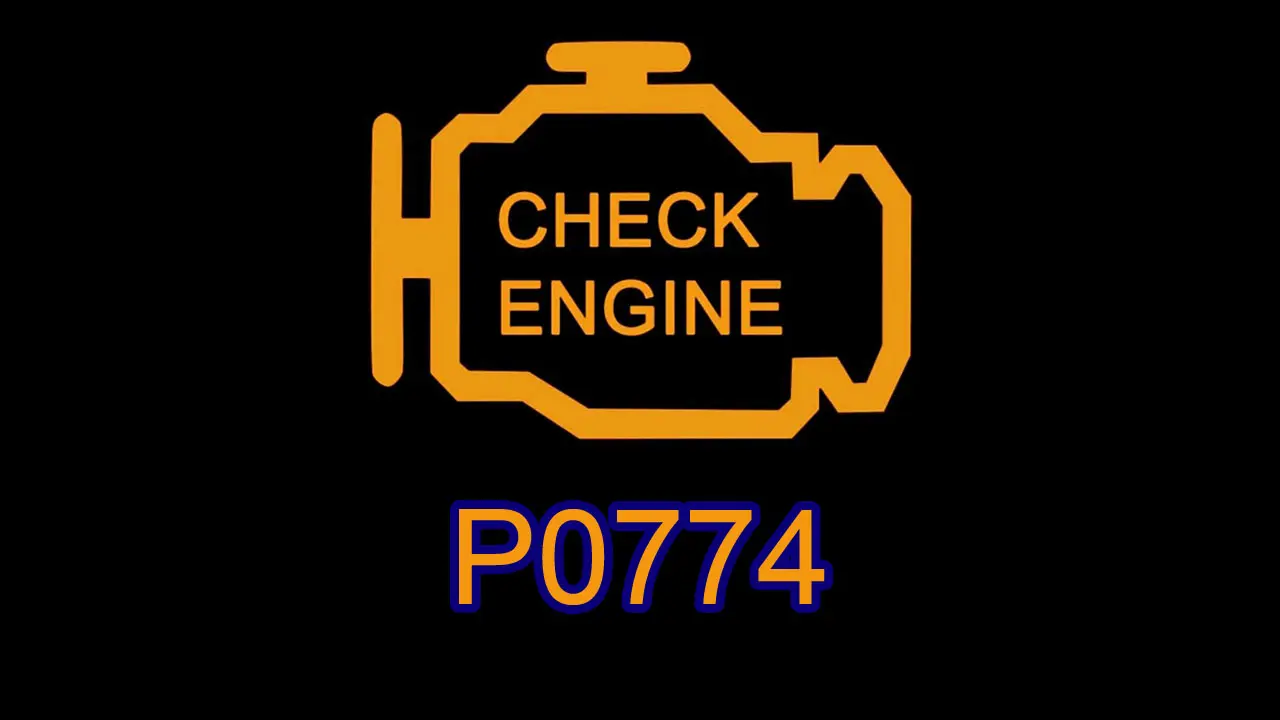
P0774 Shift Solenoid "E" Intermittent
The P0774 trouble code is an OBD-II diagnostic trouble code related to Shift Solenoid "E" in an automatic transmission.
P0774 – Shift Solenoid "E" Intermittent
This code means that the Transmission Control Module (TCM) has detected an intermittent problem with the electrical circuit or operation of Shift Solenoid "E".
Shift Solenoid "E" is used to control transmission fluid flow inside the hydraulic system. By opening and closing at specific times, the solenoid helps the transmission select and maintain the appropriate gear.
The word "intermittent" is important. The solenoid or its circuit may work normally at one moment and then become abnormal under certain conditions, such as vibration, heat, moisture or changes in transmission fluid pressure.
P0774 does not automatically mean that Shift Solenoid "E" itself is defective. The problem can also be caused by wiring, connectors, low transmission fluid, contaminated fluid, a valve-body problem or a TCM control issue.
What Does P0774 Mean?
An automatic transmission uses several electronically controlled solenoids to direct transmission fluid through different hydraulic circuits.
The TCM determines when each solenoid should be activated or deactivated.
The basic process is:
TCM → Shift Solenoid "E" → Hydraulic Fluid Flow → Clutch/Brake Application → Gear Change
When the TCM detects that the electrical signal or operating behavior of Shift Solenoid "E" is inconsistent, it may store:
P0774 – Shift Solenoid "E" Intermittent
This means the fault may not be present continuously.
What Is Shift Solenoid "E"?
Shift Solenoid "E" is an electrically controlled hydraulic valve.
Its exact function varies according to the transmission design.
Depending on the transmission, it can control hydraulic fluid flow to:
-
Clutch packs
-
Brake bands
-
Hydraulic circuits
-
Shift valves
-
Gear-selection mechanisms
The TCM uses information from several sensors to determine when the solenoid should operate.
These inputs can include:
-
Vehicle speed
-
Engine RPM
-
Throttle position
-
Engine load
-
Transmission temperature
-
Input shaft speed
-
Output shaft speed
-
Selected gear
Because transmission designs differ, the exact gear controlled by Solenoid "E" cannot be determined from P0774 alone.
What Does "Intermittent" Mean?
An intermittent fault occurs when the system operates correctly sometimes and incorrectly at other times.
For example, the solenoid might operate normally when the transmission is cold but malfunction after the transmission becomes hot.
A connector may also make good electrical contact under normal conditions but lose contact because of vibration.
Possible intermittent conditions include:
-
Loose connector
-
Corroded terminal
-
Partially broken wire
-
Heat-damaged wiring
-
Internal solenoid failure
-
Fluid contamination
-
Mechanical sticking
-
TCM control interruption
This is why P0774 can sometimes be difficult to reproduce in a workshop.
Symptoms of P0774
Possible symptoms include:
-
Check Engine Light
-
Transmission warning light
-
Harsh shifting
-
Delayed shifting
-
Erratic shifting
-
Transmission slipping
-
Shift flare
-
Failure to engage a particular gear
-
Transmission stuck in one gear
-
Unexpected downshifting
-
Delayed Drive or Reverse engagement
-
Limp mode
-
Reduced acceleration
-
Poor fuel economy
-
Increased transmission temperature
Some vehicles may store P0774 with little or no noticeable change in driving behavior.
What Does P0774 Feel Like While Driving?
The driving symptoms depend on the function of Shift Solenoid "E" in the particular transmission.
Erratic gear changes
The transmission may shift normally and then suddenly shift differently.
Harsh shifting
A malfunctioning solenoid can cause incorrect hydraulic timing.
Delayed shifting
The transmission may hesitate before changing gears.
Transmission slipping
An incorrectly controlled hydraulic circuit may prevent a clutch from engaging properly.
Shift flare
Engine RPM may rise temporarily during a gear change.
Limp mode
The TCM may restrict gear selection when it detects unreliable solenoid operation.
Common Causes of P0774
Faulty Shift Solenoid "E"
The solenoid may have an internal electrical or mechanical fault.
Loose electrical connector
A poor connection can cause the signal to disappear intermittently.
Corroded connector terminals
Corrosion can increase electrical resistance and disrupt the solenoid circuit.
Damaged wiring
A partially broken or chafed wire may cause an intermittent open or short circuit.
Heat-damaged wiring
Transmission wiring can be exposed to high temperatures, which can degrade insulation.
Transmission-fluid contamination
Dirty fluid can cause the solenoid or hydraulic valves to stick.
Low transmission fluid
Low fluid can cause hydraulic-pressure problems and abnormal shifting.
Incorrect transmission fluid
Using fluid that does not meet the transmission manufacturer's specification can affect hydraulic operation.
Valve-body problem
A sticking valve can interfere with the hydraulic circuit controlled by Solenoid "E".
Hydraulic pressure problem
Incorrect line pressure can prevent the transmission from responding correctly.
Speed sensor problem
Incorrect input or output speed information can cause the TCM to make incorrect shift decisions.
Low battery or charging voltage
Unstable system voltage can affect electronic transmission controls.
TCM fault
A problem with the TCM's solenoid driver circuit can cause intermittent control.
Is P0774 Serious?
P0774 can become a serious transmission problem if ignored.
An intermittent solenoid problem can initially seem minor because the transmission may operate normally most of the time.
However, if the solenoid begins malfunctioning more frequently, it can result in:
-
Incorrect clutch engagement
-
Harsh shifts
-
Clutch slip
-
Increased transmission temperature
-
Internal transmission wear
The severity depends on the symptoms and the role of Solenoid "E" in the specific transmission.
Can You Drive With P0774?
If the transmission is operating normally and the problem is only occasional, a short drive to a repair facility may be possible.
Continued driving should be avoided if you experience:
-
Severe slipping
-
Violent shifting
-
Loss of gears
-
Transmission overheating
-
Repeated limp mode
-
Loss of drive
Because the fault is intermittent, it can become more frequent without warning.
P0774 vs. P0773
These codes both concern Shift Solenoid "E".
P0773 – Shift Solenoid "E" Electrical
The control system detects an electrical problem in the Solenoid "E" circuit.
P0774 – Shift Solenoid "E" Intermittent
The problem occurs intermittently rather than being continuously present.
If P0774 is present, particular attention should be given to wiring, connectors and conditions that cause the fault to appear and disappear.
P0774 vs. P0772
P0772 – Shift Solenoid "E" Stuck On
The system detects that Solenoid "E" is stuck in an active condition.
P0774 – Shift Solenoid "E" Intermittent
The solenoid or its circuit works inconsistently.
These are different fault conditions even though they involve the same solenoid.
P0774 vs. P0771
P0771 – Shift Solenoid "E" Performance / Stuck Off
The solenoid is not operating within the expected range or is behaving as though it is stuck off.
P0774 – Shift Solenoid "E" Intermittent
The fault appears and disappears.
P0774 vs. P0770
P0770 – Shift Solenoid "E" Malfunction
A general malfunction involving Solenoid "E".
P0774 – Shift Solenoid "E" Intermittent
The system has specifically detected an intermittent condition.
Where Is Shift Solenoid "E"?
The location depends on the transmission.
It may be:
-
Inside the transmission
-
Mounted in the valve body
-
Beneath the transmission pan
-
Integrated into a solenoid pack
-
Integrated into a mechatronic assembly
Some transmissions permit individual solenoid replacement, while others require servicing a complete solenoid pack or valve-body assembly.
How to Diagnose P0774
Because the problem is intermittent, diagnosis should focus on identifying when and why the fault occurs.
1. Scan the TCM
Use a professional diagnostic scanner to retrieve:
-
Stored codes
-
Pending codes
-
Freeze-frame data
-
Transmission temperature
-
Solenoid commands
-
Commanded gear
-
Actual gear
-
Input speed
-
Output speed
Check for other transmission codes.
2. Examine freeze-frame data
Find out exactly when P0774 was recorded.
Pay attention to:
-
Vehicle speed
-
Engine RPM
-
Transmission temperature
-
Throttle position
-
Engine load
-
Selected gear
-
Battery voltage
If the code occurs only at high transmission temperatures, a heat-related problem becomes more likely.
3. Inspect the connector
Check the Shift Solenoid "E" connector for:
-
Corrosion
-
Loose terminals
-
Bent pins
-
Water intrusion
-
Fluid contamination
-
Damaged locking mechanisms
4. Inspect the wiring harness
Look for:
-
Broken wires
-
Chafing
-
Pinched wiring
-
Melted insulation
-
High resistance
-
Poor previous repairs
Pay special attention to areas where the harness can move or contact hot components.
5. Perform a wiggle test
An intermittent electrical fault can sometimes be reproduced by carefully moving the wiring harness or connector while monitoring the circuit.
If the signal changes unexpectedly, the wiring or connector requires further investigation.
6. Test solenoid resistance
Measure Shift Solenoid "E" resistance according to the manufacturer's specifications.
If possible, test under different temperature conditions.
A solenoid may test correctly when cold but develop an abnormal electrical condition when hot.
7. Monitor the control signal
Use suitable diagnostic equipment to determine whether the TCM is sending a stable command to Solenoid "E".
An oscilloscope can be useful for systems using PWM control.
8. Check battery and charging voltage
Verify that the vehicle's electrical system maintains stable voltage.
Low or unstable voltage can cause transmission-control problems.
9. Check transmission fluid
Inspect:
-
Fluid level
-
Fluid condition
-
Fluid specification
-
Burnt odor
-
Metal particles
-
Clutch material
Heavy contamination may indicate internal transmission wear.
10. Check the solenoid mechanically
If electrical testing is normal, determine whether the solenoid can move and respond correctly to commands.
A solenoid can have normal electrical resistance while still sticking mechanically.
11. Check hydraulic pressure
If appropriate for the transmission, measure hydraulic pressure according to the manufacturer's procedure.
Compare actual pressure with specification.
12. Inspect the valve body
If the electrical system and solenoid appear normal, inspect the valve body for:
-
Sticking valves
-
Contamination
-
Worn valve bores
-
Restricted passages
-
Internal hydraulic leakage
13. Check transmission speed signals
Monitor:
-
Input shaft speed
-
Intermediate shaft speed where applicable
-
Output shaft speed
Incorrect speed information can cause the TCM to incorrectly evaluate transmission operation.
14. Check for temperature-related behavior
Drive the vehicle until the transmission reaches normal operating temperature.
If the fault appears only when hot, investigate:
-
Solenoid coil behavior
-
Wiring resistance
-
Connector expansion
-
Hydraulic-fluid viscosity
-
Valve-body operation
15. Evaluate the TCM
If the solenoid, wiring, connectors and hydraulic system are verified, the TCM's driver circuit may require further testing.
Can a Bad Shift Solenoid Cause P0774?
Yes.
Shift Solenoid "E" may develop an internal electrical fault or become mechanically stuck.
Because the code is intermittent, the fault may only appear under specific conditions.
Can Wiring Cause P0774?
Yes.
Wiring is especially important with an intermittent code.
A partially broken wire can maintain continuity most of the time but lose contact when the vehicle vibrates.
Can a Bad Connector Cause P0774?
Yes.
A loose or corroded terminal can cause the electrical signal to disappear temporarily.
Can Dirty Transmission Fluid Cause P0774?
Yes.
Contaminated fluid can cause a solenoid or valve to stick intermittently.
Can Low Transmission Fluid Cause P0774?
Yes, potentially.
Low fluid can affect hydraulic pressure and transmission operation.
However, low fluid should not be assumed to be the only cause of an intermittent solenoid code.
Can a Bad Valve Body Cause P0774?
Yes.
A sticking valve can cause an intermittent hydraulic problem even when the solenoid's electrical circuit is functioning correctly.
Can a Speed Sensor Cause P0774?
Potentially.
Incorrect speed information can cause the TCM to misinterpret transmission operation.
Other sensor-related codes may also be present if this is the underlying problem.
Can P0774 Cause Harsh Shifting?
Yes.
If Solenoid "E" controls a hydraulic circuit involved in gear changes, intermittent operation can cause inconsistent or harsh shifts.
Can P0774 Cause Transmission Slipping?
Yes.
Incorrect hydraulic control can prevent an internal clutch from applying correctly.
Can P0774 Cause Limp Mode?
Yes.
The TCM may activate a fail-safe strategy when it cannot reliably control the transmission.
Can P0774 Cause Transmission Overheating?
Yes, potentially.
Repeated incorrect clutch engagement or slipping can generate additional heat.
Can P0774 Damage the Transmission?
It can if the vehicle continues operating with significant slipping or incorrect shifting.
An intermittent fault may become more frequent and eventually lead to increased clutch wear.
Can P0774 Be Caused by the TCM?
Yes, although this is usually considered after the solenoid and external circuit have been tested.
Before replacing the TCM, verify:
Connector → Wiring → Solenoid → Fluid → Hydraulic System → Valve Body → TCM
Common Diagnostic Mistakes With P0774
Replacing the solenoid immediately
The actual problem may be a loose connector or damaged wiring.
Testing only when the transmission is cold
The fault may appear only at operating temperature.
Checking only resistance
A solenoid can pass a resistance test and still have a mechanical problem.
Ignoring the connector
Loose terminals are particularly important with intermittent faults.
Ignoring the wiring harness
Vibration and heat can cause intermittent electrical problems.
Ignoring transmission fluid
Contaminated fluid can affect solenoid and valve-body operation.
Replacing the valve body without testing
The electrical circuit should be verified first.
Replacing the TCM too early
The TCM should normally be considered after other causes have been eliminated.
What Is the Correct Repair for P0774?
The repair depends on the confirmed cause.
Possible repairs include:
-
Repairing damaged wiring
-
Replacing damaged connector terminals
-
Repairing loose connections
-
Cleaning corrosion
-
Repairing water intrusion
-
Replacing Shift Solenoid "E"
-
Correcting transmission-fluid level
-
Repairing transmission-fluid leaks
-
Replacing contaminated or incorrect transmission fluid
-
Servicing the valve body
-
Repairing hydraulic pressure problems
-
Replacing a faulty speed sensor when confirmed as the cause
-
Repairing internal transmission components
-
Updating TCM software
-
Reprogramming the TCM
-
Replacing the TCM when confirmed defective
How to Test the Vehicle After Repair
Because P0774 is an intermittent code, the vehicle should be tested under the conditions that originally caused the fault.
Verify that:
-
Shift Solenoid "E" responds consistently
-
The electrical signal remains stable
-
Connector terminals remain secure
-
Wiring maintains continuity
-
Transmission shifts correctly
-
No slipping occurs
-
Engine RPM behaves normally during shifts
-
Transmission temperature remains normal
-
Limp mode does not activate
-
No additional transmission codes appear
-
P0774 does not return
The road test should include different speeds, throttle positions and transmission temperatures.
Frequently Asked Questions About P0774
What does P0774 mean?
P0774 means the transmission control system has detected an intermittent problem involving Shift Solenoid "E" or its electrical/control circuit.
Does P0774 mean the solenoid is bad?
No. Wiring, connectors, transmission fluid, the valve body, hydraulic problems and the TCM can also cause the code.
Why is P0774 difficult to diagnose?
Because the problem may disappear before testing begins.
Can a loose connector cause P0774?
Yes.
Can damaged wiring cause P0774?
Yes.
Can dirty transmission fluid cause P0774?
Yes.
Can low transmission fluid cause P0774?
It can contribute to abnormal transmission operation.
Can a bad valve body cause P0774?
Yes.
Can P0774 cause harsh shifting?
Yes.
Can P0774 cause transmission slipping?
Yes.
Can P0774 cause limp mode?
Yes, depending on the vehicle.
Can P0774 cause overheating?
Yes, particularly if the malfunction causes repeated clutch slip.
Can I drive with P0774?
A short trip to a repair facility may be possible if the transmission is operating normally. Severe slipping, overheating, violent shifting or loss of drive are reasons to avoid continued driving.
Does P0774 mean the transmission needs replacement?
No. The electrical circuit, solenoid and hydraulic system should be diagnosed before considering major transmission repair.
Final Thoughts on P0774
P0774 – Shift Solenoid "E" Intermittent indicates that the transmission control system has detected an intermittent problem with Shift Solenoid "E" or its control circuit.
Because the fault comes and goes, the diagnosis should focus on wiring, connectors, temperature changes, vibration and conditions that cause the solenoid to stop responding correctly.
A useful diagnostic sequence is:
Scan Data → Freeze-Frame → Connector → Wiring → Solenoid → Transmission Fluid → Hydraulic Pressure → Valve Body → Internal Components → TCM
The most important point is that P0774 does not automatically mean that Shift Solenoid "E" needs to be replaced. An intermittent electrical connection or wiring fault can produce the same code, while a contaminated valve body can create similar hydraulic symptoms.
If the vehicle is slipping, shifting violently or entering limp mode, continued driving should be avoided until the transmission is properly diagnosed.