TR
TR EN
EN

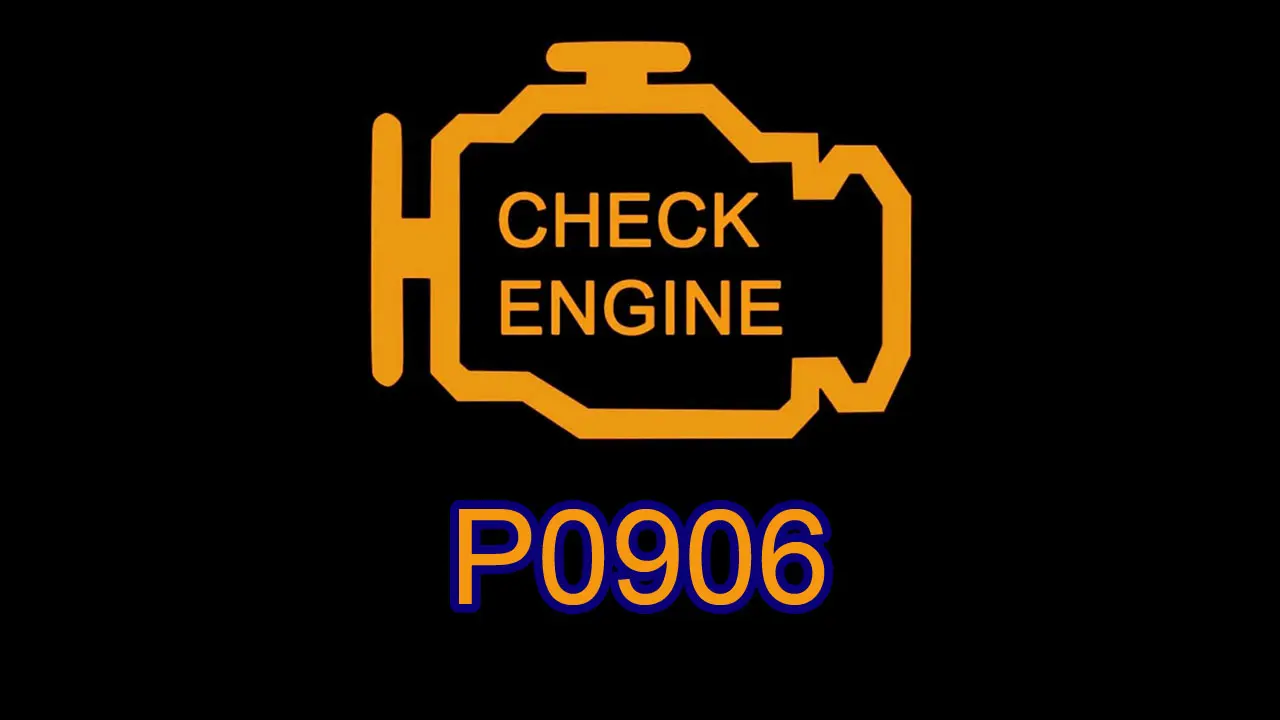
P0906 Gate Select Position Circuit Low
The P0906 – Gate Select Position Circuit Low diagnostic trouble code (DTC) indicates that the transmission control system has detected an abnormally low electrical signal or voltage in the gate select position circuit.
The gate select position circuit provides the transmission control module (TCM) with information about the position of the transmission's gate-selection mechanism. Depending on the transmission design, this information may come from a gate position sensor, selector position sensor, transmission position sensor, or an integrated actuator position sensor.
When P0906 is stored, the control module is receiving a signal that is lower than the expected value. This can be caused by a sensor problem, wiring fault, poor connection, short to ground, insufficient reference voltage, or a mechanical problem affecting the sensor's position.
P0906 is primarily a position-sensing circuit fault. It does not automatically mean that the transmission has internal mechanical damage.
What Does P0906 Mean?
The code can be understood as follows:
-
P – Powertrain-related fault
-
09 – Transmission-related system
-
06 – Specific fault identification
-
Gate Select Position – The position of the transmission's gate-selection mechanism
-
Circuit Low – The control module is detecting a signal or voltage below the expected range
In simple terms:
P0906 means that the transmission control module is receiving an abnormally low signal from the gate select position circuit.
The exact voltage threshold and circuit design vary between manufacturers.
What Is the Gate Select Position?
Some electronically controlled transmissions use a selector mechanism that must move between different gates before a specific gear can be engaged.
The transmission control system needs to know where this mechanism is located.
For example, a simplified sequence can be:
Gear request → Gate actuator moves → Gate position sensor detects movement → TCM confirms position → Gear actuator engages the selected gear
The position sensor is therefore important because the control module needs confirmation that the selector has reached the correct location.
If the sensor signal becomes too low, the TCM may no longer be able to determine the gate position accurately.
What Is a Gate Select Position Sensor?
A gate select position sensor detects the physical position of the gear-selection mechanism.
Depending on the vehicle, it may be:
-
A dedicated position sensor
-
A potentiometer
-
A Hall-effect sensor
-
A magnetic position sensor
-
An integrated actuator position sensor
-
Part of a mechatronic assembly
The sensor typically receives a reference voltage and ground and sends a variable signal back to the control module.
The control module uses this signal to determine the selector's position.
Symptoms of P0906
The symptoms depend on the transmission design and how low the circuit signal has become.
Common symptoms include:
Difficulty selecting gears
The transmission may struggle to select the requested gear.
Some gears become unavailable
The vehicle may lose access to certain gears while others continue to work.
Delayed gear engagement
There may be a delay between selecting a gear and actual engagement.
Transmission remains in Neutral
If the TCM cannot determine the gate position, it may prevent gear engagement.
Vehicle cannot move
In severe cases, the transmission may be unable to select a usable gear.
Transmission enters limp mode
The transmission may restrict gear operation to protect itself.
Harsh shifting
Incorrect position information can result in abnormal gear-selection behavior.
Incorrect gear indication
The dashboard may display a gear position that does not correspond correctly to the actual transmission state.
Check Engine Light
The malfunction indicator lamp may illuminate.
Transmission warning message
A transmission or drivetrain warning may appear.
Intermittent gear-selection problems
The fault may appear only under certain conditions, such as vibration, temperature changes, or movement of the wiring harness.
Is P0906 a Serious Problem?
P0906 can be a serious transmission-control problem.
The transmission must know the position of the gate-selection mechanism before it can reliably execute gear changes.
If the position signal becomes unreliable, the control module may disable certain transmission functions.
The problem is particularly serious if:
-
The vehicle cannot select gears
-
The transmission remains in Neutral
-
The wrong gear is selected
-
The vehicle loses drive
-
Limp mode is activated
-
The gear indicator is incorrect
If the vehicle continues to operate normally and the code is intermittent, the fault may be electrical and relatively easy to correct. Nevertheless, it should be diagnosed before it develops into a complete gear-selection failure.
Most Common Causes of P0906
Several faults can cause a low gate-position signal.
Faulty gate select position sensor
The sensor may have an internal electrical failure and produce a signal lower than expected.
Short to ground
A signal wire may be contacting ground.
This can pull the sensor signal down and is one of the important causes to check for a circuit-low code.
Damaged wiring
The wiring may be:
-
Broken
-
Chafed
-
Pinched
-
Melted
-
Corroded
-
Contaminated
-
Improperly repaired
Poor connector connection
A loose or damaged connector can interfere with the sensor signal.
Corroded terminals
Corrosion can increase circuit resistance or alter the sensor signal.
Low reference voltage
If the sensor's reference supply is missing or too low, the output signal may also be incorrect.
Poor sensor ground
A damaged ground circuit can cause abnormal sensor readings.
Mechanical misalignment
If the sensor is incorrectly positioned relative to the gate-selection mechanism, its output may not correspond to the actual position.
Damaged gate mechanism
A mechanically damaged or stuck selector can cause the sensor to remain at an abnormal position.
Faulty gate select actuator
If the actuator cannot move the mechanism correctly, the position sensor may report an unexpected value.
Mechatronic problem
On transmissions where the sensor is integrated into the mechatronic unit, an internal mechatronic fault may cause P0906.
TCM fault
A control-module problem is possible, although it should normally be considered after the sensor and circuit have been tested.
Can a Short to Ground Cause P0906?
Yes.
A short to ground is one of the most important possibilities with a circuit-low code.
If the sensor signal wire is unintentionally connected to ground, the signal voltage can fall below the expected range.
Possible causes include:
-
Damaged insulation
-
Pinched wiring
-
Chafing against the transmission
-
Incorrect previous wiring repair
-
Water contamination
-
Connector damage
The signal wire should therefore be tested for an unintended connection to ground.
Can a Bad Sensor Cause P0906?
Yes.
An internal failure of the gate select position sensor can produce a signal that is consistently or intermittently too low.
A failing sensor may also show:
-
Unstable output
-
Sudden voltage drops
-
Dead spots
-
Incorrect position readings
-
Temperature-dependent behavior
Comparing the sensor's output against the manufacturer's specifications is important before replacing it.
Can a Bad Connector Cause P0906?
Yes.
A connector problem can create an abnormal sensor signal.
Pay particular attention to:
-
Corroded terminals
-
Loose terminals
-
Bent pins
-
Water intrusion
-
Terminals pushed backward
-
Damaged connector locks
Transmission connectors are often exposed to heat, vibration, moisture, and contamination.
Can Low Battery Voltage Cause P0906?
It can contribute to transmission electronic faults, but it is not usually the direct cause of a gate-position circuit-low fault.
If the vehicle has a weak battery or charging-system problem, the control module and sensors may not operate correctly.
This is especially worth checking when P0906 appears together with several other low-voltage or communication codes.
If system voltage is normal and only P0906 returns, the gate position circuit should receive more attention.
How Is P0906 Diagnosed?
A proper diagnosis should determine whether the low signal is caused by the sensor, wiring, reference voltage, ground, connector, actuator, mechanical mechanism, or control module.
1. Scan all control modules
Retrieve all stored and pending DTCs.
Record:
-
P0906
-
Other gear-position codes
-
Actuator codes
-
Transmission codes
-
Communication codes
-
Voltage-related codes
-
Freeze-frame information
Other codes may identify the source of the problem.
2. Check transmission operation
Observe what happens when different gears are selected.
Determine whether the transmission:
-
Selects all gears
-
Loses specific gears
-
Remains in Neutral
-
Enters limp mode
-
Delays gear engagement
-
Shifts harshly
3. Check live data
Use a diagnostic scanner to observe the gate position reported by the TCM.
Compare the reported position with the actual selector position.
If the physical mechanism is in one position while the TCM reports another, further investigation is required.
4. Inspect the sensor
Look for physical damage, contamination, incorrect installation, or signs of mechanical interference.
5. Inspect the wiring
Check the complete circuit for:
-
Broken wires
-
Chafing
-
Pinching
-
Corrosion
-
Melted insulation
-
Poor previous repairs
6. Inspect the connector
Check all terminals for proper contact and signs of corrosion or moisture.
7. Measure reference voltage
If the sensor uses a reference-voltage circuit, verify that the specified reference voltage is present.
8. Check the sensor ground
A reliable ground is essential for accurate sensor operation.
9. Check the signal voltage
Measure the sensor output and compare it with manufacturer specifications.
The signal should change appropriately as the gate-selection mechanism moves.
10. Check for a short to ground
The signal circuit should be tested for an unintended connection to ground.
11. Check actuator operation
If the gate actuator is not moving the mechanism correctly, the position sensor may be reporting an abnormal value even though the sensor itself is functional.
How to Test P0906 With a Multimeter
A multimeter can be useful when diagnosing this code.
The exact test procedure must follow the vehicle's wiring diagram.
Check the reference voltage.
Confirm that the sensor receives the specified reference voltage.
Check sensor ground.
Verify the ground circuit and perform a voltage-drop test where appropriate.
Check signal voltage.
Measure the sensor's output.
If the signal is significantly lower than the specified range, investigate the sensor and wiring.
Check for a short to ground.
Test the signal circuit for an unintended connection to ground.
Check wiring continuity.
Verify the wiring between the sensor and the control module.
Move the selector while monitoring voltage.
A healthy position sensor should generally produce a predictable change in signal as the mechanism moves.
An erratic, flat, or excessively low signal can indicate a sensor or circuit problem.
Why Live Data Is Important
P0906 is a position-related fault, so live data can be particularly useful.
A scan tool may show parameters such as:
-
Gate position
-
Selector position
-
Requested gear
-
Actual gear
-
Actuator position
-
Sensor voltage
For example, the physical gate may be in the expected position while the TCM reports an implausible position.
That points toward a sensor or signal problem.
If the reported position changes correctly but the transmission still cannot select gears, attention may need to shift toward the actuator or mechanical mechanism.
Can P0906 Be Caused by a Mechanical Problem?
Yes.
Although P0906 is an electrical circuit-low code, the electrical signal can be affected by mechanical movement.
For example, a mechanically stuck gate mechanism may prevent the position sensor from reaching its normal operating range.
Possible mechanical causes include:
-
Bent selector components
-
Worn selector mechanism
-
Binding
-
Damaged actuator gears
-
Internal transmission damage
-
Foreign material
-
Incorrect assembly
This is why electrical testing should be combined with observation of the actual mechanical movement.
Can P0906 Cause Limp Mode?
Yes.
If the TCM cannot reliably determine the gate position, it may consider gear selection unsafe or unpredictable.
The control system may therefore activate a fail-safe mode.
Possible results include:
-
Limited gear availability
-
Fixed gear operation
-
Neutral operation
-
Reduced transmission functionality
-
Transmission warning messages
Can P0906 Prevent the Vehicle From Moving?
Yes, potentially.
If the transmission cannot confirm the correct gate position, it may prevent gear engagement.
The vehicle may remain in Neutral or fail to engage forward or reverse.
The exact behavior depends on the transmission architecture.
Can P0906 Cause the Wrong Gear to Be Selected?
It can contribute to incorrect gear-selection behavior if the control module is receiving an incorrect gate-position signal.
Because incorrect gear selection can create a safety risk, the vehicle should not be driven normally if the transmission is selecting unexpected gears.
Can P0906 Damage the Transmission?
P0906 does not automatically indicate internal transmission damage.
However, incorrect position information can cause abnormal transmission operation.
If the vehicle is repeatedly attempting to select gears, shifting violently, or entering and leaving gears unexpectedly, continued driving should be avoided until the problem is diagnosed.
Common Diagnostic Mistakes
One of the most common mistakes is replacing the position sensor without checking the wiring.
A short to ground can produce exactly the type of low signal associated with P0906.
Other common mistakes include:
Ignoring the reference voltage
A faulty reference supply can affect the sensor signal.
Ignoring the sensor ground
A poor ground can cause abnormal readings.
Replacing the TCM too early
The control module should generally be considered only after the sensor and circuit have been verified.
Testing only resistance
A sensor may pass a resistance test but produce an incorrect signal during operation.
Ignoring mechanical movement
The sensor may be working correctly while the gate mechanism is mechanically stuck.
Ignoring live data
Comparing actual movement with the position reported by the TCM can significantly speed up diagnosis.
How Is P0906 Repaired?
The correct repair depends on the confirmed cause.
Possible repairs include:
-
Repairing damaged wiring
-
Replacing damaged wiring
-
Repairing connector terminals
-
Replacing damaged connectors
-
Repairing the sensor ground
-
Restoring the correct reference voltage
-
Repairing a short to ground
-
Replacing the gate select position sensor
-
Correcting sensor alignment
-
Repairing the gate-selection mechanism
-
Replacing a faulty actuator
-
Repairing or replacing a mechatronic assembly
-
Updating transmission software
-
Replacing the TCM when conclusively diagnosed as faulty
The key is to repair the actual cause rather than replacing parts based only on the DTC.
Does the Sensor Need Calibration?
Some vehicles require the gate select position sensor or related actuator to be initialized, adapted, or calibrated after replacement.
Depending on the transmission, the procedure may be called:
-
Gear position calibration
-
Selector adaptation
-
Actuator initialization
-
Basic settings
-
Transmission relearn
A diagnostic scan tool may be required.
If calibration is required and not performed, the transmission may continue to report incorrect gate positions.
Can You Drive With P0906?
It depends on the symptoms.
If the transmission continues to select every gear correctly and the fault is intermittent, the vehicle may remain temporarily drivable.
However, the fault should be diagnosed as soon as possible.
Driving should be avoided if:
-
The transmission cannot select gears
-
The vehicle remains in Neutral
-
The wrong gear is selected
-
Gear selection is unpredictable
-
Limp mode is active
-
The vehicle repeatedly loses drive
-
Severe shifting occurs
A position-sensing problem can become a complete gear-selection problem without much warning.
How to Reset P0906
After repairing the underlying problem, P0906 can be cleared with an appropriate diagnostic scanner.
A good repair procedure is:
Diagnose → Repair → Calibrate if required → Clear DTC → Test all gear positions → Test drive → Rescan
If P0906 returns immediately, the low signal condition has probably not been corrected.
Disconnecting the battery is not a proper method of repairing the fault and may erase learned transmission values or other useful diagnostic information on some vehicles.
Does P0906 Mean the Transmission Needs Replacement?
No.
P0906 does not automatically mean that the transmission needs to be rebuilt or replaced.
The code concerns the gate select position circuit, so the following should be checked first:
-
Gate position sensor
-
Reference voltage
-
Sensor ground
-
Signal circuit
-
Wiring
-
Connectors
-
Short to ground
-
Gate select actuator
-
Mechanical selector mechanism
-
Mechatronic unit
-
TCM
-
Calibration and software
Only after diagnostic testing confirms genuine internal transmission or mechatronic damage should major transmission repair be considered.
P0906 vs. P0907 and P0908
The related gate select position codes describe different electrical conditions.
P0906 – Gate Select Position Circuit Low
The control module detects a signal that is lower than the expected range.
P0907 – Gate Select Position Circuit High
The control module detects a signal that is higher than the expected range.
P0908 – Gate Select Position Circuit Intermittent
The position circuit operates inconsistently or the signal intermittently becomes invalid.
These distinctions are useful because the diagnostic direction changes.
With P0906, checking for a short to ground, low reference voltage, poor ground, and a faulty sensor is particularly important.
With P0907, an excessively high signal or short to power becomes more relevant.
With P0908, intermittent wiring, connector problems, sensor dead spots, and vibration-related faults deserve particular attention.
Final Thoughts on P0906
P0906 – Gate Select Position Circuit Low indicates that the transmission control system is receiving an abnormally low electrical signal from the circuit used to determine the position of the gate-selection mechanism.
The most common possibilities include a faulty position sensor, short to ground, damaged wiring, corroded connectors, low reference voltage, poor sensor ground, sensor misalignment, actuator problems, or a mechanical issue affecting the selector mechanism.
The code does not automatically mean that the transmission is internally damaged.
A proper diagnosis should begin by checking the sensor's reference voltage, ground, and signal circuit. The wiring and connectors should then be inspected for damage or shorts. Live data can be especially valuable because it allows the technician to compare the actual gate position with the position recognized by the transmission control module.
If the vehicle has lost gears, remains in Neutral, enters limp mode, or selects an unexpected gear, P0906 should be treated as an important fault and diagnosed before continuing normal driving.