TR
TR EN
EN

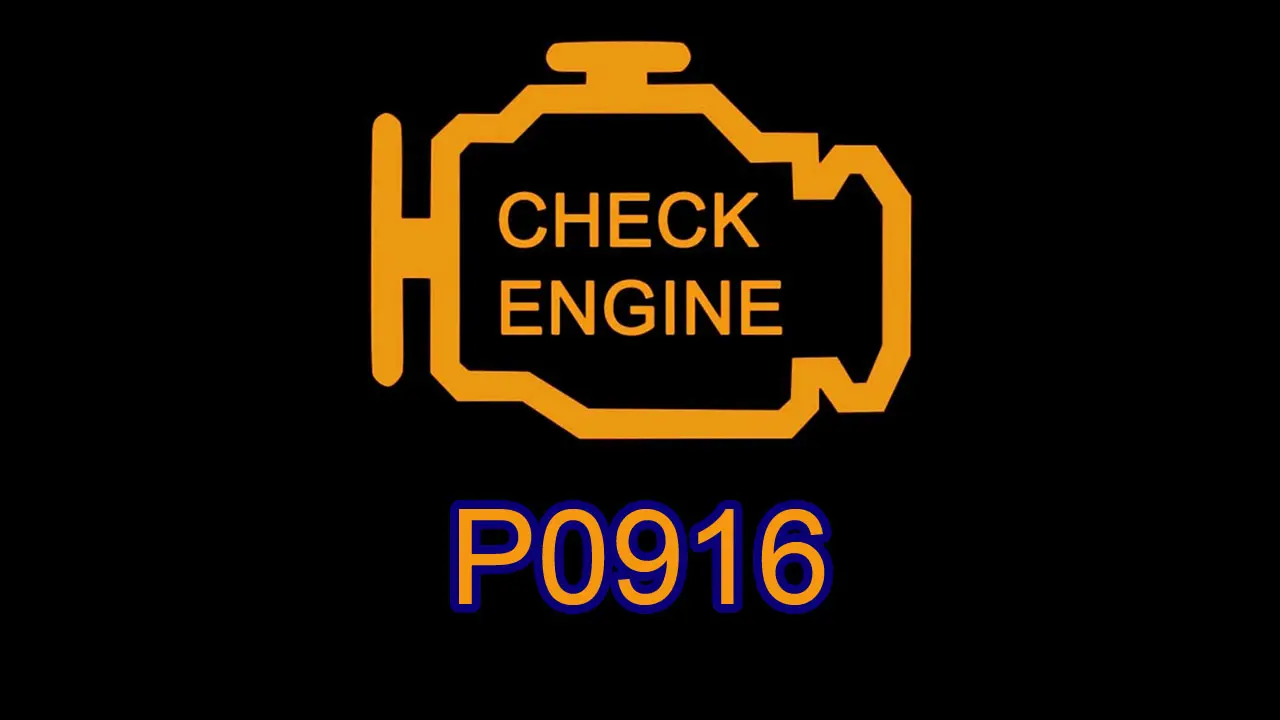
P0916 Gear Shift Position Circuit Low
The P0916 trouble code is an OBD-II diagnostic trouble code related to the gear shift position sensing circuit.
P0916 – Gear Shift Position Circuit Low
This code means that the transmission control module (TCM) has detected a lower-than-expected voltage or electrical signal from the gear shift position circuit.
The gear shift position circuit provides the transmission control system with information about the position of the gear selector or internal shift mechanism. The TCM uses this information to determine whether the transmission is in the position requested by the driver.
When the signal falls below the expected range, the TCM can store P0916.
Possible causes include:
-
Faulty gear shift position sensor
-
Short to ground
-
Open or high-resistance circuit
-
Damaged wiring
-
Corroded electrical connector
-
Loose connector terminal
-
Poor sensor ground
-
Incorrect reference voltage
-
Faulty gear shift actuator
-
Damaged internal transmission wiring
-
Mechatronic unit fault
-
Low system voltage
-
Transmission control module fault
The exact components involved depend on the vehicle and transmission design.
What Does P0916 Mean?
P0916 – Gear Shift Position Circuit Low
Modern electronically controlled transmissions need accurate information about the position of the gear-selection mechanism.
A simplified system can be represented as:
Gear selector / shift mechanism → Position sensor → Wiring → TCM
On some transmissions, the system can be more complex:
TCM → Shift actuator → Selector mechanism → Position sensor → TCM
The position sensor produces an electrical signal that changes according to the position of the selector mechanism.
If the TCM detects that this signal is below the expected value, it can store P0916.
A typical fault could look like:
Signal wire shorted to ground → Voltage drops → TCM detects low signal → P0916
However, a short to ground is not the only possible cause. A poor ground, damaged wiring, sensor failure or reference-voltage problem can also create a low signal.
What Does “Circuit Low” Mean?
The word “Low” refers to the electrical signal, not to the physical gear position.
It does not mean:
-
Low transmission fluid
-
Low hydraulic pressure
-
Low engine RPM
-
Low gear
It means that the voltage or signal being monitored by the TCM is lower than the expected range.
For example:
Normal signal → Signal drops below specification → TCM detects low input → P0916
What Is the Gear Shift Position Sensor?
The gear shift position sensor tells the transmission control system where the gear selector or internal shift mechanism is located.
Depending on the vehicle, it may be called:
-
Gear shift position sensor
-
Gear selector position sensor
-
Transmission range sensor
-
Selector position sensor
-
Gear position sensor
The sensor may be located:
-
On the transmission
-
On the selector mechanism
-
Inside the transmission
-
Inside the mechatronic unit
-
Near the gear selector
Because transmission designs differ, the exact sensor and circuit should be identified using the vehicle-specific wiring diagram.
Symptoms of P0916
Symptoms can range from minor gear-selection problems to complete loss of drive.
Possible symptoms include:
-
Check Engine Light
-
Transmission warning light
-
Incorrect gear indication
-
Gear selector indicator showing the wrong position
-
Difficulty selecting gears
-
Delayed gear engagement
-
Harsh shifting
-
Transmission stuck in one gear
-
Transmission entering limp mode
-
Difficulty selecting Drive
-
Difficulty selecting Reverse
-
Intermittent loss of drive
-
Vehicle refusing to move
-
Unexpected gear selection
In some vehicles, the engine may start normally but the transmission may not allow the vehicle to move because the TCM cannot reliably determine the selector position.
Common Causes of P0916
Faulty gear shift position sensor
A defective position sensor may produce a signal that is lower than expected.
Internal sensor failure can cause the output to remain below the normal operating range.
Short to ground
A signal wire that contacts ground can pull the circuit voltage down.
For example:
Signal wire → Short to ground → Low voltage → P0916
This is an important possibility when diagnosing a circuit-low code.
Poor sensor ground
A sensor's ground circuit is just as important as its power and signal circuits.
A damaged or high-resistance ground can cause incorrect sensor operation.
Damaged wiring
Transmission wiring can be affected by:
-
Heat
-
Vibration
-
Moisture
-
Chafing
-
Transmission movement
-
Previous repairs
A partially damaged wire can create excessive resistance and reduce the signal reaching the TCM.
Corroded connector
Corrosion can increase resistance and interfere with the sensor signal.
Loose terminal
A terminal that does not maintain proper contact can cause an abnormal or intermittent low signal.
Reference voltage problem
If the sensor depends on a reference voltage from the TCM, an incorrect reference supply can affect the output signal.
Faulty shift actuator
If the actuator cannot position the selector correctly, the position sensor may report an abnormal position.
Internal transmission wiring problem
Some transmissions place the position sensor and related wiring inside the transmission or mechatronic assembly.
An internal wiring fault can therefore cause P0916.
Mechatronic unit fault
A malfunctioning mechatronic unit can affect both gear-position sensing and actuator operation.
Low system voltage
A weak battery or charging-system problem can affect electronically controlled transmissions.
If P0916 appears together with multiple unrelated electronic codes, check the vehicle's power supply.
Transmission control module fault
A TCM problem is possible but should normally be considered only after the sensor and its complete circuit have been tested.
Can Low Transmission Fluid Cause P0916?
Low transmission fluid does not normally cause a low electrical signal in the gear shift position circuit.
However, low fluid can cause:
-
Delayed gear engagement
-
Slipping
-
Hydraulic pressure problems
-
Mechatronic problems
-
Transmission overheating
Therefore, fluid level should still be checked where applicable, but P0916 should primarily be investigated as an electrical and gear-position sensing problem.
Can Dirty Transmission Fluid Cause P0916?
Dirty transmission fluid can contribute to:
-
Valve sticking
-
Hydraulic restrictions
-
Mechatronic problems
-
Poor gear engagement
However, contaminated fluid does not normally cause a low electrical signal by itself.
The sensor, wiring, connector and power/ground circuits should be tested before concluding that the fluid is responsible.
Is P0916 a Serious Transmission Problem?
P0916 can be a serious problem if the low position signal prevents the TCM from correctly determining the transmission's gear position.
However, the code does not automatically mean that the transmission has suffered internal damage.
A simple electrical fault such as:
-
Shorted wire
-
Corroded connector
-
Poor ground
-
Faulty sensor
can produce P0916.
If the vehicle cannot reliably select Drive or Reverse, the problem should be addressed immediately.
Can You Drive With P0916?
If the transmission operates normally and only the warning light is present, it may be possible to drive carefully to a repair facility.
However, continued driving is not recommended if the gear-position information is clearly incorrect.
Do not continue driving if:
-
Drive cannot be selected
-
Reverse cannot be selected
-
The gear indicator is incorrect
-
The vehicle enters limp mode
-
The transmission shifts unpredictably
-
The vehicle unexpectedly goes into Neutral
-
Severe shifting occurs
-
The vehicle loses drive
P0916 vs. P0917
These codes describe opposite electrical conditions.
P0916 – Gear Shift Position Circuit Low
The TCM detects a lower-than-expected signal.
P0917 – Gear Shift Position Circuit High
The TCM detects a higher-than-expected signal.
In simple terms:
P0916 → Signal too low
P0917 → Signal too high
P0916 vs. P0918
P0916 – Gear Shift Position Circuit Low
Indicates a low electrical signal.
P0918 – Gear Shift Position Circuit Intermittent
Indicates an unstable or intermittently lost signal.
An intermittent fault can sometimes produce low readings, but the diagnostic conditions are different.
P0916 vs. P0919
P0916 – Gear Shift Position Circuit Low
Specifically identifies a low electrical signal in the gear-position circuit.
P0919 – Gear Shift Position Control Error
Indicates a broader problem with controlling or achieving the required gear position.
P0919 can involve electrical, actuator or mechanical problems, while P0916 more specifically points toward the position circuit signal.
How to Diagnose P0916
Because P0916 is a circuit-low code, the electrical circuit should be carefully tested.
1. Scan all transmission modules
Use a professional diagnostic scanner to check:
-
TCM
-
PCM
-
Transmission-related modules
-
Mechatronic system
Record all stored and pending codes.
Other codes can help identify a common electrical problem.
2. Check freeze-frame data
Review:
-
Vehicle speed
-
Engine RPM
-
Transmission temperature
-
Selected gear
-
Commanded gear
-
Actual gear
-
Battery voltage
This can show when the low signal was detected.
3. Monitor live gear-position data
Observe the position sensor while selecting different gear positions.
Look for:
-
Signal remaining too low
-
Signal not changing
-
Incorrect position readings
-
Sudden signal drops
4. Compare commanded and actual gear position
Compare:
Commanded position
with
Actual position
If the TCM requests one position but the sensor reports another, investigate the sensor, actuator and mechanical selector.
5. Identify the correct circuit
Use the vehicle-specific wiring diagram to identify:
-
Sensor power
-
Reference voltage
-
Ground
-
Signal wire
-
Connector pin locations
6. Inspect the connector
Check for:
-
Corrosion
-
Bent pins
-
Loose terminals
-
Moisture
-
Oil contamination
-
Damaged locking mechanisms
7. Inspect the wiring
Look for:
-
Short to ground
-
Chafing
-
Pinched wiring
-
Broken conductors
-
Melted insulation
-
Previous repairs
8. Check sensor power and reference voltage
Verify the supply according to manufacturer specifications.
An incorrect supply can cause a low sensor output.
9. Check the sensor ground
A poor ground can create an incorrect sensor signal.
A voltage-drop test can be more useful than a simple continuity check when looking for a high-resistance ground.
10. Test the signal wire
Measure the sensor output and compare it with the manufacturer's specifications.
A signal that remains excessively low regardless of selector position can indicate:
-
Short to ground
-
Sensor failure
-
Reference-voltage problem
-
Ground problem
11. Test for a short to ground
Inspect the signal circuit for unintended contact with ground.
12. Test the position sensor
Move the selector through its operating range and observe whether the sensor signal changes correctly.
A sensor that remains low or produces an incorrect signal may need replacement.
13. Check the shift actuator
If the sensor operates correctly but the selector does not physically reach the requested position, investigate the actuator and mechanical mechanism.
14. Check battery and charging voltage
If several electronic transmission codes are stored, verify:
-
Battery condition
-
Charging voltage
-
Main grounds
-
Transmission power supply
15. Perform gear-position adaptation
If required, perform the manufacturer-specified calibration or relearn procedure.
16. Check transmission fluid
Inspect the fluid level and condition where applicable.
17. Inspect the mechanical selector mechanism
If the electrical system is functioning correctly, investigate:
-
Selector shaft
-
Shift forks
-
Selector rails
-
Gear engagement mechanism
-
Other internal components
18. Evaluate the TCM
The TCM should generally be considered only after the sensor, wiring, power, ground, actuator and mechanical components have been properly tested.
Why P0916 Can Be Misdiagnosed
A common mistake is assuming:
“Circuit Low = Bad sensor.”
That is not necessarily correct.
For example:
Signal wire shorted to ground → Low signal → P0916
The sensor may be completely functional.
Another possibility is:
Poor sensor ground → Incorrect sensor output → P0916
Again, replacing the sensor would not solve the actual problem.
This is why the complete circuit must be tested.
P0916 After Transmission Repair
If P0916 appeared immediately after transmission work, inspect all components that were disconnected or moved.
Pay particular attention to:
-
Gear position sensor
-
Sensor connector
-
Shift actuator
-
Mechatronic connectors
-
Internal transmission wiring
-
External harness
-
Ground connections
Also check whether the transmission requires a gear-position calibration or adaptation procedure after the repair.
P0916 After Transmission Replacement
If P0916 appears after transmission replacement, check:
-
Correct transmission installation
-
Sensor compatibility
-
Actuator compatibility
-
Wiring connections
-
Connector seating
-
TCM communication
-
Software configuration
-
Gear-position calibration
-
Required adaptation procedures
Do not automatically assume that the replacement transmission is defective.
Can P0916 Damage the Transmission?
P0916 itself does not automatically mean that internal transmission damage has occurred.
The code identifies a low electrical signal in the gear-position circuit.
However, if the incorrect signal causes the transmission to select or attempt to engage the wrong gear, additional wear can occur.
Possible secondary effects include:
-
Clutch wear
-
Harsh engagement
-
Incorrect gear selection
-
Excessive heat
-
Actuator stress
Prompt diagnosis is therefore recommended.
Common Diagnostic Mistakes With P0916
Common mistakes include:
-
Replacing the sensor immediately
-
Ignoring the sensor ground
-
Failing to test for a short to ground
-
Ignoring reference voltage
-
Not checking the connector
-
Replacing the TCM without testing the circuit
-
Failing to compare commanded and actual gear position
-
Ignoring mechanical selector problems
-
Assuming low transmission fluid caused the code
-
Replacing the complete transmission unnecessarily
What Is the Correct Repair for P0916?
The correct repair depends on the confirmed cause.
Possible repairs include:
-
Replacing the gear shift position sensor
-
Repairing a short to ground
-
Repairing damaged wiring
-
Replacing damaged connector terminals
-
Cleaning or repairing corroded connectors
-
Correcting sensor ground problems
-
Correcting the reference-voltage circuit
-
Replacing a faulty shift actuator
-
Repairing the mechanical selector mechanism
-
Repairing or replacing the mechatronic unit
-
Correcting transmission fluid level where applicable
-
Performing gear-position calibration
-
Performing actuator adaptation
-
Performing transmission relearn procedures
-
Updating TCM software where applicable
-
Replacing the TCM only after it has been conclusively diagnosed as faulty
After the repair, clear the trouble code and perform a complete road test.
The transmission should be checked through its normal gear-selection range to confirm that the position signal and actual gear selection are correct.
Final Thoughts on P0916
P0916 – Gear Shift Position Circuit Low indicates that the transmission control system has detected a lower-than-expected electrical signal from the gear shift position circuit.
The most important areas to investigate are the gear shift position sensor, signal wiring, sensor ground, reference-voltage circuit, connectors and transmission control system. A short to ground is another important possibility.
The correct diagnostic approach is to monitor live gear-position data, compare commanded and actual positions, inspect the wiring and connectors, verify sensor power and ground, test the signal circuit and then evaluate the actuator and mechanical selector mechanism if necessary.
P0916 does not automatically mean that the complete transmission needs to be replaced. A faulty sensor, shorted wire, poor ground or damaged connector can produce the code and may be repaired without replacing the transmission.