TR
TR EN
EN

What Is a Rocker Arm? What Are the Symptoms of Rocker Arm Failure?
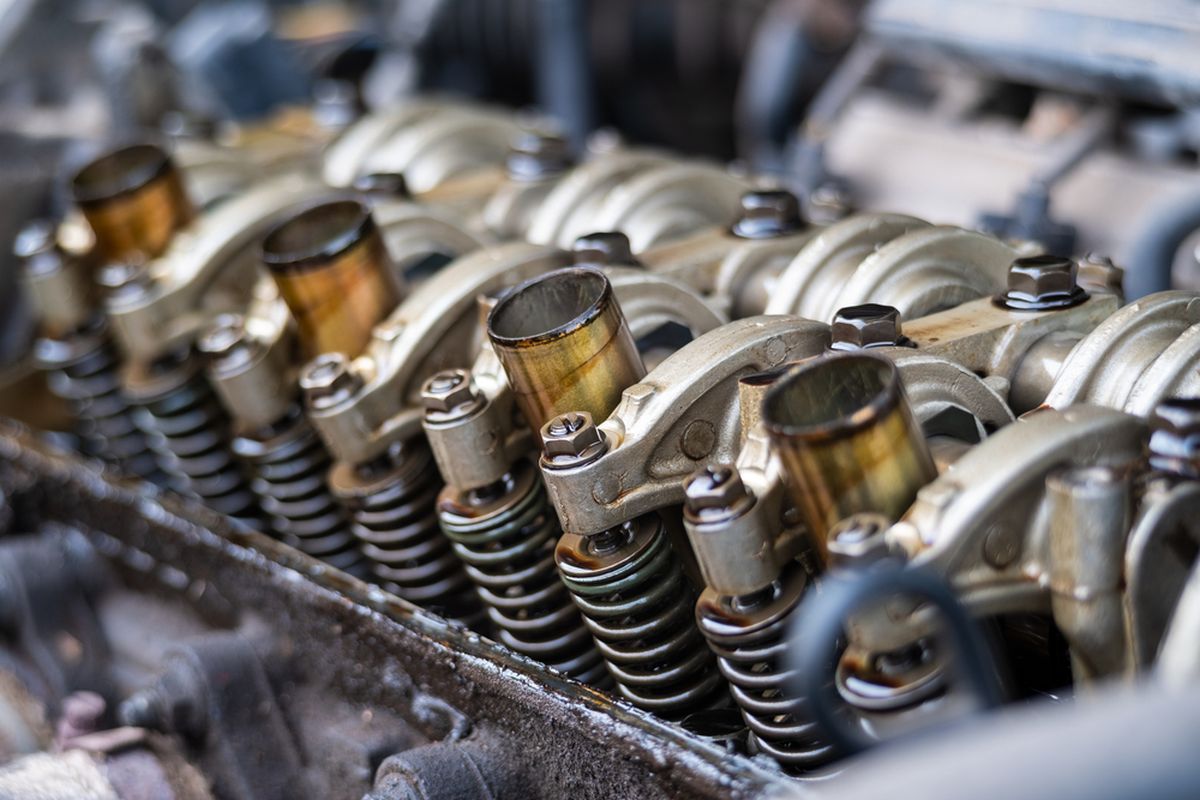
The rocker arm is an important component in the valvetrain of an internal combustion engine. It transfers the movement generated by the camshaft to the engine valves, allowing the intake and exhaust valves to open and close at the correct time.
Although rocker arms are relatively small components, their failure can have a significant effect on engine operation. A damaged or worn rocker arm may cause abnormal engine noise, misfires, loss of power, rough running, and in severe cases, valve-train or engine damage.
What Is a Rocker Arm?

A rocker arm is a pivoting mechanical lever located between the camshaft or another valvetrain component and the valve.
Depending on the engine design, the rocker arm can be operated directly by a camshaft, a pushrod, or through other valvetrain components.
Its basic job is simple:
Camshaft movement → rocker arm movement → valve opens
When the camshaft rotates, the cam lobe pushes against the rocker arm or an associated component. The rocker arm pivots and pushes the valve downward, opening it against the force of the valve spring.
When the cam lobe moves away, the valve spring returns the valve toward its seat.
This process happens thousands of times per minute while the engine is running.
What Does a Rocker Arm Do?
The rocker arm is part of the system responsible for controlling the opening and closing of the valves.
The valves have very precise timing requirements. The intake valve must open to allow the air-fuel mixture or air to enter the cylinder, while the exhaust valve must open to allow combustion gases to leave.
A rocker arm therefore contributes to:
-
Valve opening and closing
-
Correct valve timing
-
Proper intake air flow
-
Proper exhaust gas flow
-
Efficient combustion
-
Engine performance
-
Smooth engine operation
Even a relatively small amount of wear can affect how far or how accurately a valve opens.
Where Is the Rocker Arm Located?
Rocker arms are generally located in the upper portion of the cylinder head or valvetrain, depending on the engine design.
On many engines, they can be found underneath the valve cover.
However, not every engine uses conventional rocker arms. Modern engines can use different valvetrain arrangements, including direct-acting bucket tappets, finger followers, hydraulic lash adjusters, and other designs.
For this reason, the exact location and appearance of a rocker arm depend on the engine.
What Causes Rocker Arm Failure?
Rocker arms operate under considerable mechanical stress. They repeatedly transfer force between the camshaft and valves, often at high engine speeds and temperatures.
Several problems can eventually cause rocker arm failure.
Lack of lubrication
Engine oil is critical for rocker arm and valvetrain lubrication. Low oil level, degraded oil, incorrect oil viscosity, or restricted oil passages can increase friction and wear.
Poor-quality or contaminated engine oil
Sludge, dirt, and metal particles in the oil can accelerate wear on the rocker arm and other valvetrain components.
Excessive engine wear
As the engine accumulates mileage, contact surfaces can gradually wear. Wear may develop on the rocker arm, camshaft, valve tip, or hydraulic lash adjuster.
Hydraulic lash adjuster problems
In engines equipped with hydraulic lash adjustment, a faulty or collapsed hydraulic lifter can prevent the rocker arm from operating correctly.
High engine speed
Repeated operation at very high RPM increases the mechanical loads placed on the valvetrain.
Valve-train problems
A damaged valve spring, camshaft, valve, or timing component can place abnormal forces on the rocker arm.
Manufacturing or material defects
Although less common, a defective rocker arm can crack, deform, or wear prematurely.
What Are the Symptoms of a Faulty Rocker Arm?
Rocker arm failure can produce several different symptoms. The exact symptoms depend on whether the rocker arm is simply worn, damaged, displaced, or completely broken.
One of the most recognizable symptoms is abnormal ticking or tapping noise from the upper part of the engine.
Other symptoms may include:
-
Engine ticking or tapping
-
Rough idle
-
Engine misfire
-
Loss of power
-
Poor acceleration
-
Engine vibration
-
Check Engine Light
-
Increased fuel consumption
-
Difficulty starting
-
Reduced engine performance
-
Abnormal exhaust sound
-
Low compression in one cylinder
-
Severe engine noise in advanced cases
Ticking or Tapping Noise From the Engine
A damaged rocker arm can produce a noticeable ticking, tapping, or clicking sound from the cylinder-head area.
The noise may become more obvious when the engine is warm or when engine speed increases.
However, a ticking noise does not automatically mean the rocker arm is faulty.
Similar sounds can be caused by:
-
Hydraulic lifters
-
Valve clearance
-
Camshaft wear
-
Low engine oil pressure
-
Fuel injectors
-
Timing-chain components
-
Valve springs
-
Other valvetrain components
Therefore, the location and behavior of the noise are important during diagnosis.
Engine Misfire
A damaged rocker arm may prevent a valve from opening correctly.
If an intake or exhaust valve does not move through its intended range, the affected cylinder may not operate properly. This can cause a misfire.
The engine may feel:
-
Rough
-
Shaky
-
Uneven at idle
-
Weak during acceleration
A diagnostic scanner may also record a cylinder-specific misfire code such as P0301, P0302, P0303, or P0304, depending on which cylinder is affected.
However, a misfire code alone does not prove that the rocker arm is defective. Ignition, fuel, compression, and valve-train problems can all cause similar codes.
Loss of Engine Power
If a rocker arm fails and a valve cannot open properly, the cylinder cannot breathe normally.
For example, if an intake valve does not open sufficiently, the cylinder may receive less air than intended. If an exhaust valve is affected, combustion gases may not leave the cylinder properly.
The result can be:
-
Weak acceleration
-
Reduced high-RPM performance
-
Poor throttle response
-
Reduced engine power
The problem may become more noticeable under heavy acceleration.
Rough Idle and Engine Vibration
A rocker arm problem affecting one cylinder can cause uneven combustion.
At idle, the engine may shake or vibrate noticeably. The RPM may fluctuate, and the engine may sound uneven.
As engine speed increases, the vibration can change depending on how severely the affected valve is malfunctioning.
Check Engine Light
A rocker arm problem can trigger the Check Engine Light if it causes a misfire or affects valve timing or valve operation.
Possible diagnostic codes can include misfire-related codes or variable valve timing-related codes, depending on the engine design.
It is important not to diagnose a rocker arm based solely on the fault code. The code identifies a system or symptom, not necessarily the failed mechanical component.
Difficulty Starting the Engine
A severely damaged rocker arm can affect valve movement enough to reduce cylinder compression.
If one or more valves cannot operate correctly, the engine may have difficulty starting.
In an extreme failure, the engine may crank but fail to start because the affected cylinder cannot achieve the required compression and air exchange.
Low Compression in One Cylinder
Compression testing can provide useful information when a rocker arm or other valvetrain component is suspected.
If a valve is not opening or closing correctly, the affected cylinder may show abnormal compression.
A compression test or leak-down test can help determine whether the problem is related to:
-
Valves
-
Valve seats
-
Piston rings
-
Head gasket
-
Valvetrain components
This is one reason compression testing can be useful before replacing expensive parts.
Can a Rocker Arm Break?
Yes. A rocker arm can crack, deform, become displaced, or break completely.
A broken rocker arm may cause a sudden change in engine operation.
Depending on the engine design, a broken rocker arm can result in:
-
Severe misfire
-
Loss of power
-
Loud valvetrain noise
-
Valve movement problems
-
Low compression
-
Engine failure to start
In some engines, a rocker arm can become displaced from its normal position without completely breaking.
Can a Rocker Arm Cause a Misfire?
Yes.
If the rocker arm cannot correctly transfer camshaft movement to the valve, the affected cylinder may not receive the correct amount of air or may not be able to expel exhaust gases properly.
This can create a mechanical misfire.
However, a misfire should not automatically be blamed on the rocker arm. Ignition coils, spark plugs, injectors, compression, timing, and fuel delivery should also be checked.
Rocker Arm Failure vs. Hydraulic Lifter Failure
These two problems can produce very similar symptoms.
Both may cause:
-
Ticking noise
-
Rough running
-
Misfire
-
Loss of power
-
Abnormal valve movement
A hydraulic lifter problem can also prevent a rocker arm from receiving the correct mechanical movement.
For this reason, diagnosing the complete valvetrain is more reliable than replacing the rocker arm based only on engine noise.
How Is a Faulty Rocker Arm Diagnosed?
Diagnosis generally begins with the simplest checks and progresses toward mechanical inspection.
The technician may first check:
-
Engine oil level
-
Oil condition
-
Engine oil pressure
-
Fault codes
-
Misfire data
-
Engine noise
-
Compression
If a mechanical valvetrain problem is suspected, the valve cover may need to be removed.
The rocker arms, camshaft, valve springs, valve tips, and associated components can then be inspected for:
-
Excessive wear
-
Cracks
-
Damage
-
Abnormal movement
-
Displacement
-
Lack of lubrication
-
Uneven contact patterns
Depending on the engine, the camshaft may also need to be rotated manually or the engine may need to be inspected while cranking to verify valve movement.
Can a Rocker Arm Be Repaired?
In most cases, a damaged rocker arm is replaced rather than repaired.
The reason is that the component operates under high mechanical loads and requires precise dimensions and contact surfaces.
If one rocker arm has failed, the technician should also investigate why it failed.
Simply installing a new rocker arm may not solve the problem if the underlying cause is:
-
Low oil pressure
-
Blocked oil passages
-
A damaged camshaft
-
A failed hydraulic lifter
-
Excessive valve-train wear
-
A damaged valve spring
-
Incorrect valve timing
Should All Rocker Arms Be Replaced?
Not necessarily.
If only one rocker arm has failed and the other components are within specification, replacing the damaged component may be sufficient.
However, if the engine has significant mileage or there is widespread valvetrain wear, multiple components may need inspection or replacement.
The camshaft and mating surfaces are particularly important because a damaged rocker arm may have been caused by abnormal contact with the camshaft.
Can You Drive With a Bad Rocker Arm?
Driving with a suspected rocker arm failure is generally not recommended.
A minor valvetrain noise may not immediately cause catastrophic damage, but a broken or severely worn rocker arm can create much more serious problems.
Continued operation can potentially damage:
-
Camshaft
-
Valves
-
Valve springs
-
Hydraulic lifters
-
Pistons
-
Cylinder head
-
Timing components
If the engine is misfiring severely or producing loud mechanical noise, continuing to drive can also damage the catalytic converter.
Can a Rocker Arm Damage the Engine?
Yes, especially if the failure is severe or the vehicle continues to be driven.
A broken rocker arm may allow abnormal valve movement. Depending on the engine's design, a valve can potentially contact a piston if valve timing or valve control is lost.
This is particularly important in interference engines, where incorrect valve movement can result in piston-to-valve contact.
The final result can be much more expensive than simply replacing a rocker arm.
Rocker Arm and Engine Oil
Engine oil condition is extremely important for the valvetrain.
The rocker arm itself needs proper lubrication, while many engines also rely on oil pressure to operate hydraulic lash adjusters.
For this reason, using the correct oil specification and changing the oil at the appropriate intervals can help reduce valvetrain wear.
If a rocker arm fails and the engine contains sludge or contaminated oil, the oil system should be investigated before installing replacement parts.
Final Thoughts
The rocker arm is a relatively simple-looking component, but it plays an important role in transferring camshaft movement to the valves.
A faulty rocker arm can produce ticking or tapping noises, rough idle, misfires, loss of power, engine vibration, poor acceleration, difficulty starting, and low compression.
The important point is that these symptoms are not exclusive to rocker arm failure. Hydraulic lifters, camshaft wear, valve problems, low oil pressure, timing components, and other valvetrain faults can produce very similar symptoms.
A proper diagnosis should therefore examine the complete valvetrain rather than replacing the rocker arm based only on a noise or fault code.