TR
TR EN
EN

What Is a Blown Head Gasket? How Can You Tell?
When people talk about a “blown gasket” in a car engine, they usually mean a failed, damaged, or leaking cylinder head gasket. The head gasket sits between the engine block and cylinder head and keeps the combustion chamber, engine oil passages, and coolant passages properly separated.
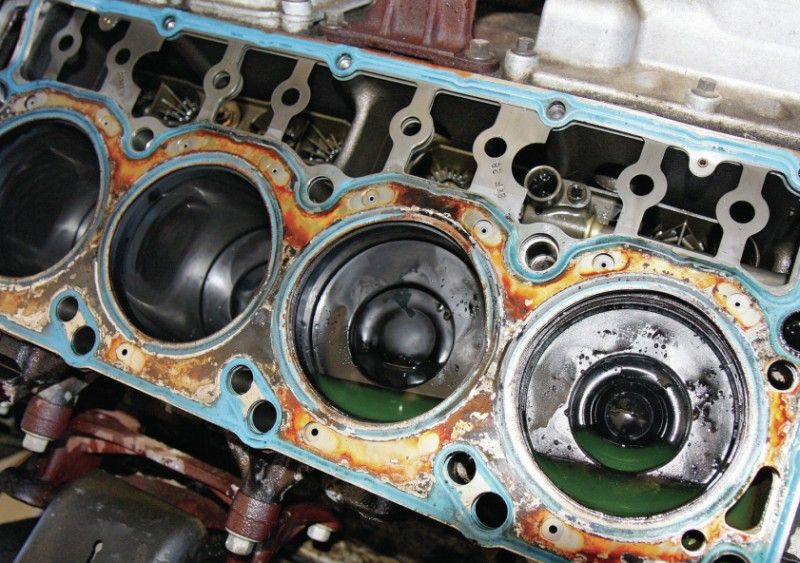
When the head gasket loses its sealing ability, combustion gases, coolant, and engine oil can potentially move between areas where they should not. Depending on where the failure occurs, the engine may lose compression, the cooling system may become excessively pressurized, coolant may enter the cylinders, or coolant may mix with engine oil.
However, an important point should be made from the beginning: not every overheating problem means the head gasket is blown, and not every coolant loss is caused by a head-gasket failure. A proper diagnosis requires the symptoms to be evaluated together and, when necessary, confirmed with appropriate tests.
What Does the Head Gasket Do?
The cylinder head gasket is one of the engine's most important sealing components.
Located between the cylinder head and engine block, it performs several jobs at the same time:
-
Seals combustion pressure inside the cylinders
-
Keeps engine oil inside its oil passages
-
Keeps coolant inside the cooling passages
-
Prevents oil, coolant, and combustion gases from mixing
-
Helps maintain compression between the cylinders and the engine block
When the gasket is damaged, one or more of these functions can be lost.
That is why the symptoms of a head-gasket failure can vary considerably depending on exactly where the gasket has failed.
What Causes a Head Gasket to Fail?
A head gasket usually does not fail without a reason. Severe overheating is one of the most common causes.
Problems that can cause an engine to overheat include:
-
Low coolant level
-
Coolant leaks
-
Radiator problems
-
Thermostat failure
-
Water-pump problems
-
Cooling-fan failure
-
Air trapped in the cooling system
-
Expansion-tank or radiator-cap problems
-
A restricted radiator
-
Cooling-system maintenance problems
Excessive engine temperature can cause the cylinder head and engine block to expand differently. This is particularly important with aluminum cylinder heads, which can become distorted when subjected to excessive heat.
If the cylinder head becomes warped, simply installing a new gasket may not be enough. The cylinder head surface and flatness must also be checked.
How Can You Tell If the Head Gasket Is Blown?
A head-gasket failure cannot always be confirmed from one symptom alone. However, several signs should raise suspicion.
1. Persistent Coolant Loss
If the coolant level repeatedly drops but there is no obvious external leak, an internal coolant loss should be investigated.
For example, if:
-
The radiator appears to be dry
-
The hoses show no obvious leaks
-
The water pump shows no visible leakage
-
The expansion tank is not cracked
but the coolant level continues to fall, coolant may be entering the engine or another part of the vehicle's cooling system.
However, this does not automatically prove a blown head gasket.
Other possibilities, such as a heater-core leak or a coolant leak involving a turbocharger cooling circuit, may also need to be considered depending on the engine.
2. Persistent White Exhaust Smoke
White vapor from the exhaust during a cold start is often completely normal. Water vapor forms from condensation inside the exhaust system and usually disappears as the exhaust becomes hot.
The situation is different when thick white smoke continues after the engine has reached operating temperature.
If persistent white exhaust smoke occurs together with coolant loss, coolant entering the combustion chamber should be investigated.
A damaged head gasket can allow coolant to enter a cylinder, where it is exposed to combustion and eventually leaves through the exhaust as vapor.
Still, exhaust color alone is not enough to diagnose a head-gasket failure.
3. Excessive Pressure in the Expansion Tank
One important sign of head-gasket failure is combustion gas entering the cooling system.
If high-pressure combustion gases leak into the cooling passages, you may notice:
-
Continuous or abnormal bubbling in the expansion tank
-
Excessive cooling-system pressure
-
Cooling hoses becoming unusually firm
-
Coolant being pushed out of the expansion tank
-
Temperature rising rapidly under load
It is important to understand that some pressure in the cooling system is normal. Modern cooling systems are designed to operate under pressure.
The concern is abnormal pressurization caused by combustion gases entering the cooling system.
4. Coolant Contamination in the Engine Oil
A head-gasket failure can sometimes allow coolant to enter the engine oil.
When this happens, the oil may develop a:
-
Milky appearance
-
Creamy appearance
-
Light-brown color
-
Frothy or sludge-like consistency
However, there is an important warning here.
Creamy or white residue underneath the oil filler cap does not automatically mean the head gasket is blown.
Short-distance driving can allow condensation to accumulate inside the engine, particularly in cold weather. This moisture can create a creamy deposit around the oil cap.
The condition of the actual engine oil, oil level, coolant level, driving pattern, and other symptoms should therefore be evaluated together.
5. Increasing Engine Oil Level
If coolant enters the engine oil, the oil level may sometimes appear higher than normal.
This is a serious symptom because coolant contamination can significantly reduce the oil's ability to lubricate engine components.
Potentially affected components include:
-
Crankshaft bearings
-
Camshaft bearings
-
Turbocharger
-
Timing components
-
Other internally lubricated engine parts
If coolant contamination is suspected, continuing to operate the engine can cause much more expensive damage.
6. Engine Misfire or Rough Running
If coolant enters one or more cylinders, the engine may begin to run poorly.
Possible symptoms include:
-
Rough idle
-
Misfire
-
Poor acceleration
-
Loss of power
-
Difficult starting
-
Check Engine light
-
Cylinder-specific misfire codes
The problem can sometimes be especially noticeable immediately after a cold start.
However, misfire has many possible causes. Spark plugs, ignition coils, injectors, fuel pressure, vacuum leaks, compression problems and other engine-management issues can all produce similar symptoms.
A misfire code therefore does not automatically mean the head gasket has failed.
7. Rough Running After the Vehicle Has Been Parked Overnight
Some head-gasket failures produce a particularly noticeable pattern during the first start of the day.
If a small amount of coolant leaks into a cylinder while the engine is sitting overnight, the vehicle may:
-
Start roughly
-
Misfire for several seconds
-
Shake at idle
-
Produce unusual white vapor
-
Then gradually return to normal operation
This type of behavior can be an important diagnostic clue.
However, the ignition system, fuel injectors and other causes of cold-start misfire should also be checked before blaming the head gasket.
8. Repeated Engine Overheating
Head-gasket problems and overheating can have a two-way relationship.
An existing cooling-system fault can cause the engine to overheat and eventually damage the head gasket.
After the gasket is damaged, combustion gases can enter the cooling system and make the cooling system operate abnormally, potentially causing further overheating.
For this reason, it is not enough to say, “The head gasket is blown.”
The original cause of the overheating should also be identified.
Otherwise, a replacement gasket may fail again because the underlying cooling-system problem was never repaired.
9. Low Compression
The head gasket helps maintain the seal between the combustion chambers and the engine block.
If the gasket fails between a cylinder and another passage or between adjacent cylinders, compression can be affected.
A compression test may show:
-
Low compression in one cylinder
-
Low compression in multiple cylinders
-
Similar compression loss in two adjacent cylinders
However, low compression is not exclusive to head-gasket problems.
Other possible causes include:
-
Worn piston rings
-
Cylinder wear
-
Burned or damaged valves
-
Valve-sealing problems
-
Piston damage
-
Other mechanical engine faults
For this reason, compression-test results must be interpreted in context.
10. Combustion Gases Detected in the Cooling System
One of the most useful ways to investigate a suspected head-gasket failure is to test the cooling system for combustion gases.
A special chemical test can be performed using the appropriate test equipment to determine whether combustion gases are present in the cooling system.
A positive result can provide strong evidence that combustion pressure is entering the cooling system.
The test must still be performed correctly, using suitable equipment and procedure.
Which Tests Confirm a Blown Head Gasket?
When a head-gasket failure is suspected, several diagnostic methods can be used together.
Cooling-system pressure test
The cooling system is pressurized according to the vehicle manufacturer's specified procedure to look for coolant leakage.
This can help identify external leaks and, in some situations, internal leakage.
Combustion-gas test
The cooling system is checked for combustion gases.
This is particularly useful when the engine is pressurizing the cooling system without an obvious external leak.
Compression test
Cylinder compression pressures are measured and compared.
Large differences between cylinders can indicate a mechanical sealing problem.
Leak-down test
Compressed air is introduced into an individual cylinder while the cylinder is positioned correctly.
The technician then observes where the pressure is escaping.
This test can help distinguish between:
-
Valve leakage
-
Piston-ring problems
-
Cylinder problems
-
Head-gasket leakage
Oil and coolant inspection
The engine oil and coolant are inspected for signs of cross-contamination.
The technician may also monitor fluid levels and inspect for abnormal pressure behavior.
Can an OBD-II Scanner Detect a Blown Head Gasket?
An OBD-II scanner can provide useful information, but it cannot normally confirm a blown head gasket by itself.
A vehicle may store codes related to:
-
Engine misfires
-
Individual-cylinder misfires
-
Engine coolant temperature
-
Fuel-trim abnormalities
-
Other engine-management problems
For example, a cylinder misfire code may occur if coolant is entering that cylinder.
But the same code can also be caused by an ignition coil, spark plug, injector, fuel problem, compression issue or another mechanical fault.
OBD-II data can therefore help guide the diagnosis, but mechanical and chemical testing may be necessary to confirm a head-gasket problem.
The Relationship Between Overheating and Head-Gasket Failure
Overheating is one of the most important factors associated with head-gasket damage.
Excessive temperature can distort the cylinder head and reduce the gasket's ability to maintain a proper seal.
However, not every head-gasket failure is caused by overheating.
Other contributing factors can include:
-
Age and deterioration
-
Incorrect installation
-
Incorrect tightening procedure
-
Incorrect bolt torque
-
Cylinder-head distortion
-
Damaged sealing surfaces
-
Problems with combustion pressure
This is why a proper repair involves more than simply replacing the gasket.
Why Is the Cylinder Head Inspected During a Gasket Replacement?
It is not always necessary to replace the entire cylinder head when the head gasket fails.
In many cases, the existing cylinder head can be reused if it remains within the manufacturer's specifications.
The cylinder head may need to be checked for:
-
Flatness
-
Cracks
-
Surface condition
-
Valve-train condition
-
Manufacturer-specified tolerances
If the manufacturer permits machining within specified limits, the sealing surface may be reconditioned.
If the cylinder head is excessively warped or cracked, however, a different repair strategy may be required.
Is It Safe to Drive With a Blown Head Gasket?
Continuing to drive with a serious head-gasket failure can turn a repairable problem into major engine damage.
If coolant continues to disappear, the engine may overheat.
If coolant enters the engine oil, lubrication can deteriorate and internal engine components can suffer damage.
If coolant enters the combustion chamber, it may cause:
-
Misfires
-
Catalytic-converter damage
-
Lubrication problems
-
Cylinder corrosion
-
More serious mechanical damage
In severe cases, enough liquid can enter a cylinder to interfere with normal engine rotation and create a serious mechanical problem.
For this reason, a vehicle showing severe overheating, rapid coolant loss, oil-pressure problems or persistent heavy white exhaust should not simply be driven until the problem gets worse.
Can a Head-Gasket Failure Be Prevented?
There is no special maintenance procedure that guarantees a head gasket will never fail. However, many of the conditions that damage head gaskets can be prevented.
Good maintenance practices include:
-
Check the coolant level regularly.
-
Repair cooling-system leaks promptly.
-
Do not continue driving an overheating engine.
-
Use the correct coolant specification for the vehicle.
-
Maintain the correct engine oil level.
-
Use the correct engine-oil specification and viscosity.
-
Take oil-pressure and overheating warnings seriously.
-
Inspect the radiator, thermostat, cooling fan and water pump when necessary.
-
Follow the manufacturer's torque and tightening procedure during engine repairs.
Preventing severe overheating is one of the most important things you can do to reduce the risk of head-gasket damage.
A Head Gasket Does Not Always Fail in an Obvious Way
One of the most important things to understand about head-gasket problems is that they do not all produce the same symptoms.
One vehicle may show obvious:
-
Coolant loss
-
White exhaust
-
Overheating
-
Coolant contamination in the oil
while another may only develop abnormal cooling-system pressure or a persistent misfire in one cylinder.
A small gasket leak may even allow the vehicle to operate normally under light driving conditions and become noticeable only under heavy engine load.
Therefore, conclusions such as “the car isn't losing coolant, so the head gasket must be fine” or “there is creamy residue under the oil cap, so the head gasket is definitely blown” can be misleading.
A proper diagnosis should combine the symptoms with appropriate testing, such as a cooling-system pressure test, combustion-gas test, compression test or leak-down test.
The goal is not only to determine whether the head gasket has failed, but also to determine why it failed. If the original cause of the overheating or cooling-system problem is not repaired, simply installing a new gasket may not solve the problem permanently.