TR
TR EN
EN

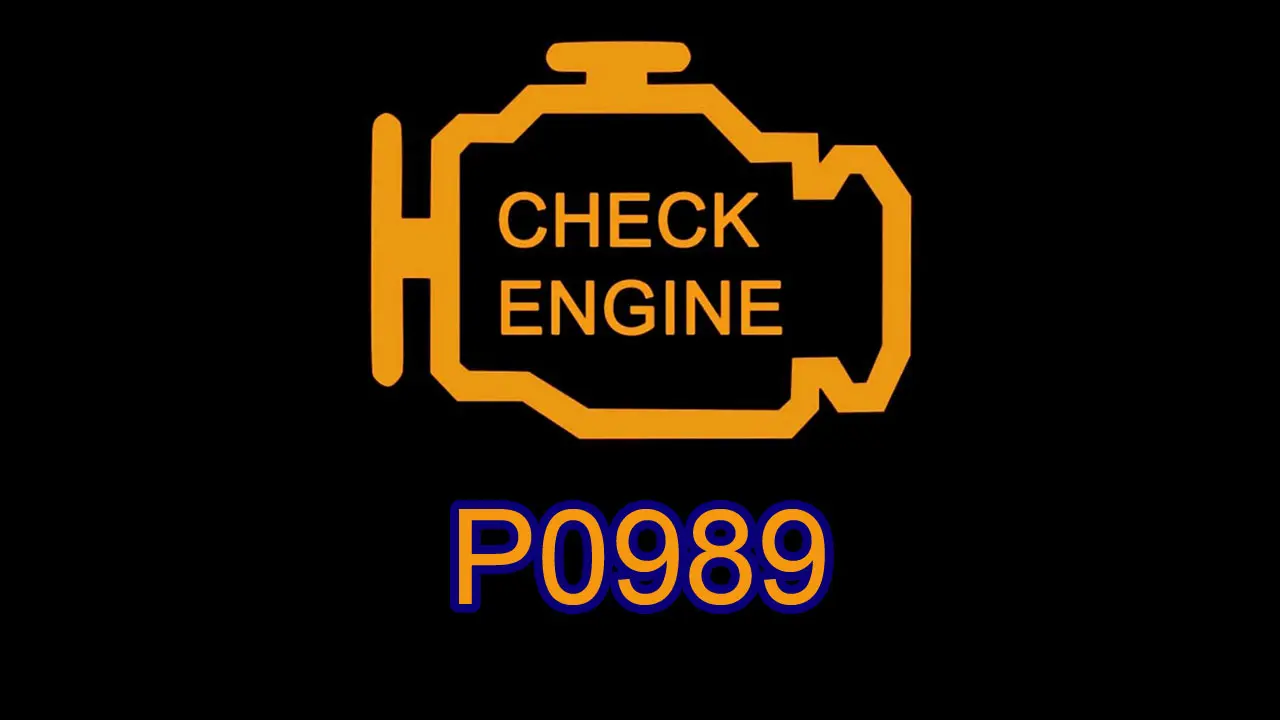
P0989 Transmission Fluid Pressure Sensor / Switch "E" Circuit Low
The P0989 trouble code is an OBD-II diagnostic trouble code related to the automatic transmission's hydraulic pressure monitoring system.
P0989 – Transmission Fluid Pressure Sensor/Switch “E” Circuit Low
This code means that the transmission control module (TCM) or powertrain control module (PCM) has detected an electrical signal that is lower than the expected value in the Transmission Fluid Pressure Sensor/Switch “E” circuit.
In simple terms, the transmission computer is receiving a lower-than-expected voltage or signal from the “E” transmission fluid pressure sensor/switch circuit.
It is important to understand that P0989 does not automatically mean that the transmission's hydraulic pressure is physically too low. The code primarily describes an electrical signal condition. A faulty sensor, damaged wiring, poor ground, shorted signal circuit or connector problem can all produce this code.
What Does P0989 Mean?
P0989 – Transmission Fluid Pressure Sensor/Switch “E” Circuit Low
Automatic transmissions rely on hydraulic pressure to control internal components and perform gear changes.
The transmission pump generates hydraulic pressure, while valves and solenoids direct that pressure to the appropriate circuits.
A pressure sensor or switch provides information about this system to the TCM.
When the electrical signal from Pressure Sensor/Switch “E” drops below the expected level, the control module can store P0989.
The word “Low” refers primarily to the electrical signal, not necessarily to the actual hydraulic pressure inside the transmission.
What Is Transmission Fluid Pressure Sensor/Switch “E”?
The transmission fluid pressure sensor/switch monitors pressure within a specific hydraulic circuit of the transmission.
Depending on the transmission design, it can be used to:
-
Monitor hydraulic pressure
-
Confirm that a hydraulic circuit is operating
-
Verify pressure-control operation
-
Help control gear changes
-
Monitor clutch application
-
Provide feedback to the transmission control module
Some transmissions use variable pressure sensors that produce a changing voltage.
Others use pressure switches that change electrical state when a specific pressure threshold is reached.
Therefore, the exact operation of Pressure Sensor/Switch “E” depends on the specific transmission.
What Does the “E” Mean?
The “E” is a manufacturer-defined identification for a particular pressure sensor or switch circuit.
It does not necessarily mean that the transmission contains five pressure sensors arranged alphabetically.
The location and function of Sensor/Switch “E” can vary significantly between transmission models.
For this reason, the vehicle-specific wiring diagram and service information should always be used to identify the correct component.
What Does “Circuit Low” Mean?
The “Circuit Low” portion of P0989 means that the control module has detected an electrical signal below the expected operating range.
This can happen when:
-
The sensor output is too low
-
The signal wire is shorted to ground
-
The sensor has an internal electrical fault
-
The reference voltage is missing
-
The sensor ground circuit has a problem
-
The connector has poor contact
-
Wiring is damaged
A low electrical signal does not automatically prove that hydraulic pressure is low.
Does P0989 Mean Transmission Pressure Is Too Low?
Not necessarily.
This is an important distinction.
The transmission may have normal hydraulic pressure while the electrical signal sent by the pressure sensor is too low.
For example, a pressure sensor could have an internal failure and produce an abnormally low output even though the transmission pump and hydraulic system are functioning correctly.
Conversely, an actual hydraulic pressure problem can sometimes contribute to abnormal pressure readings.
Therefore, the electrical circuit should normally be checked before concluding that the transmission has a mechanical pressure problem.
Symptoms of P0989
The symptoms depend on the vehicle and transmission.
Possible symptoms include:
-
Check Engine Light
-
Transmission warning light
-
Harsh shifting
-
Delayed gear changes
-
Erratic shifting
-
Transmission slipping
-
Delayed engagement of Drive
-
Delayed engagement of Reverse
-
Transmission stuck in one gear
-
Unexpected downshifts
-
Unexpected upshifts
-
Poor acceleration
-
Higher engine RPM
-
Reduced transmission performance
-
Limp mode
-
Increased fuel consumption
Some vehicles may continue to operate almost normally.
In those cases, the Check Engine Light may be the only noticeable symptom.
Common Causes of P0989
There are several possible causes of a low signal in the Pressure Sensor/Switch “E” circuit.
Faulty transmission fluid pressure sensor/switch
The sensor may have an internal electrical problem that causes its output signal to remain too low.
Possible failures include:
-
Internal short
-
Incorrect resistance
-
Damaged sensing element
-
Signal stuck low
-
Internal electronic failure
Signal wire shorted to ground
A shorted signal wire can pull the sensor output toward ground.
This is a particularly important possibility when diagnosing a circuit-low code.
If the signal wire is contacting ground, replacing the pressure sensor will not solve the problem.
Damaged wiring
The wiring harness may be:
-
Chafed
-
Pinched
-
Broken
-
Melted
-
Corroded
-
Incorrectly repaired
Transmission wiring operates in a demanding environment with considerable heat and vibration.
Poor electrical connector
A loose or damaged connector can prevent the sensor signal from reaching the TCM correctly.
Possible problems include:
-
Corrosion
-
Bent pins
-
Loose terminals
-
Water contamination
-
Transmission fluid contamination
-
Damaged connector locking mechanism
Reference voltage problem
Many pressure sensors require a regulated reference voltage.
If the reference voltage is missing or too low, the sensor may produce an abnormal output.
A shared reference circuit can also be affected by another faulty component.
Ground circuit problem
A pressure sensor needs a reliable ground.
Depending on the circuit design, an abnormal ground can cause the sensor output to become incorrect.
Actual hydraulic pressure problem
Although P0989 is primarily an electrical code, an actual pressure problem should not be completely ignored.
Possible hydraulic causes include:
-
Low transmission fluid
-
Worn transmission pump
-
Internal hydraulic leakage
-
Valve body problems
-
Sticking valves
-
Pressure-control solenoid problems
These should generally be investigated after the electrical circuit has been verified.
Can Low Transmission Fluid Cause P0989?
Low transmission fluid can cause genuine hydraulic pressure problems.
However, P0989 specifically identifies a low electrical signal in the Pressure Sensor/Switch “E” circuit.
Therefore, low fluid should be checked, but it should not automatically be considered the cause.
If the fluid level is low, the technician should also determine why it became low.
Possible leakage points include:
-
Transmission pan
-
Cooler lines
-
Seals
-
Axle seals
-
Transmission case
-
Fluid connections
Can P0989 Be Caused by a Short to Ground?
Yes.
A short to ground is one of the important electrical possibilities with a circuit-low code.
If the pressure sensor's signal wire contacts ground, the voltage reaching the TCM can drop below the expected range.
The result can be P0989.
This is why checking the signal wire for unintended continuity to ground can be an important part of diagnosis.
How Serious Is P0989?
The seriousness depends on the underlying cause.
If the problem is simply a damaged wire or connector, the repair may be relatively straightforward.
However, if the low signal prevents the TCM from correctly monitoring transmission pressure, the transmission may not operate as intended.
Possible consequences include:
-
Incorrect gear changes
-
Harsh shifting
-
Clutch engagement problems
-
Transmission overheating
-
Limp mode
-
Increased internal wear
Therefore, P0989 should not be ignored.
Can You Drive With P0989?
If the vehicle is shifting normally and the code has just appeared, it may be possible to drive a short distance to a repair facility.
However, extended driving without diagnosis is not recommended.
Driving should be minimized if there is:
-
Severe transmission slipping
-
Violent shifting
-
Loss of Drive
-
Loss of Reverse
-
Transmission overheating
-
Limp mode
-
Burning transmission fluid smell
These symptoms may indicate a more serious transmission problem.
How to Diagnose P0989
Because P0989 is a circuit-low code, diagnosis should begin with the electrical system.
1. Scan the transmission control module
Use a professional diagnostic scanner and retrieve all stored and pending codes.
Check:
-
P0989
-
Other transmission codes
-
Freeze-frame data
-
Transmission temperature
-
Engine RPM
-
Vehicle speed
-
Selected gear
-
Pressure sensor data
Additional codes may reveal a common electrical or transmission problem.
2. Identify Pressure Sensor/Switch “E”
Use the vehicle-specific wiring diagram to determine:
-
Sensor location
-
Connector pinout
-
Reference voltage
-
Ground circuit
-
Signal circuit
-
TCM connection
The “E” designation is not universal across all transmissions.
3. Inspect the sensor
Look for:
-
Physical damage
-
Fluid contamination
-
Corrosion
-
Loose installation
-
Damaged terminals
If the sensor is accessible, inspect the connector before replacing it.
4. Inspect the wiring harness
Look carefully for:
-
Chafed wires
-
Broken conductors
-
Melted insulation
-
Pinched wires
-
Corrosion
-
Previous repairs
-
Loose harness clips
Areas close to the transmission and exhaust system deserve particular attention.
5. Check reference voltage
If the sensor uses a reference voltage, measure it according to manufacturer specifications.
A missing or low reference voltage can cause the pressure signal to become abnormal.
6. Check the sensor ground
Verify that the sensor has a proper ground.
A voltage-drop test can be useful for detecting excessive resistance in the ground circuit.
7. Test the signal wire
This is one of the most important steps for P0989.
Check whether the signal wire is:
-
Shorted to ground
-
Shorted to another circuit
-
Open
-
Damaged
-
Pulled below the expected voltage
If the signal wire is shorted to ground, replacing the sensor will not fix the problem.
8. Monitor live data
If the scanner provides pressure sensor information, monitor it.
Look for:
-
Signal stuck at a low value
-
Implausible pressure readings
-
Signal that does not respond to operating conditions
-
Pressure readings inconsistent with transmission behavior
Live data can help determine whether the problem is constant or intermittent.
9. Test the pressure sensor
If the wiring, connector, reference voltage and ground are correct, test the sensor itself.
The exact test procedure and expected values depend on the specific transmission.
A sensor that produces an abnormally low output despite having the correct power and ground may be defective.
10. Test actual hydraulic pressure
If the electrical circuit passes inspection but transmission symptoms remain, actual hydraulic pressure may need to be measured.
A mechanical pressure test can help determine whether the transmission is actually producing low pressure or whether the problem is limited to the electrical signal.
Why Replacing the Sensor Immediately Can Be a Mistake
P0989 can certainly be caused by a defective pressure sensor.
However, replacing the sensor without testing the circuit can lead to unnecessary parts replacement.
For example, if the signal wire is shorted to ground, a new sensor will produce the same fault.
Likewise, a missing reference voltage or poor connector can create the same symptoms.
The complete circuit should therefore be checked before replacing the sensor.
P0989 After Transmission Repair
If P0989 appears after transmission removal, replacement or repair, inspect the components that were disturbed.
Possible causes include:
-
Connector not fully seated
-
Damaged connector terminal
-
Pinched wiring
-
Harness routed incorrectly
-
Sensor damaged during installation
-
Loose ground connection
-
Wiring contacting another component
If the code appeared immediately after transmission work, the recent repair should be considered an important diagnostic clue.
P0989 After a Transmission Fluid Change
If P0989 appears shortly after a transmission fluid service, verify:
-
Correct transmission fluid type
-
Correct fluid level
-
Correct filling procedure
-
Correct fluid temperature during level checking
Also inspect the area around the transmission for fluid leaks or contamination of electrical connectors.
However, a fluid service does not normally create an electrical circuit-low condition by itself.
The pressure sensor circuit should still be tested.
Can P0989 Cause Limp Mode?
Yes, depending on the vehicle.
If the TCM cannot reliably monitor an important pressure circuit, it may activate a protective strategy.
Possible results include:
-
Limited gears
-
Fixed gear operation
-
Harsh shifts
-
Delayed engagement
-
Increased line pressure
-
Reduced transmission performance
Not every vehicle with P0989 will enter limp mode.
The exact response depends on the transmission and control-module programming.
Can P0989 Be an Internal Transmission Problem?
It can be, but P0989 should not automatically be interpreted as an internal transmission failure.
If the electrical circuit is functioning correctly and actual hydraulic pressure is confirmed to be too low, further investigation may reveal:
-
Transmission pump wear
-
Internal leakage
-
Valve body problems
-
Sticking valves
-
Pressure-control solenoid problems
These possibilities should be considered based on actual test results rather than the code alone.
Common Diagnostic Mistakes With P0989
One of the biggest mistakes is interpreting “Circuit Low” as “transmission fluid pressure is low.”
The code primarily refers to the electrical signal.
Another common mistake is replacing the pressure sensor without checking for a short to ground.
A third mistake is assuming that a pressure-related code automatically means the transmission needs replacement.
P0989 alone does not prove that the transmission is mechanically defective.
What Is the Correct Repair for P0989?
The correct repair depends on the confirmed cause.
Possible repairs include:
-
Replacing the transmission fluid pressure sensor/switch
-
Repairing a signal wire
-
Removing a short to ground
-
Repairing damaged wiring
-
Replacing damaged connector terminals
-
Cleaning or replacing a contaminated connector
-
Repairing the sensor ground
-
Restoring the correct reference voltage
-
Correcting transmission fluid level
-
Repairing a pressure-control solenoid
-
Repairing the valve body when a hydraulic problem is confirmed
-
Repairing internal transmission components when testing proves an internal fault
-
Repairing or replacing the TCM when it is conclusively diagnosed as faulty
Final Thoughts on P0989
P0989 – Transmission Fluid Pressure Sensor/Switch “E” Circuit Low indicates that the transmission control system has detected an electrically low signal in the Pressure Sensor/Switch “E” circuit.
The first areas to investigate are the pressure sensor, signal wiring, connector, reference voltage and ground circuit.
The most important point is that “Circuit Low” does not automatically mean that the transmission's hydraulic pressure is too low. An electrical problem such as a signal wire shorted to ground can produce P0989 even when the transmission's actual hydraulic pressure is normal.
A proper diagnosis should therefore begin with the electrical circuit. If the electrical system passes all tests, then actual hydraulic pressure, solenoids, the valve body and other internal transmission components can be investigated.
P0989 does not automatically mean that the transmission needs to be rebuilt or replaced. Finding the reason for the low electrical signal first can prevent unnecessary and expensive transmission repairs.