TR
TR EN
EN

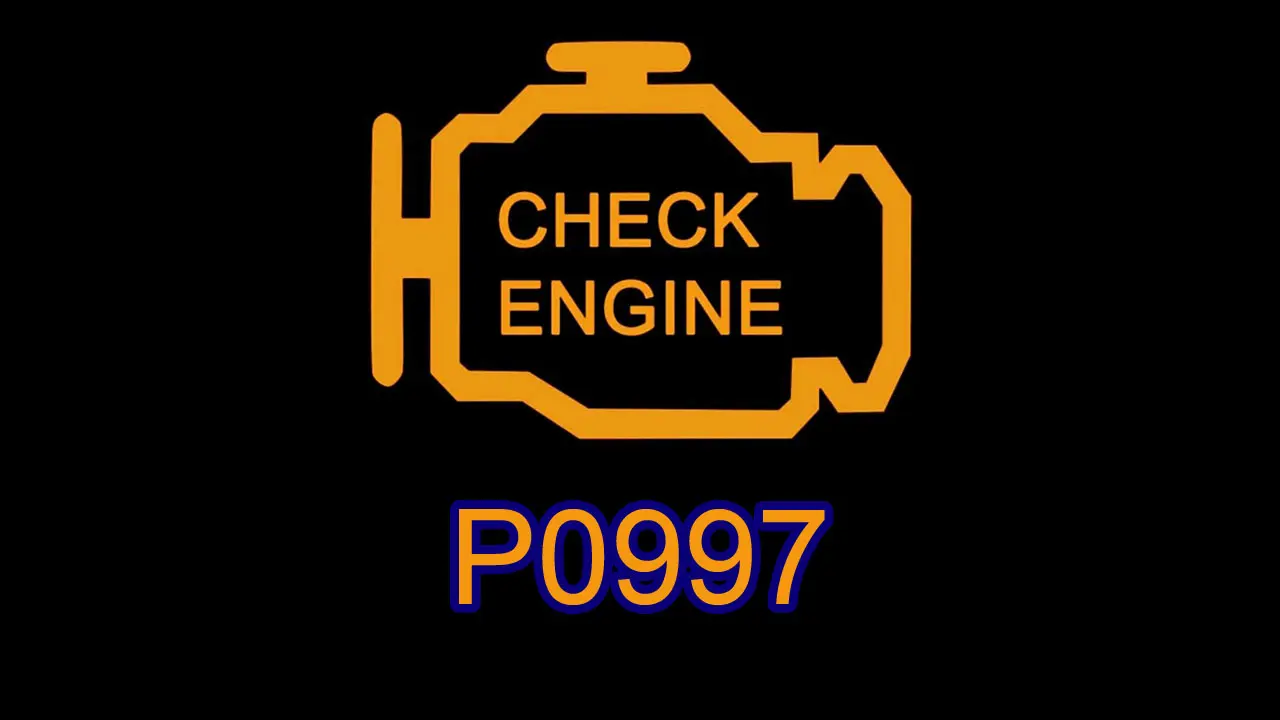
P0997 Shift Solenoid "F" Control Circuit Range / Performance
The P0997 diagnostic trouble code (DTC) indicates a problem with the Shift Solenoid "F" control circuit range or performance.
This code is stored when the transmission control system detects that the electrical or operational behaviour of Shift Solenoid "F" is outside the expected range.
Shift solenoids are important components inside an automatic transmission. They control the flow of transmission fluid through hydraulic circuits, allowing the transmission to engage the correct gears and control clutch operation.
When the transmission control module (TCM) detects an abnormal signal, incorrect solenoid response or a performance problem involving Shift Solenoid "F", it may store P0997.
Depending on the vehicle and transmission design, the driver may experience harsh shifting, delayed gear changes, slipping, incorrect gear selection, limp mode or a transmission warning light.
The exact meaning and diagnostic procedure can vary between manufacturers, so the vehicle-specific service information should always be consulted.
What Does P0997 Mean?
P0997 – Shift Solenoid "F" Control Circuit Range/Performance
This code means that the transmission control module has detected a problem with the expected operation of Shift Solenoid "F".
The term "Range/Performance" is important.
It does not necessarily mean that the electrical circuit is completely open or shorted.
Instead, the control module may be detecting that the solenoid's operation or response is not behaving as expected.
For example, the TCM may command the solenoid to operate and then detect that the resulting hydraulic pressure, transmission behaviour or electrical response does not match the expected value.
What Is Shift Solenoid "F"?
Shift Solenoid "F" is an electronically controlled solenoid used by the transmission to control transmission fluid flow and hydraulic pressure.
The solenoid is usually part of the transmission valve body or an integrated mechatronic assembly.
When the TCM sends an electrical command, the solenoid changes the flow of transmission fluid through a particular hydraulic circuit.
This allows the transmission to control:
-
Gear changes
-
Clutch engagement
-
Clutch release
-
Hydraulic pressure
-
Shift timing
-
Transmission operating strategy
The exact function of Solenoid "F" depends on the specific transmission.
The letter "F" does not necessarily correspond to a specific gear.
How Does Shift Solenoid "F" Work?
The transmission control module continuously monitors vehicle and transmission conditions.
It can use information from:
-
Engine speed
-
Vehicle speed
-
Throttle position
-
Accelerator position
-
Transmission temperature
-
Input shaft speed
-
Output shaft speed
-
Engine load
-
Current gear
Based on this information, the TCM determines how the transmission should operate.
When a particular hydraulic circuit needs to be activated, the TCM sends an electrical command to Shift Solenoid "F".
The solenoid then controls transmission fluid flow.
This hydraulic pressure operates internal transmission components such as clutch packs, valves or other hydraulic actuators.
If the TCM detects that the solenoid does not respond as expected, it can set P0997.
What Does "Range/Performance" Mean in P0997?
A range/performance fault is different from a simple open-circuit or short-circuit fault.
The solenoid may still have electrical continuity and may appear to operate during a basic electrical test.
However, its actual behaviour may not match what the TCM expects.
Possible examples include:
-
Solenoid response is too slow
-
Hydraulic pressure is incorrect
-
Solenoid is sticking
-
Solenoid response is inconsistent
-
Commanded pressure does not match actual pressure
-
Transmission ratio does not match the expected result
-
Electrical current is outside the expected operating range
For this reason, P0997 often requires more than simply checking whether the solenoid has continuity.
Symptoms of P0997
The symptoms associated with P0997 depend on the transmission and the severity of the fault.
Common symptoms may include:
-
Check Engine Light
-
Transmission warning light
-
Harsh shifting
-
Delayed gear changes
-
Jerking during shifting
-
Transmission slipping
-
Incorrect gear selection
-
Failure to shift
-
Transmission stuck in one gear
-
Delayed Drive or Reverse engagement
-
Reduced transmission performance
-
Limp mode
-
Increased transmission temperature
Some vehicles may store P0997 without producing obvious driving symptoms.
Check Engine Light
The Check Engine Light is one of the most common signs associated with P0997.
When the TCM detects a problem with the Shift Solenoid "F" control system, it may request the engine control module to illuminate the warning light.
Some vehicles also display a dedicated transmission warning message.
Harsh or Jerky Shifting
Incorrect solenoid operation can affect hydraulic pressure during gear changes.
The driver may notice:
-
Hard upshifts
-
Hard downshifts
-
Jerking
-
Sudden engagement
-
Thumping during gear changes
If Shift Solenoid "F" controls an important hydraulic circuit, a performance problem can significantly affect shift quality.
Delayed Gear Changes
The transmission may hesitate before changing gears.
The driver may notice that:
-
Engine RPM rises before the shift
-
The transmission takes longer to engage
-
Upshifts are delayed
-
Downshifts occur later than normal
This can happen when the solenoid does not regulate hydraulic pressure correctly.
Transmission Slipping
If the affected hydraulic circuit does not provide the correct pressure, a clutch may not fully engage.
This can produce transmission slipping.
Possible signs include:
-
Engine RPM increases without proportional acceleration
-
RPM fluctuates during acceleration
-
Vehicle speed does not increase normally
-
Transmission feels as though it temporarily loses drive
Slipping should be taken seriously because continued operation can increase clutch wear and transmission temperature.
Transmission Stuck in One Gear
A significant shift-solenoid problem can prevent the transmission from shifting normally.
The TCM may enter a protective strategy and keep the transmission in a limited gear range.
The driver may feel that the vehicle is stuck in one gear.
Limp Mode
P0997 can be associated with transmission limp mode.
When the TCM cannot reliably control the affected hydraulic circuit, it may limit transmission operation to protect internal components.
Possible symptoms include:
-
Limited gear selection
-
Fixed gear operation
-
Harsh shifts
-
Reduced acceleration
-
Restricted transmission functionality
The exact limp-mode strategy varies by manufacturer.
Common Causes of P0997
There are several possible causes of P0997.
Faulty Shift Solenoid "F"
The solenoid itself may be electrically or mechanically defective.
Solenoid sticking
Contaminated transmission fluid or deposits can prevent the solenoid from moving correctly.
Damaged wiring
The wiring between the TCM and solenoid can become damaged due to heat, vibration or mechanical contact.
Corroded connector
A poor electrical connection can cause intermittent or incorrect solenoid operation.
Low transmission fluid
Insufficient fluid can cause hydraulic pressure problems.
Dirty or contaminated transmission fluid
Debris can interfere with the solenoid or valve body.
Valve body problems
Wear, contamination or internal leakage can affect hydraulic operation.
Transmission pump problems
Insufficient hydraulic pressure can cause a solenoid performance problem even when the solenoid itself is functional.
Internal transmission wear
Worn clutch packs or other internal components can create hydraulic and performance problems.
Transmission control module problem
Although less common, a TCM fault can cause incorrect solenoid control.
Electrical Causes of P0997
The electrical side of the system should be carefully inspected.
Possible electrical causes include:
-
Open circuit
-
Short circuit
-
High resistance
-
Low resistance
-
Damaged wiring
-
Corroded terminals
-
Loose connector
-
Poor ground
-
Voltage supply problem
-
Internal solenoid coil failure
A wiring problem can create the same diagnostic code as a defective solenoid.
Mechanical Causes of P0997
P0997 can also have a hydraulic or mechanical cause.
Possible problems include:
-
Sticking solenoid valve
-
Blocked hydraulic passage
-
Valve-body wear
-
Internal hydraulic leakage
-
Low fluid pressure
-
Worn clutch components
-
Transmission pump wear
This is why simply replacing the solenoid is not always the correct repair.
Transmission Fluid Problems
Transmission fluid is essential for both lubrication and hydraulic control.
If the fluid level is too low, the transmission may not produce sufficient hydraulic pressure.
If the fluid is contaminated, debris can interfere with valves and solenoids.
The technician should inspect:
-
Fluid level
-
Fluid condition
-
Fluid smell
-
Contamination
-
Metal particles
-
Clutch material
The fluid specification should also be verified.
Can Low Transmission Fluid Cause P0997?
Yes.
Low transmission fluid can cause abnormal hydraulic pressure and transmission behaviour.
The TCM may interpret the resulting performance problem as a solenoid control or performance fault.
Therefore, fluid level should be checked before replacing expensive transmission components.
Can Dirty Transmission Fluid Cause P0997?
Yes.
Contaminated fluid can interfere with the operation of Shift Solenoid "F".
Deposits or debris can cause the solenoid to move slowly or become stuck.
Contamination can also affect the valve body and hydraulic passages.
How Is P0997 Diagnosed?
A proper diagnosis should begin with a professional diagnostic scan tool.
The technician should record:
-
P0997
-
Other stored transmission codes
-
Freeze-frame data
-
Transmission temperature
-
Current gear
-
Commanded gear
-
Solenoid command
-
Solenoid current
-
Input speed
-
Output speed
-
Transmission pressure
Other transmission codes are particularly important.
If multiple solenoid, pressure or gear-ratio codes are present, the underlying problem may be larger than a single solenoid.
Step 1: Scan for Diagnostic Trouble Codes
The first step is to scan the vehicle and identify all stored and pending codes.
P0997 should not be diagnosed in isolation if other transmission codes are present.
The freeze-frame information can also show the conditions under which the code was detected.
Step 2: Inspect the Transmission Fluid
The transmission fluid level and condition should be checked according to the manufacturer's procedure.
Look for:
-
Low fluid level
-
Burnt smell
-
Excessive darkening
-
Metal particles
-
Clutch debris
If the fluid is severely contaminated, the transmission may have an internal problem.
Step 3: Inspect Wiring and Connectors
The wiring harness and connectors associated with Shift Solenoid "F" should be inspected.
Look for:
-
Broken wires
-
Damaged insulation
-
Corrosion
-
Loose terminals
-
Oil or fluid contamination
-
Poor connector engagement
An intermittent wiring fault can cause a range/performance code.
Step 4: Test the Solenoid Electrically
The solenoid's electrical circuit should be tested using the manufacturer's specifications.
Possible tests include:
-
Coil resistance
-
Voltage supply
-
Ground
-
Control signal
-
Wiring continuity
-
Short-to-ground testing
-
Short-to-voltage testing
The correct resistance value varies by transmission.
There is no universal resistance specification for Shift Solenoid "F".
Step 5: Perform an Actuator Test
A professional scan tool may be able to command Shift Solenoid "F".
The technician can then observe whether the solenoid responds correctly.
Possible observations include:
-
Solenoid current
-
Hydraulic pressure
-
Gear engagement
-
RPM response
-
Transmission behaviour
This can help distinguish an electrical problem from a hydraulic or mechanical problem.
Step 6: Check Hydraulic Pressure
If the electrical system appears normal, hydraulic pressure testing may be necessary.
The technician can compare actual pressure with the manufacturer's specifications.
If the solenoid is being commanded correctly but the hydraulic pressure is incorrect, possible causes include:
-
Valve-body problems
-
Internal leakage
-
Transmission pump problems
-
Blocked hydraulic passages
-
Worn clutch components
Step 7: Inspect the Valve Body
If electrical and fluid checks do not identify the problem, the valve body may need to be inspected.
Possible problems include:
-
Sticking valves
-
Worn valve bores
-
Contaminated passages
-
Internal leakage
-
Damaged solenoid mounting areas
The correct procedure depends on the transmission.
Common Repair Solutions for P0997
The appropriate repair depends on the actual cause.
Possible repairs include:
-
Repairing damaged wiring
-
Repairing or replacing electrical connectors
-
Correcting transmission fluid level
-
Replacing incorrect transmission fluid
-
Servicing contaminated fluid
-
Cleaning or servicing the valve body
-
Replacing Shift Solenoid "F"
-
Replacing a solenoid pack
-
Repairing the transmission valve body
-
Repairing internal transmission components
-
Updating or replacing the TCM when appropriate
A diagnostic test should be completed before selecting the repair.
Does P0997 Always Mean the Shift Solenoid Is Bad?
No.
This is one of the most important points when diagnosing P0997.
The code identifies a range/performance problem involving the Shift Solenoid "F" control system.
It does not automatically prove that the solenoid itself has failed.
The actual cause could be:
-
Wiring
-
Connector
-
Fluid
-
Hydraulic pressure
-
Valve body
-
Transmission pump
-
Internal transmission components
-
Solenoid
-
Control module
Replacing the solenoid without checking these systems can result in unnecessary repairs.
Can You Drive With P0997?
It depends on the symptoms.
If P0997 is stored but the transmission continues to operate normally, the vehicle may remain driveable for a short period.
However, driving should be minimized if there is:
-
Severe slipping
-
Harsh shifting
-
Loss of drive
-
Transmission overheating
-
Limp mode
-
Failure to shift
Continued driving with a transmission that is slipping or overheating can increase internal wear.
Is P0997 a Serious Code?
P0997 should be taken seriously because it involves the transmission's electronic and hydraulic control system.
The severity depends on the underlying cause.
A damaged connector may be relatively simple to repair.
However, if P0997 is caused by a valve-body problem, hydraulic pressure loss or internal transmission wear, the repair can be considerably more complex.
The sooner the cause is identified, the lower the risk of secondary damage.
Can P0997 Cause Transmission Damage?
The code itself does not directly damage the transmission.
However, the underlying problem can potentially cause damage.
For example, incorrect hydraulic pressure may cause clutch slipping.
Repeated slipping can generate excessive heat and accelerate clutch wear.
For this reason, persistent symptoms should not be ignored.
How to Prevent P0997
Regular transmission maintenance can help reduce the risk of shift-solenoid problems.
-
Use the correct transmission fluid.
-
Maintain the correct fluid level.
-
Follow the manufacturer's service schedule.
-
Replace the transmission filter where applicable.
-
Repair fluid leaks promptly.
-
Avoid prolonged transmission overheating.
-
Do not ignore transmission warning lights.
-
Diagnose abnormal shifting as soon as possible.
-
Inspect transmission wiring and connectors during service.
Frequently Asked Questions
What does P0997 mean?
P0997 means the transmission control system has detected a range or performance problem with the Shift Solenoid "F" control circuit.
Is P0997 a transmission code?
Yes. P0997 is a powertrain diagnostic trouble code associated with automatic transmission control.
Does P0997 mean Shift Solenoid "F" must be replaced?
No. The code does not automatically prove that the solenoid is defective. Wiring, fluid, valve-body and hydraulic problems can produce the same code.
Can low transmission fluid cause P0997?
Yes. Low fluid can cause hydraulic pressure problems that affect solenoid performance.
Can dirty transmission fluid cause P0997?
Yes. Contaminated fluid can cause a solenoid to stick or interfere with valve-body operation.
Can P0997 cause hard shifting?
Yes. Incorrect solenoid operation can affect hydraulic pressure and cause harsh or jerky gear changes.
Can P0997 cause limp mode?
Yes. Some vehicles may activate limp mode to protect the transmission when a serious shift-control problem is detected.
Can P0997 cause transmission slipping?
It can. If the affected hydraulic circuit cannot maintain the required pressure, a clutch may not engage correctly.
Can I drive with P0997?
Short-term driving may be possible if the vehicle operates normally, but severe slipping, overheating, harsh shifting or limp mode should be diagnosed immediately.
How is P0997 fixed?
The repair depends on the cause. Possible repairs include wiring repair, connector repair, fluid service, valve-body service or replacement of Shift Solenoid "F".
Final Thoughts
The P0997 – Shift Solenoid "F" Control Circuit Range/Performance code indicates that the transmission control system has detected abnormal operation involving Shift Solenoid "F".
Because this is a range/performance code, the problem is not necessarily a simple electrical open or short circuit.
The solenoid may be functioning incorrectly because of contamination, mechanical sticking, incorrect hydraulic pressure or an internal electrical fault. However, damaged wiring, poor connectors, low or contaminated transmission fluid, valve-body problems, transmission pump issues and internal transmission wear can also cause P0997.
The correct diagnostic process should therefore include scanning all transmission codes, checking fluid level and condition, inspecting wiring and connectors, testing the solenoid electrically, evaluating live data, performing actuator tests and checking hydraulic pressure when necessary.
Replacing Shift Solenoid "F" without confirming the root cause is not recommended.
An accurate diagnosis is especially important when P0997 is accompanied by slipping, harsh shifting, overheating or limp mode, because continued operation under these conditions can potentially lead to additional transmission damage.