TR
TR EN
EN

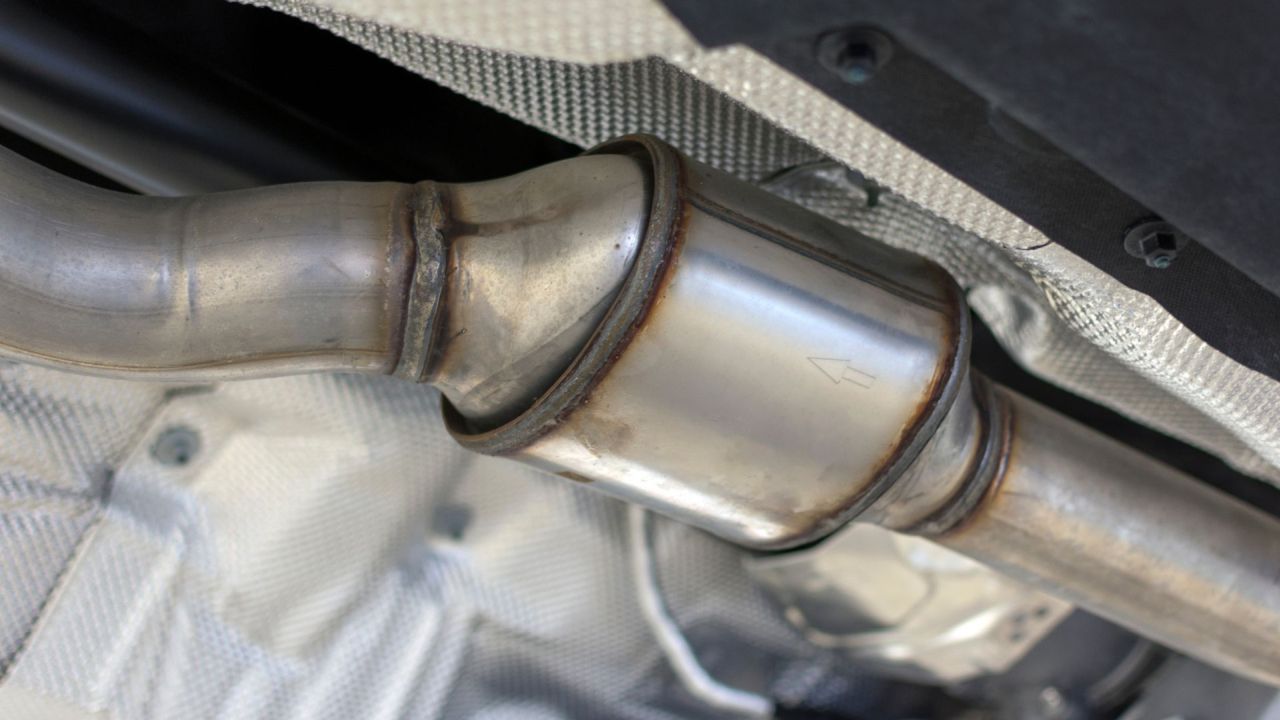
What Is a Catalytic Converter? What Are the Symptoms of a Malfunction?
A catalytic converter is an emissions-control component installed in the exhaust system of a vehicle. Its primary purpose is to reduce harmful pollutants produced by the engine before exhaust gases are released into the atmosphere.
Internal combustion engines produce several pollutants during combustion. The most important ones include carbon monoxide (CO), hydrocarbons (HC), and nitrogen oxides (NOx). A properly functioning catalytic converter converts these harmful gases into less harmful substances such as carbon dioxide (CO₂), nitrogen (N₂), and water vapor.
The catalytic converter does not simply filter exhaust gases mechanically. Instead, it uses chemical reactions accelerated by precious-metal catalysts.
Inside the converter is a specially designed substrate, usually made from ceramic or metal, containing thousands of small passages. These passages provide a very large surface area for exhaust gases to contact the catalyst coating.
The active catalyst materials commonly include platinum, palladium, and rhodium.
Although catalytic converters are most commonly associated with gasoline-powered cars, similar catalytic technologies are also used in diesel engines, industrial equipment, generators, motorcycles, and other combustion systems.
How Does a Catalytic Converter Work?
The catalytic converter works by promoting chemical reactions between pollutants in the exhaust gas.
For a modern gasoline engine, the most common design is the three-way catalytic converter.
The name “three-way” comes from its ability to address three major groups of pollutants:
-
Carbon monoxide (CO)
-
Hydrocarbons (HC)
-
Nitrogen oxides (NOx)
The converter performs two major types of chemical reactions.
Oxidation reactions
Carbon monoxide is oxidized into carbon dioxide.
Unburned hydrocarbons are oxidized into carbon dioxide and water.
Reduction reactions
Nitrogen oxides are reduced into nitrogen and oxygen.
These reactions occur on the catalyst surface. The catalyst itself is not normally consumed in the chemical reactions; instead, it accelerates the reactions.
The converter needs to reach a sufficiently high operating temperature before it becomes highly effective. This is why modern vehicles often use oxygen sensors, precise fuel control, and strategically positioned catalytic converters to reduce emissions shortly after engine startup.
What Happens Inside a Catalytic Converter?
A catalytic converter typically contains a honeycomb-shaped substrate.
The honeycomb structure is important because it provides a huge surface area without making the exhaust system excessively large.
The substrate is coated with a washcoat that contains the catalytic materials.
As hot exhaust gases pass through the small channels, pollutants come into contact with the catalyst.
Depending on the type of catalytic converter and the operating conditions, different reactions take place.
For gasoline engines operating around the stoichiometric air-fuel ratio, the engine control system continuously adjusts the mixture so the three-way catalyst can simultaneously reduce NOx and oxidize CO and HC.
This is one reason oxygen sensors are extremely important.
The engine control module uses oxygen-sensor feedback to maintain the air-fuel mixture within the range where the catalytic converter can operate effectively.
Why Does a Catalytic Converter Need Heat?
A catalytic converter cannot perform at maximum efficiency when it is cold.
It must reach its light-off temperature before the catalytic reactions become highly effective.
During a cold start, the engine produces emissions before the converter has reached its normal operating temperature. Modern vehicles therefore use various strategies to heat the catalyst more quickly.
These may include:
-
Placing the catalyst close to the exhaust manifold
-
Using multiple catalytic converters
-
Adjusting ignition timing during warm-up
-
Modifying fuel injection
-
Using electrically heated catalyst systems in some applications
The first few minutes after a cold start can therefore be particularly important from an emissions perspective.
The History of the Catalytic Converter
The development of the catalytic converter was closely connected to the growing problem of vehicle air pollution.
As automobile ownership increased during the twentieth century, emissions from internal combustion engines became an increasingly important environmental concern.
Engineers began developing systems that could chemically convert harmful exhaust pollutants into less harmful substances.
One of the major milestones occurred in the 1970s, when increasingly strict vehicle emissions regulations accelerated the adoption of catalytic converters.
The introduction of unleaded gasoline was also extremely important.
Traditional leaded gasoline could contaminate and deactivate catalytic materials. As catalytic converters became standard equipment, unleaded fuel became necessary for vehicles equipped with these systems.
Over subsequent decades, catalytic converter technology improved significantly.
Modern systems are smaller, more efficient, more durable, and better integrated with electronic engine management systems than early designs.
The development of oxygen sensors, electronic fuel injection, advanced engine control units, improved catalyst formulations, and stricter emissions regulations has played a major role in this evolution.
What Are the Different Types of Catalytic Converters?
Catalytic converters can be classified according to their chemical function, engine application, and construction.
The most common types include three-way catalytic converters, oxidation catalysts, diesel oxidation catalysts, and more advanced emissions systems used with diesel engines.
Three-Way Catalytic Converter
The three-way catalytic converter is widely used in gasoline-powered vehicles.
It simultaneously addresses:
-
Carbon monoxide
-
Hydrocarbons
-
Nitrogen oxides
This type of converter is particularly effective when the engine operates close to the stoichiometric air-fuel ratio.
Most modern gasoline passenger cars use some form of three-way catalytic system.
Two-Way Oxidation Catalytic Converter
An oxidation catalyst primarily focuses on oxidizing carbon monoxide and hydrocarbons.
It does not provide the same NOx reduction capability as a three-way catalyst.
Older gasoline systems and some diesel applications have used oxidation catalysts.
Diesel Oxidation Catalyst (DOC)
Diesel engines operate differently from gasoline engines because they normally use excess air.
A diesel oxidation catalyst is designed primarily to reduce pollutants such as carbon monoxide and hydrocarbons.
A diesel emissions system may also include additional components such as:
-
Diesel particulate filter (DPF)
-
Selective catalytic reduction (SCR)
-
Diesel exhaust fluid or AdBlue injection
-
NOx sensors
These components work together rather than relying on a single catalytic converter.
Selective Catalytic Reduction (SCR)
SCR is a separate emissions-control technology primarily used to reduce nitrogen oxides from diesel exhaust.
Instead of relying only on the catalyst inside a traditional converter, the system injects a urea-based solution into the exhaust.
The resulting chemical process helps convert NOx into nitrogen and water.
SCR is particularly important in modern diesel vehicles because diesel engines operate with excess oxygen, making conventional three-way catalyst operation unsuitable for NOx reduction in the same way as gasoline engines.
Close-Coupled and Underfloor Catalytic Converters
Catalytic converters can also be classified according to their position in the exhaust system.
A close-coupled catalytic converter is located close to the engine.
Its main advantage is that it heats up quickly after startup.
An underfloor catalytic converter is positioned farther downstream, typically beneath the vehicle.
Some vehicles use more than one catalyst to achieve the required emissions performance.
High-Flow and Performance Catalytic Converters
Performance vehicles and modified exhaust systems may use high-flow catalytic converters.
These are designed to provide sufficient emissions control while reducing exhaust restriction compared with some conventional designs.
However, a high-flow catalytic converter is not automatically legal or emissions-compliant simply because it is marketed as a performance product.
Its suitability depends on the vehicle, emissions regulations, certification, and application.
What Are the Advantages of a Catalytic Converter?
The most important advantage is pollution reduction.
A properly functioning catalytic converter can dramatically reduce the amount of certain harmful pollutants released from an internal combustion engine.
Other advantages include:
Reduced carbon monoxide emissions
CO is a toxic gas produced by incomplete combustion. Catalytic oxidation converts much of it into carbon dioxide.
Reduced hydrocarbon emissions
Unburned fuel compounds contribute to air pollution and smog formation. The catalyst helps oxidize these compounds.
Reduced nitrogen oxide emissions
Three-way catalysts can convert NOx into nitrogen and oxygen when operating under appropriate conditions.
Better compliance with emissions regulations
Catalytic converters allow vehicles to meet increasingly strict emissions requirements.
Reduced contribution to urban air pollution
Large numbers of vehicles operating in cities can contribute significantly to local air pollution. Effective exhaust after-treatment helps reduce this impact.
What Are the Disadvantages of a Catalytic Converter?
Catalytic converters are highly beneficial, but they also have some disadvantages.
High cost
Catalytic converters contain valuable catalyst materials such as platinum, palladium, and rhodium. This makes replacement expensive.
Can become clogged
A damaged or melted substrate can restrict exhaust flow.
Sensitive to engine problems
A catalytic converter can be damaged by excessive fuel, oil contamination, coolant entering the combustion chamber, or severe misfires.
Requires operating temperature
The converter cannot provide full emissions-control performance immediately after a cold start.
Can be damaged by overheating
Severe combustion problems can cause extremely high exhaust temperatures and destroy the catalyst substrate.
Precious-metal dependence
The use of precious metals contributes significantly to manufacturing and replacement costs.
What Are the Symptoms of a Failing Catalytic Converter?
A catalytic converter can fail in several different ways.
It can become contaminated, internally damaged, melted, cracked, or physically restricted.
The symptoms depend on the type and severity of the failure.
Common symptoms include:
-
Loss of engine power
-
Poor acceleration
-
Sluggish throttle response
-
Reduced fuel economy
-
Engine hesitation
-
Rough running
-
Check Engine Light
-
Exhaust odor
-
Excessive exhaust heat
-
Rattling sounds from underneath the vehicle
-
Difficulty reaching high engine speeds
-
Engine stalling in severe cases
A partially blocked catalytic converter can sometimes allow the vehicle to drive relatively normally at low loads but cause major power loss during acceleration.
This happens because the engine needs to move a larger volume of exhaust gas at higher engine speeds and loads.
Why Does a Catalytic Converter Become Clogged?
A clogged catalytic converter is one of the more serious failures because it can create excessive exhaust backpressure.
The internal ceramic substrate can melt or break apart.
Possible causes include:
-
Severe engine misfire
-
Excessive fuel entering the exhaust
-
Faulty fuel injectors
-
Incorrect air-fuel mixture
-
Ignition system failure
-
Failed oxygen sensor
-
Excessive oil consumption
-
Coolant entering the combustion chamber
-
Long-term overheating
-
Physical damage
-
Catalyst contamination
A catalytic converter usually does not fail without a reason.
If a new converter is installed while the underlying engine problem remains unresolved, the replacement converter may fail again.
Why Does a Catalytic Converter Melt?
One of the most common causes of catalyst melting is excessive unburned fuel entering the exhaust.
If an engine misfires, fuel may pass through the combustion chamber without being completely burned.
That fuel can ignite inside the catalytic converter.
This can dramatically increase catalyst temperature.
Severe overheating can cause the ceramic substrate to melt and collapse.
Once the honeycomb structure collapses, exhaust flow becomes restricted.
This can create a cycle in which the engine loses power because it cannot efficiently expel exhaust gases.
Can Engine Oil Damage a Catalytic Converter?
Yes.
If an engine burns excessive amounts of oil, oil-derived contaminants can enter the exhaust.
Long-term oil contamination can reduce catalytic efficiency and damage the catalyst.
Possible causes of excessive oil consumption include:
-
Worn piston rings
-
Damaged valve stem seals
-
Turbocharger problems
-
Excessive crankcase pressure
-
Engine wear
Replacing the catalytic converter without addressing excessive oil consumption may result in another premature catalyst failure.
Can Coolant Damage a Catalytic Converter?
Yes.
Coolant entering the combustion chamber can eventually reach the exhaust system.
Possible causes include:
-
Blown head gasket
-
Cracked cylinder head
-
Cracked engine block
-
Other internal coolant leaks
Coolant contamination can damage the catalyst and may also produce abnormal exhaust smoke or other engine symptoms.
What Does a Catalytic Converter Rattle Mean?
A rattling sound from the catalytic converter area can indicate that the internal substrate has broken apart.
The ceramic honeycomb can crack because of:
-
Thermal shock
-
Physical impact
-
Excessive temperature
-
Age
-
Internal catalyst deterioration
When the substrate breaks, small pieces can move inside the housing and produce a characteristic rattling noise.
In severe cases, the broken material can shift and block exhaust passages.
How Is a Catalytic Converter Diagnosed?
Catalytic converter diagnosis should not be based on a single symptom.
A technician should first determine whether the engine is operating correctly.
The diagnostic process may include:
Reading OBD-II trouble codes
Codes such as P0420 and P0430 can indicate catalyst efficiency problems.
However, these codes do not automatically prove that the catalytic converter itself is defective.
The underlying cause must be investigated.
Checking oxygen sensor signals
The upstream and downstream oxygen sensors can provide valuable information about catalyst operation.
In a conventional gasoline system, the upstream sensor typically responds rapidly to changes in exhaust oxygen concentration.
The downstream sensor should generally show a more stabilized signal when the catalytic converter is functioning properly.
Checking exhaust backpressure
A restricted catalytic converter can create excessive backpressure.
This can be measured using appropriate diagnostic equipment.
Checking engine misfires
Misfire codes and ignition problems should be investigated before condemning the catalytic converter.
Checking fuel mixture
An excessively rich or lean mixture can cause emissions and catalyst problems.
Checking oil and coolant consumption
Engine-fluid contamination can shorten catalyst life.
What Does P0420 Mean?
P0420 generally refers to:
Catalyst System Efficiency Below Threshold — Bank 1
This code means the engine control system has determined that catalyst efficiency appears lower than expected.
The code does not necessarily mean that the catalytic converter must immediately be replaced.
Other possible causes can include:
-
Exhaust leaks
-
Faulty oxygen sensors
-
Wiring problems
-
Incorrect fuel mixture
-
Engine misfires
-
Fuel-system problems
-
Catalyst aging
-
Actual catalytic converter failure
Proper diagnosis is therefore important.
What Does P0430 Mean?
P0430 generally refers to:
Catalyst System Efficiency Below Threshold — Bank 2
This is similar to P0420 but applies to Bank 2 on engines with two cylinder banks.
Again, the code should be treated as a diagnostic starting point rather than automatic proof of catalytic converter failure.
How Long Does a Catalytic Converter Last?
There is no single universal replacement interval.
A catalytic converter is generally designed to last for a long period, often many years and potentially the life of the vehicle when the engine and emissions system remain healthy.
Its actual lifespan depends on:
-
Engine condition
-
Driving conditions
-
Fuel quality
-
Oil consumption
-
Misfires
-
Maintenance
-
Exhaust temperature
-
Catalyst quality
-
Vehicle design
A healthy engine is one of the best ways to extend catalytic converter life.
Can a Catalytic Converter Be Cleaned?
There are products marketed as catalytic converter cleaners, but cleaning is not a universal solution.
If the catalyst is contaminated or the problem is caused by another engine issue, correcting the underlying problem may be more important than attempting to clean the converter.
A converter with a melted, collapsed, cracked, or physically damaged substrate cannot normally be restored simply by adding a cleaning chemical.
Professional diagnosis should determine whether cleaning is appropriate or replacement is necessary.
Can a Catalytic Converter Be Repaired?
A catalytic converter with a damaged internal substrate generally cannot be meaningfully repaired.
If the ceramic honeycomb has melted or broken apart, replacement is usually the proper solution.
However, external problems such as damaged heat shields, mounting brackets, or certain exhaust connections may be repairable without replacing the catalyst itself.
What Happens If the Catalytic Converter Is Removed?
Removing or disabling a catalytic converter can have several consequences.
The exact consequences depend on the vehicle and local laws, but mechanically and electronically, several problems can occur.
Increased emissions
Without the catalytic converter, harmful exhaust pollutants can increase substantially.
Check Engine Light
Modern vehicles monitor emissions-system performance.
Removing the converter can cause catalyst-efficiency faults such as P0420 or P0430.
Possible inspection failure
In jurisdictions where emissions equipment is checked, a vehicle with a missing or modified catalytic converter may fail inspection.
Exhaust odor
A vehicle without effective catalytic treatment can produce a noticeably stronger exhaust odor.
Potential ECU calibration problems
The engine control system may detect abnormal oxygen-sensor behavior or catalyst efficiency.
Possible legal consequences
Catalytic converter removal is illegal or restricted in many jurisdictions when it causes a vehicle to fail its required emissions standards.
For road-going vehicles, emissions-control components should therefore not be removed simply to obtain a perceived performance advantage.
Does Removing the Catalytic Converter Increase Power?
Removing a severely blocked catalytic converter can restore power that was lost because of exhaust restriction.
However, removing a healthy catalytic converter does not automatically produce a major performance improvement on a modern road vehicle.
Modern engines and exhaust systems are designed as an integrated system.
If a converter is functioning correctly, replacing it with an unrestricted exhaust section may provide little real-world benefit while increasing emissions and potentially creating legal and diagnostic problems.
If a vehicle has poor performance because of a restricted converter, the correct solution is to diagnose the restriction and replace the defective component rather than simply removing emissions equipment.
Can a Car Run Without a Catalytic Converter?
Technically, many internal combustion engines can continue running without a catalytic converter.
However, that does not mean the vehicle is operating correctly or legally.
The engine may continue to start and drive, but emissions can increase significantly and the Check Engine Light may illuminate.
Depending on the vehicle, the engine control system may also enter a modified operating strategy if it detects emissions-system faults.
Catalytic Converters and Environmental Protection
Catalytic converters have played an important role in reducing vehicle-related air pollution.
Large-scale use of catalytic converters has significantly reduced emissions of carbon monoxide, hydrocarbons, and nitrogen oxides from modern vehicles compared with older uncontrolled combustion systems.
Their environmental contribution is particularly important in densely populated cities where millions of combustion engines may operate every day.
However, catalytic converters are not a complete solution to vehicle-related environmental problems.
They do not eliminate carbon dioxide emissions produced by burning fossil fuels.
They primarily reduce specific harmful pollutants.
For this reason, environmental strategies also include:
-
Improved fuel efficiency
-
Hybrid technology
-
Electric vehicles
-
Cleaner fuels
-
Advanced engine management
-
Stricter emissions standards
-
Public transportation
-
Improved vehicle maintenance
Catalytic converters should therefore be considered one part of a larger emissions-control strategy.
Recycling Catalytic Converters
Catalytic converters have another important environmental characteristic: they contain valuable precious metals.
Platinum, palladium, and rhodium can be recovered from used catalytic converters through specialized recycling processes.
Recycling these materials can reduce the need for new raw-material extraction.
However, catalytic converter recycling should be performed through legitimate recycling channels because the high value of the metals has also contributed to catalytic converter theft in some regions.
Catalytic Converter Applications Outside Automobiles
Catalytic technology is not limited to passenger cars.
Similar catalytic systems are used in many industrial and commercial applications.
Industrial Engines
Large diesel and natural-gas engines can use catalytic after-treatment systems to reduce exhaust emissions.
These systems are used in:
-
Power generators
-
Construction equipment
-
Mining equipment
-
Agricultural machinery
-
Industrial engines
-
Marine engines
Power Generation
Stationary engines used for electricity generation can produce significant quantities of exhaust pollutants.
Catalytic systems can be installed to reduce emissions from generators and other combustion-based power systems.
Industrial Furnaces and Boilers
Catalytic technologies can also be used in industrial heating equipment.
Depending on the application, catalysts can help reduce pollutants such as nitrogen oxides, carbon monoxide, and hydrocarbons.
Chemical and Manufacturing Industries
Catalysts are widely used in industrial processes because they can accelerate chemical reactions and improve process efficiency.
Although industrial catalytic systems are not identical to automotive catalytic converters, they use the same fundamental concept: a catalyst promotes a chemical reaction without being consumed in the same way as the reactants.
Marine Applications
Marine engines can also use exhaust after-treatment systems.
Large marine diesel engines increasingly require emissions-control technologies to meet environmental regulations.
Depending on the engine and applicable regulations, these systems may include oxidation catalysts, particulate filters, SCR systems, and other technologies.
Motorcycle Catalytic Converters
Modern motorcycles can also be equipped with catalytic converters.
Their compact exhaust systems require carefully engineered catalyst placement because available space is limited and exhaust temperatures can be high.
Catalytic converters help motorcycles meet applicable emissions requirements while maintaining engine performance.
How to Protect Your Catalytic Converter
Proper vehicle maintenance is one of the best ways to protect the catalytic converter.
Important practices include:
-
Fix engine misfires promptly
-
Replace defective spark plugs
-
Maintain correct fuel pressure
-
Repair leaking injectors
-
Monitor oil consumption
-
Repair coolant leaks
-
Replace faulty oxygen sensors when properly diagnosed
-
Avoid prolonged operation with a Check Engine Light caused by engine faults
-
Maintain the correct air-fuel mixture
-
Use the correct engine oil
-
Repair exhaust leaks
-
Follow the manufacturer's maintenance schedule
The most important principle is simple:
A catalytic converter should not be expected to compensate for an unhealthy engine.
If the engine continuously sends excessive fuel, oil, coolant, or abnormal exhaust gases into the converter, catalyst damage is likely.
Is a Catalytic Converter Dangerous When It Is Hot?
Yes.
Catalytic converters can become extremely hot during normal operation.
The temperature can increase even further when the engine has a misfire or an excessively rich mixture.
For this reason:
-
Do not touch a recently operated catalytic converter
-
Keep flammable materials away from the exhaust
-
Avoid parking over dry grass or other combustible materials
-
Allow the exhaust system to cool before performing repairs
-
Use appropriate safety equipment when working underneath the vehicle
A catalytic converter can remain hot for a considerable time after the engine has been switched off.
Why Are Catalytic Converters Expensive?
The primary reason is the use of precious metals.
Platinum, palladium, and rhodium are used because they are highly effective at promoting the chemical reactions required for emissions control.
The price of these metals can fluctuate significantly.
Additional costs include:
-
Vehicle-specific design
-
Ceramic or metallic substrate
-
Manufacturing
-
Emissions certification
-
Sensors and associated components
-
Heat shielding
-
Installation labor
This is why catalytic converter replacement can be one of the more expensive exhaust-system repairs.
Can a Bad Catalytic Converter Damage the Engine?
A severely restricted catalytic converter can create excessive exhaust backpressure.
If the restriction becomes severe enough, the engine may experience:
-
Significant power loss
-
Poor acceleration
-
Difficulty maintaining high RPM
-
Stalling
-
Increased engine load
-
Abnormal operating temperatures
A failed catalyst may therefore cause serious drivability problems.
However, it is equally important to understand the opposite relationship: engine problems can damage the catalytic converter.
A misfire, rich mixture, oil consumption, or coolant leak can destroy a catalyst.
Therefore, when replacing a failed catalytic converter, technicians should always investigate why the original component failed.
Final Thoughts
The catalytic converter is one of the most important emissions-control components in a modern internal combustion vehicle.
Its job is not simply to reduce exhaust odor or make the exhaust system cleaner. It performs complex chemical reactions that convert harmful pollutants into substantially less harmful compounds.
Modern catalytic converters are the result of decades of development involving chemistry, engine management, emissions regulations, sensor technology, and materials engineering.
A properly functioning catalytic converter can operate for many years, but it depends heavily on the health of the engine.
Misfires, excessive fuel, oil consumption, coolant leaks, overheating, and incorrect air-fuel mixtures can severely shorten its life.
If symptoms such as loss of power, poor acceleration, rattling from the exhaust, excessive heat, unusual exhaust odor, or Check Engine Light appear, the catalytic converter should be evaluated together with the engine and emissions-control system.
Most importantly, catalytic converter removal should not be treated as a routine performance modification. On modern road vehicles, it can increase harmful emissions, trigger diagnostic faults, cause inspection problems, and violate local emissions regulations.
The catalytic converter remains an essential bridge between internal combustion technology and modern environmental requirements, helping vehicles achieve much cleaner exhaust emissions than older uncontrolled systems.