TR
TR EN
EN

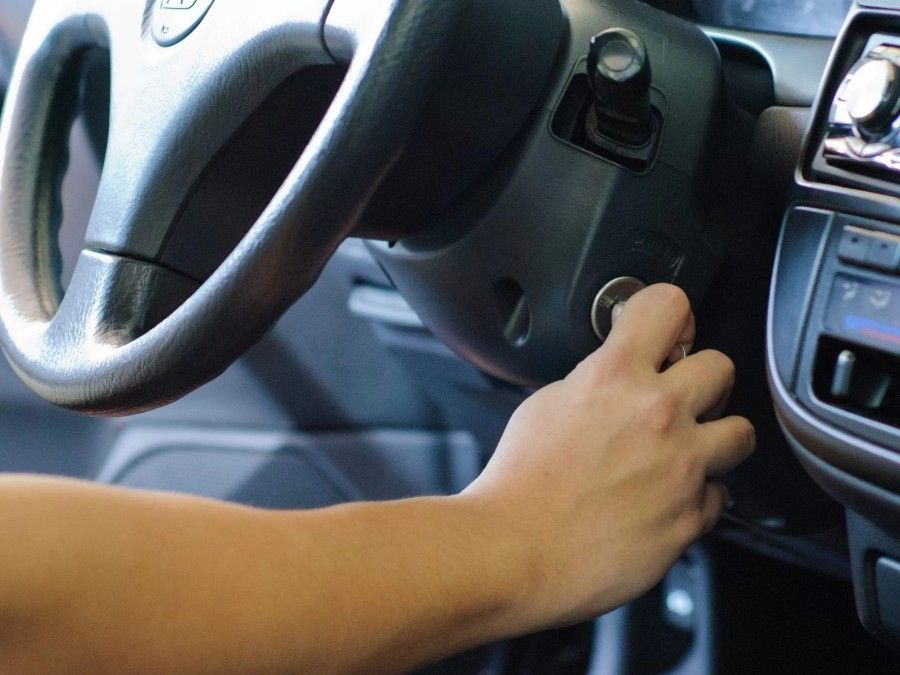
Why Won’t the Car Start?
Finding out why a car will not start requires a logical diagnostic approach. A no-start condition can be caused by something as simple as a weak battery or loose connection, but it can also result from problems with the starter system, fuel delivery, ignition, engine timing, immobilizer, compression, or engine control system.
The first and most important question is:
Does the engine crank when you try to start the vehicle, or does nothing happen?
This distinction immediately separates many possible causes.
When the Engine Does Not Crank
If you turn the ignition key or press the Start button and the engine does not turn over, the problem is generally related to the battery, starting circuit, security system, wiring, or starter system.
In an automatic transmission vehicle, the transmission generally needs to be in Park (P) or Neutral (N). Depending on the vehicle, a manual transmission may require the clutch pedal to be depressed, while automatic vehicles may require the brake pedal to be pressed before the starter is enabled.
Weak or Discharged Battery
A weak battery is one of the most common reasons a vehicle will not start.
Typical symptoms include:
-
A single click when starting
-
Rapid clicking from the starter relay or solenoid
-
Dim headlights
-
Instrument cluster resetting or going dark
-
Slow cranking
-
No response when the Start button is pressed
Battery voltage should be checked with a multimeter, but voltage alone does not prove that the battery is healthy. A battery can show acceptable resting voltage and still fail under the heavy load required by the starter motor.
A proper battery load or conductance test provides more useful information.
Loose or Corroded Battery Terminals
The positive and negative battery connections should be inspected for:
-
Corrosion
-
Loose terminals
-
Damaged cables
-
Poor ground connections
-
Broken or overheated cable ends
A poor connection can prevent enough current from reaching the starter even when the battery itself is in good condition.
The engine ground strap is also important. A damaged or corroded ground connection can cause a no-crank condition and may create other electrical problems.
Faulty Starter Relay or Solenoid
The starter relay and solenoid are responsible for controlling the high-current starter circuit.
Depending on the vehicle, a relay may control the starter solenoid, while the solenoid itself engages the starter drive and switches high current to the starter motor.
A click does not automatically mean the relay or solenoid is good. Likewise, the absence of a click does not automatically prove that the relay is faulty.
The starter control signal, power supply, ground, and voltage drop should be tested.
Faulty Starter Motor
A worn starter motor can cause:
-
No cranking
-
Intermittent starting
-
Slow cranking
-
Clicking without engine rotation
-
Grinding or abnormal mechanical noise
The starter should be tested using the vehicle manufacturer's recommended procedure. Directly connecting battery power to a removed starter is not a suitable general DIY test because high current, sparks, accidental movement, and damage to electrical components can create safety risks.
A starter test bench or proper in-vehicle electrical test is safer.
Damaged Starter Drive or Flywheel Teeth
If the starter motor spins but does not properly engage the engine, the starter drive mechanism may be damaged.
Grinding noises during starting can also indicate damage to the starter gear or the flywheel/flexplate ring gear.
This requires mechanical inspection rather than simply replacing the starter.
Faulty Ignition Switch or Start Button
In vehicles with a traditional ignition switch, the switch must send the appropriate signal to the starter circuit.
Modern vehicles using a Start button can have a more complex authorization system involving the body control module, immobilizer, brake or clutch switch, transmission position signal, and engine control module.
If the starter does not receive its control signal, these circuits should be tested before replacing the ignition switch or Start button.
Park/Neutral, Clutch, and Brake Safety Switches
A vehicle may intentionally prevent starter operation unless certain conditions are satisfied.
Depending on the vehicle, this can involve:
-
Park/Neutral position switch
-
Transmission range sensor
-
Clutch pedal switch
-
Brake pedal switch
-
Start authorization system
If one of these signals is missing, the starter may not operate even though the battery and starter motor are perfectly functional.
Dead Smart Key Battery
A weak or dead key-fob battery can sometimes prevent a vehicle from recognizing the key.
Many modern vehicles have an emergency starting procedure. Depending on the vehicle, the key may need to be held near a designated detection area, placed in a specific slot, or positioned close to the Start button.
The exact procedure varies between manufacturers, so the owner's manual should be checked.
Importantly, a dead key-fob battery does not necessarily mean that the vehicle's immobilizer itself has failed.
Immobilizer or Anti-Theft System
The immobilizer can prevent the engine from starting if the vehicle does not recognize an authorized key.
Possible symptoms include:
-
Immobilizer warning light
-
Security indicator flashing
-
Engine cranking but not starting
-
Starter operation being disabled on some vehicles
A diagnostic scanner can be useful for checking key authorization and immobilizer-related faults.
Seized or Mechanically Locked Engine
A severely damaged engine may be unable to rotate.
Possible causes include:
-
Seized bearings
-
Severe lack of lubrication
-
Internal mechanical failure
-
Timing-related damage
-
Severe overheating
-
Liquid entering a cylinder and preventing normal compression movement
Do not attempt to force the engine to turn using unsafe methods. If mechanical seizure is suspected, the engine should be inspected using appropriate workshop procedures.
When the Engine Cranks but Does Not Start
This is a different situation.
If the starter turns the engine at normal speed but the engine does not fire, the battery and starter are usually not the primary problem.
A gasoline or diesel engine generally needs the correct combination of:
Fuel + air + compression + correctly timed combustion + appropriate engine control signals
A problem with any of these can result in a crank-no-start condition.
Fuel System Problems
Fuel-related problems can prevent the engine from starting even when the starter works normally.
Possible causes include:
-
Empty fuel tank
-
Low fuel pressure
-
Failed fuel pump
-
Fuel pump relay or control circuit problem
-
Restricted fuel filter
-
Damaged fuel lines
-
Faulty fuel pressure regulator
-
Faulty fuel injectors
-
Contaminated fuel
-
Immobilizer-related fuel or injection disablement
Failed Fuel Pump
A fuel pump may produce a brief sound when the ignition is switched on, but this sound does not prove that the pump is producing the correct fuel pressure or flow.
Likewise, not hearing the pump does not automatically prove that the pump itself has failed.
The correct diagnostic procedure is to check:
-
Fuel pump power supply
-
Ground
-
Pump control signal
-
Fuel pressure
-
Fuel flow
-
Fuel pressure retention
Some vehicles do not run the pump continuously during every key-on event, so the absence of an audible priming sound should be interpreted according to the specific vehicle's system.
Faulty Fuel Pump Relay or Control Circuit
Some vehicles use a conventional fuel pump relay, while others control the pump through an electronic fuel pump control module.
A failure in the relay, fuse, control module, wiring, or ECU command can prevent the pump from operating.
The circuit should be tested rather than replacing the relay automatically.
No Fuel in the Tank
Never overlook the simplest possibility.
A faulty fuel gauge or inaccurate fuel-level reading can make the driver believe there is fuel in the tank when the tank is actually empty.
If the vehicle suddenly stops running and then refuses to restart, the fuel level should be verified.
Contaminated or Incorrect Fuel
Contaminated fuel can cause difficult starting, misfires, poor running, or a complete no-start condition.
Possible contamination includes:
-
Water
-
Diesel in a gasoline vehicle
-
Gasoline in a diesel vehicle
-
Excessive contamination from a fuel storage or delivery problem
If the problem appeared immediately after refueling, the fuel should be considered as part of the diagnosis.
Restricted Fuel Filter
A severely restricted fuel filter can prevent the engine from receiving sufficient fuel.
This is particularly important on vehicles where the filter has a defined service interval or where fuel contamination has occurred.
However, a clogged filter should be confirmed based on fuel pressure and flow measurements rather than replaced simply because the vehicle has a starting problem.
Damaged or Restricted Fuel Lines
Fuel lines can become damaged, crushed, restricted, or disconnected.
A fuel supply problem can therefore exist even when the fuel pump itself is functioning correctly.
Fuel Pressure Regulator Problems
The fuel pressure regulator helps maintain the required fuel pressure for the injection system.
Depending on the design, it may be integrated into the fuel module, mounted on the fuel rail, or electronically controlled.
Incorrect fuel pressure can cause:
-
Hard starting
-
Long cranking
-
Poor idle
-
Misfires
-
Stalling
-
No-start conditions
Fuel pressure should be measured against the manufacturer's specification.
Faulty Fuel Injectors
Injectors must deliver the correct amount of fuel at the correct time.
A failed injector can cause a no-start condition, especially if multiple injectors are affected. A severely leaking injector can also flood the engine or create other problems.
Injector diagnosis can involve electrical testing, scan data, balance testing, fuel-pressure testing, and appropriate injector testing equipment.
Air Intake Problems
A major intake-air problem can affect starting and combustion.
Possible causes include:
-
Disconnected intake hose
-
Large vacuum leak
-
Damaged PCV system
-
Throttle body problems
-
Intake manifold leaks
-
EGR valve stuck in an incorrect position
A minor vacuum leak does not normally prevent a healthy modern engine from starting, so the size and location of the leak matter.
Starting Fluid Is Not a Reliable General Diagnostic Test
A common recommendation is to spray starting fluid into the intake and see whether the engine briefly runs.
Although this may sometimes provide diagnostic information, it is not a recommended general DIY test. Modern engines can be damaged by inappropriate starting-fluid use, and there is a significant fire risk.
A better approach is to diagnose fuel pressure, injector operation, ignition, crankshaft speed, camshaft synchronization, and engine-control data with appropriate equipment.
Ignition System Problems
Gasoline engines require a correctly timed and sufficiently strong ignition event.
Possible causes include:
-
Faulty spark plugs
-
Failed ignition coils
-
Ignition module problems
-
Crankshaft position sensor failure
-
Camshaft position sensor failure
-
Ignition power or ground problems
-
Wiring or connector faults
-
ECU-related problems
Faulty Crankshaft Position Sensor
The crankshaft position sensor provides information about crankshaft position and speed.
The ECU uses this information to determine engine timing and, depending on the system, to control fuel injection and ignition.
If the ECU cannot determine that the engine is rotating correctly, the engine may crank normally but fail to start.
One useful diagnostic check is live data. If engine speed remains at zero while the engine is clearly being cranked, the crankshaft signal and its wiring should be investigated.
However, a crankshaft sensor should not automatically be replaced just because a no-start condition exists.
Faulty Camshaft Position Sensor
The camshaft position signal helps the ECU determine the position of the camshaft relative to the crankshaft.
Depending on the engine design, a camshaft sensor failure may cause difficult starting, extended cranking, poor running, or a complete no-start condition.
Some engines can start with a missing camshaft signal by using the crankshaft signal, while others are much more sensitive to camshaft synchronization. The exact behavior depends on the engine management system.
Faulty Ignition Coil
Ignition coils generate the high voltage required to produce a spark at the spark plug.
Modern vehicles may use one coil per cylinder, coil packs, or other ignition arrangements.
A single failed coil usually causes a misfire on one cylinder rather than preventing the entire engine from starting. However, multiple ignition failures, loss of common power or ground, or a system-level ignition problem can cause a complete no-start condition.
Engine Compression Problems
An engine needs sufficient compression for combustion.
Low compression can result from:
-
Burned valves
-
Damaged piston rings
-
Valve timing problems
-
Broken timing belt or chain
-
Head gasket failure
-
Internal engine damage
If the engine cranks unusually fast or sounds different from normal, a mechanical problem should be considered.
A compression test or leak-down test can help determine whether the engine has a mechanical compression problem.
Timing Belt or Timing Chain Failure
A broken timing belt or failed timing chain can cause a crank-no-start condition.
In interference engines, a timing failure can also result in valve and piston contact and significant internal engine damage.
If the engine suddenly stopped while driving and now cranks unusually quickly without starting, valve timing should be checked.
Engine Control and Electrical Problems
Modern vehicles depend on multiple control modules and communication networks.
A no-start condition can sometimes be caused by:
-
ECU power supply problems
-
Poor ECU grounds
-
Blown fuses
-
CAN communication faults
-
Damaged wiring
-
Connector problems
-
Main relay failure
-
Ignition power problems
-
Faulty engine control module
An OBD-II scanner can provide valuable information, but a stored fault code does not automatically identify the failed component.
A Simple Way to Approach a No-Start Problem
The most efficient diagnostic approach is to separate the problem into two categories.
If the engine does not crank:
Check the battery, terminals, grounds, starter control circuit, transmission/clutch/brake authorization signals, starter relay, solenoid, starter motor, and immobilizer system.
If the engine cranks but does not start:
Check fuel pressure, injector operation, ignition, crankshaft and camshaft signals, engine synchronization, compression, and ECU data.
This approach prevents unnecessary parts replacement.
What Should You Check First?
Start with the simplest and safest checks:
-
Confirm that the battery has sufficient charge.
-
Check the battery terminals and major ground connections.
-
Determine whether the engine actually cranks.
-
Check for fuel and verify fuel pressure when necessary.
-
Scan the vehicle for diagnostic trouble codes.
-
Check engine RPM during cranking.
-
Verify ignition and injector operation.
-
Check camshaft/crankshaft synchronization.
-
Perform compression or mechanical timing tests when required.
-
Inspect wiring, connectors, fuses, relays, and ECU power supplies.
A vehicle that will not start does not automatically need a new battery, fuel pump, starter, ignition coil, or ECU. The most reliable diagnosis comes from determining exactly what is missing: starter operation, fuel, spark, compression, timing, or the electronic signals required to control them.