TR
TR EN
EN

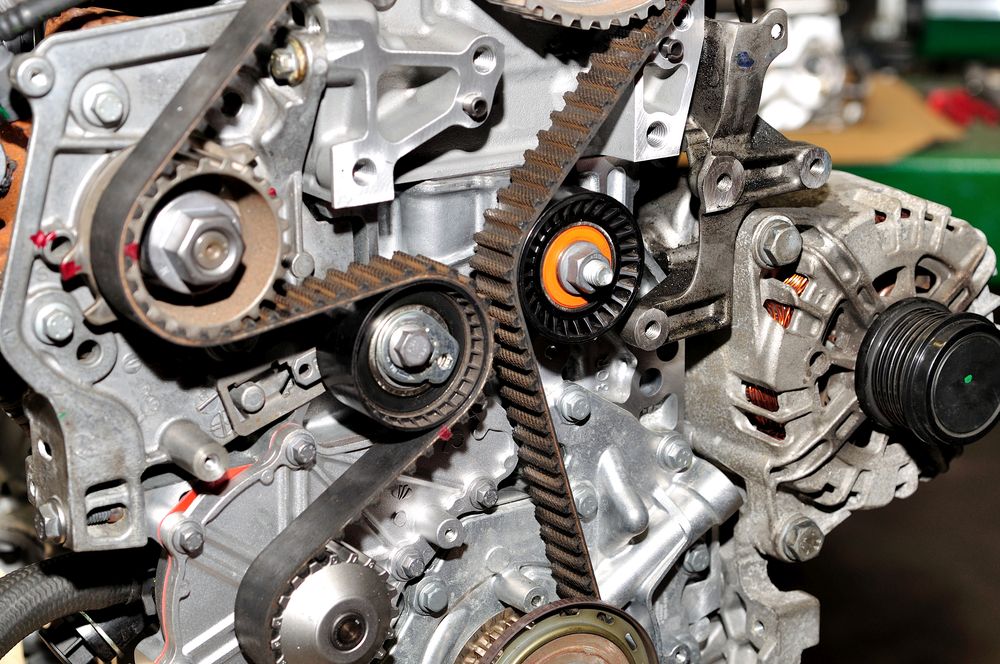
What Happens If the Timing Belt Breaks?
The timing belt is one of the most important components in an internal-combustion engine. It keeps the crankshaft and camshaft synchronized so that the valves open and close at exactly the right time.
When the timing belt breaks, this synchronization is suddenly lost. Depending on the engine design, the result can range from the engine simply stopping to severe internal engine damage.
This is particularly important with interference engines, where a broken timing belt can cause the pistons and valves to collide.
Why Does the Engine Stop When the Timing Belt Breaks?
The crankshaft and camshaft must rotate in a precisely coordinated relationship.
The crankshaft moves the pistons, while the camshaft controls the opening and closing of the valves. The timing belt keeps these two systems synchronized.
When the belt breaks:
Crankshaft and camshaft synchronization is lost.
The crankshaft may continue rotating while the camshaft no longer operates the valves correctly. The combustion process can no longer continue normally, so the engine usually stops almost immediately.
What Does a Broken Timing Belt Feel Like While Driving?
A timing belt failure is often sudden.
If the belt breaks while the vehicle is moving, the driver may notice:
-
The engine suddenly shuts off.
-
Pressing the accelerator no longer produces power.
-
The engine will not restart.
-
The starter may turn the engine faster than normal.
-
The engine may sound different during cranking.
-
Various warning lights may appear on the dashboard.
One of the most noticeable clues can be an unusually fast cranking sound after the engine has stopped.
This can happen because the loss of valve timing may also reduce normal cylinder compression.
Will the Pistons and Valves Collide?
It depends entirely on the engine's design.
Some engines have enough clearance between the pistons and fully open valves. These are generally referred to as non-interference engines. A broken timing belt may stop the engine without causing major internal damage.
Many modern engines, however, use an interference design. In these engines, the piston and valve operating areas overlap when timing is correct.
If the timing belt breaks, a piston moving upward can contact a valve that has remained open.
Possible damage includes:
-
Bent valves
-
Damaged valve stems
-
Damaged valve seats
-
Piston crown damage
-
Cylinder head damage
-
Camshaft damage
-
Damage to camshaft bearings or related components
The actual extent of the damage depends on the engine design, engine speed, and the circumstances under which the belt failed.
Is a Timing Belt Failure More Serious at High RPM?
The risk of severe damage is generally greater at higher engine speeds.
When a timing belt breaks at low RPM, the moving components have less kinetic energy. In some cases, this can result in less severe damage.
At high RPM, pistons and other engine components are moving much faster. If valve timing suddenly disappears, the potential for significant mechanical damage increases.
However, engine design remains the most important factor. An interference engine can suffer serious damage even if the belt breaks at relatively low speed.
Should You Try to Start the Engine After the Timing Belt Breaks?
No.
If you suspect that the timing belt has broken, repeatedly turning the engine over with the starter is not a good idea.
If the belt has already failed, restarting the engine will not solve the problem. On an interference engine, unnecessary cranking can also contribute to additional mechanical contact.
The safest approach is to have the vehicle inspected and, if necessary, transported to a repair facility.
Does a Broken Timing Belt Mean the Entire Engine Must Be Replaced?
Not necessarily.
A timing belt failure does not automatically mean that the entire engine needs to be replaced.
The required repair depends on the damage.
For example, if only several valves are bent, the cylinder head may be removed and repaired. Depending on the engine, repairs may include:
-
Replacing bent valves
-
Replacing damaged valve components
-
Repairing valve seats
-
Inspecting valve springs
-
Checking the camshaft
-
Inspecting piston crowns
-
Checking the cylinder head
-
Replacing damaged timing components
If the pistons, cylinder walls, cylinder head, or lower engine have suffered extensive damage, the repair can become considerably more expensive.
In some cases, replacing the complete engine or long block may then make more economic sense.
Which Parts Should Be Checked After a Timing Belt Breaks?
Replacing only the broken belt is often not enough.
The entire timing system should be inspected, including:
-
Timing belt
-
Tensioner
-
Idler pulleys
-
Water pump
-
Camshaft gears
-
Crankshaft gear
-
Valves
-
Valve springs
-
Camshaft
-
Cylinder head
-
Pistons
If the water pump is driven by the timing belt, its condition is particularly important.
A seized water pump or damaged tensioner can be the actual reason the belt failed. Installing a new belt without finding the original cause can result in another failure.
Why Do Timing Belts Break?
A timing belt can fail for several different reasons.
Common causes include:
-
Reaching the recommended service interval
-
Age-related deterioration
-
Incorrect installation
-
Failed tensioner
-
Failed idler pulley
-
Seized water pump
-
Oil contamination
-
Fuel or chemical contamination
-
Damaged belt teeth
-
Incorrect belt tension
-
Incorrect or poor-quality replacement parts
-
Manufacturing defects
-
Another engine component becoming locked or excessively difficult to rotate
This is why replacing only the belt without inspecting the rest of the timing system can be a mistake.
Can an Oil Leak Damage the Timing Belt?
Yes.
Depending on the belt material and engine design, prolonged exposure to engine oil, fuel, or unsuitable chemicals can deteriorate the belt.
A belt may still look reasonably normal from the outside while its internal structure has already been weakened.
If an oil leak reaches the timing belt area, the source of the leak should be repaired as part of the timing belt service.
Simply installing another belt while leaving the oil leak unresolved can shorten the life of the replacement belt.
Can a Timing Belt Break Before Its Recommended Replacement Interval?
Yes.
The manufacturer's replacement interval is not a guarantee that the belt will never fail before that mileage or time period.
Premature failure can result from:
-
Extreme temperatures
-
Oil contamination
-
Water pump failure
-
Tensioner failure
-
Incorrect installation
-
Incorrect belt tension
-
Damaged pulleys
-
Poor-quality parts
-
Severe operating conditions
This is why both mileage and time should be considered when following the manufacturer's timing belt replacement schedule.
Does a Timing Belt Always Show Warning Signs Before Breaking?
No.
This is one of the dangerous aspects of timing belt failure.
Some belts may show:
-
Cracks
-
Fraying
-
Missing teeth
-
Surface damage
-
Contamination
-
Excessive wear
But a belt can also fail without providing an obvious warning to the driver.
Furthermore, the belt itself may be perfectly intact while a tensioner, idler pulley, or water pump causes the timing system to fail.
For this reason, simply looking at the visible part of the belt is not always enough to determine its condition.
Are Timing Belts and Timing Chains the Same?
No.
Both systems synchronize the crankshaft and camshaft, but their construction is different.
A timing belt is made from reinforced rubber-based materials and has a defined replacement interval.
A timing chain uses metal links and is generally designed for a longer service life. However, a timing chain is not completely maintenance-free.
Chain stretch, worn guides, tensioner problems, and inadequate lubrication can all cause timing problems.
How Can Timing Belt Failure Be Prevented?
The most effective way to reduce the risk of timing belt failure is to follow the manufacturer's replacement schedule.
During a timing belt replacement, the entire system should be considered rather than treating the belt as an isolated component.
Important points include:
-
Use the correct belt for the engine.
-
Inspect or replace the tensioner as required.
-
Check the idler pulleys.
-
Inspect or replace the water pump according to the manufacturer's procedure.
-
Repair oil leaks around the timing system.
-
Follow the correct installation procedure.
-
Set belt tension according to the manufacturer's specifications.
-
Verify the engine timing after installation.
Unusual noises from the timing belt area, visible oil contamination, or an approaching replacement interval should not be ignored.
What Should You Do If the Timing Belt Has Broken?
If you suspect that the timing belt has broken while driving, do not repeatedly attempt to restart the engine.
Move the vehicle to a safe location if possible and arrange for professional inspection or towing.
The repair facility should first confirm the condition of the timing system and then determine whether internal engine damage has occurred.
On an interference engine, simply installing a new belt and attempting to start the engine without checking the valves and timing can be an inappropriate repair strategy.
A broken timing belt can sometimes result in a relatively straightforward repair, while in other engines it can cause extensive valve, piston, and cylinder-head damage. The key is to determine why the belt failed and how much mechanical damage occurred before deciding on the repair.