TR
TR EN
EN

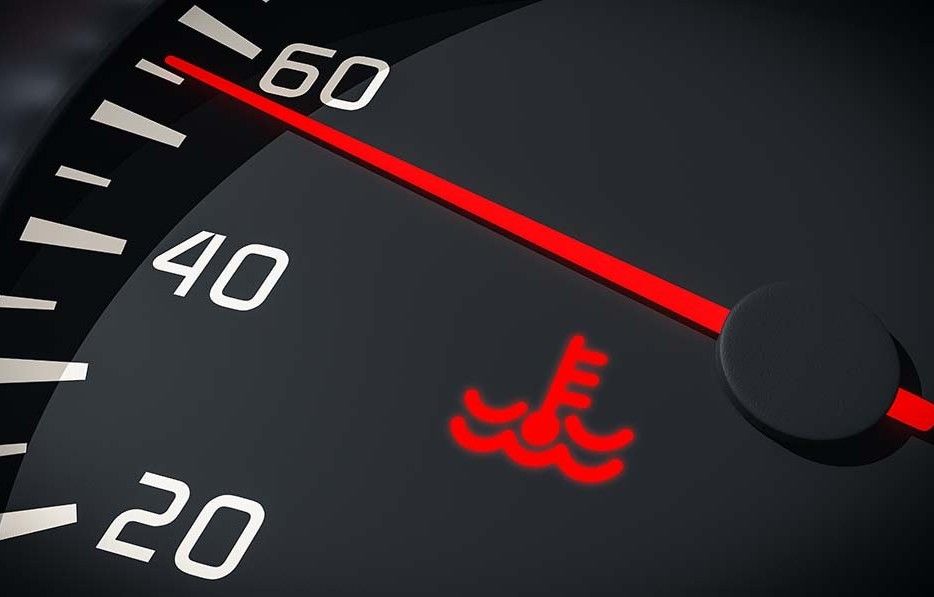
Why Does the Engine Temperature Warning Light Come On?
The engine temperature warning light is one of the most important warnings on a vehicle. It usually indicates that the engine coolant temperature has risen above the normal operating range or that the cooling system has detected a serious temperature-related problem.
Depending on the vehicle, the warning may appear as a red thermometer symbol, a coolant temperature warning, or together with the temperature gauge.
The warning light does not necessarily mean that the engine itself is the only problem. Low coolant, a cooling fan failure, a faulty thermostat, a damaged water pump, a blocked radiator, or even a faulty temperature sensor can cause the warning to appear.
Common Reasons for the Temperature Warning Light
Low coolant level
One of the most common causes is insufficient coolant.
If the cooling system does not contain enough coolant, heat cannot be transferred away from the engine efficiently. Coolant loss may be caused by a leaking radiator, hose, water pump, thermostat housing, expansion tank, or another component.
A coolant level that repeatedly drops should never be treated as normal.
Cooling fan failure
If the temperature warning appears mainly when the vehicle is stopped or moving slowly in traffic, while the temperature returns toward normal when driving at higher speeds, the cooling fan should be investigated.
Possible causes include:
-
Failed cooling fan motor
-
Blown fuse
-
Faulty fan relay
-
Damaged wiring
-
Faulty fan control module
-
Incorrect temperature sensor signal
Faulty thermostat
The thermostat controls coolant circulation according to engine temperature.
If it becomes stuck closed, hot coolant may not reach the radiator properly. This can cause the engine temperature to rise rapidly.
A thermostat stuck open usually produces different symptoms, such as slow warm-up or an engine that operates below its intended temperature. Therefore, not every thermostat failure causes an overheating warning.
Water pump failure
The water pump circulates coolant through the engine and radiator.
If the pump is mechanically damaged, its impeller is damaged, or its drive mechanism develops a problem, coolant circulation can become insufficient. The engine may then overheat, particularly under heavy load or at higher engine speeds.
Blocked radiator or restricted airflow
A radiator can become restricted internally by corrosion, deposits, or contaminated coolant. Its external fins can also become blocked by dirt, mud, insects, or other debris.
Reduced coolant flow or insufficient airflow through the radiator can significantly reduce cooling performance.
Air trapped in the cooling system
Air pockets can develop after coolant replacement or after a cooling-system component has been removed and installed.
If the system is not properly bled, coolant circulation can be affected. Air pockets can also cause temperature fluctuations and may interfere with the temperature sensor's ability to provide a reliable reading.
What Should You Do When the Temperature Warning Light Comes On?
If the warning light is red, the safest approach is to stop driving as soon as it is safe to do so.
Turn the engine off and allow it to cool.
Do not immediately open the radiator cap or expansion tank when the engine is extremely hot. The cooling system can be pressurized, and hot coolant or steam may cause severe burns.
Once the engine has cooled sufficiently, the coolant level can be checked.
Simply adding coolant or water and continuing to drive is not a proper repair if the system is losing coolant. The reason for the loss should be identified.
What If the Warning Light Comes On but the Engine Is Not Actually Overheating?
A warning light does not always prove that the engine is physically overheating.
The engine coolant temperature sensor can fail or send an incorrect signal. The sensor connector, wiring, power supply, and ECU data should therefore be checked.
On some vehicles, communication between the temperature sensor, ECU, and instrument cluster can also cause an incorrect warning.
For this reason, replacing the thermostat, radiator, or water pump solely because the warning light is on is not a reliable diagnostic method.
Can a Head Gasket Problem Cause the Temperature Warning Light?
Yes. A damaged head gasket can allow combustion gases to enter the cooling system or coolant to enter the combustion chambers.
Possible symptoms include:
-
Repeated coolant loss
-
Excessive white exhaust smoke
-
Continuous bubbling in the expansion tank
-
Abnormally high cooling-system pressure
-
Repeated overheating
-
Engine oil contamination in some cases
However, none of these symptoms alone proves that the head gasket has failed.
A cooling-system pressure test, combustion-gas test, compression test, or leak-down test may be required depending on the symptoms.
Other Problems That Can Cause the Warning Light
Other possible causes include:
-
Coolant leaks
-
Damaged or collapsed radiator hoses
-
Faulty radiator or expansion tank cap
-
Cooling fan relay failure
-
Cooling fan fuse failure
-
Fan control module problems
-
Coolant temperature sensor failure
-
Water pump failure
-
Thermostat failure
-
Internal radiator blockage
-
Air trapped in the cooling system
-
Head gasket failure
-
Cylinder head damage or distortion
-
Very low engine oil level
-
Excessive engine load
-
Cooling-system circulation problems
Is It Safe to Drive With the Temperature Warning Light On?
Driving with a red overheating warning can cause serious engine damage.
Continued overheating can damage the head gasket, distort the cylinder head, reduce engine oil performance, and in severe cases damage pistons, rings, bearings, or other internal engine components.
A relatively inexpensive cooling-system problem can therefore turn into a major engine repair if the vehicle continues to be driven while overheating.
How Is an Overheating Problem Properly Diagnosed?
The correct approach is to diagnose the cooling system rather than replacing components one by one.
The first checks should include coolant level, visible leaks, and the actual engine temperature. A diagnostic scanner can be useful for comparing the temperature reported by the coolant temperature sensor with the engine's actual condition.
The cooling fan should also be checked to determine whether it operates correctly when required. The thermostat, water pump, radiator, coolant circulation, and cooling-system pressure should be evaluated according to the symptoms.
If coolant is disappearing without an obvious external leak, a pressure test and combustion-gas test may be necessary.
A temperature warning light—especially a red overheating warning—should never be ignored. Stopping the vehicle and finding the cause early can prevent a cooling-system fault from turning into expensive engine damage.