TR
TR EN
EN

Gear Selector Stuck in Park: Causes and Repair Tips
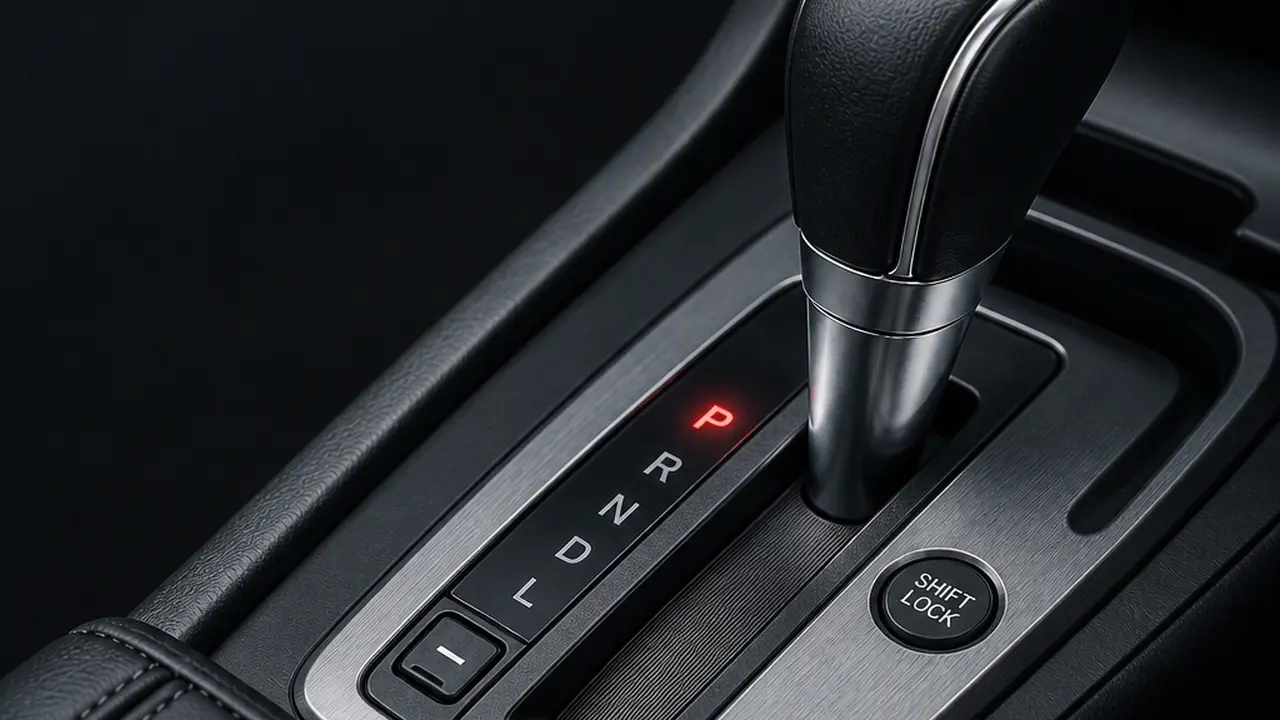
You press the brake pedal, move the gear selector, and nothing happens. The transmission remains in Park (P).
This can be frustrating, especially when the engine is running normally and there are no obvious warning lights on the dashboard. However, a gear selector that is stuck in Park does not necessarily mean that the transmission itself has failed.
In many vehicles, the problem is related to the brake pedal signal, the shift-lock system, an electrical fault, or the way the vehicle was parked on an incline.
Understanding what prevents the selector from moving can help you determine whether the problem is something simple or requires professional repair.
Why Is the Gear Selector Stuck in Park?
Automatic transmissions use a safety system that prevents the selector from being moved out of Park unless certain conditions are met.
The most important condition is usually the brake pedal signal. When you press the brake pedal, the vehicle should detect the brake input and release the shift lock.
If that signal is missing, the vehicle may continue to keep the selector locked in P.
There are several possible causes:
-
The vehicle is parked on a steep incline.
-
The brake pedal is not being detected.
-
The brake light switch is faulty.
-
The shift interlock solenoid is not working.
-
A fuse or wiring connection has failed.
-
The battery voltage is too low.
-
The gear selector mechanism has a mechanical problem.
-
There is an electrical or transmission control problem.
The exact system varies between vehicles, but the basic principle is similar.
Parking on a Slope Can Lock the Gear Selector
One of the most common situations occurs when an automatic vehicle is parked on a hill.
Inside an automatic transmission is a mechanical component called the parking pawl. When the selector is placed in P, the parking pawl locks the transmission and prevents the vehicle from rolling.
If the vehicle's weight is allowed to rest heavily against the parking pawl, significant force can be transferred to the mechanism.
This is especially noticeable when you park on a steep incline without properly applying the parking brake.
When you later try to move the selector out of P, the mechanism may be under enough load that the selector feels extremely stiff or appears to be completely stuck.
In this situation, the transmission may not actually be damaged. The selector is simply being held under mechanical load.
Why Should You Use the Parking Brake Before Selecting Park?
The parking brake is not just an extra safety device. It can also reduce the load placed on the transmission's parking mechanism.
A good parking sequence is:
Stop the vehicle while holding the brake pedal.
Apply the parking brake.
Keep the vehicle stationary with the parking brake.
Then select P.
This allows the parking brake to hold most of the vehicle's weight instead of leaving that load against the parking pawl.
The exact recommended procedure can vary between manufacturers, so the owner's manual should always take priority.
The Brake Pedal and Shift Interlock System
Modern automatic vehicles commonly use a Brake Transmission Shift Interlock (BTSI) system.
Its purpose is simple: the gear selector should not be moved out of Park unless the brake pedal is pressed.
This prevents the vehicle from unexpectedly moving if someone shifts the selector without intending to do so.
When you press the brake pedal, the vehicle receives a signal confirming that the brake is being applied. The shift-lock system then releases the selector.
If the vehicle does not receive this signal, the selector can remain locked in P.
A Faulty Brake Light Switch Can Cause the Problem
The brake light switch is one of the first components worth checking when a vehicle refuses to come out of Park.
This switch is normally located near the brake pedal. Besides controlling the brake lights, its signal can also be used by other vehicle systems.
If the switch fails, the vehicle may not recognize that the brake pedal has been pressed.
As a result, you may experience two symptoms at the same time:
-
The brake lights may not illuminate.
-
The gear selector may remain locked in Park.
If the brake lights do not come on when you press the pedal, this is an important clue.
A damaged connector, broken wire, blown fuse, or poor electrical connection can produce a similar result.
What Is the Shift Interlock Solenoid?
The shift interlock solenoid is an electrically controlled mechanism that physically prevents the gear selector from leaving Park under certain conditions.
When the vehicle detects the brake pedal signal, the solenoid releases the lock.
If the solenoid becomes faulty, the selector may remain stuck even though the brake lights are working correctly.
The problem can be caused by the solenoid itself, its wiring, a connector, a fuse, or a control signal.
In some vehicles, the solenoid is integrated into the gear selector assembly, while other designs allow individual components to be serviced.
Can a Weak Battery Keep the Selector in Park?
Yes.
The shift-lock system depends on electrical power. If the battery is severely discharged or the vehicle has a significant voltage problem, the electronic interlock may not operate normally.
This can sometimes happen after leaving the headlights or another electrical accessory switched on for a long period.
If the engine will not crank normally, the interior lights are unusually dim, or several electrical systems are behaving strangely, battery voltage should be checked.
However, a weak battery is not the only possible explanation. A vehicle with normal electrical power but a faulty brake signal or shift interlock can show the same basic symptom.
How Can You Release a Gear Selector Stuck in Park?
First, do not immediately try to force the selector.
Make sure the vehicle is secure and keep your foot firmly on the brake pedal.
If the vehicle is parked on an incline, the parking mechanism may be under load. In some situations, reducing that load can allow the selector to move normally again.
If the vehicle still will not shift out of P, check whether the brake lights operate when the pedal is pressed.
Many vehicles also have a Shift Lock Override or manual shift-lock release.
This is usually a small access point located near the gear selector. It allows the selector to be released manually in an emergency, such as when the battery is discharged or the electrical shift-lock system has failed.
The exact location and procedure differ considerably between vehicles. The owner's manual should be consulted before using the override.
Do Not Force the Gear Selector
A selector that refuses to move should not be treated like a lever that simply needs more force.
Forcing it can damage the selector mechanism, shift cable, linkage, interlock components, or other parts of the system.
If the selector suddenly became difficult to move when the vehicle was parked on a slope, mechanical load is a likely possibility.
If it remains locked on level ground even when the brake pedal is pressed, an electrical or mechanical fault becomes more likely.
Either way, excessive force is unlikely to solve the underlying problem.
What Should Be Checked During a Repair?
Diagnosis normally begins with the simplest possibilities.
The brake lights should be checked first. If they do not work, the brake light switch, fuse, wiring, and connectors should be inspected.
If the brake lights operate normally, the shift interlock system should be tested.
A technician may check:
-
Brake pedal switch operation
-
Shift interlock solenoid
-
Fuses and power supply
-
Wiring and electrical connectors
-
Gear selector mechanism
-
Shift cable or linkage
-
Battery voltage
-
Transmission control system, where applicable
If the selector is mechanically loaded because of the way the vehicle was parked, the technician may also need to determine whether the parking pawl is under excessive load.
When Does It Indicate a More Serious Transmission Problem?
A selector stuck in Park does not automatically mean the transmission needs to be rebuilt or replaced.
However, the situation deserves more attention if it occurs together with other symptoms such as unusual transmission noises, difficulty engaging other gears, warning messages, fluid leaks, abnormal shifting, or repeated electrical faults.
If the vehicle can only be moved by using the manual shift-lock release every time, the underlying cause should be diagnosed rather than relying on the emergency release.
The shift-lock override is intended to get the vehicle out of Park when the normal release system is unavailable. It is not a permanent repair.
How to Prevent the Gear Selector From Getting Stuck
A few simple habits can reduce the chance of experiencing this problem.
When parking on an incline, use the parking brake properly rather than allowing the transmission's parking mechanism to hold the entire weight of the vehicle.
Also, always press the brake pedal before attempting to move an automatic transmission selector out of P.
If the brake lights suddenly stop working, have the problem checked promptly. A brake light switch can affect more than just the lights.
And if the selector begins to feel unusually stiff or behaves differently from normal, it is better to investigate the problem before it becomes impossible to move.
The Important Point
A gear selector stuck in Park can have several causes, and the transmission itself is not always the culprit.
A vehicle parked under load on a steep incline, a faulty brake light switch, a failed shift interlock solenoid, an electrical problem, low battery voltage, or a problem within the selector mechanism can all prevent the gear lever from leaving P.
The first things to check are usually the brake pedal signal, brake lights, battery condition, and shift-lock system.
Most importantly, do not force the selector. If the normal release mechanism is not working, find out why before causing additional damage.