TR
TR EN
EN

P2059 Reductant Injection Air Pump Control Circuit/Open
P2059 Reductant Injection Air Pump Control Circuit Open is a generic OBD-II diagnostic trouble code indicating that the vehicle's Engine Control Module (ECM), Powertrain Control Module (PCM), or aftertreatment control module has detected an open electrical circuit in the circuit controlling the reductant injection air pump.
In simple terms, the vehicle's computer has detected that the electrical path used to control the reductant injection air pump is interrupted or does not have the expected electrical continuity.
The reductant injection air pump is used on certain diesel emissions-control systems to supply compressed air to an air-assisted reductant injector. The compressed air helps atomize the reductant so it can mix properly with the exhaust gases.
On many diesel vehicles, the reductant is Diesel Exhaust Fluid (DEF), known as AdBlue in many European markets.
Possible causes of P2059 include:
-
Broken control wire
-
Disconnected connector
-
Loose electrical terminal
-
Corroded connector
-
Failed reductant injection air pump
-
Open pump motor winding
-
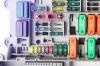
Blown fuse
-
Faulty relay
-
Damaged power supply
-
Poor ground
-
Damaged wiring near the exhaust
-
Failed air-pump control circuit
-
Faulty aftertreatment control module
-
Incorrect wiring repair
-
Incorrect replacement component
-
Software or calibration problem
P2059 does not automatically mean that the reductant air pump itself needs to be replaced. Because the code identifies an open circuit, the wiring, connectors, fuse, relay, power, ground, and pump should all be tested.
What Does P2059 Mean?
The code description contains several important terms.
Reductant
Reductant is a fluid used by certain exhaust-emissions systems to reduce pollutants.
On many modern diesel vehicles, this fluid is DEF/AdBlue.
DEF works with the Selective Catalytic Reduction (SCR) system to reduce nitrogen oxide (NOx) emissions.
Injection
Injection refers to the controlled delivery of reductant into the exhaust system.
The control module determines when and how much reductant should be injected based on operating conditions such as:
-
Engine load
-
Engine speed
-
Exhaust temperature
-
NOx levels
-
SCR operating conditions
Air Pump
The reductant injection air pump supplies compressed air to an air-assisted dosing system.
The compressed air helps atomize the reductant into a fine spray, allowing it to mix more effectively with the exhaust gases.
Not every SCR system uses an air-assisted reductant pump. Therefore, the exact hardware associated with P2059 depends on the vehicle manufacturer.
Control Circuit
The control circuit is the electrical path used to operate the reductant injection air pump.
Depending on the vehicle, it can include:
-
Battery power
-
Ground
-
Fuse
-
Relay
-
Control wire
-
Pump motor
-
Electronic driver
-
Feedback circuit
-
Aftertreatment control module
Open
"Open" means that the electrical path is interrupted.
The control module may detect an open circuit when:
-
A wire is broken
-
A connector is disconnected
-
A terminal has lost contact
-
A fuse is open
-
A pump winding is open
-
A control circuit is interrupted
An open circuit generally prevents the intended current from flowing.
How Does a Reductant Injection Air Pump Work?
A typical air-assisted reductant system operates approximately as follows:
-
DEF/AdBlue is stored in a dedicated tank.
-
The control system monitors the fluid level and temperature.
-
A reductant supply system moves fluid toward the dosing system.
-
The air pump is activated when air assistance is required.
-
The pump generates compressed air.
-
Compressed air travels through an air line to the dosing injector.
-
Reductant and compressed air are combined at the injector.
-
The air helps atomize the reductant.
-
The injector sprays the reductant into the exhaust.
-
The SCR catalyst uses the resulting ammonia-containing compounds to reduce NOx.
-
NOx sensors monitor the performance of the emissions system.
-
The control module adjusts reductant dosing according to operating conditions.
If the electrical circuit controlling the air pump is open, the pump may not operate and P2059 can be stored.
Why Is Air Assistance Used?
Air assistance can improve reductant atomization.
Compressed air helps break the liquid reductant into smaller droplets.
This can improve:
-
Spray quality
-
Exhaust mixing
-
Dosing consistency
-
Reductant distribution
-
SCR catalyst utilization
The exact injection system varies between manufacturers.
Symptoms of P2059
Check Engine Light
The Check Engine Light is one of the most common symptoms.
The ECM/PCM may illuminate the warning lamp after detecting the open circuit.
DEF/AdBlue Warning
SCR-equipped vehicles may display a reductant or emissions warning.
Possible messages include:
-
Check DEF
-
AdBlue system fault
-
DEF system malfunction
-
Exhaust fluid system fault
-
Reductant system fault
The exact message depends on the vehicle.
Reduced Engine Power
Some vehicles may reduce engine torque if the reductant injection system cannot operate correctly.
Vehicle Speed Limitation
Certain SCR-equipped vehicles may eventually impose a speed limitation if the emissions fault remains unresolved.
The exact strategy depends on the manufacturer and market.
Increased NOx Emissions
If reductant injection is interrupted, the SCR catalyst may not be able to reduce NOx as effectively.
Reductant Dosing Problems
If the air pump does not operate, the injector may not be able to atomize the reductant correctly.
This can result in poor or interrupted dosing.
Poor Engine Performance
Depending on the vehicle's fail-safe strategy, symptoms may include:
-
Reduced acceleration
-
Hesitation
-
Torque limitation
-
Reduced engine power
Additional Aftertreatment Fault Codes
P2059 may appear together with codes involving:
-
Reductant pressure
-
DEF/AdBlue
-
Reductant injector
-
NOx sensors
-
SCR efficiency
-
Aftertreatment communication
-
Pump or heater circuits
These additional codes can provide important diagnostic clues.
No Noticeable Symptoms
Some vehicles may store P2059 without obvious drivability problems.
The vehicle can initially operate normally while the emissions system detects the circuit fault.
Common Causes of P2059
Broken Wiring
A broken wire is one of the most common causes of an open-circuit fault.
Aftertreatment wiring is exposed to:
-
High exhaust temperatures
-
Vibration
-
Moisture
-
Road salt
-
Dirt
-
Mechanical abrasion
A conductor may break while the outer insulation still appears normal.
Disconnected Connector
A connector that is not fully seated can interrupt the pump circuit.
This is especially important after repairs involving:
-
DEF tank
-
Reductant pump
-
Dosing system
-
Exhaust system
-
Aftertreatment components
Loose Terminal
A terminal can lose contact with the mating terminal.
Possible causes include:
-
Poor terminal tension
-
Vibration
-
Previous repair
-
Corrosion
-
Mechanical damage
Corroded Connector
Water and contamination can cause electrical corrosion.
Check for:
-
Green corrosion
-
White deposits
-
Moisture
-
Bent pins
-
Loose terminals
-
Damaged connector seals
Failed Reductant Injection Air Pump
The pump itself may have an internal open circuit.
Possible failures include:
-
Broken motor winding
-
Internal wire failure
-
Open coil
-
Failed internal electronics
-
Internal connector problem
If the pump has an open internal circuit, the control module may detect no expected current.
Blown Fuse
A blown fuse can interrupt the pump's power supply.
However, the reason the fuse failed should be investigated.
Repeatedly replacing a fuse without finding the cause can result in further electrical damage.
Faulty Relay
A failed relay may prevent power from reaching the pump.
A relay with open contacts can create an apparent open circuit.
Poor Ground
If the pump's ground connection is open or severely compromised, the pump may not complete its electrical circuit.
Damaged Control Wire
The control wire between the pump and module can become:
-
Broken
-
Cut
-
Chafed
-
Melted
-
Corroded
Exhaust Heat Damage
The pump wiring may be routed near hot exhaust components.
Excessive heat can damage insulation and conductors.
Incorrect Wiring Repair
A previous repair may have left a wire disconnected or incorrectly joined.
Incorrect Replacement Component
An incompatible pump or aftertreatment component may not have the correct electrical characteristics.
Faulty Aftertreatment Control Module Driver
The control module may use an electronic driver to operate the pump.
If the driver fails, the pump may not receive the required control signal.
The module should only be considered after the external circuit and pump have been tested.
Software or Calibration Problem
In rare cases, a software or calibration issue can cause an incorrect circuit-monitoring fault.
Contaminated DEF/AdBlue
Incorrect or contaminated DEF can cause SCR-system problems.
However, DEF contamination alone does not normally cause an electrical open-circuit code.
P2059 should first be diagnosed as an electrical problem.
Frozen DEF
DEF can freeze at sufficiently low temperatures.
Modern systems generally use heating and temperature-management strategies to handle freezing.
A frozen reductant system does not automatically indicate that the air-pump electrical circuit is open.
Vehicles Commonly Affected by P2059
P2059 can occur on diesel vehicles equipped with an air-assisted reductant injection system.
Examples may include:
-
Ford F-250 Super Duty
-
Ford F-350 Super Duty
-
Ford F-450 Super Duty
-
Ford Transit Diesel
-
Chevrolet Silverado Duramax
-
Chevrolet Express Diesel
-
GMC Sierra Duramax
-
GMC Savana Diesel
-
Ram 2500
-
Ram 3500
-
Mercedes-Benz Sprinter
-
Volkswagen Touareg TDI
-
Volkswagen Transporter
-
Audi Q7 TDI
-
BMW X5 Diesel
-
Peugeot Boxer Diesel
-
Citroën Jumper
-
Fiat Ducato Diesel
-
Iveco Daily
-
Renault Master
-
Opel Movano
This list is not exhaustive.
P2059 is a generic OBD-II code, and the exact reductant air-pump configuration varies by manufacturer.
How Is P2059 Diagnosed?
P2059 should be diagnosed by tracing the complete electrical circuit between the control module and reductant injection air pump.
The goal is to determine exactly where the electrical path is interrupted.
Step 1: Scan for Additional Trouble Codes
Use a suitable diagnostic scan tool to retrieve all stored and pending codes.
Look for related codes involving:
-
Reductant injection
-
DEF/AdBlue
-
Air pump
-
Reductant pump
-
Dosing injector
-
NOx sensors
-
SCR efficiency
-
Aftertreatment module
-
Power supply
-
Ground
-
Communication
If several components have circuit faults at the same time, investigate shared power and ground circuits.
Step 2: Check Freeze-Frame Data
Record the operating conditions when P2059 was stored.
Useful parameters may include:
-
Engine RPM
-
Vehicle speed
-
Battery voltage
-
Engine temperature
-
Exhaust temperature
-
DEF temperature
-
Air-pump command
-
Reductant pressure
-
Dosing command
-
Aftertreatment operating status
Step 3: Identify the Exact Circuit
Use the manufacturer's wiring diagram to identify:
-
Air-pump power circuit
-
Ground circuit
-
Control circuit
-
Fuse
-
Relay
-
Controlling module
-
Feedback circuit, if equipped
This step is important because circuit configurations differ between vehicles.
Step 4: Inspect the Air Pump
Inspect the pump for:
-
Physical damage
-
Water intrusion
-
Corrosion
-
Overheating
-
Damaged connector
-
Damaged air fittings
-
Signs of mechanical seizure
Step 5: Inspect Wiring and Connectors
Follow the harness from the air pump toward the controlling module.
Look for:
-
Broken wires
-
Chafing
-
Melted insulation
-
Corrosion
-
Loose terminals
-
Water intrusion
-
Damaged connector locks
-
Incorrect previous repairs
Pay particular attention to sections close to hot exhaust components.
Step 6: Check Fuses
Check all fuses associated with:
-
Reductant system
-
Aftertreatment system
-
Air pump
-
Dosing system
A blown fuse should be investigated before replacement.
Step 7: Check Relay Operation
Verify that the applicable relay:
-
Receives the required control signal
-
Switches correctly
-
Supplies power when commanded
-
Does not have open contacts
Step 8: Check Power at the Pump
Using the manufacturer's wiring diagram, verify that the air pump receives the required power supply.
If power is missing, trace the circuit backward through:
-
Fuse
-
Relay
-
Wiring
-
Connector
-
Power distribution
Step 9: Check Ground at the Pump
Verify the pump's ground connection.
A voltage-drop test under load can identify a poor ground more effectively than a simple continuity test.
Step 10: Perform a Continuity Test
With the circuit safely isolated according to the manufacturer's procedure, check continuity through the appropriate wiring.
An infinite resistance reading where continuity should exist can indicate an open circuit.
Step 11: Test the Control Wire
Check continuity between the pump connector and the appropriate control-module terminal.
If continuity is missing, inspect the harness for a broken conductor or damaged connector.
Step 12: Check for Intermittent Wiring Faults
An open circuit may be caused by a wire that breaks only when the harness moves.
While monitoring continuity or the appropriate electrical signal, carefully manipulate the harness.
Look for changes in:
-
Continuity
-
Voltage
-
Resistance
-
Pump operation
This can reveal a broken conductor hidden inside the insulation.
Step 13: Test Pump Resistance
If the manufacturer provides a resistance specification, measure the pump's internal resistance.
An open or infinite resistance reading can indicate an internal winding or electrical failure.
Do not use a generic resistance value because pump designs vary.
Step 14: Check Voltage Drop
Measure voltage drop across:
-
Power wiring
-
Ground wiring
-
Connectors
-
Relay contacts
This can reveal high-resistance connections that may not be obvious from visual inspection.
Step 15: Perform an Active Test
If supported by the diagnostic tool, command the reductant injection air pump.
Monitor:
-
Pump operation
-
Current draw
-
Control signal
-
Supply voltage
-
Air pressure
-
Feedback
A pump that does not operate despite having correct power, ground, and control signals may have an internal failure.
Step 16: Inspect Air Lines
Although P2059 is an electrical code, inspect the pneumatic side of the system.
Check for:
-
Cracked air hoses
-
Loose fittings
-
Blocked lines
-
Air leaks
-
Damaged connections
Air-side problems may produce additional system faults.
Step 17: Inspect the Reductant Injector
If additional dosing codes are present, inspect the injector for:
-
DEF crystallization
-
Blockage
-
Electrical problems
-
Poor atomization
-
Damaged wiring
Step 18: Check the Control Module
If the wiring, connectors, fuse, relay, power, ground, and pump all test correctly, check the ECM/PCM or aftertreatment module's output driver.
An oscilloscope may be useful for confirming the control signal on some vehicles.
Do not replace the control module simply because P2059 is present.
Step 19: Check Manufacturer Technical Information
Check the manufacturer's service information for:
-
Technical Service Bulletins
-
Known air-pump failures
-
Wiring harness problems
-
Relay faults
-
Connector issues
-
Software updates
-
Updated components
-
Calibration procedures
How to Fix P2059
The correct repair depends on the location of the open circuit.
Repair a Broken Wire
Repair or replace the broken conductor.
The repair should be properly insulated, secured, and protected from heat, vibration, and abrasion.
Repair or Replace the Connector
If the connector or terminals are damaged, repair or replace them.
Make sure the terminals have the correct contact tension and the connector locks securely.
Repair Damaged Wiring
Replace wiring damaged by:
-
Exhaust heat
-
Chafing
-
Road debris
-
Corrosion
-
Previous repairs
Restore the original harness routing and heat protection.
Replace a Blown Fuse
Replace the fuse with the correct rating after determining why it failed.
Never install a higher-rated fuse.
Replace a Faulty Relay
If the relay does not switch or supply power correctly, replace it with the correct specification.
Repair the Ground Circuit
Repair loose, corroded, or open ground connections.
Verify the repair with an appropriate voltage-drop test.
Replace the Reductant Injection Air Pump
If the pump has an internal open circuit or fails its electrical and functional tests, replace the correct air pump.
The replacement component must match the manufacturer's specification.
Repair the Pump Control Circuit
If the control signal is missing because of a wiring or driver problem, repair the applicable control circuit.
Repair or Replace the Aftertreatment Control Module
If testing proves that the module's output driver is defective, repair or replace the applicable module according to manufacturer procedures.
Update Control Module Software
If a software update addresses P2059, reprogram the applicable control module.
Repair Air Lines
Repair or replace damaged pneumatic hoses and fittings.
Clean or Replace the Reductant Injector
If the injector is blocked by crystallized DEF or is otherwise defective, clean or replace it according to manufacturer procedures.
Perform Required Calibration
After replacing an air pump, injector, or control module, the vehicle may require:
-
Reductant system initialization
-
Air-pump calibration
-
Dosing-system calibration
-
DEF system reset
-
Aftertreatment module programming
-
System self-test
The exact procedure depends on the vehicle.
Clear the Code and Verify the Repair
After completing the repair:
-
Clear P2059.
-
Run the applicable aftertreatment self-test.
-
Command the air pump if supported.
-
Verify power and ground.
-
Check the control signal.
-
Confirm pump operation.
-
Verify air pressure.
-
Confirm reductant injection.
-
Test-drive the vehicle.
-
Rescan for stored and pending codes.
The repair should be considered successful only when the electrical circuit operates within specification and P2059 does not return.
What Happens If P2059 Is Ignored?
If P2059 prevents the reductant injection air pump from operating, the air-assisted dosing system may not function correctly.
Possible consequences include:
-
Check Engine Light
-
DEF/AdBlue warning
-
Increased NOx emissions
-
Reduced SCR effectiveness
-
Reductant dosing problems
-
Reduced engine power
-
Vehicle speed limitations
-
Additional aftertreatment fault codes
Some vehicles may eventually impose operating restrictions when an emissions-system fault remains unresolved.
Can You Drive With P2059?
Short-term driving may be possible if the vehicle starts and operates normally, but P2059 should be diagnosed promptly.
If a DEF/AdBlue warning, emissions countdown, or reduced-power message appears, the vehicle should be serviced without unnecessary delay.
Continued driving with an unresolved reductant injection fault can potentially result in:
-
Reduced engine power
-
Speed restrictions
-
Increased emissions
-
SCR system problems
-
Additional aftertreatment faults
If the vehicle has severe power loss or multiple emissions warnings, it should be inspected as soon as possible.
Is P2059 a Serious Code?
P2059 is generally considered a moderate-to-high severity emissions-system fault.
The immediate fault is an open electrical circuit controlling the reductant injection air pump.
The vehicle may initially continue to operate normally, but if the air pump cannot operate, reductant injection may be compromised.
Potential consequences include:
-
Reduced SCR effectiveness
-
Increased NOx emissions
-
DEF/AdBlue warnings
-
Reduced engine power
-
Vehicle speed limitations
-
Additional aftertreatment faults
The actual severity depends on the vehicle's emissions-control strategy.
P2059 vs. P2060 and P2061
P2059, P2060, and P2061 describe different electrical conditions involving the reductant injection air pump control circuit.
| Code | General Meaning |
|---|---|
| P2059 | Reductant Injection Air Pump Control Circuit Open |
| P2060 | Reductant Injection Air Pump Control Circuit Low |
| P2061 | Reductant Injection Air Pump Control Circuit High |
P2059 — Circuit Open
The control module detects an interrupted electrical path or a condition consistent with no current flow.
Typical diagnostic areas include:
-
Broken wire
-
Disconnected connector
-
Loose terminal
-
Blown fuse
-
Failed pump winding
-
Open relay circuit
P2060 — Circuit Low
The control module detects a voltage or electrical signal below the expected range.
Common possibilities include:
-
Short to ground
-
Low supply voltage
-
Poor ground
-
High-resistance connection
-
Shorted pump
-
Damaged control wiring
P2061 — Circuit High
The control module detects a voltage or electrical condition above the expected range.
Common possibilities include:
-
Short to battery voltage
-
Open control circuit with a pull-up voltage
-
Faulty relay
-
Incorrect wiring
-
Failed pump
-
Control-module driver problem
These three codes can involve the same physical pump but point to different electrical conditions.
P2059 vs. P2058
P2058 and P2059 are related reductant injection air-pump codes but describe different circuit conditions.
| Code | General Meaning |
|---|---|
| P2058 | Reductant Injection Air Pump Control Circuit Low |
| P2059 | Reductant Injection Air Pump Control Circuit Open |
The exact code assignment should always be confirmed against the vehicle manufacturer's service information because manufacturer-specific diagnostics may provide additional details.
P2059 vs. P2062
P2059 specifically identifies the reductant injection air pump control circuit, while P2062 refers more generally to a reductant/regeneration supply control circuit open.
| Code | General Meaning |
|---|---|
| P2059 | Reductant Injection Air Pump Control Circuit Open |
| P2062 | Reductant / Regeneration Supply Control Circuit Open |
Therefore, P2059 provides a more specific indication that the air-pump control circuit should be investigated.
How to Prevent P2059
Not every electrical failure can be prevented, but proper maintenance can reduce the likelihood of reductant-system faults.
Recommended practices include:
-
Use the correct DEF/AdBlue specification.
-
Keep reductant-system connectors clean and properly sealed.
-
Repair damaged wiring promptly.
-
Keep wiring harnesses secured away from hot exhaust components.
-
Maintain the battery and charging system.
-
Avoid unnecessary modifications to aftertreatment wiring.
-
Address DEF/AdBlue warnings promptly.
-
Inspect reductant air hoses and fittings during aftertreatment service.
-
Prevent excessive DEF crystallization around the injector.
-
Use the correct replacement air pump.
-
Follow manufacturer procedures after replacing emissions components.
-
Maintain the vehicle according to manufacturer recommendations.
Final Thoughts
P2059 Reductant Injection Air Pump Control Circuit Open indicates that the vehicle's control system has detected an open electrical circuit controlling the reductant injection air pump.
The most important causes include:
-
Broken wiring
-
Disconnected connector
-
Loose terminal
-
Corroded connector
-
Blown fuse
-
Faulty relay
-
Poor ground
-
Open pump motor winding
-
Failed reductant injection air pump
-
Damaged control circuit
-
Exhaust heat damage
-
Incorrect wiring repair
-
Faulty aftertreatment control module driver
-
Incorrect replacement component
-
Software or calibration problems
The most important diagnostic point is that P2059 does not automatically mean the reductant injection air pump must be replaced.
Because this is an open-circuit fault, diagnosis should begin by identifying the exact circuit using the manufacturer's wiring diagram. The fuse, relay, power supply, ground, control wiring, connectors, and pump continuity should then be checked systematically.
If continuity is missing between the control module and pump, the wiring harness or connector is likely responsible. If the external wiring has good continuity but the pump itself shows an open internal circuit, the pump may need to be replaced.
If the wiring and pump test correctly but the control signal is absent, the control module and its output driver should then be investigated.
If P2059 affects an SCR/DEF system, ignoring the problem can eventually result in DEF/AdBlue warnings, increased NOx emissions, reduced SCR effectiveness, reduced engine power, vehicle speed limitations, and additional aftertreatment faults.
The correct repair is to locate the interrupted electrical path, repair the wiring or connector or replace the failed component, perform any required initialization or calibration, clear the code, and verify that the reductant injection air pump operates correctly without P2059 returning.