TR
TR EN
EN

What Is the Anti-Slip Regulation (ASR) System?
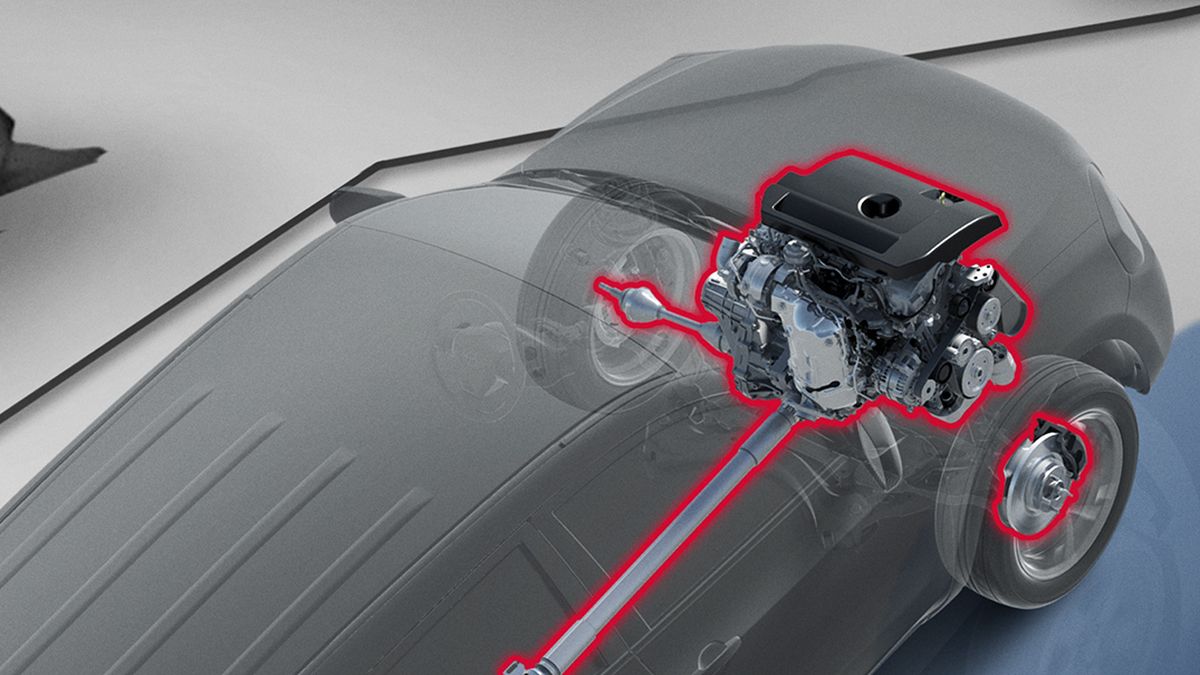
The Anti-Slip Regulation (ASR) system is an electronic vehicle safety system designed to prevent the driven wheels from spinning excessively during acceleration. It is also known as Acceleration Slip Regulation or, depending on the manufacturer, may be referred to as a Traction Control System (TCS).
The main purpose of ASR is to maintain traction when the driver applies too much throttle or when the road surface does not provide enough grip. It is particularly useful on wet roads, snow, ice, gravel, sand, and other low-traction surfaces.
In modern vehicles, ASR usually works together with the ABS and ESP/ESC systems.
How Does ASR Work?
ASR continuously monitors wheel speeds and compares the rotation of the driven wheels with the vehicle's actual movement.
If one or both driven wheels suddenly rotate faster than expected, the control system can interpret this as wheelspin. It then intervenes to restore traction.
Depending on the vehicle's design, ASR can use one or both of the following methods:
Braking the spinning wheel
The system can apply controlled braking to a spinning driven wheel. This can help the differential transfer more usable torque to the wheel that still has traction.
This principle is closely related to the electronic differential lock function, often called EDL on some vehicles.
Reducing engine torque
If wheelspin becomes excessive, the system can temporarily reduce engine torque. Depending on the vehicle, this can be achieved through electronic throttle intervention, ignition timing adjustments, fuel injection control, or other engine management strategies.
As a result, the driver may sometimes feel that the vehicle does not respond to the accelerator as strongly as expected when ASR is actively intervening.
When Does ASR Activate?
ASR does not only operate on snow or ice. It can activate whenever the driven wheels lose traction sufficiently.
Typical situations include:
-
Wet asphalt
-
Snow and ice
-
Gravel
-
Sand
-
Mud
-
Dirty or oily road surfaces
-
Hard acceleration
-
Sudden throttle application
-
Accelerating out of a corner
-
Different levels of grip between the driven wheels
A powerful vehicle can even activate ASR briefly on dry asphalt if the driver applies the throttle aggressively.
How Does ASR Detect Wheelspin?
The most important information used by ASR comes from the wheel-speed sensors.
These sensors are also part of the ABS system and continuously monitor the rotational speed of each wheel. The control unit compares these signals to determine whether one of the driven wheels is rotating abnormally fast compared with the others and with the vehicle's overall movement.
Depending on the vehicle, ASR/ESC control may also use information from:
-
Engine speed
-
Accelerator pedal position
-
Throttle position
-
Steering angle
-
Vehicle speed
-
Engine torque
-
Yaw-rate sensors
-
Longitudinal and lateral acceleration sensors
Therefore, ASR does not simply operate according to a basic rule such as "one wheel is spinning." The electronic control unit evaluates several signals together before deciding how much intervention is required.
What Is the Difference Between ASR and ABS?
ASR and ABS can use the same wheel-speed sensors, but they perform different functions.
ABS is primarily designed to prevent the wheels from locking during braking.
ASR is designed to reduce excessive wheelspin during acceleration.
In simple terms:
-
ABS → Prevents wheel lock during braking.
-
ASR → Reduces wheelspin during acceleration.
Both systems may use the same ABS/ESC hydraulic unit and electronic control architecture.
Is ASR the Same as ESP or ESC?
No. They are related, but they are not exactly the same system.
ASR primarily focuses on traction during acceleration.
ESP or ESC has a broader function. It monitors the vehicle's direction and stability and can intervene when the vehicle begins to deviate from the driver's intended path.
An ESC system can potentially:
-
Apply braking to individual wheels
-
Reduce engine torque
-
Control wheelspin
-
Help correct oversteer or understeer
-
Improve directional stability
For this reason, ASR is often integrated as one of the functions of the broader ESC/ESP system.
Manufacturers can also use different names for similar technologies, including TCS, Traction Control, ASR, or other proprietary terms.
What Does ASR Intervention Feel Like?
When ASR becomes active, the driver may notice several different sensations.
For example:
-
The vehicle may accelerate more slowly than expected.
-
Throttle response may temporarily feel reduced.
-
Engine RPM may be prevented from rising rapidly.
-
A spinning wheel may feel as though it is being lightly braked.
-
The traction-control warning light may flash on the instrument cluster.
-
The vehicle may regain traction more progressively on a slippery surface.
A flashing traction-control light during acceleration on snow or a wet road is not necessarily a sign of a malfunction. It often means that the system is actively doing its job.
What Are the Symptoms of an ASR Fault?
When there is a problem with the ASR system, the vehicle may display an ASR, traction-control, ESP/ESC, or ABS warning.
Possible symptoms include:
-
ASR or traction-control warning light remaining on
-
ABS or ESP/ESC warning light appearing
-
Traction control becoming unavailable
-
Excessive wheelspin on slippery surfaces
-
ASR activating when it should not
-
Unexpected reduction of engine power during acceleration
-
Several electronic safety systems becoming unavailable at the same time
However, an ASR warning does not automatically mean that the ASR control unit itself has failed.
What Can Cause an ASR Fault?
Because ASR is closely connected to ABS and ESC, many different faults can affect its operation.
Wheel-speed sensor failure
A faulty ABS wheel-speed sensor can provide incorrect information, making it difficult for the system to determine actual wheel speeds.
Damaged wiring or connectors
Broken wires, corrosion, loose connectors, water intrusion, or poor electrical contacts can interrupt the wheel-speed signal.
Wheel bearing or magnetic encoder problems
On some vehicles, the wheel bearing contains a magnetic encoder that is used by the wheel-speed sensor. Damage or contamination in this area can create ABS, ASR, or ESC faults.
Low battery voltage
A weak battery or charging-system problem can cause various electronic control modules to generate ABS, ESC, and traction-control faults, particularly during startup or under heavy electrical load.
ABS hydraulic unit problems
Since ASR may use the ABS hydraulic system to brake an individual driven wheel, a hydraulic unit problem can also affect traction-control operation.
Steering-angle sensor problems
If ASR is integrated into the ESC system, a faulty steering-angle sensor can affect the system's ability to correctly evaluate vehicle movement.
Yaw-rate or acceleration sensor faults
Problems with stability-control sensors can cause the vehicle to disable ASR or ESC functions.
CAN communication problems
Modern vehicles rely on communication between the engine ECU, ABS/ESC module, transmission controller, and other modules. A communication problem can prevent ASR from operating correctly.
Can ASR Fail Because of the Tires?
Yes. Tires are an important part of the traction-control system because ASR can only work with the information and grip available at the wheels.
Problems can occur when:
-
Tire sizes do not match the manufacturer's specifications.
-
Tires on the same axle have significantly different circumferences.
-
Tire pressures are incorrect.
-
One tire is significantly more worn than another.
-
Different tire types or constructions are used incorrectly.
-
Tires have very low grip.
A significant difference in wheel circumference can cause the wheel-speed sensors to detect rotational differences that do not necessarily represent actual wheelspin.
For this reason, tire condition and correct tire pressure should always be considered when diagnosing ABS, ASR, or ESC problems.
Why Does ASR Sometimes Allow Some Wheelspin?
The purpose of ASR is not necessarily to eliminate every small amount of wheel movement.
In certain situations, some wheelspin can actually help the vehicle move forward. This can be particularly relevant on deep snow, loose gravel, or other soft surfaces.
If the system reduces engine torque too aggressively, the vehicle may not produce enough momentum to escape from a low-traction situation.
This is one reason why some vehicles allow the driver to reduce or temporarily disable traction-control intervention.
The exact behavior depends on the vehicle. In some models, pressing the traction-control button does not completely disable ESC; it simply reduces the level of ASR/TCS intervention.
What Happens When ASR Is Turned Off?
When ASR is switched off or reduced, the vehicle may allow more wheelspin during acceleration.
This can be useful in certain situations, such as when a vehicle is stuck in deep snow and needs some wheelspin to build momentum.
However, on normal roads, especially on wet, icy, or snowy surfaces, keeping the traction-control system active is generally safer.
The behavior of the system depends on the manufacturer. Some vehicles allow only partial reduction of traction-control intervention, while others provide different levels of electronic stability control.
ASR vs. Electronic Differential Lock
ASR and electronic differential lock functions can work together, but they are not identical.
An electronic differential lock (EDL) can use the ABS hydraulic system to brake a spinning driven wheel. This can improve the amount of usable torque reaching the wheel with better traction.
ASR, on the other hand, is a broader traction-control strategy that can also reduce engine torque.
In some vehicles, EDL operates as part of the overall ASR/TCS/ESC system.
Neither system should be confused with a true mechanical differential lock. A mechanical differential lock physically changes the way torque is distributed, whereas brake-based electronic systems primarily use individual wheel braking and electronic control.
ASR vs. a Mechanical Limited-Slip Differential
A mechanical limited-slip differential (LSD) and ASR solve traction problems in different ways.
An LSD uses mechanical or electronically controlled hardware inside the differential to limit the speed difference between the driven wheels and improve torque distribution.
ASR primarily uses electronic control and, depending on the vehicle, individual wheel braking and engine torque reduction.
ASR is therefore not a replacement for a mechanical LSD in every situation. Both systems can also be used together on some vehicles.
How Is an ASR Fault Diagnosed?
Proper ASR diagnosis usually requires more than simply reading the engine ECU.
The ABS/ESC control module should also be scanned for stored fault codes.
A technician may then examine live data from the wheel-speed sensors and compare the readings from all four wheels.
The diagnostic process may include checking:
-
ABS/ASR/ESC fault codes
-
Individual wheel-speed sensor readings
-
Sensor wiring and connectors
-
Wheel bearings
-
Magnetic encoders
-
Battery voltage
-
Alternator charging voltage
-
ABS hydraulic unit
-
Steering-angle sensor
-
Yaw-rate and acceleration sensors
-
CAN communication
-
Engine ECU communication
-
Tire sizes and pressures
The exact diagnostic procedure depends on the vehicle.
It is important not to replace a wheel-speed sensor, ABS module, throttle body, or another component simply because an ASR warning is present. The fault code and live data should be used to identify the actual cause.
Can You Drive With an ASR Fault?
That depends on what has failed and which other systems are affected.
If only traction control has been disabled, the vehicle may still drive normally under good road conditions. However, the driver loses an important electronic safety function.
The situation becomes more serious if the ASR warning appears together with:
-
ABS warning
-
ESP/ESC warning
-
Brake-system warning
-
Multiple electronic safety-system warnings
In such cases, other functions may also be unavailable.
Extra caution is necessary on wet, snowy, icy, or loose surfaces because the vehicle may no longer have the same level of electronic traction and stability assistance.
Is ASR Really Necessary?
ASR is particularly valuable because engine power alone does not guarantee useful acceleration. The engine can produce plenty of torque, but that torque must still be transferred to the road through the tires.
When grip is limited, excessive torque can cause the driven wheels to spin instead of moving the vehicle forward efficiently.
ASR helps control this situation by reducing wheelspin and maintaining more usable traction.
However, ASR cannot overcome the physical limits of the tires and road surface. If the tires have almost no grip, no electronic system can create traction that does not exist.
Good tires, correct tire pressure, appropriate speed, and smooth throttle control therefore remain just as important as the electronic traction-control system itself.