TR
TR EN
EN

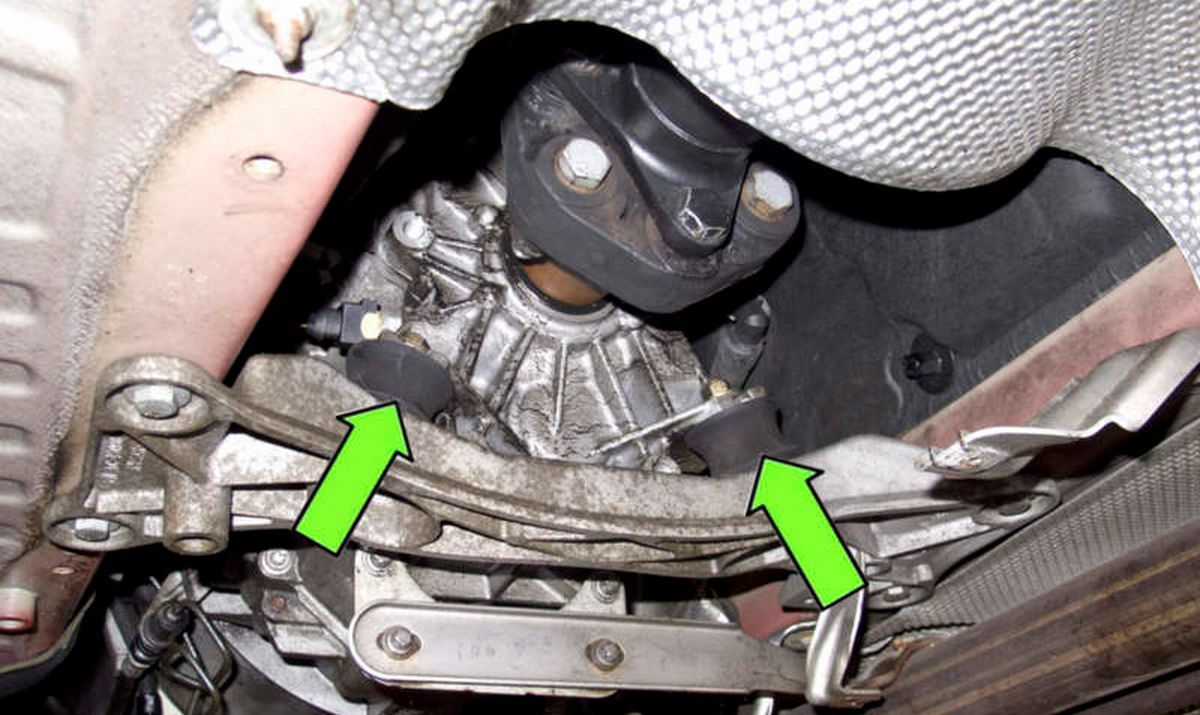
Transmission Mount Failure Symptoms
The transmission mount, also called a transmission mounting or transmission support, is an important component that connects the transmission to the vehicle body or subframe. Its job is not simply to hold the transmission in place. It also helps control drivetrain movement and absorbs vibrations and shocks produced by the engine and transmission.
When a transmission mount becomes worn, cracked, torn, or separated, the vehicle can develop noticeable noises, vibrations, jerking, and abnormal drivetrain movement.
Because these symptoms can also be caused by engine mounts, CV joints, suspension components, or transmission problems, identifying the exact source is important before replacing any parts.
What Does a Transmission Mount Do?
The transmission mount supports the weight of the transmission and keeps it correctly positioned relative to the engine, drivetrain, and chassis.
At the same time, it is designed to control movement caused by:
-
Engine torque
-
Gear changes
-
Acceleration and deceleration
-
Road impacts
-
Engine start and shutdown
-
Clutch engagement
-
Automatic transmission shifting
Most transmission mounts contain rubber or another vibration-isolating material. Some modern vehicles use hydraulic or electronically controlled mounts.
The mounting material allows a controlled amount of movement while preventing excessive drivetrain movement.
What Happens When a Transmission Mount Fails?
As the mount deteriorates, it can no longer control transmission movement properly.
The transmission may move more than it should when the driver accelerates, releases the accelerator, changes gear, or engages the clutch.
This excessive movement can place additional stress on:
-
Engine mounts
-
Transmission mounts
-
Driveshafts
-
CV joints
-
Exhaust components
-
Wiring
-
Hoses
-
Transmission linkage
-
Other drivetrain components
A severely damaged mount can therefore create problems beyond the mount itself.
The Most Common Transmission Mount Failure Symptoms
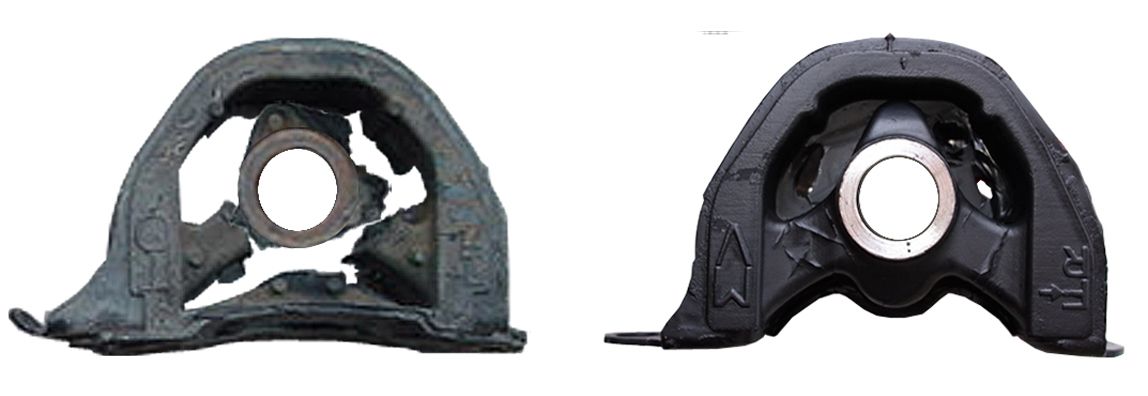
A bad transmission mount can produce several different symptoms.
The most common ones include:
-
Clunking or knocking noises
-
Excessive vibration
-
Jerking during gear changes
-
Excessive drivetrain movement
-
Increased vibration at idle
-
A noticeable thump when accelerating
-
A thump when releasing the accelerator
-
Rough engagement of the clutch
-
Difficulty selecting gears
-
Transmission movement
-
Abnormal noises when starting or stopping the engine
-
Increased vibration inside the cabin
Not every vehicle will show all of these symptoms.
The symptoms also depend on the type of transmission, the mount design, and how severely the mount has deteriorated.
Clunking or Knocking When Accelerating
One of the classic symptoms is a clunking or knocking sound during acceleration.
When the driver suddenly presses the accelerator, engine torque causes the powertrain to move slightly.
A healthy transmission mount limits this movement.
If the mount is damaged, the transmission can move too far and the mount or surrounding components may suddenly take the load.
This can create a noticeable knock or clunk.
The same noise may occur when rapidly releasing the accelerator because the direction of drivetrain force changes.
Thump When Changing Gears
A worn transmission mount can cause a noticeable thump when shifting between gears.
This is particularly common when:
-
Selecting Reverse
-
Selecting Drive
-
Shifting from first to second gear
-
Shifting under heavy acceleration
-
Changing from forward to reverse
-
Engaging the clutch on a manual transmission
However, a hard gear change does not automatically mean the transmission mount is bad.
Transmission fluid condition, shift solenoids, clutch problems, engine mounts, software calibration, and internal transmission faults can produce similar symptoms.
Excessive Vibration
Another common symptom is increased vibration.
The transmission mount normally isolates drivetrain vibration from the vehicle body.
When the rubber element becomes hard, cracked, torn, or separated, vibration can travel more easily into the chassis.
The driver may notice vibration through:
-
The steering wheel
-
Floor
-
Center console
-
Gear lever
-
Seats
-
Pedals
The vibration may be especially noticeable at idle or when the vehicle is placed in Drive while stopped.
Vibration When Selecting Drive or Reverse
Automatic transmission vehicles can develop a noticeable vibration when selecting Drive or Reverse.
The transmission applies load to the drivetrain, which creates a torque reaction.
If the mount cannot properly control this movement, the vibration can become much more noticeable.
A similar symptom can occur with a failed engine mount, so both engine and transmission mounts should be inspected.
Jerking During Acceleration
A damaged transmission mount can make the vehicle feel as though it jerks when accelerating.
This happens because the drivetrain can move excessively as engine torque increases.
In severe cases, the movement can occur in stages:
-
The engine and transmission produce torque.
-
The damaged mount allows excessive movement.
-
The drivetrain reaches the limit of its movement.
-
The mount or another component absorbs the sudden load.
-
The driver feels a jerk or thump.
This can be mistaken for a transmission shifting problem.
Jerking When Releasing the Accelerator
A bad transmission mount can also produce a jerk when the accelerator is suddenly released.
When torque changes direction, the drivetrain moves in the opposite direction.
If the mount has excessive play, this movement can be felt as a sudden bump.
This is sometimes described as driveline lash, although driveline lash can have several causes and is not necessarily caused by a transmission mount.
Excessive Engine and Transmission Movement
A damaged mount may allow the entire powertrain assembly to move excessively.
This movement may be visible during an inspection or when the engine is started, stopped, or loaded.
However, deliberately revving an engine aggressively to observe movement is not a safe diagnostic procedure unless it is performed by a trained technician using appropriate precautions.
A professional can inspect the powertrain while applying controlled loads.
Gear Lever Movement
On some manual transmission vehicles, a damaged transmission mount can cause the gear lever to move noticeably during acceleration and deceleration.
This happens because the transmission itself is moving relative to the vehicle body.
The effect can be particularly noticeable when:
-
Accelerating hard
-
Releasing the accelerator
-
Changing direction between acceleration and engine braking
A moving gear lever can therefore be an indication that the drivetrain mounts need inspection.
Difficulty Selecting Gears
A severely damaged transmission mount can affect the alignment of the transmission and its linkage.
On vehicles with mechanical shift linkages, excessive transmission movement may make gear selection feel unusual or inconsistent.
The driver may experience:
-
Difficult gear selection
-
A gear lever that feels misaligned
-
Increased play in the shifter
-
Difficulty engaging certain gears
However, difficult shifting should never automatically be attributed to the mount. The clutch, linkage, synchronizers, transmission fluid, and internal transmission components should also be checked.
Noise During Engine Start and Shutdown
A worn mount can produce a knock when the engine starts or shuts down.
The engine and transmission assembly naturally moves slightly as the engine begins running or stops.
A healthy mounting system controls this movement.
A damaged mount can allow a sudden movement that produces a noticeable thump.
If the noise is particularly strong when switching the engine on and off, the engine and transmission mounts should be inspected together.
Visible Cracks or Tears
Physical inspection can sometimes reveal a failed mount.
Look for:
-
Cracked rubber
-
Torn rubber
-
Separated rubber from the metal housing
-
Collapsed mounting material
-
Broken metal brackets
-
Damaged bolts
-
Fluid leakage from hydraulic mounts
-
Excessive corrosion
A mount does not always look completely broken when it has already lost much of its ability to control drivetrain movement.
Hydraulic Transmission Mount Failure
Some vehicles use hydraulic mounts rather than simple rubber mounts.
These mounts contain fluid designed to improve vibration isolation.
If the mount develops a leak, the hydraulic fluid may be visible around the mounting assembly.
Possible symptoms include:
-
Increased vibration
-
Clunking
-
Excessive drivetrain movement
-
Reduced vibration isolation
-
Fluid residue around the mount
A hydraulic mount can therefore fail internally even if its external rubber does not appear severely damaged.
Can a Bad Transmission Mount Cause Transmission Problems?
A failed mount does not necessarily mean that the transmission itself is internally damaged.
However, prolonged operation with a severely damaged mount can place additional stress on surrounding components.
Excessive movement can affect:
-
Shift cables
-
Electrical connectors
-
Transmission wiring
-
CV joints
-
Driveshafts
-
Exhaust components
-
Engine mounts
-
Hoses and pipes
For this reason, a severely damaged mount should not be ignored.
Transmission Mount vs Engine Mount
Transmission mounts and engine mounts can produce very similar symptoms.
Both can cause:
-
Vibration
-
Clunking
-
Thumping
-
Excessive drivetrain movement
-
Jerking during acceleration
-
Noise during engine start and shutdown
The difference is their location and role within the mounting system.
In many vehicles, the engine and transmission are supported by several mounts working together. A technician should therefore inspect the entire mounting system rather than replacing only the component that seems most obvious.
How Is a Bad Transmission Mount Diagnosed?
Diagnosis should begin with a visual inspection.
The technician can inspect the mounting assembly for cracks, tears, separation, leakage, broken brackets, and damaged fasteners.
The mounting points should also be checked for abnormal movement.
A technician may then compare drivetrain movement under controlled conditions, such as during:
-
Acceleration
-
Deceleration
-
Gear engagement
-
Clutch engagement
-
Engine startup and shutdown
The surrounding components should also be inspected because a noise attributed to the transmission mount may actually originate elsewhere.
Other Problems That Can Cause Similar Symptoms
Before replacing a transmission mount, other possible causes should be considered.
Similar symptoms can be produced by:
Engine mounts
A failed engine mount can cause almost identical vibration and knocking symptoms.
CV joints
Worn inner CV joints can produce clunks or vibration during acceleration.
Driveshaft components
Driveshaft or universal joint problems can create knocking and vibration.
Transmission problems
Internal transmission faults can cause harsh shifting and engagement shocks.
Clutch problems
A worn or damaged clutch can cause judder, vibration, and harsh engagement.
Exhaust components
A loose exhaust system can knock against the chassis when the drivetrain moves.
Suspension components
Worn suspension bushings can also produce clunking noises during acceleration and deceleration.
Is It Safe to Drive With a Bad Transmission Mount?
It depends on the severity of the failure.
A mildly worn mount may allow the vehicle to continue operating for some time, but the problem can gradually become worse.
A severely damaged or broken mount is more serious.
Excessive drivetrain movement can damage other components and may create unpredictable vehicle behavior.
If the transmission mount is visibly broken, the transmission is moving excessively, or loud knocking occurs during acceleration and gear engagement, the vehicle should be inspected as soon as possible.
How Long Does a Transmission Mount Last?
There is no universal replacement interval for transmission mounts.
Their lifespan depends on:
-
Vehicle design
-
Driving style
-
Engine torque
-
Transmission type
-
Road conditions
-
Climate
-
Oil or fluid contamination
-
Mount material
-
Vehicle mileage
-
Frequency of hard acceleration
A vehicle driven aggressively or frequently on poor roads can place considerably more stress on its mounts.
There is generally no need to replace a transmission mount simply because the vehicle has reached a particular mileage. Replacement should be based on its physical condition and symptoms.
Can Oil or Fluid Damage a Transmission Mount?
Yes.
Rubber mounting components can deteriorate when exposed to certain fluids for extended periods.
Engine oil, transmission fluid, coolant, and other chemicals can contaminate the rubber and accelerate deterioration.
If a mount is repeatedly exposed to fluid because of an engine or transmission leak, replacing the mount without fixing the leak may result in another premature failure.
Should Transmission Mounts Be Replaced in Pairs?
Not necessarily.
Unlike some suspension components, transmission mounts do not always need to be replaced as a pair.
The correct approach is to inspect all engine and transmission mounts.
If one mount has failed because of age or deterioration, the condition of the other mounts should be checked carefully.
If several mounts are significantly worn, replacing only one may not completely eliminate the symptoms.
Can a Bad Transmission Mount Cause a Check Engine Light?
A transmission mount itself normally does not directly cause a check engine light.
However, severe drivetrain movement can potentially affect wiring, connectors, sensors, or other components.
If warning lights appear together with mount-related symptoms, the vehicle should be scanned for diagnostic trouble codes rather than assuming the mount is responsible.
Final Thoughts
A transmission mount does much more than support the transmission. It controls drivetrain movement and helps isolate engine and transmission vibrations from the vehicle body.
The most common signs of a failing transmission mount include clunking noises, excessive vibration, jerking during acceleration, thumping during gear changes, abnormal drivetrain movement, and increased movement of the gear lever.
However, these symptoms can also be caused by engine mounts, CV joints, driveshafts, clutch components, suspension bushings, or transmission faults.
For that reason, the correct diagnosis is more important than simply replacing the mount based on a single symptom. A proper inspection of the entire drivetrain mounting system can identify the failed component and prevent unnecessary repairs.