TR
TR EN
EN

When Should Brake Pads Be Replaced?
Brake pads are among the most important wear components in a vehicle's braking system. Unlike engine oil or other fluids, brake pads do not have one fixed replacement interval that applies to every car.
Their service life depends heavily on driving style, traffic conditions, vehicle weight, brake system design, road conditions, and the quality of the brake pads themselves.
For this reason, brake pads should be replaced based primarily on their remaining thickness and condition, rather than simply following a specific mileage figure.
How Many Miles Do Brake Pads Last?
There is no universal mileage limit for brake pads.
Depending on the vehicle and driving conditions, a set of brake pads may last approximately 20,000–50,000 miles, while some may last considerably longer.
Front brake pads generally wear faster than rear pads because the front axle handles a larger portion of the braking force in most vehicles.
However, this is only a general tendency. Some vehicles use electronic brake-force distribution, regenerative braking, electric parking brakes, or other systems that can change how quickly the front and rear pads wear.
What Determines Brake Pad Life?
Several factors can significantly affect brake pad wear.
Driving style
Frequent hard braking and aggressive acceleration followed by heavy braking can wear pads much faster.
A driver who anticipates traffic and brakes progressively will generally get more mileage from the same brake pads.
City traffic
Stop-and-go traffic can be particularly demanding.
Constant braking at traffic lights, intersections, and congested roads means the brakes are used much more frequently than during steady highway driving.
Highway driving
Long-distance highway driving can result in relatively low brake-pad wear when traffic is flowing smoothly.
However, repeated high-speed braking, mountain driving, or towing can significantly increase brake temperatures and wear.
Vehicle weight
Heavy vehicles generally require more braking energy to slow down.
SUVs, large sedans, vans, and vehicles frequently carrying heavy loads may therefore experience faster brake wear.
Road conditions
Mountain roads and steep descents can place considerable stress on the braking system.
Continuous braking on a long downhill section can cause excessive heat buildup and accelerate pad wear.
What Is the Minimum Brake Pad Thickness?
There is no single minimum thickness that applies to every brake system.
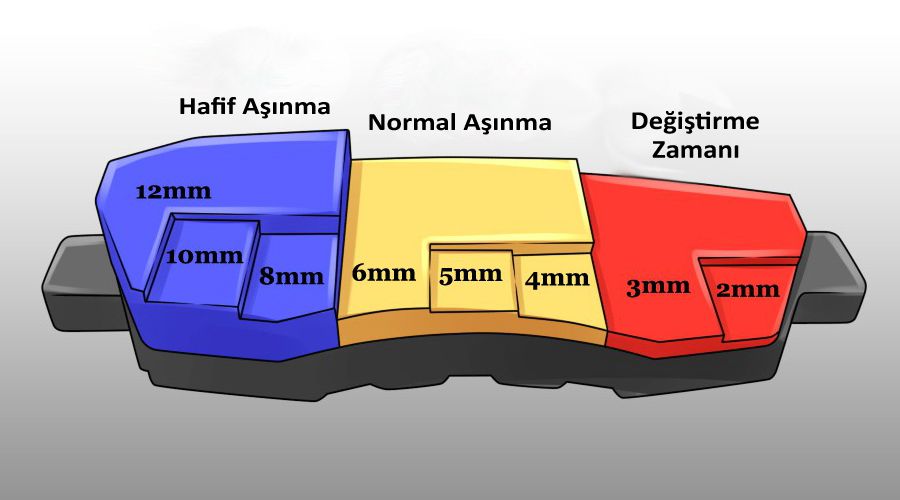
As a general rule, brake pads approaching around 3–4 mm of friction material should be inspected carefully and replacement planning should begin.
When the remaining friction material becomes very thin, replacement becomes increasingly urgent.
If the friction material is close to 2 mm or less, the pads are generally considered to be at or near the end of their usable life and should not be left in service without professional assessment.
The manufacturer's specifications should always take priority because some brake systems have different limits.
What Are the Signs That Brake Pads Need Replacement?
Brake pads can provide several warning signs as they approach the end of their service life.
Common symptoms include:
-
A brake-pad warning light
-
A high-pitched squealing noise
-
Grinding or metal-on-metal noise
-
Increased braking distance
-
Brake pedal vibration
-
Reduced braking performance
-
The vehicle pulling during braking
-
Visible cracks or uneven pad wear
-
Very thin friction material
Not every noise means that the brake pads are worn out, however.
Brake noise can also be caused by brake dust, corrosion, glazing, incorrect installation, caliper problems, or unsuitable brake components.
What Does a Brake Pad Warning Light Mean?
Some vehicles are equipped with brake-pad wear sensors.
When the friction material reaches a predetermined wear level, the sensor can trigger a warning on the dashboard.
Depending on the vehicle, the warning may indicate that the pads need to be inspected rather than that they are already completely worn out.
If the vehicle has a brake-pad warning light, it should not be ignored.
The exact meaning of the warning should be confirmed using the vehicle's owner's manual.
Can You Tell Brake Pad Wear Without Removing the Wheel?
Sometimes.
On vehicles with open-style wheels, part of the brake pad may be visible through the wheel spokes.
You may be able to compare the thickness of the friction material with the backing plate.
However, visual inspection through the wheel is not always accurate.
The outer and inner pads can wear at different rates. In some cases, the inner pad may be significantly thinner than the outer pad because of a sticking caliper or another mechanical problem.
A proper inspection should therefore examine all pads on the axle.
Should Front and Rear Brake Pads Be Changed Together?
Not necessarily.
Brake pads should generally be replaced by axle.
If the front pads are worn but the rear pads still have substantial friction material remaining, only the front axle may require replacement.
Similarly, rear pads can require replacement while the front pads remain serviceable.
Replacing only one pad on an axle is not appropriate because the braking force would not be balanced correctly.
When one side of an axle has significantly different wear from the other, the underlying cause should also be investigated.
What Causes Uneven Brake Pad Wear?
Uneven wear is an important warning sign.
Possible causes include:
-
Sticking brake caliper
-
Seized caliper slide pins
-
Damaged brake hardware
-
Incorrect pad installation
-
Contaminated friction material
-
Caliper piston problems
-
Brake hose restrictions
-
Disc problems
-
Incorrectly fitted components
For example, if the inner pad is almost worn out while the outer pad still has plenty of material, simply installing new pads may not solve the problem.
The caliper and its sliding mechanism should be inspected.
Do Brake Pads Need to Be Replaced When Brake Discs Are Changed?
Not necessarily, but new brake discs are commonly installed with new brake pads.
A new disc paired with severely worn or unevenly worn pads would not be an ideal combination.
When replacing discs, the condition and remaining thickness of the pads should be checked carefully.
In many cases, replacing both components together provides a better opportunity for proper bedding-in and consistent braking performance.
Do Brake Discs Need to Be Replaced When Changing Brake Pads?
No.
Brake pads can often be replaced while the existing brake discs remain in service if the discs are still within specification.
However, the discs should be inspected for:
-
Minimum thickness
-
Deep grooves
-
Cracks
-
Excessive corrosion
-
Heat damage
-
Severe scoring
-
Excessive runout
-
Uneven wear
Installing new pads on discs that are already below their minimum thickness is not appropriate.
Can Worn Brake Pads Damage the Brake Disc?
Yes.
If the friction material becomes excessively thin, the metal backing plate can eventually contact the brake disc.
This can cause severe scoring and may produce a grinding noise.
At this stage, replacing only the brake pads may no longer be sufficient. The brake discs may also require replacement.
Continuing to drive with metal-on-metal brake contact can also reduce braking performance and create a serious safety risk.
Why Do Brake Pads Sometimes Squeal?
Brake squeal does not automatically mean that the pads are worn out.
Possible causes include:
-
Pad material characteristics
-
Brake dust
-
Glazing
-
Disc surface condition
-
Improper bedding-in
-
Caliper vibration
-
Missing or damaged anti-rattle hardware
-
Incorrectly installed pads
-
Corrosion
Some brake pads can produce a slight squeal even when they have plenty of friction material remaining.
However, a new or suddenly developing noise should always be investigated rather than automatically dismissed.
What Does Grinding While Braking Mean?
Grinding is much more concerning than ordinary brake squeal.
If you hear a harsh grinding or metal-on-metal sound when applying the brakes, the vehicle should be inspected as soon as possible.
Possible causes include completely worn brake pads, severely damaged discs, foreign objects, or other brake-system problems.
Driving for an extended period with metal-on-metal contact can rapidly damage expensive brake components.
Do Brake Pads Wear Faster in Automatic Cars?
They can, depending on how the vehicle is driven.
Automatic transmissions can encourage frequent low-speed braking in urban traffic, especially when the driver relies heavily on the brake pedal while maneuvering or crawling through congestion.
However, the transmission type alone does not determine brake-pad life.
Driving style, traffic, vehicle weight, regenerative braking, and brake-system design are more important factors.
Do Electric and Hybrid Cars Wear Brake Pads More Slowly?
Often, yes.
Hybrid and electric vehicles can use regenerative braking to slow the vehicle and recover some kinetic energy.
This reduces the amount of work performed by the conventional friction brakes in many driving situations.
As a result, brake pads can sometimes last significantly longer than expected.
However, long pad life does not mean the brakes can be ignored.
Brake discs can experience corrosion when friction braking is used less frequently, particularly in wet or humid conditions.
Regular inspection remains important.
Is Brake Pad Thickness More Important Than Mileage?
Yes.
Mileage is useful as a reference, but it cannot determine the actual condition of the brake pads.
Two vehicles with the same mileage can have completely different brake-pad wear.
For example, a vehicle used mostly on open highways may have much thicker pads than another vehicle with the same mileage that spends every day in heavy city traffic.
The actual remaining friction material is therefore much more useful than mileage alone.
How Often Should Brake Pads Be Inspected?
Brake pads should generally be checked during routine maintenance and whenever the wheels or braking system are serviced.
A more frequent inspection may be appropriate when:
-
The vehicle is driven heavily in city traffic
-
The vehicle frequently carries heavy loads
-
The vehicle is used in mountainous areas
-
The driver notices unusual brake noise
-
The brake pedal feels different
-
The vehicle pulls during braking
-
A brake warning light appears
Regular inspection can identify worn pads before they reach a dangerous condition.
Should Brake Pads Be Replaced in Pairs?
Brake pads should normally be replaced on both sides of the same axle.
For example, if the left front brake pad is worn, the right front brake pad should also be replaced rather than replacing only one side.
This maintains balanced braking performance between the two sides.
Front and rear axles do not necessarily need to be replaced at the same time.
What Else Should Be Checked When Replacing Brake Pads?
Brake-pad replacement is a good opportunity to inspect the entire brake assembly.
The technician should check the condition of:
-
Brake discs
-
Caliper pistons
-
Caliper slide pins
-
Pad clips and hardware
-
Brake hoses
-
Dust boots
-
Parking brake mechanism
-
Electronic parking brake system where fitted
-
Brake fluid condition
-
Wheel-side components for contamination or leaks
A new set of pads cannot compensate for a mechanical problem elsewhere in the braking system.
Can Brake Fluid Affect Brake Pad Replacement?
Brake fluid and brake-pad wear are related to the overall braking system but are maintained differently.
Brake fluid absorbs moisture over time and may require replacement according to the manufacturer's service schedule.
Changing brake pads does not automatically mean the brake fluid must be replaced.
However, the fluid level and condition should be checked during brake service.
If the brake fluid level is unexpectedly low, the cause should be investigated rather than simply topping it up.
Excessive pad wear can sometimes cause the fluid level in the reservoir to fall as the caliper pistons move farther outward.
What Is the Best Time to Replace Brake Pads?
The best time to replace brake pads is before they become critically thin or begin damaging other brake components.
Do not wait until you hear metal-on-metal grinding.
A practical approach is to have the pads inspected regularly and plan replacement when the remaining friction material is approaching the manufacturer's recommended wear limit.
The exact replacement point depends on the vehicle and brake system, but the important principle is simple: brake pads should be replaced according to their actual condition, not just their mileage.
A properly maintained braking system provides consistent stopping performance and helps prevent a relatively inexpensive brake-pad replacement from turning into a much more expensive brake-disc, caliper, or other brake-system repair.