TR
TR EN
EN

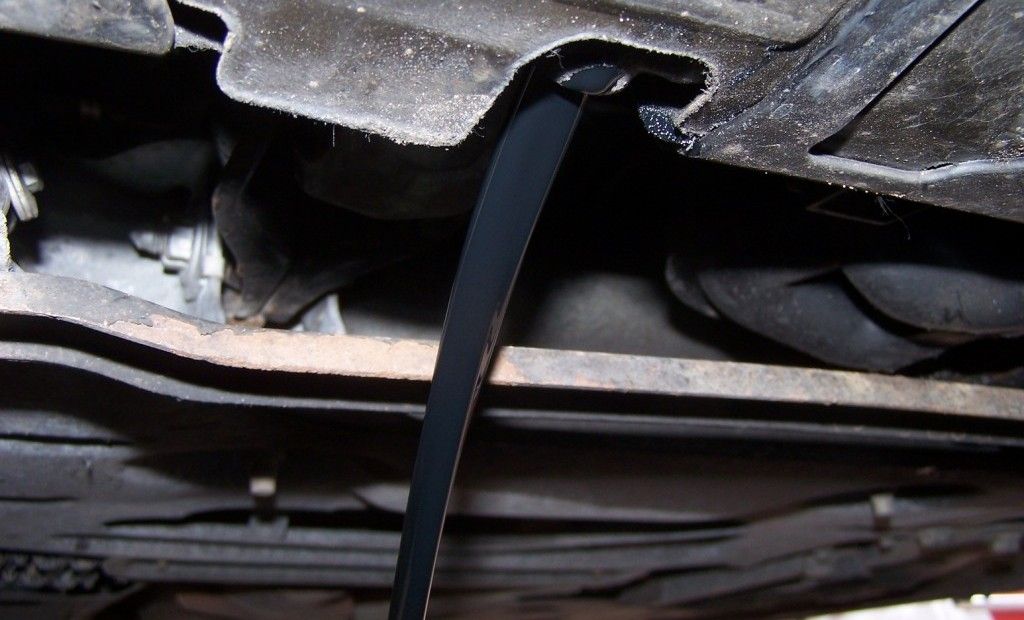
When Should You Change Your Engine Oil?
Engine oil is one of the most important fluids in a vehicle. It lubricates moving engine components, reduces friction, helps control operating temperatures, and carries contaminants away from critical engine parts.
However, engine oil does not maintain its original properties indefinitely. High temperatures, pressure, fuel contamination, moisture, combustion by-products, and normal engine operation gradually affect the oil.
For this reason, engine oil should be replaced at a specific mileage or time interval.
There is no single oil-change interval that applies to every vehicle. The correct interval depends on the engine, the manufacturer's maintenance schedule, the oil specification, and how the vehicle is used.
How Many Miles Should You Drive Before Changing Engine Oil?
Oil-change intervals vary considerably between vehicles.
Some engines may require an oil change around 3,000–5,000 miles, while many modern engines can operate with intervals of 7,500, 10,000, 15,000 miles, or more when the manufacturer allows it.
These figures are only general examples.
One engine may be designed for a 15,000-mile oil-change interval, while another may require significantly more frequent servicing.
For this reason, the manufacturer's recommended maintenance schedule should always be the starting point rather than relying on a universal mileage figure.
How Often Should Engine Oil Be Changed by Time?
Engine oil ages with time as well as mileage.
A vehicle that travels only a few thousand miles per year still needs regular oil changes.
The manufacturer may specify an interval such as a certain number of miles or a certain number of months, whichever comes first.
This is particularly important for vehicles that are used very little.
Simply saying, “I have not reached the mileage yet,” is not always enough to justify postponing an oil change for several years.
Should You Change Oil If You Rarely Drive the Car?
Yes.
Low mileage does not automatically mean that the engine oil can be left in the engine indefinitely.
Vehicles that are frequently started for short periods can actually place additional stress on the oil.
If the engine does not reach its normal operating temperature regularly, moisture and fuel contamination can become more significant concerns.
For a vehicle that is driven very little, the time-based service interval can therefore be just as important as the mileage interval.
Does Short-Distance Driving Affect Engine Oil?
Yes.
Short-distance driving can create more demanding conditions for engine oil.
When an engine is started from cold, the oil has not yet reached its normal operating temperature. If the vehicle is driven only a short distance and then switched off, the engine and oil may not remain hot long enough to fully stabilize operating conditions.
Repeated short trips can contribute to:
-
Moisture accumulation
-
Fuel dilution
-
Increased contamination
-
Faster oil degradation
-
More demanding cold-start conditions
This is especially relevant for vehicles that are regularly used for very short urban trips.
Should City-Driven Cars Have More Frequent Oil Changes?
Heavy city driving can be more demanding than steady highway driving.
Frequent stop-and-go traffic, long periods of idling, repeated cold starts, low-speed operation, and short trips can all increase engine workload.
Some manufacturers classify this type of driving as severe or heavy-duty use and provide a shorter maintenance schedule for these conditions.
If the vehicle is primarily used in heavy traffic or for short trips, the severe-service maintenance schedule should be checked if the manufacturer provides one.
Does Highway Driving Allow Longer Oil Change Intervals?
Highway driving generally allows an engine to operate at a more stable temperature for longer periods.
This can be less demanding on engine oil than repeated short trips and constant stop-and-go driving.
However, highway use does not mean that oil changes can be postponed indefinitely.
The manufacturer's maximum mileage and time interval should still be followed.
Can You Tell When Oil Needs Changing by Its Color?
No.
Oil color alone is not a reliable way to determine whether an oil change is due.
Engine oil can become darker as it circulates through the engine and collects contaminants. This does not automatically mean that the oil has lost its ability to lubricate and protect the engine.
Diesel engine oil, in particular, can become dark relatively quickly.
On the other hand, oil that still looks relatively clean does not necessarily mean that it can safely remain in the engine indefinitely.
The oil-change interval should therefore be based primarily on the manufacturer's maintenance schedule, oil specification, mileage, time, and operating conditions, rather than color alone.
Does Synthetic Oil Last Longer?
Synthetic motor oils are designed to provide stable performance under demanding operating conditions and can support longer service intervals in engines designed for them.
However, using synthetic oil does not mean that you can ignore the manufacturer's recommended oil-change interval.
The appropriate interval depends on factors such as:
-
Oil specification
-
Manufacturer approval
-
Viscosity
-
Engine design
-
Driving conditions
-
Maintenance schedule
The word “synthetic” alone does not determine how long the oil should remain in the engine.
Does Oil Viscosity Determine the Change Interval?
Not by itself.
Numbers such as 0W-20, 5W-30, 5W-40, and 10W-40 describe the oil's viscosity classification.
However, viscosity is only one part of choosing the correct engine oil.
Two different 5W-30 oils can have different performance standards and manufacturer approvals.
Therefore, choosing oil based solely on viscosity can be a mistake.
The correct oil should meet both the required viscosity and performance specification for the engine.
Should the Oil Filter Be Changed With the Oil?
In most routine maintenance situations, yes.
The oil filter removes contaminants and particles from the engine oil. Over time, the filter collects debris and its filtering capacity can become reduced.
Installing new engine oil while leaving an old, contaminated filter in place is generally not the best maintenance practice.
For this reason, the oil filter is normally replaced at the same time as the engine oil unless the manufacturer specifies otherwise.
What If the Engine Is Losing Oil?
Oil consumption and oil-change intervals are two different issues.
If the oil level is falling between services, the reason should be investigated.
Possible causes include:
-
External oil leaks
-
Oil pan or gasket leaks
-
Crankshaft seal leaks
-
Valve cover leaks
-
Turbocharger oil leaks
-
Valve stem seal problems
-
Worn piston rings
-
Excessive normal oil consumption for the engine
If the oil level falls below the recommended range, the correct oil should be added.
However, repeatedly adding oil without investigating significant oil loss is not a proper solution.
How Do You Check Engine Oil Level?
Vehicles equipped with a traditional dipstick can usually be checked on a level surface.
After switching off the engine, allow enough time for the oil to drain back into the oil pan.
Remove the dipstick, wipe it clean, reinstall it, and then remove it again.
The oil level should normally be between the minimum and maximum marks.
Some modern vehicles do not have a traditional dipstick and use an electronic oil-level measurement system instead.
In that case, the manufacturer's specified measurement procedure should be followed.
Can Too Much Engine Oil Damage the Engine?
Yes.
Low oil level is dangerous, but overfilling the engine can also cause problems.
If the oil level is excessively high, the crankshaft may come into contact with the oil. This can cause the oil to become aerated or foamy and potentially reduce effective lubrication.
Excessive oil can also create other mechanical problems depending on the engine design.
For this reason, engine oil should be kept within the manufacturer's specified range.
More oil is not better oil.
What Happens If You Change Engine Oil Too Late?
Seriously delaying an oil change can increase the risk of engine problems.
Over time:
-
Lubricating performance can deteriorate
-
Additives can become depleted
-
Contaminants can accumulate
-
Sludge and deposits can form
-
Friction and wear can increase
-
Oil passages can become restricted
-
Turbocharger lubrication can be affected
-
Engine component wear can accelerate
A severely neglected oil-change schedule can therefore contribute to expensive engine repairs.
Why Is Oil Important in Turbocharged Engines?
Turbochargers operate at extremely high speeds and temperatures.
The turbocharger shaft and bearings depend on proper lubrication, making oil quality particularly important.
Using the wrong oil or extending the oil-change interval excessively can increase the risk of turbocharger and engine problems.
For turbocharged gasoline and diesel engines, it is particularly important to use an oil that meets the manufacturer's required specifications.
When Should Diesel Engine Oil Be Changed?
Diesel engines follow the same basic principle: the oil should be changed according to the manufacturer's recommended schedule.
However, modern diesel engines can have additional considerations because of systems such as the Diesel Particulate Filter (DPF).
Short-distance urban driving can also create more demanding operating conditions for a diesel engine.
If the manufacturer provides separate maintenance schedules for normal and severe use, the appropriate schedule should be selected according to the vehicle's actual usage.
Is Oil Specification Important for DPF-Equipped Vehicles?
Yes.
Vehicles equipped with diesel particulate filters may require specific low-ash or low-SAPS engine oils designed to work with their emissions systems.
Using an unsuitable oil can increase the amount of ash entering the exhaust after-treatment system and may contribute to problems over time.
For this reason, DPF-equipped vehicles should always use the engine oil specification recommended by the manufacturer.
The same principle can also apply to some gasoline engines equipped with gasoline particulate filters.
What Should You Do If the Oil Warning Light Comes On?
It is important to distinguish between an oil pressure warning and an oil service or oil-life reminder.
These warnings do not mean the same thing.
If a red oil-pressure warning appears while the engine is running, the situation can be serious. Continuing to drive with insufficient oil pressure can cause severe engine damage.
The engine should be stopped as soon as it is safe to do so, and the oil level and lubrication system should be checked.
An oil service reminder, on the other hand, generally indicates that scheduled maintenance is due.
Always check the exact warning symbol in the vehicle's owner's manual.
Should Oil Be Changed Based Only on Mileage?
No.
Three factors should be considered together:
Mileage
The manufacturer's recommended mileage interval should be followed.
Time
The maximum time interval should not be exceeded simply because the vehicle has covered very few miles.
Driving conditions
Short trips, heavy traffic, frequent idling, extreme temperatures, towing, heavy loads, and other demanding conditions can affect the appropriate maintenance schedule.
This is why there is no universal rule such as “change the oil every 5,000 miles” that applies to every modern vehicle.
What Is the Best Oil Change Interval?
The safest approach is to follow the vehicle manufacturer's maintenance schedule while considering the actual way the vehicle is driven.
Before changing the oil, make sure you know:
-
The recommended mileage interval
-
The maximum time interval
-
The required oil viscosity
-
The required oil specification
-
Any manufacturer-specific oil approval
-
Whether the vehicle has a severe-service maintenance schedule
-
Whether the oil filter should be replaced
-
Whether the engine has a turbocharger or particulate filter
The right oil change is not simply about changing the oil frequently. It is about using the correct oil, at the correct specification, at the correct interval.
Regular oil changes, proper oil levels, and the correct lubricant can help maintain engine lubrication and reduce unnecessary wear over the long term.